









Vacuum excavation is the future
“We can excavate without causing any damage, and demand for this is growing,” says Cris Van Durme of Prima-Clean. “The work tends to involve smaller jobs lasting from two days to two weeks, as part of larger projects. And projects are coming in thick and fast.”
Prima-Clean has made significant progress, particularly in recent years. Cris Van Durme says: “In the past, vacuum excavators were rarely specified, whereas today they are almost standard. This is mainly due to the many incidents of damage contractors have to deal with, and the high costs involved.”
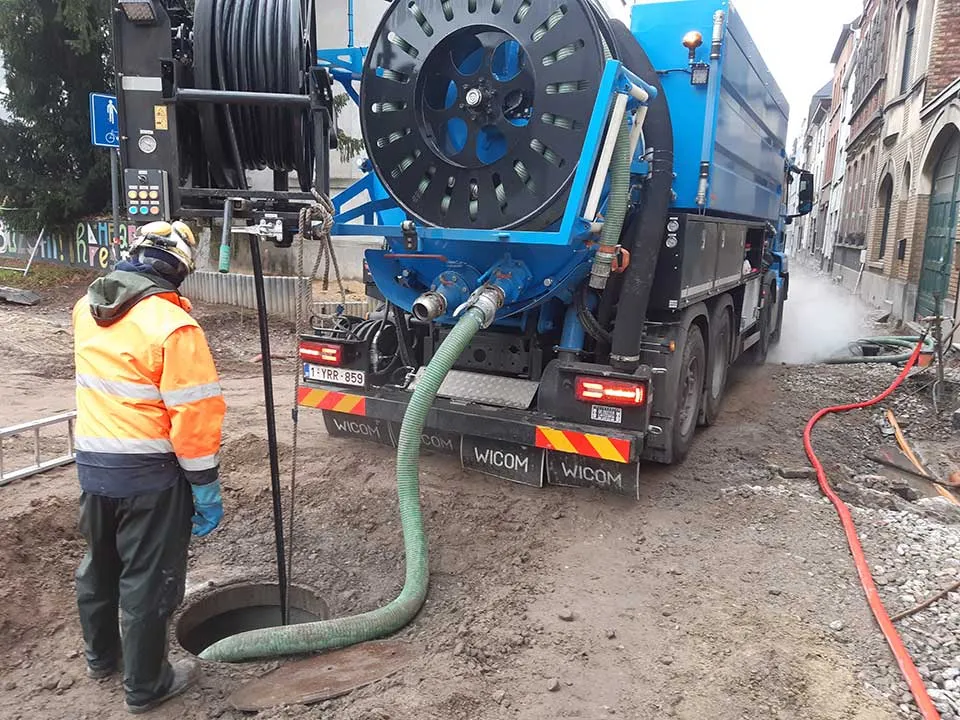
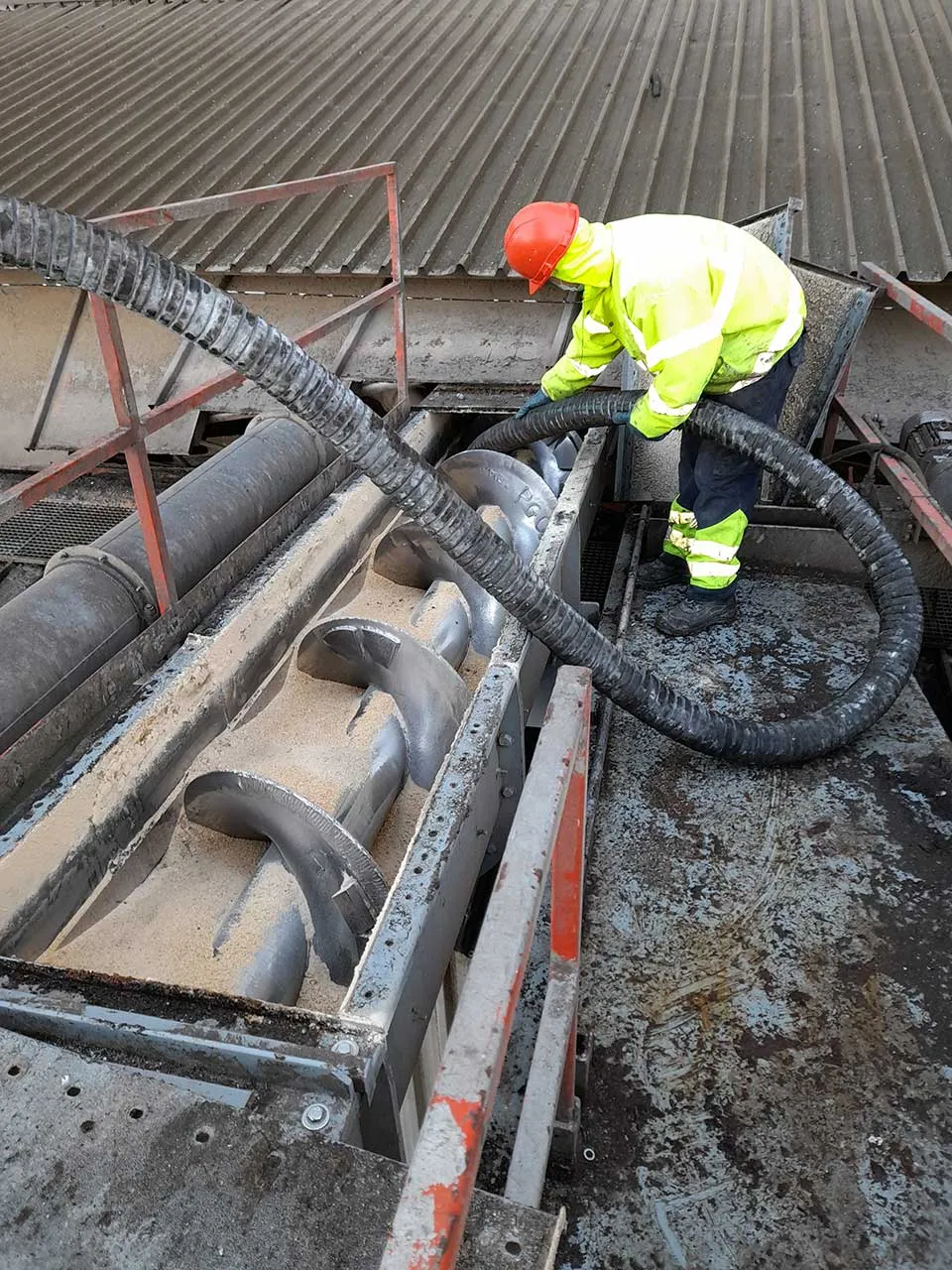
How often does an excavator damage cables, pipes and utilities while removing soil, with all the consequences that entails? Cris van Durme says: “Our vacuum excavator lets us work safely, and also faster and more precisely. The vehicle is fitted with gas detection and is fully ATEX-compliant and certified. We can also use our vacuum trucks to remove roof gravel, suck up thick sludge, empty deep pits, remove blasting sand or grit, and much more. In short, our vehicles are suitable for a wide range of applications in earthworks, water, rail and road construction, as well as for utility operators, environmental engineering and industry. This versatility is a major advantage.”
Vacuum excavation
Prima-Clean has been vacuum-excavating soil since April 2014, and in 2017 it bought its first version of Amphitec’s Vortex 18000. With its excavation arm, the machine is specially designed to remove soil around cables and pipes. Cris Van Durme says: “Its powerful vacuum technology makes it quick and easy to suck up soil, clay, rubble and sand. Conventional vacuum excavators are turbine-powered trucks that generate high airflow (43,000 m³/hour), but with a low vacuum (43%). They are therefore not always efficient. We use a different technology for vacuum excavation, where a high vacuum (96%) is far more important than airflow.”
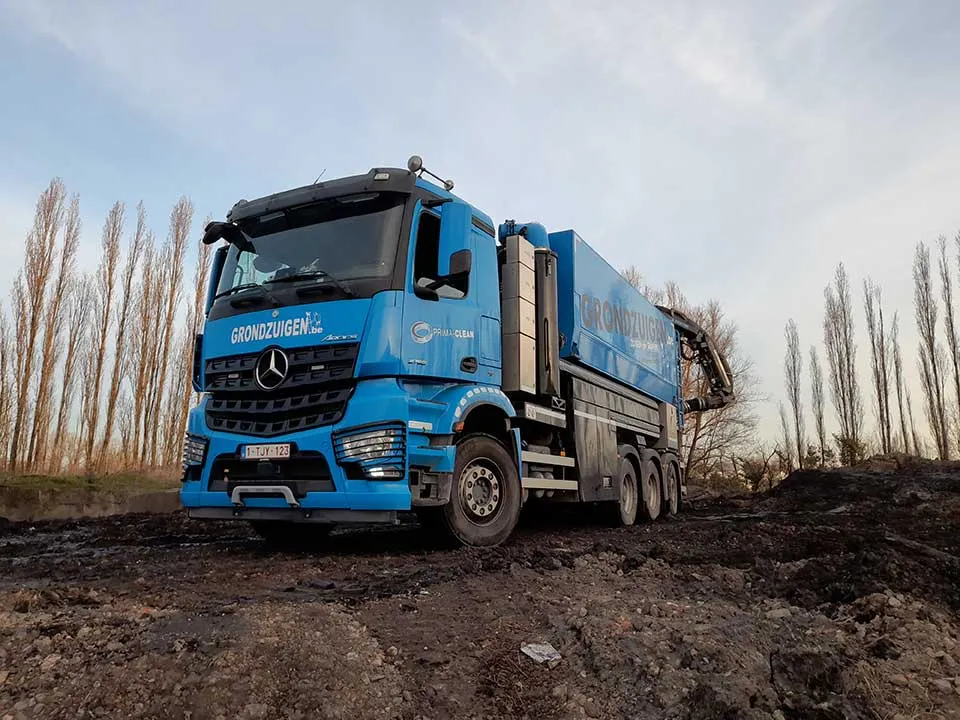
The Vortex 18000 is a powerful vacuum excavator based on a Mercedes-Benz Arocs 3258 L 8×4 with a tridem axle configuration. The Arocs has a technical payload capacity of 37,000 kg, which is limited by law to 32,000 kg for road use. It is fitted with two vacuum pumps (with a combined capacity of 18,000 m³/hour), driven via an NMV power take-off to draw on almost all of the engine’s power. A gearbox power take-off and an engine power take-off also drive the radio-controlled, hydraulic 10-inch suction arm, the Mattei air compressor (3 m³/min at 7 bar), the reco-drive and the high-pressure water pump.
Delivering results
“We are very pleased with how this machine performs, so we recently bought another Vortex 18000,” says Cris Van Durme. “It may not be the best choice in terms of price, as a vacuum truck costs considerably more to buy than a turbine truck and also uses more fuel, but we focus on results and invest in the customer. A paying customer is not interested in hearing that the ground is too wet, too hard or too clayey. It is exactly the same machine, but we have increased the power from 580 to 630 hp because it could use a little more. Of course, it is a major advantage that we now know the machine so well. Our staff also have extensive experience and I continually provide guidance, as well as arranging external training within our sector. Vacuum excavation grew out of my own idea and passion. The fact that this vacuum truck is now also growing in popularity in the Netherlands, Germany and other countries shows that we are on the right track. The market is growing, and the machine has proved itself over the past few years, running almost day and night. I am firmly convinced that vacuum excavation is the future.”
First, best, finest… and innovation
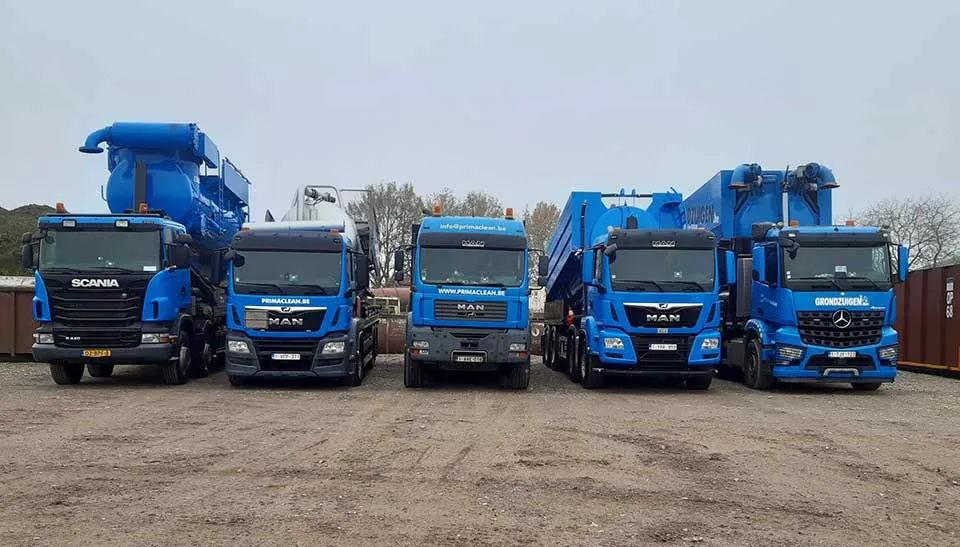
“We strive to be first, best and finest at Prima-Clean. Equipment plays a crucial role in that, which is why we are prepared to invest. A few months ago, we also bought a new sewer cleaning truck, and in 2020 we invested in a new vacuum truck. This means we can offer road construction clients a single point of contact, from digging trial trenches to cleaning sewers and gullies. Our motto is: good work can only be done with good equipment,” concludes Cris Van Durme.
Question about this story? Ask your question
Keep following this
Get an email when a new story is published. No account needed.
- SubjectGeneral







