









Towards an integrated approach to infiltration and depaving
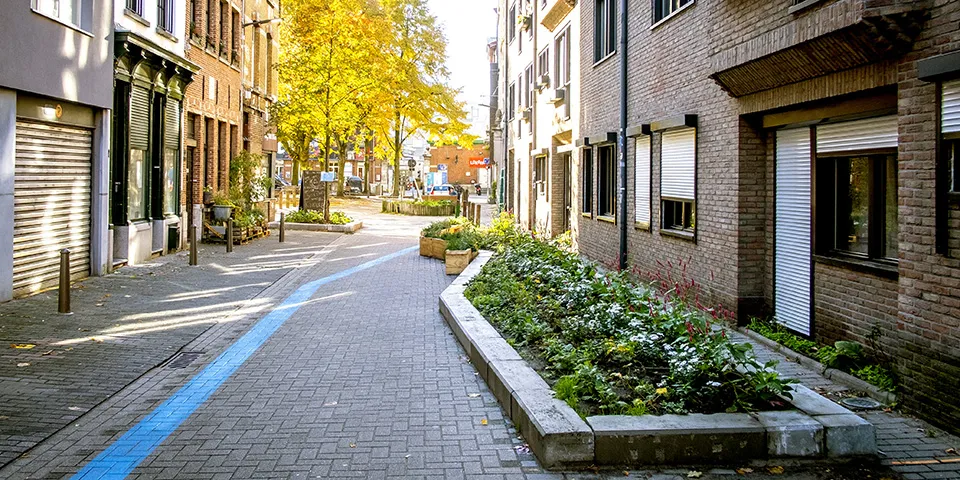
The dry summers of 2017 and 2018 are still fresh in our minds. Like local, sometimes intense, downpours, they are a sign that climate change is making itself felt. But how can we limit the flooding caused by these downpours? And how can we capture this precious rainwater for useful purposes, helping to tackle drought in the process? Recent research by Patrick Willems, professor of water engineering at KU Leuven, shows that depaving could be one of the keys to a solution. According to Willems, disconnecting sufficient areas of paved surfaces from the sewer system, combined with infiltration, is crucial to managing changing climate conditions intelligently.
Aquafin has been working for some time to develop solutions for managing water intelligently. One of these is its rainwater plans, which assess how best to deal with rainwater in each municipality. The wastewater treatment utility is now developing a concept to put the climate-resilient ideas generated by these plans into practice. Krista Decat, Aquafin’s Vision Manager, explains: “Our new concept picks up where the rainwater plans leave off. While a rainwater plan looks at a larger area and provides an overview, our new concept zooms in on specific project zones and examines all the water flows there. We look at how green-blue measures can be implemented in practice, providing the best solution for a specific situation in a particular street, neighbourhood or urban district. As well as ensuring optimal performance, we also consider the aesthetic aspect.
Getting everyone on board
“A green-blue measure can take many forms. Think of swales, depaving, infiltration strips or permeable paving, as well as green roofs or façade gardens, which we would ideally like to combine with the intelligent reuse of rainwater,” Krista Decat continues. “These measures are not new in themselves, but integrating them thoughtfully into a construction project is. So is raising awareness of them, among both residents and our technical partners. A key challenge is finding a good way to get our technical partners on board.”
Krista Decat, Vision Manager at Aquafin. (Image: Sigfrid Eggers)
In his speech at the Aquafin Awards in late 2018, Dirk De Waele, Director of Project Management, had already noted: “In general, far too little attention is paid to source control measures to prevent rainwater runoff. If we are serious about the second part of Aquafin’s vision, namely ‘a living environment in harmony with water’, we owe it to ourselves, our clients and society to act.” Decat adds: “Our concept therefore requires close cooperation with our technical partners. We need to strengthen our dialogue with them. After all, they will be helping to design and deliver our plans and ideas.”
Benefits that keep adding up
While this approach is still relatively new in Flanders, other countries are already much further along. New York, for example, has been enjoying the benefits of green-blue measures for some time. First and foremost, they deliver visible results straight away. They also make neighbourhoods much more pleasant places to live, something conventional underground infrastructure works cannot offer. And for anyone who thinks this concept is expensive, a study has shown that the cost is significantly lower too. “What’s more,” says Krista Decat, “the very diversity of the measures ensures that your surroundings are best adapted to changing or more extreme weather conditions.”
Today and tomorrow
Krista Decat: “This idea is aimed not only at our traditional clients, such as municipalities, but also at property developers, development companies, and businesses and organisations facing complex water issues. We want to inspire them and help develop and deliver innovative, forward-looking water concepts. We are already carrying out two such commissions. For ZOO Planckendael, we are preparing a comprehensive water study focused on sustainably improving and optimising the park’s various water flows. Matexi, meanwhile, called on our expertise for advice on the sustainable management of energy and water for a new neighbourhood to be built at Drie Fonteinen in Vilvoorde.”
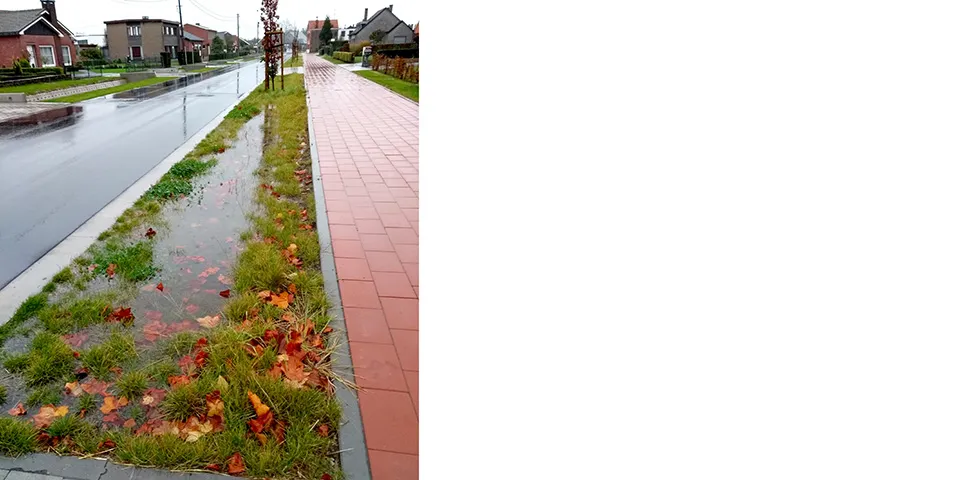
As well as traditional clients such as municipalities, Aquafin also targets property developers, development companies, and businesses and organisations facing complex water issues.
Working with technical partners
“Managing rainwater sustainably, making our cities and municipalities as climate-resilient as possible, and challenging our partners to apply this way of thinking consistently: it is certainly ambitious, but we are convinced that this is the only way to secure a future for water,” concludes Krista Decat.
Question about this story? Ask your question
Keep following this
Get an email when a new story is published. No account needed.
- ThemeSpace for water and green infrastructure
- SubjectGeneral







