









The Pen | Prof. Dr.ir. Luc Taerwe, Professor Emeritus of Concrete Structures at Ghent University
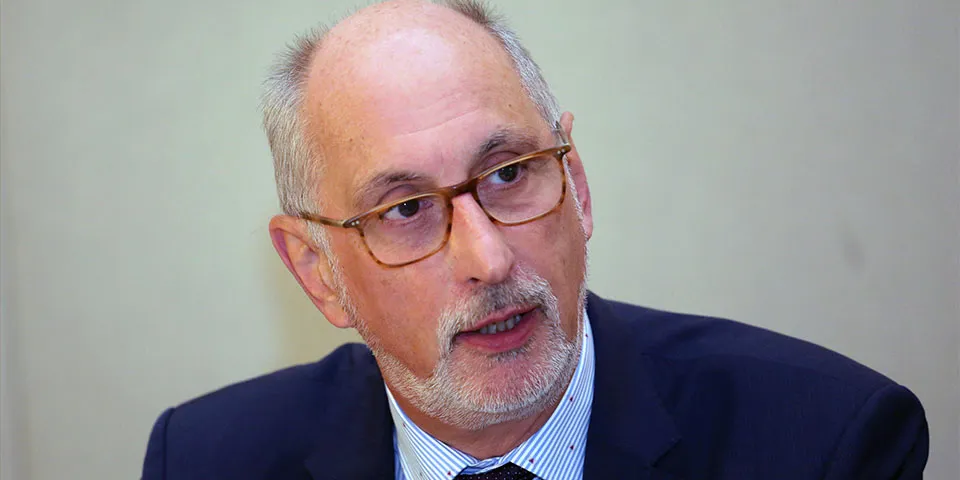
Just as the Industry 4.0 initiative is leading to new ways of producing, new products and new business models, we will also need to develop innovative concepts and techniques for concrete: Concrete 4.0 is the challenge.
Concrete 4.0
With global production of more than 30 billion tonnes a year, concrete remains the world’s most widely used construction material, and will continue to do so for some time. This is linked to the production of more than 4.6 billion tonnes of Portland cement a year, which accounts for around 7% of CO2 emissions resulting from human activities. If we are to move towards a carbon-neutral society by 2050, innovative solutions will need to be sought across many areas. In recent decades, various measures have already been taken to reduce the carbon footprint of cement and concrete production, notably through energy efficiency, the recovery of residual waste, the introduction of new binders and CO2 capture. Some of these measures have already reduced CO2 emissions from around 1 tonne to 0.85 tonnes per tonne of Portland clinker produced. So-called pozzolanic binders, such as ground granulated blast-furnace slag, fly ash, silica fume and metakaolin, make it possible to reduce the use of Portland cement. The use of recycled aggregates from concrete and masonry rubble not only reduces the need to extract natural resources, but also contributes to the transition towards fully circular concrete.
The use of high-strength concrete (compressive strengths of 60 to 110 MPa) and ultra-high-strength concrete (compressive strengths of up to 200 MPa) makes it possible to build more slenderly, using less material, and to build more durably, in the sense of the English word ‘durable’, meaning resistant to all kinds of deterioration mechanisms. This can also reduce the consumption of reinforcing and prestressing steel. As its name suggests, self-compacting concrete requires no external compaction energy and can fill formwork perfectly, even where large quantities of reinforcement are arranged in complex configurations. This type of concrete is already widely used in the precast sector. These various high-performance types of concrete could only be produced thanks to the development of effective superplasticisers, which make it possible to achieve high flowability at low water contents.
In Belgium, precasting has been well established for decades in the production of concrete elements. The use of automated processes results in high-quality and therefore durable concrete elements, with a wide range of shapes and textures, without having to resort to standard solutions.
3D printing of concrete makes it possible to highly automate production and to adapt the shape of concrete elements to the distribution of forces in load-bearing elements using specific optimisation algorithms. This reduces the required mass and therefore saves materials. In addition, 3D printing produces highly aesthetic solutions that stimulate the designer’s creativity.
Despite all the critical comments about concrete, no other construction material offers an affordable alternative for homes, buildings, infrastructure, foundations and hydraulic engineering structures. The buzzword ‘concrete stop’ is used indiscriminately to create a misleading picture of the real issue. The use of green space for construction projects results from policy decisions, but the cement and concrete sector cannot be blamed for designers choosing affordable and sustainable (in the sense of the English word ‘sustainable’) combinations of materials, in which concrete logically plays a leading role. The rapid run-off of rainwater can be mitigated by using permeable paving and constructing water storage basins. In the pursuit of energy-neutral buildings, the thermal inertia of concrete can play a significant role. Concrete is therefore an important link in achieving climate-neutral targets in the construction sector, and its use cannot simply be stopped.
The cement and concrete sector has long been actively contributing to the ‘Green Deal’. Thanks to innovative scientific research, various solutions are already available for delivering sustainable construction projects that reconcile the three pillars of a Sustainable Society: Planet, People and Profit. All that is needed now are the right policy decisions, resources and incentives to make Concrete 4.0 part of everyday practice. A new beginning, then, instead of a stop.
Question about this story? Ask your question
Keep following this
Get an email when a new story is published. No account needed.
- ThemeMaterials with a lower environmental impact
- SubjectGeneral







