









The Health and Safety at Work Act: a brief history
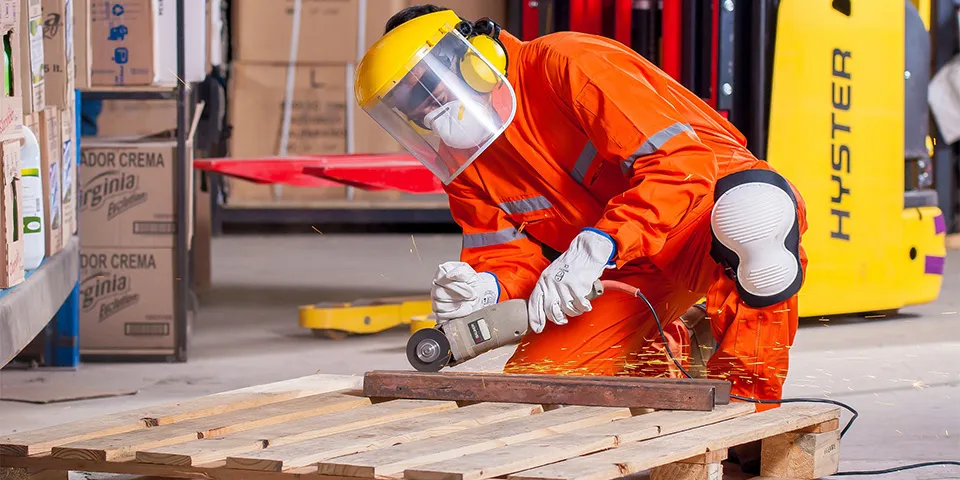
The Health and Safety at Work Act sets out clear guidelines and rules to make the workplace as safe as possible for employees. Today, it is impossible to discuss workplace safety without referring to the Act. It has been in force for decades. Its predecessor was the Safety Act.
The 1895 Safety Act: predecessor to the Health and Safety at Work Act
The first Safety Act, which protected men only, came into force in 1895. It applied only to workshops and factories. In 1934, it was replaced by a revised Safety Act. This law had a much broader scope, applying to workshops, factories and agricultural businesses. The Working Conditions Act, or Health and Safety at Work Act,
was introduced in the Netherlands in several stages from 1983 onwards. The Act gave companies greater responsibility and imposed more obligations on them to safeguard the safety of their employees. Companies must assess workplace risks and set out in an action plan how they intend to prevent accidents at work. The Act was extensively amended again from 1994. For example, companies were required to be affiliated with an occupational health and safety service. The new Health and Safety at Work Act came into force on 1 November 1999. Its aim is to place greater responsibility on companies and employees for promoting and safeguarding employees’ health and safety in the workplace.
Personal protective equipment
Standards for personal protective equipment (PPE) have also risen over the years. Protective equipment may only be used if it meets certain quality requirements. It is important that PPE bears a CE marking and comes with instructions for use. The manufacturer must compile a technical file for the product and state the level of protection that can be expected from the PPE. In addition, PPE must comply with the relevant design and construction requirements for health and safety set out in the Commodities Act Decree on Personal Protective Equipment.
The employer provides protective equipment for employees and maintains or replaces it when necessary. The required level of protection is the main consideration when selecting equipment, but user comfort is also taken into account. The appropriate equipment depends on the source of the hazard identified in the Risk Inventory and Evaluation (RI&E).
Commonly used PPE includes protective clothing, safety footwear, safety glasses, gloves, hearing protection and dust masks.
Safety footwear
Safety footwear protects the feet against hazards such as impact, crushing and stepping on sharp objects. The footwear has a closed heel, a steel toecap, anti-static properties, an energy-absorbing heel, an oil-resistant sole and water-repellent uppers. The soles are also slip-resistant. Safety footwear is worn with a penetration-resistant midsole. Manufacturers place great emphasis on user comfort. It is now barely apparent that some footwear is safety footwear, as with the Puma brand. Best known for its sports shoes, Puma also offers a wide range of professional Puma work shoes.
Question about this story? Ask your question
Keep following this
Get an email when a new story is published. No account needed.
- SubjectGeneral







