









Tailor-made solutions are key to building and maintaining industrial tracks and crane rails
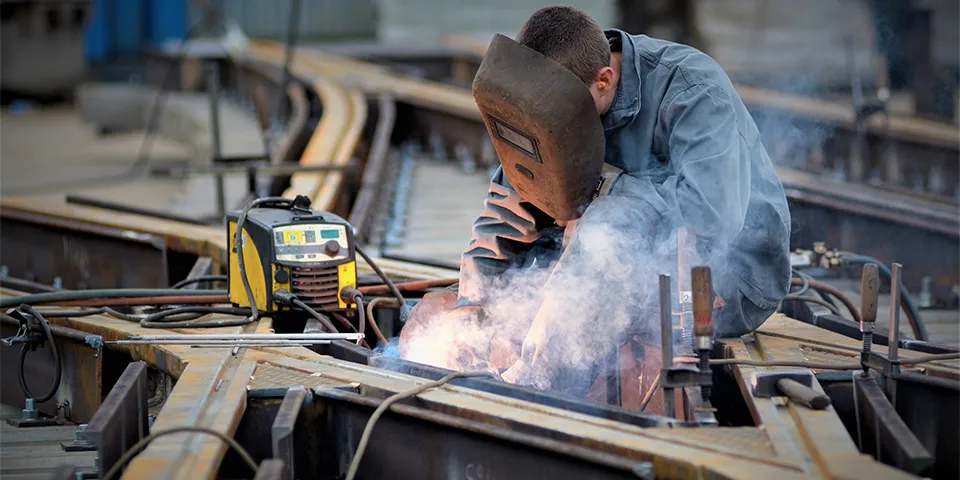
When people think of railway works, many immediately think of Belgium’s rail network or the tram tracks in our cities. Yet railway contractors’ activities are by no means limited to public projects. Frateur-De Pourcq has specialised in crane rails and industrial tracks for many years. As a result, countless kilometres of track in the Port of Antwerp bear the hallmark of the Boom-based railway contractor.
Today, Frateur-De Pourcq is best known for major tramway projects. However, the railway contractor also owes much of its growth to building crane rails and industrial tracks, mainly in the many ports across the country, with Antwerp leading the way. “Large cranes that load and unload seagoing vessels in ports run on crane rails,” explains Stefaan Rotthier, co-managing director of Frateur-De Pourcq. “For example, at the Deurganck Dock we laid all the crane rails for port companies such as PSA and DP World. In the Port of Zeebrugge, our customers include MBZ, among others.”
These crane tracks are laid on continuous steel plates. The plates and rails are selected according to the crane that will run on them. They have to withstand the considerable pressure exerted by the loads lifted by the cranes. Consequently, the rails are much larger and heavier than those used for standard railway tracks, requiring more robust fastening systems. “Standard Infrabel trains run on rails weighing 50-60 kg per metre. Cranes in the port run on rails weighing up to 125 kg per metre,” says Stefaan Rotthier.
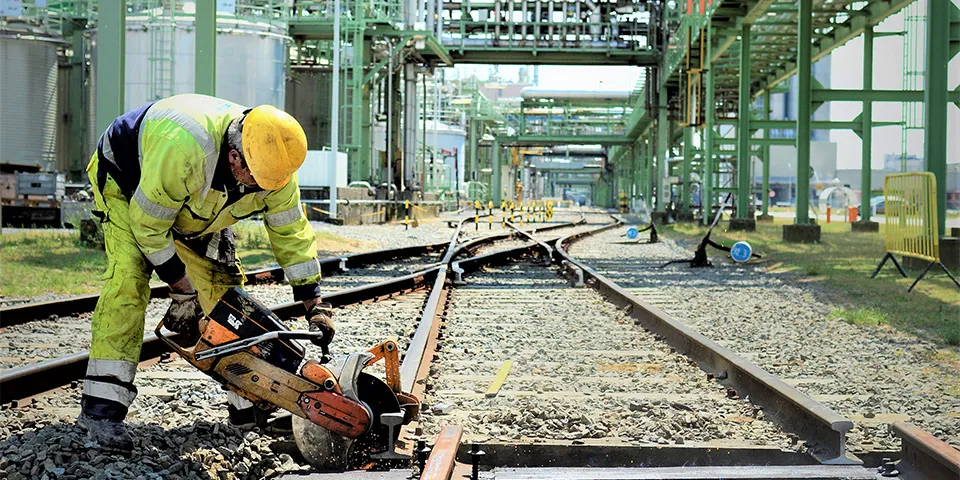
The railway contractor also looks after the maintenance of crane rails and industrial tracks.
In-house fabrication workshop
As well as crane rails, Frateur-De Pourcq also specialises in industrial tracks. The railway contractor, based in Boom, counts BASF, Total Fina and Covestro among its customers. Stefaan Rotthier says: “These companies depend on rail both to bring in materials and to transport their finished products. Their internal rail networks are connected to Infrabel’s network, which means they need to be just as safe and well maintained. We use standard rail techniques for these companies, but certain projects still call for creativity and craftsmanship. Some of these companies have a long history, which means their tracks have also been in service for many years. It can be difficult to source old materials for replacement parts, crossings and the like. Fortunately, we have our own fabrication workshop, where we can make everything fully compliant. That is a major advantage, as ours is one of only two workshops of its kind in Belgium. As a result, our competitors also come to us to have custom parts made.”
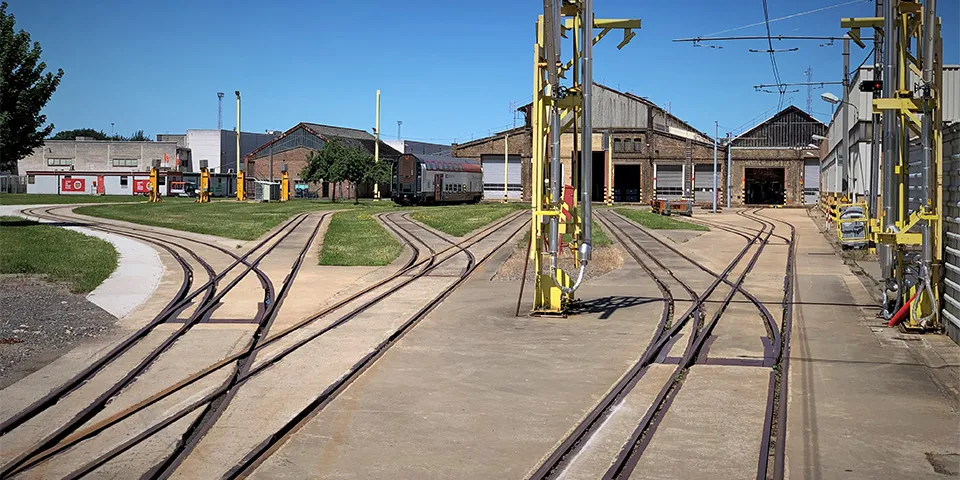
Frateur-De Pourcq is responsible for the complete construction and maintenance of the tracks at Bombardier Brugge, the company where almost all train and tram vehicles are built.
Maintenance
Frateur-De Pourcq not only builds new crane rails and industrial tracks, developing tailor-made projects from the study stage, in collaboration with the customer, through to construction. The railway contractor also takes care of maintaining all these tracks. “Our job is to respond to breakdowns or repairs as quickly as possible. It costs companies a great deal to have ships waiting in port. That is why our team is organised to be highly flexible,” says Stefaan Rotthier.
The tracks that Frateur-De Pourcq builds and maintains for Bombardier Brugge, the company where almost all train and tram vehicles are built, are a good example of its tailor-made work. Frateur-De Pourcq is responsible there for the complete construction and maintenance of the tracks. Standard trains run on standard-gauge track, which is 1,435 m wide, as do the tram vehicles operated by MIVB in Brussels. Tracks for De Lijn’s trams in Flanders have a gauge of 1 m. This means the track has three rails instead of two: one shared rail, one rail at 1 m and one at 1,435 m. “That makes it quite a challenge to draw everything up,” says Stefaan Rotthier.
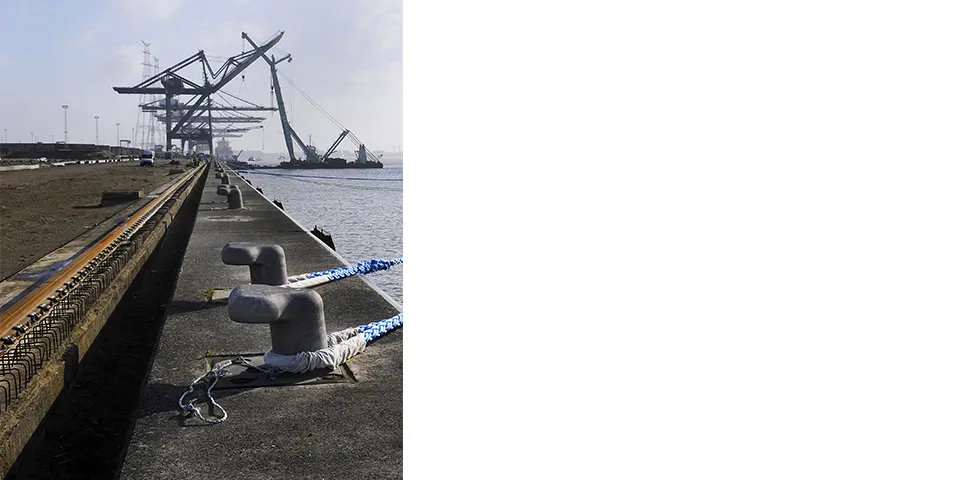
Frateur-De Pourcq has built countless kilometres of crane rails in the Port of Antwerp.
Research and innovation
Although Frateur-De Pourcq has specialised in industrial tracks for many years, it is important to keep investing in research and innovation. “Rail is an old form of transport that has to meet all modern requirements. As a railway contractor, you have to keep evolving,” stresses Stefaan Rotthier. “Safety is one area that has become increasingly important over the years, especially in chemical companies. We continually adapt our site practices to comply with all the new safety measures and keep them up to date.”
Question about this story? Ask your question
Keep following this
Get an email when a new story is published. No account needed.
- SubjectGeneral







