









Sustainability and circular economy thrive at new hotspot in the Port of Antwerp
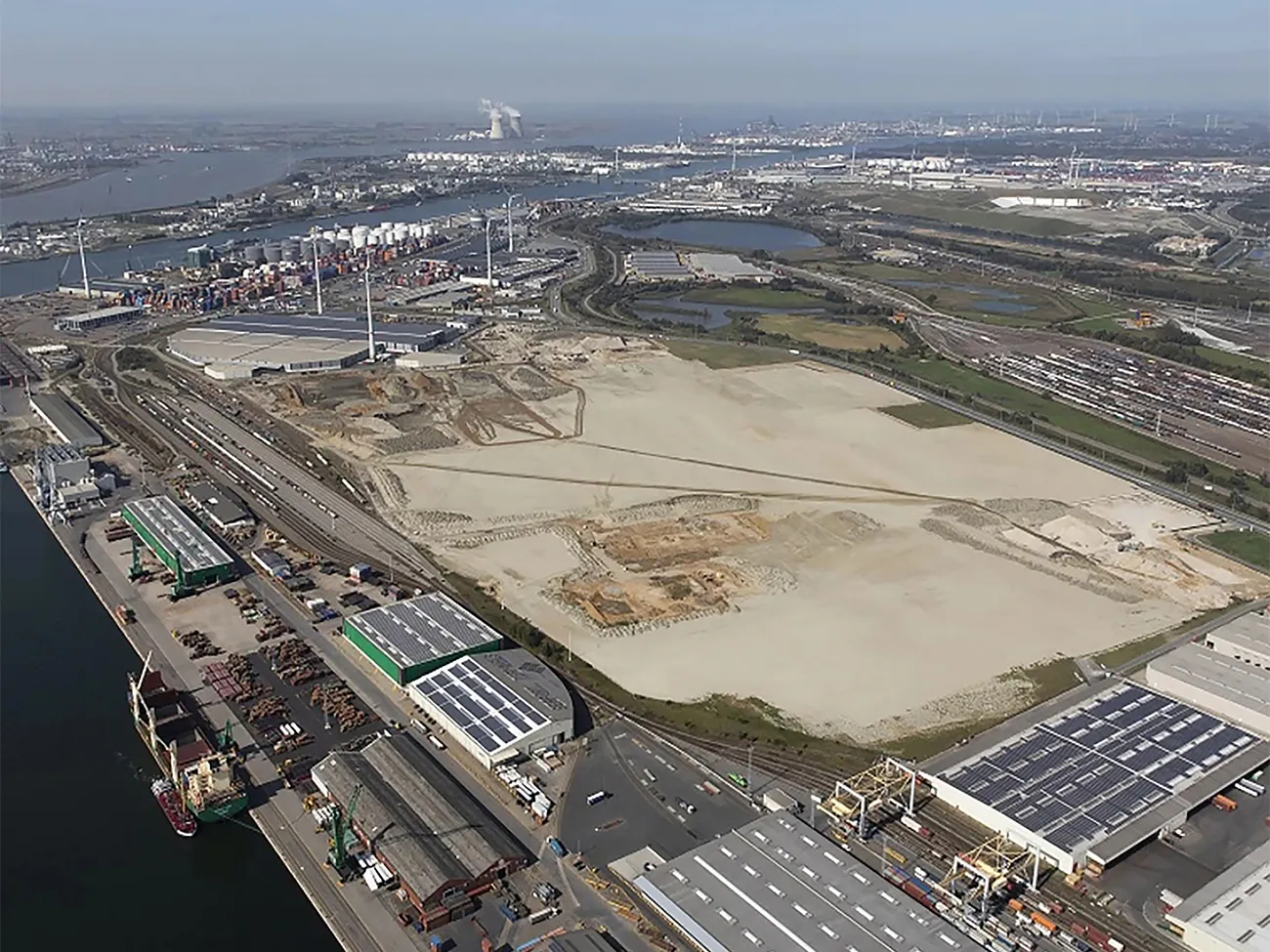
Under the name NextGen District, Port of Antwerp-Bruges is developing a hotspot for companies in the circular process and manufacturing industries on the former General Motors site. In doing so, the port authority aims to contribute to the transition to a climate-neutral society. Witteveen+Bos was appointed to develop a geotechnical and infrastructure design, and also designed the layout of a demonstration site. “We focused particularly on space, flexibility and services, and on creating a thriving environment for entrepreneurship and innovation, with opportunities for people to meet,” says Roeland Van Muylder, project manager at Witteveen+Bos.
NextGen District is aligned with Port of Antwerp’s sustainability ambitions, with the energy transition and the shift to a circular economy at the top of its list of priorities. Working with industry, it is seeking to reduce CO2 emissions and switch to alternative energy sources through ambitious transition projects, including generating renewable energy, using waste heat, and introducing, storing and converting hydrogen into sustainable building blocks for the chemical sector.
Geotechnical and geohydrological considerations
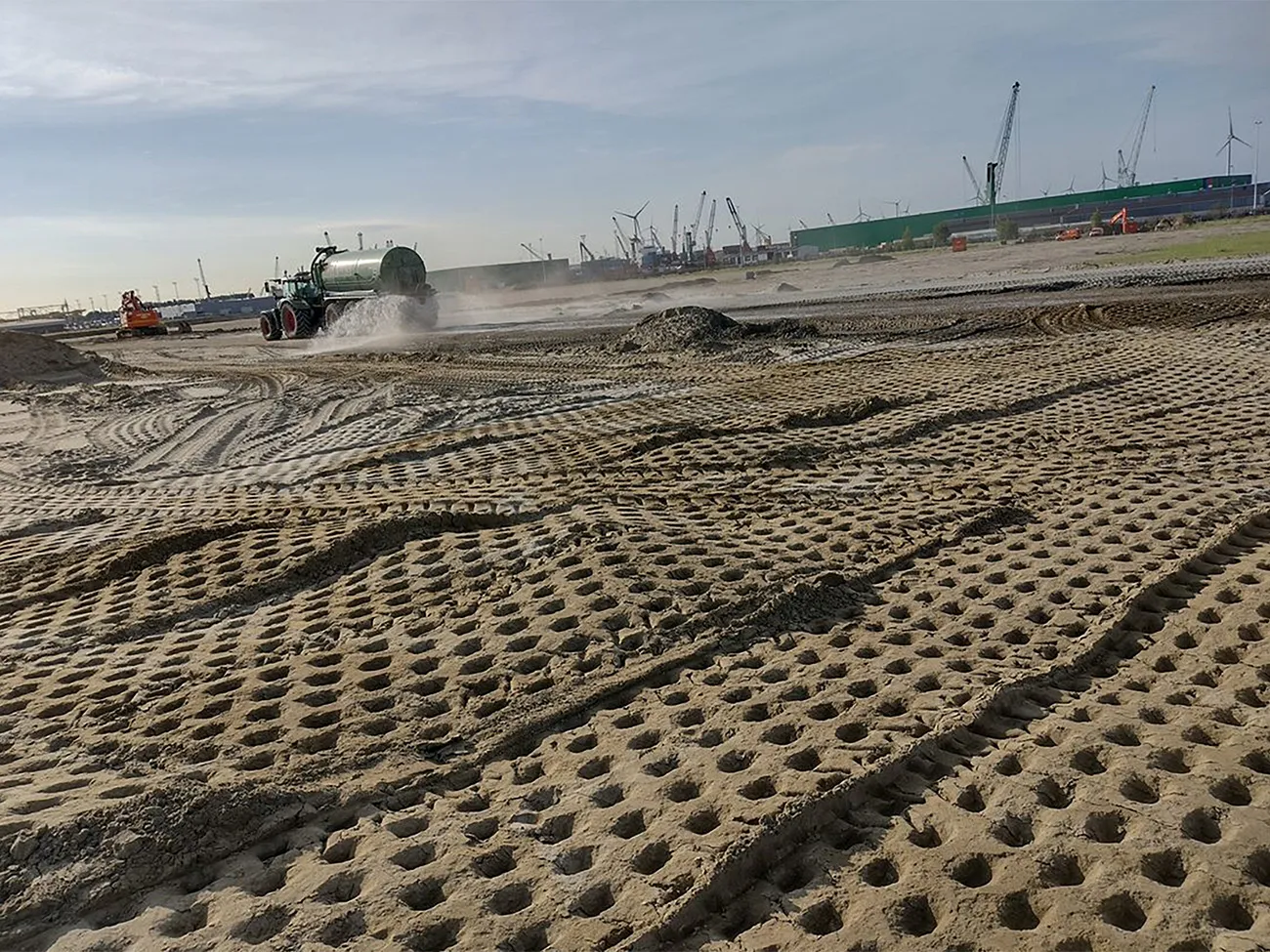
With a strong focus on themes such as the energy transition, climate adaptation, flood risk, healthy cities, the circular economy and large-scale infrastructure replacement, Witteveen+Bos positions itself as the ideal partner for these complex challenges. In the first phase, the consultancy focused on the geotechnical and geohydrological aspects. “The starting point was to make the entire area ready for development,” says project leader Sebastiaan Gerhartl, who was responsible for this part of the work. “When we started, the site had just been demolished. Surplus soil from other projects run by the port authority was being stockpiled on site. The area was then divided into two zones: a priority zone for development, and a reserve zone for additional storage, serving as surcharge loading. Both zones presented major geotechnical and geohydrological challenges, as well as solutions to be found.”
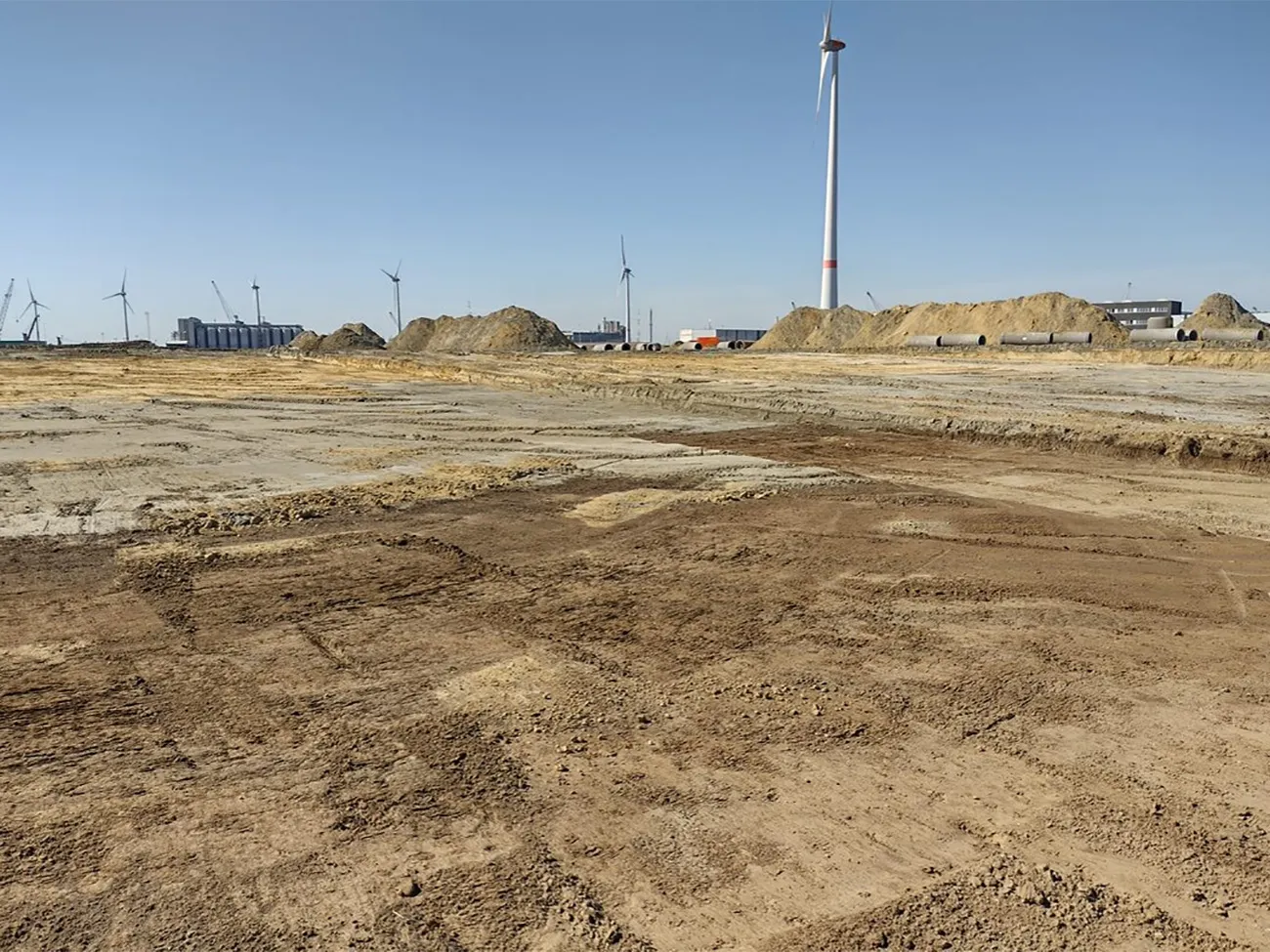
The study into preparing the site for development was completed in early 2021, when the environmental permit was granted. Sebastiaan Gerhartl says: “The study itself was not the biggest or most complex task and took a few months, but it covered a huge area of around 88 ha. In total, we are talking about adding around 1 million cubic metres of soil. Ground parameters and groundwater levels were not known across the entire area, which put pressure on estimates of the costs involved in preparing it for development. In consultation with the port authority, we carried out a cost and risk assessment and optimised the site as far as possible, including by developing a monitoring plan to continuously detect settlement and subsidence. This means that, if necessary, measures can be taken quickly in specific locations. This strategy helps reduce the costs of ground improvement while mitigating the risk of settlement exceeding the specified limits in locations where ground conditions prove less favourable.”
Circular and sustainable basic infrastructure
Once the site was ready for development, Witteveen+Bos began designing the basic infrastructure. This was no easy task, as it was not yet clear which companies would set up at NextGen District. “The design therefore had to be flexible,” says Mark Schraets, infrastructure project manager at Witteveen+Bos. “We had to prepare a detailed design for the roads, all utility services and landscaping. It is important that future businesses can connect to all the utility lines, and we also had to take everything into account in terms of access, transport and the connection to Noorderlaan. We also handled the environmental permit application, and our brief included supervising and managing the construction work.”
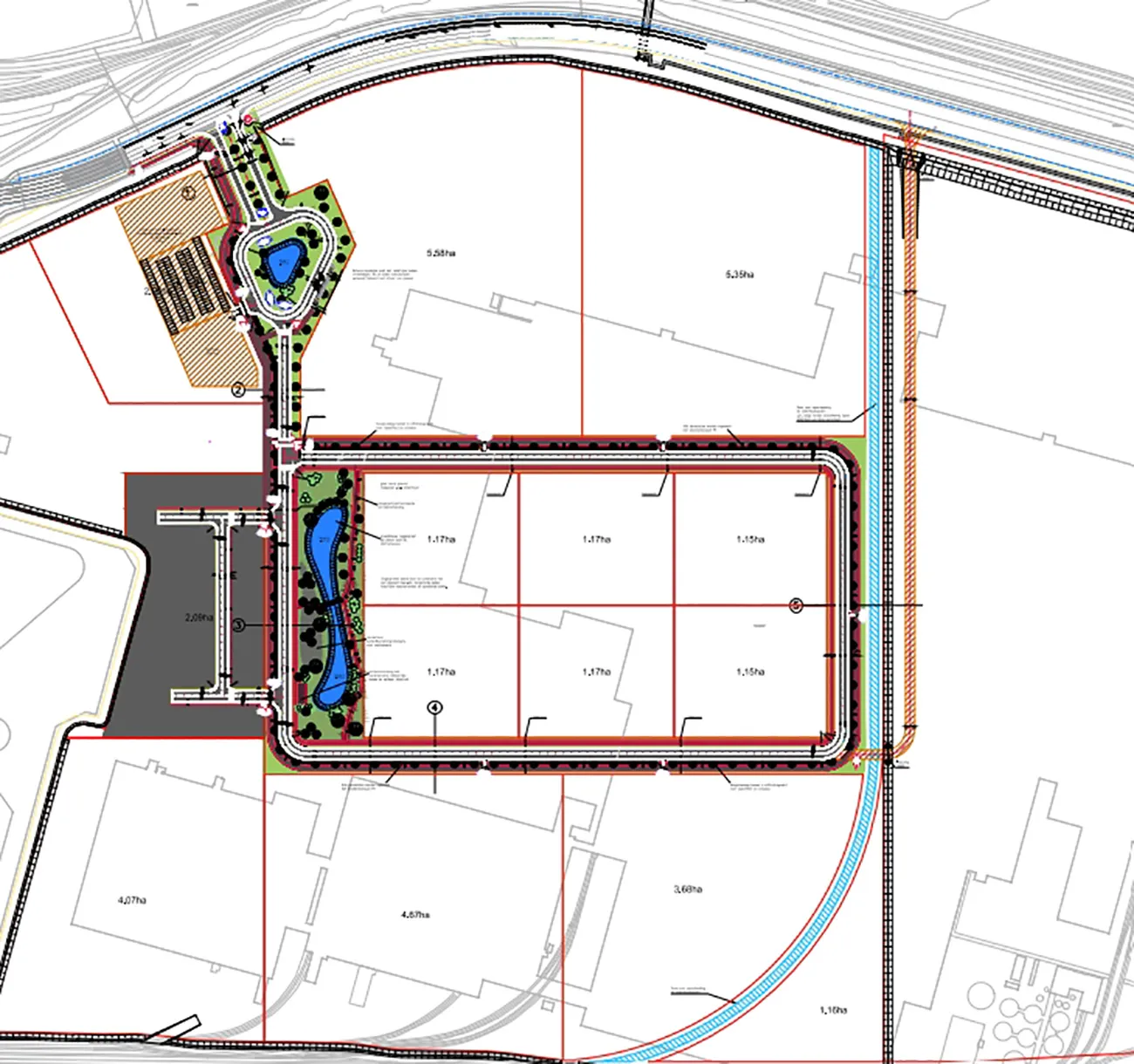
A landscape design was also drawn up with the sustainable businesses that will be based on the site in mind. Mark Schraets says: “Sustainability was one of the award criteria in the tender. Key considerations included minimising the number of utility lines, using infiltration ditches and rain gardens, and providing plenty of plants and trees. Provision was also made for outdoor recreational facilities, such as walking paths and a water feature. The design includes a connection to Noorderlaan, as well as a bus stop and cycle paths throughout the site. All of this is intended to support sustainable transport. The circular economy is another recurring theme.
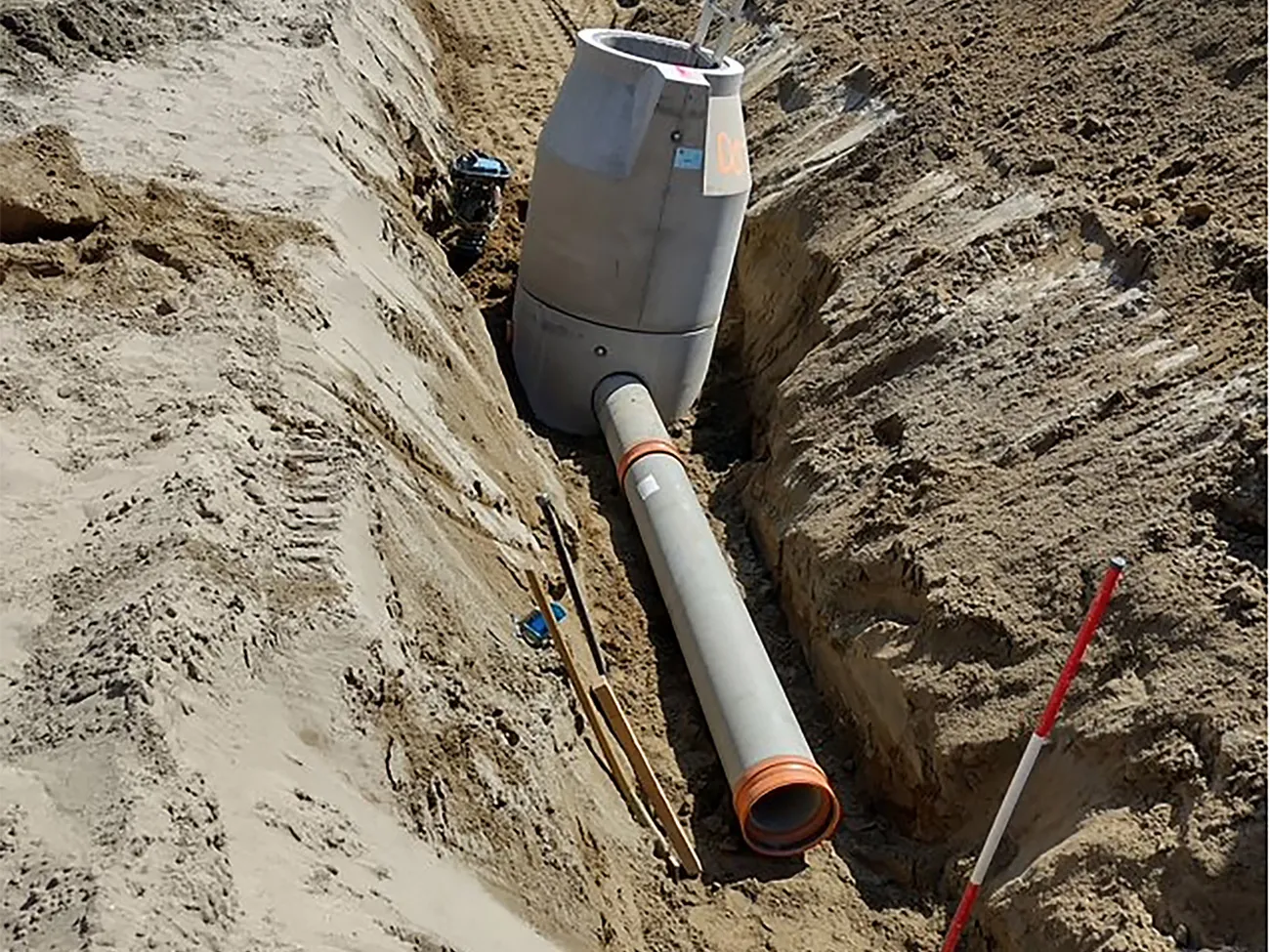
This means limiting the use of primary raw materials, opting for a road structure with a long service life, and reusing concrete rubble from the demolished General Motors buildings. The contractor was also subject to requirements relating to CO2 emissions. Another example is the use of sulphur concrete pipes for the sewer system.”
Demonstration site
In addition to the geotechnical and infrastructure design, Witteveen+Bos also took responsibility for designing a pilot site. “The client calls it a demonstration site,” says project manager Roeland Van Muylder, who was responsible for this part of the work. “How do you lay out a circular business park for sustainable pilot businesses? What factors will attract a start-up to the Port of Antwerp? And how far should the client go? Those were the key questions. Port of Antwerp-Bruges is a client with a clear vision, ambition and strategic direction. Witteveen+Bos, in turn, has the experience and expertise to turn that vision into a concrete plan. Getting everyone on the same page is always a challenge, but our expertise also plays a unifying role in that process.”
Roeland Van Muylder says: “In this project, we focused particularly on space, flexibility and services, and on creating a thriving environment for entrepreneurship and innovation, with opportunities for people to meet. This ‘softer’ infrastructure is at least as important as the more technical, physical infrastructure on sites like this. For Witteveen+Bos, this project is a perfect showcase for our strengths: translating the Sustainable Development Goals into practical design tools for use in projects. We always start by considering the client’s needs as fully as possible, then draw on our knowledge and expertise to provide an appropriate response, incorporating all aspects of sustainability as understood in 2022. In this way, we aim to deliver projects with a lasting impact and social relevance.”
Question about this story? Ask your question
Keep following this
Get an email when a new story is published. No account needed.
- SubjectGeneral







