









Successful depaving with planting substrates
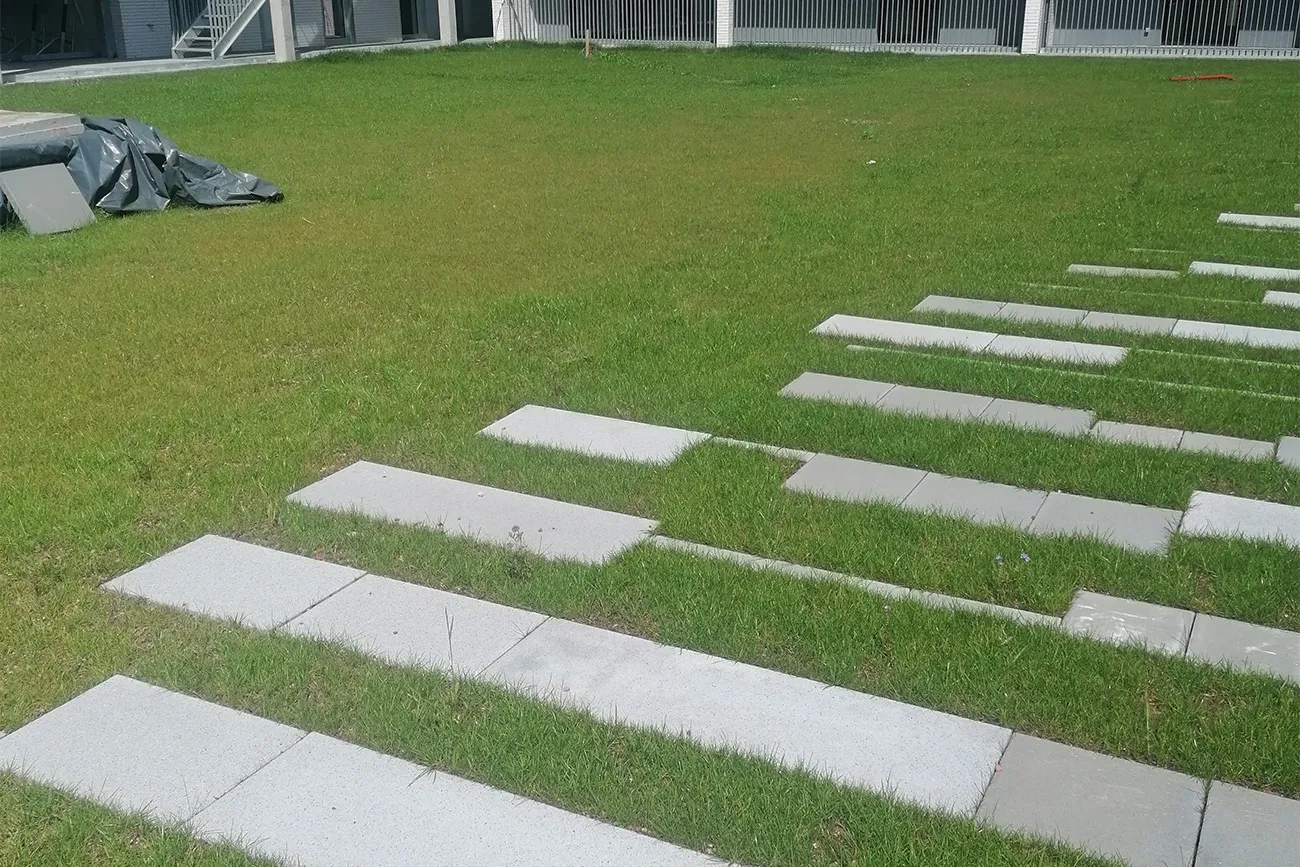
The importance of depaving is growing all the time. Every measure taken by local authorities and private individuals to make public spaces, homes and gardens more climate-resilient makes a difference. In this context, the Flemish government also launched the Vlaams Kampioenschap Tegelwippen, encouraging everyone in Flanders to remove as many paving tiles as possible. But what comes after the paving is lifted? What are the sustainable, high-quality and attractive alternatives? “Permeable paving is on the rise, but the greenery between the paving is often still treated as an afterthought. We offer the ideal technical solutions for this,” says Bart Geerts, managing director of Acterra, which produces TerraViva® substrates.
Planting substrates are indispensable for ensuring the long-term sustainability of green spaces. Bart Geerts explains: “Depaving is absolutely important, but it only becomes a success when it is easy for the user to use and maintain. You can lift the paving on your driveway, but of course something sustainable needs to take its place, and this is still too often overlooked. We have the necessary expertise and offer ideal technical solutions for applications such as a trafficable lawn. Acterra develops various patented products for trafficable lawns, ranging from grass pavers for intensive use to gravel lawns for occasional use. Our range also includes various solutions for green joints using flower mixes or microclover.”
Sustainable products
With its TerraViva® planting substrates, Acterra focuses primarily on trafficable lawns and underground growing spaces for trees in urban areas. Bart Geerts explains: “Guided by the philosophy of a green living environment, we have developed a number of sustainable products that closely align with it. Alongside a grass paver mix for grass pavers and gravel lawns, we also offer bedding substrate and foundation substrate. A sound foundation and a vigorous grass paver mix are essential for a lasting green result. It all starts with a good base.”
An alternative to grey
A green living environment remains an important priority. Green alternatives to existing ‘grey’ applications are increasingly sought. Grass pavers, for example, are used when building car parks and driveways. Their high load-bearing capacity makes them suitable for intensive use, while the grass adds more greenery to urban environments. Bart Geerts says: “Over the years, our trafficable lawn mixes have evolved from monotonous grass cover to composite mixes made up primarily of plants that can withstand foot traffic. In response to accelerating climate change, wadis and permeable paving have become essential approaches to designing public spaces. There is also growing awareness among private homeowners that they can do their bit.”
As well as adding greenery to the living environment, TerraViva® products also help to provide effective water storage. The benefits are numerous: a weed-free green space within just a few weeks, high water storage capacity, suitability for heavy loads without rutting, ease of installation, environmental benefits, no need for seedbed preparation, good germination and long-lasting growth, a high level of acceptance among local communities, ample space for root growth, and protection for the crown of the grass plant within the paver.
Crucial solutions
According to Bart Geerts, the importance of sustainable greenery in the broader context of depaving is still too often overlooked: “We are positioned right between the concrete producer on the one hand and the landscape contractor on the other. As a result, we risk falling through the cracks, even though our technical solutions are crucial to a sustainable and therefore successful project. Our substrates ensure ease of use in a sustainable way,” concludes Bart Geerts.
Question about this story? Ask your question
Keep following this
Get an email when a new story is published. No account needed.
- ThemeSpace for water and green infrastructure
- SubjectGeneral







