









Seagrass meadows protect coasts and mitigate climate impact
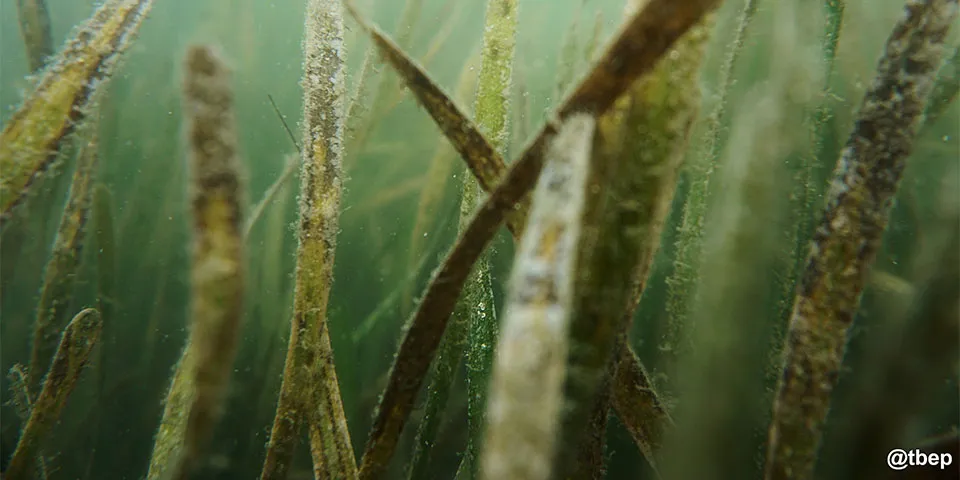
UGent, Jan De Nul, DEME and CCMAR innovate with ‘PLANT a Million sEagrasses’
With support and collaboration from Jan De Nul Group, DEME Group and the Portuguese marine institute CCMAR, UGent has received a Baekeland mandate for its doctoral study ‘PLANT ME’. This research into the sustainable protection of vulnerable coastal areas focuses on the use of seagrass. Seagrass is declining worldwide as a result of poor water quality, plant diseases, climate change and coastal erosion. With the innovative ‘PLANT ME’ project, the research team aims to help restore this ecosystem by developing a new seagrass planting technique.
The research partners UGent, Jan De Nul Group, DEME Group and CCMAR are combining their expertise as researchers and marine contractors to give the planet’s biodiversity a helping hand. The partners are also collaborating on the Coastbusters project, a research project focused on a nature-based form of coastal protection. The ‘PLANT ME’ concept originated here, with a focus on protecting coastal stretches by planting seagrass meadows.
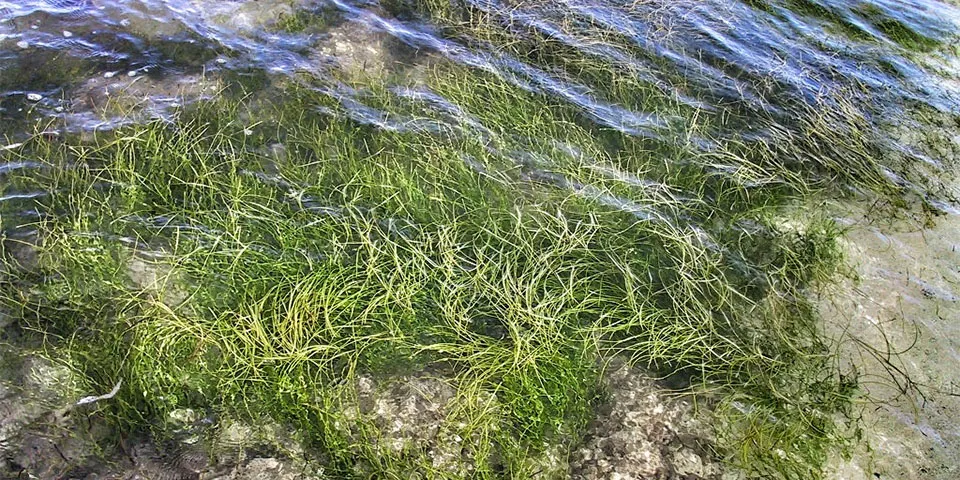
For decades, seagrass meadows have been disappearing at an alarming rate as a result of poor water quality, plant diseases, climate change and coastal erosion. Yet seagrass meadows are vital to shallow marine coastlines: they provide a habitat for a highly diverse range of underwater fauna and flora, and capture more CO2 than rainforests. Seagrass also causes waves to lose up to 75% of their force, significantly reducing erosion.
With ‘PLANT ME’, the researchers aim to help restore this valuable coastal ecosystem by developing a new seagrass planting technique. The main advantage of this method is that it is inexpensive to produce and the materials used are biodegradable. The new technique makes it quick and easy to establish new seagrass meadows on the seabed in shallow waters.
Emile Lemey, Project Development Engineer at Jan De Nul Group: “Seagrass is one of the most important crops in the sea. It provides shelter for young fish and protects the seabed on which it grows. With ‘PLANT ME’, Jan De Nul aims to contribute to the preservation of this valuable marine ecosystem by researching new growth and planting techniques.”
Tomas Sterckx, project manager at DEME: “As part of our sustainability efforts, DEME aims to build and revitalise ecosystems at sea, along the coast, in inland waters and on land, alongside a broad range of nature-based solutions. This initiative is a perfect fit with our own sustainability goals, and we want to make full use of our expertise to support this innovative project.”
Riccardo Pieraccini, PhD student at UGent: “Seagrass is found in every coastal region on every continent except Antarctica. Seagrass meadows create unique habitats that support the biodiversity of our coastal ecosystems, benefiting both people and wildlife. Seagrass acts as an ecosystem engineer, stabilising the seabed and reducing coastal erosion. The ambitious mission of the ‘PLANT ME’ project is to reverse the loss of seagrass ecosystems by developing an innovative, large-scale restoration technique based on natural, biodegradable substrates planted with seagrass.”
Aschwin Engelen, researcher at CCMAR: “This unique collaboration between science and industry is focused on developing new sustainable techniques for seagrass restoration that can be applied on a large scale. The project will make a significant contribution to the restoration needed in these seagrass meadows and coastal marine biodiversity.”
Nature-based solution
Climate change and coastal erosion pose major challenges. ‘PLANT ME’ is part of a new wave of research into innovative solutions for protecting coastlines sustainably and efficiently. In the past, breakwaters and dykes were built, but in many cases these disrupt the natural supply of sand. Today, scientists are working on solutions that also involve nature: nature-based solutions. Elements provided by nature are used in innovative, sustainable and resilient ways to protect nature itself. This not only protects people, but also promotes biodiversity where land and water meet.
Future-proof and aligned with the Sustainable Development Goals
The ‘PLANT ME’ project is one of a series of projects driving industry to innovate and develop future-proof, sustainable solutions for a better world. The United Nations Sustainable Development Goals provide a valuable framework for this work. With ‘PLANT ME’, the research team is contributing to a set of goals focused on climate and biodiversity. The project also brings academia and industry together to achieve tangible results.
Question about this story? Ask your question
Keep following this
Get an email when a new story is published. No account needed.
- SubjectGeneral







