









Safety starts with awareness and control, rarely with a protocol
Rules, procedures and agreements lay the groundwork. But on site, the difference often lies elsewhere. In sightlines that are just not quite right. In an operator who has to turn to keep an overview. In a colleague standing too close to a moving load because the work simply has to continue. Many risks do not arise from unwillingness, but because people in a dynamic environment are constantly having to balance production, time pressure and changing conditions.
Every metre counts where the pressure is on
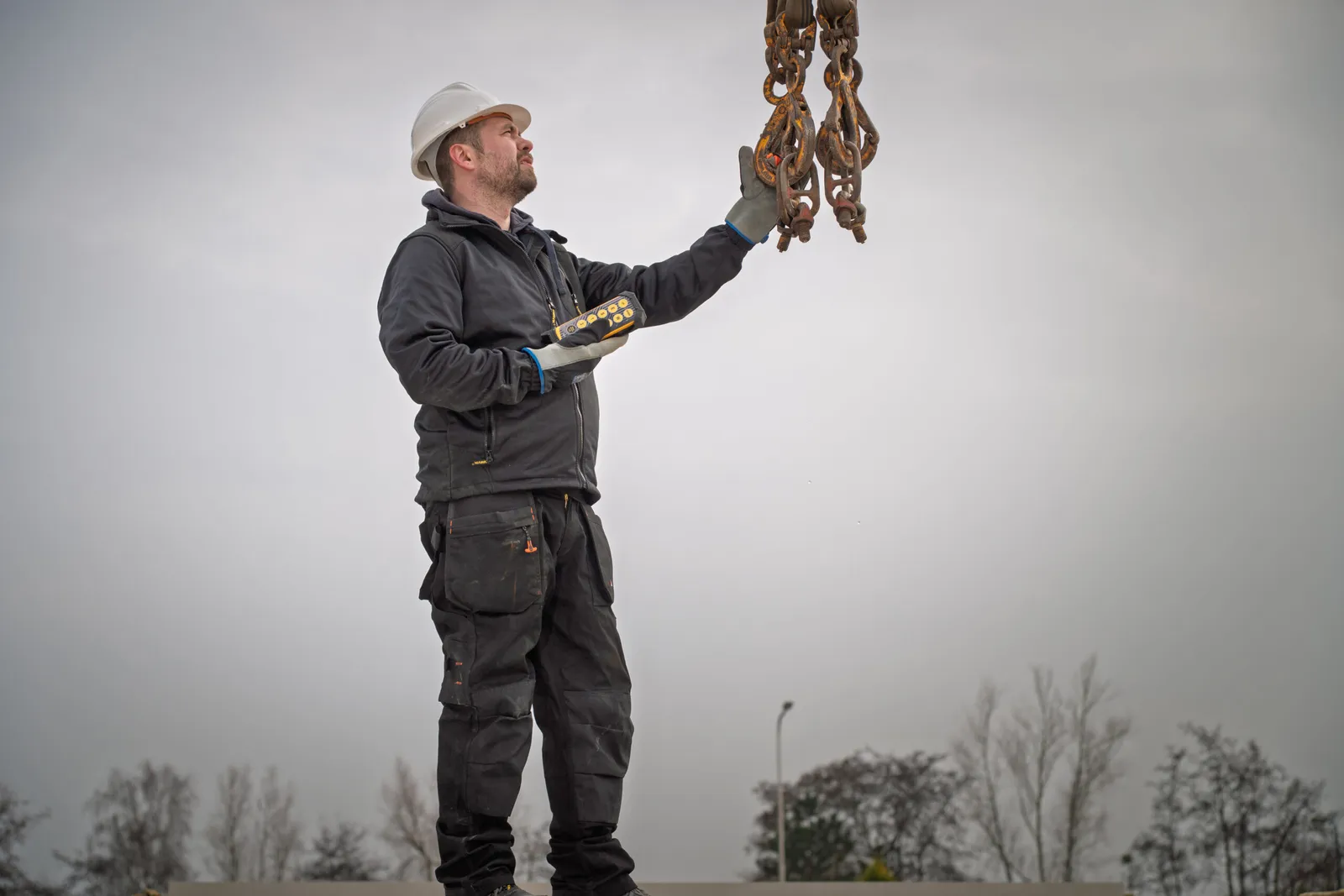
In practice, even small distances can make a big difference. Anyone who has to stand next to a machine, lifting operation or loading arm is automatically closer to potential hazards. At the same time, operators need to stay in control of what is happening. This tension is common across the infrastructure sector: close enough to work accurately, far enough away to work safely. So the question is not just how to work faster, but also how to give people a better overview without needlessly putting them in danger zones.
Better visibility is often the first safety gain
The working environment often becomes safer as soon as operators can choose where to stand, rather than being stuck in one position. When they can move freely, they can see more of the load, the machine and the surrounding area. This not only helps them work more safely, but also make calmer decisions. Less correcting, less shouting, fewer misunderstandings. In a sector where communication sometimes has to compete with noise, traffic, mud and time pressure, this is no luxury, but a practical way to manage risk.
Smart controls make working practices safer
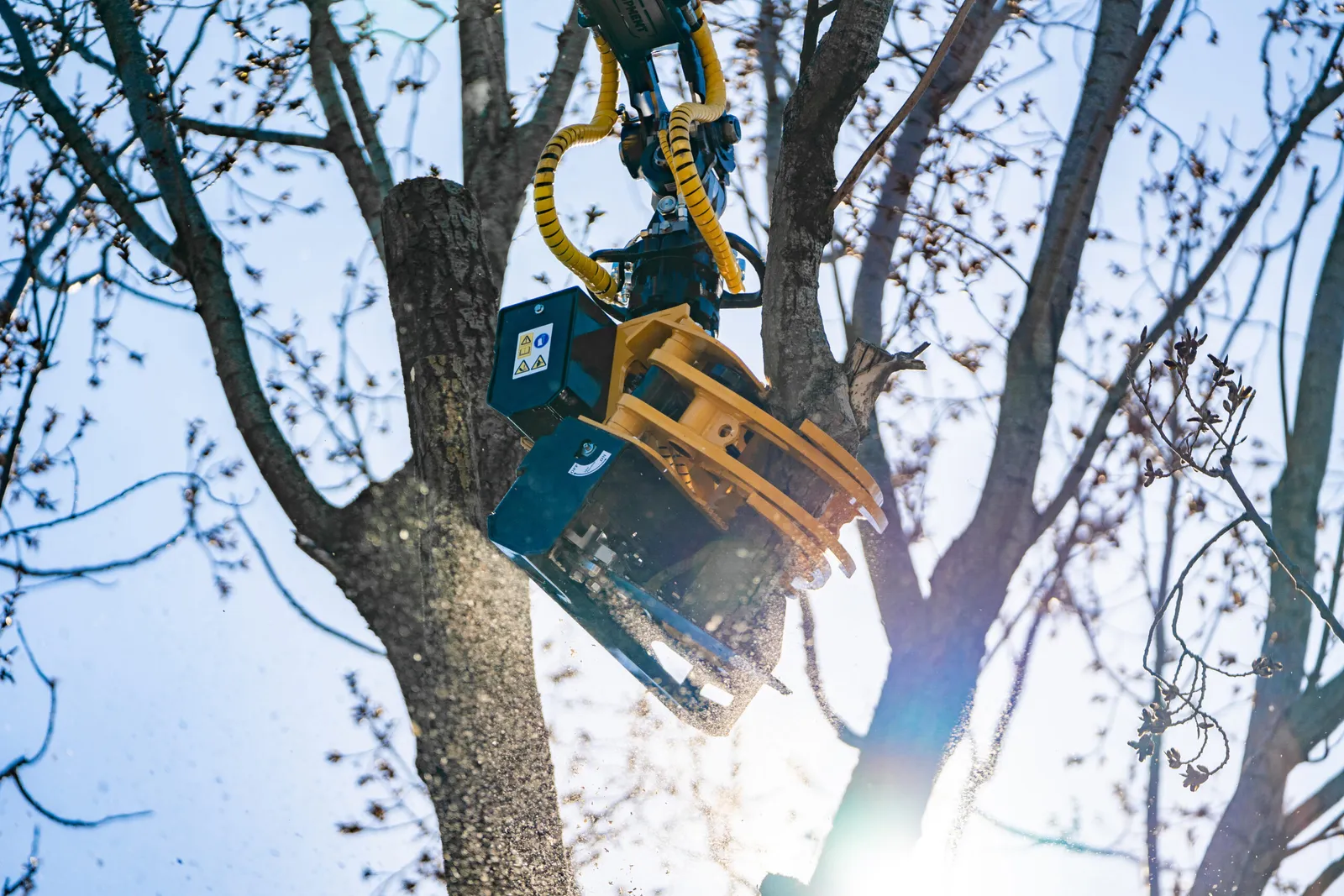
That is why control technology is playing an increasingly important role in safety. Not as a substitute for skill, but as a way to help that skill come into its own. Radio remote control helps operators maintain an overview and stay in control, reducing the difference between success and failure. When a worker no longer has to stand physically at a control panel or right next to a machine, it creates space, both literally and figuratively. Space to see better, keep a greater distance and carry out tasks with more control, even when the situation is complex or hard to read.
Technology should feel intuitive
The value lies not only in range or durability, but above all in the way technology supports safe working practices. A system should be intuitive, respond reliably and prevent operations from being triggered unintentionally. This is where some interesting developments are taking place. Tele Radio, for example, is increasingly focusing on solutions that bring safety, ease of use and flexibility together. Not with claims that go beyond what happens in practice, but with technology that better supports the work itself, especially in demanding conditions.
Tele Radio’s PAQ combines freedom of operation with control
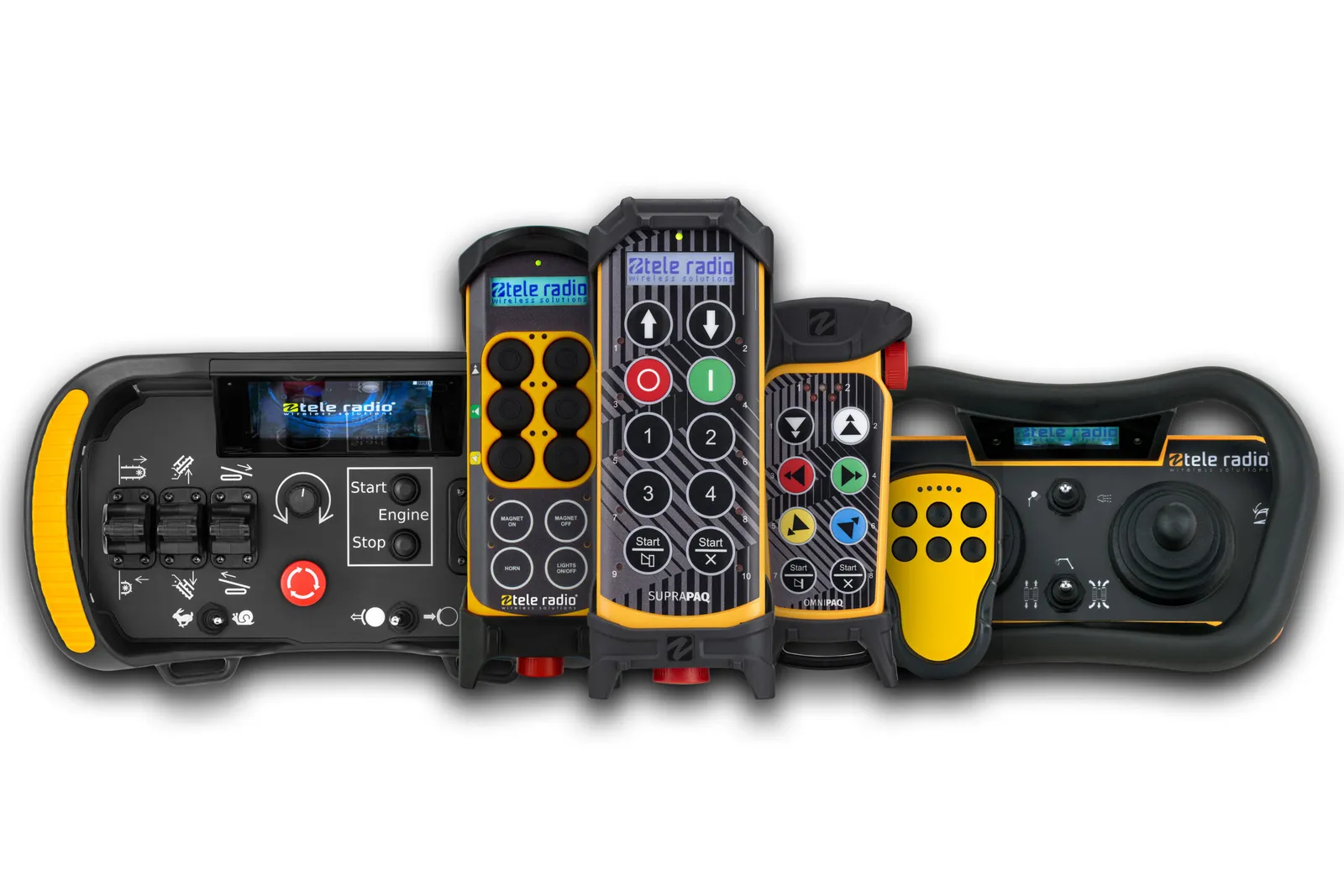
A good example is PAQ: hand-held transmitters developed for situations where freedom of operation and control need to go hand in hand. The range offers not only robust hardware, but also features that support management and safety in day-to-day use. These include the hand-held transmitter’s various functions, radio communication, plug-ins and security, each operated by its own processor so customer-specific software can never affect vital components; and assigning user permissions via RFID, so only certified personnel can operate certain machines or carry out specific tasks.
Safer working when technology works with you
What is interesting about systems such as PAQ is that they present safety not as a standalone feature, but as an integral part of the operating experience. Some models in the PAQ range, for instance, feature tilt and drop detection. These choices may not be immediately visible on the outside of a remote control, but they do affect how safely and predictably a system behaves. And that is often precisely what makes the difference between operating equipment and working with genuine control.
The wider lesson for many businesses
For many businesses, there is a broader lesson here. You work more safely when you look not only at people’s behaviour, but also at the conditions in which that behaviour takes place. Where is someone standing? What can they see? How close are they to moving equipment, a load or a machine? And does the technology help reduce risks, or does it create extra steps? Tele Radio would be happy to discuss with you the role wireless control can play in operating your plant and machinery more safely.
Have a business enquiry for Tele Radio? Get in touch
Companies in this story
Keep following this
Get an email when a new story is published. No account needed.
- SubjectGeneral
- CompanyTele Radio







