









Rainwater regulations as a driver of creative design
Text Eva Goossens
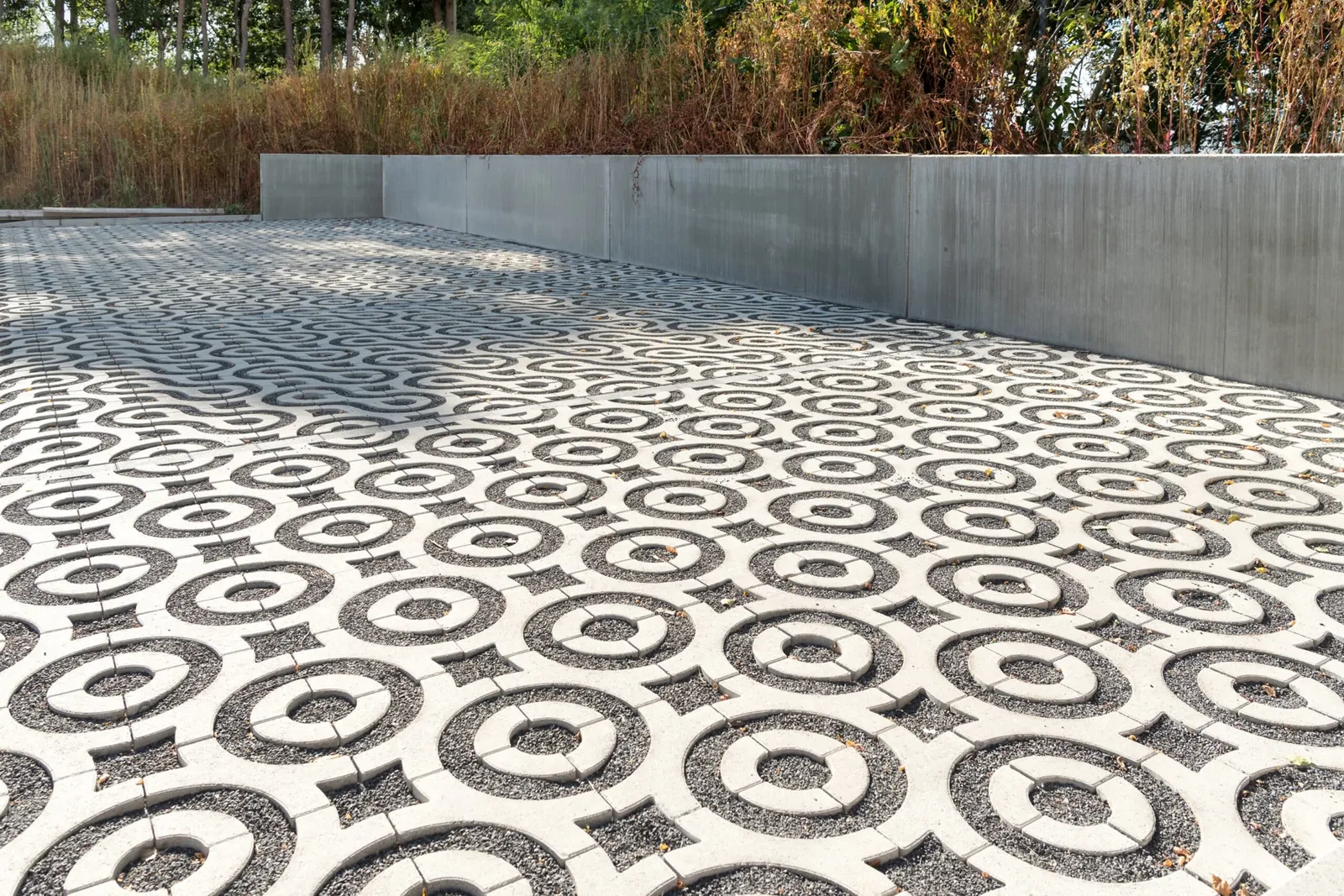
The Flemish Rainwater Regulation and stricter water-management rules are sometimes seen as a brake on creativity, as if design and sustainability were inherently at odds. Yet practice proves otherwise. There are now many paving alternatives that convincingly combine functionality, sustainability and aesthetics. An architectural look at water-permeable and permeable paving in 2025.
For architects, the regulations present a technical challenge, both in public spaces and at residential scale. When installing a new driveway, patio or car park, and often when resurfacing or extending one, sufficient infiltration capacity must be provided on the site itself. With weather conditions becoming increasingly extreme, managing rainwater thoughtfully is more urgent than ever. Alongside traditional solutions such as gravel, chippings and conventional grass pavers, there are now systems that also offer architectural value in terms of aesthetics.
Water-permeable pavers
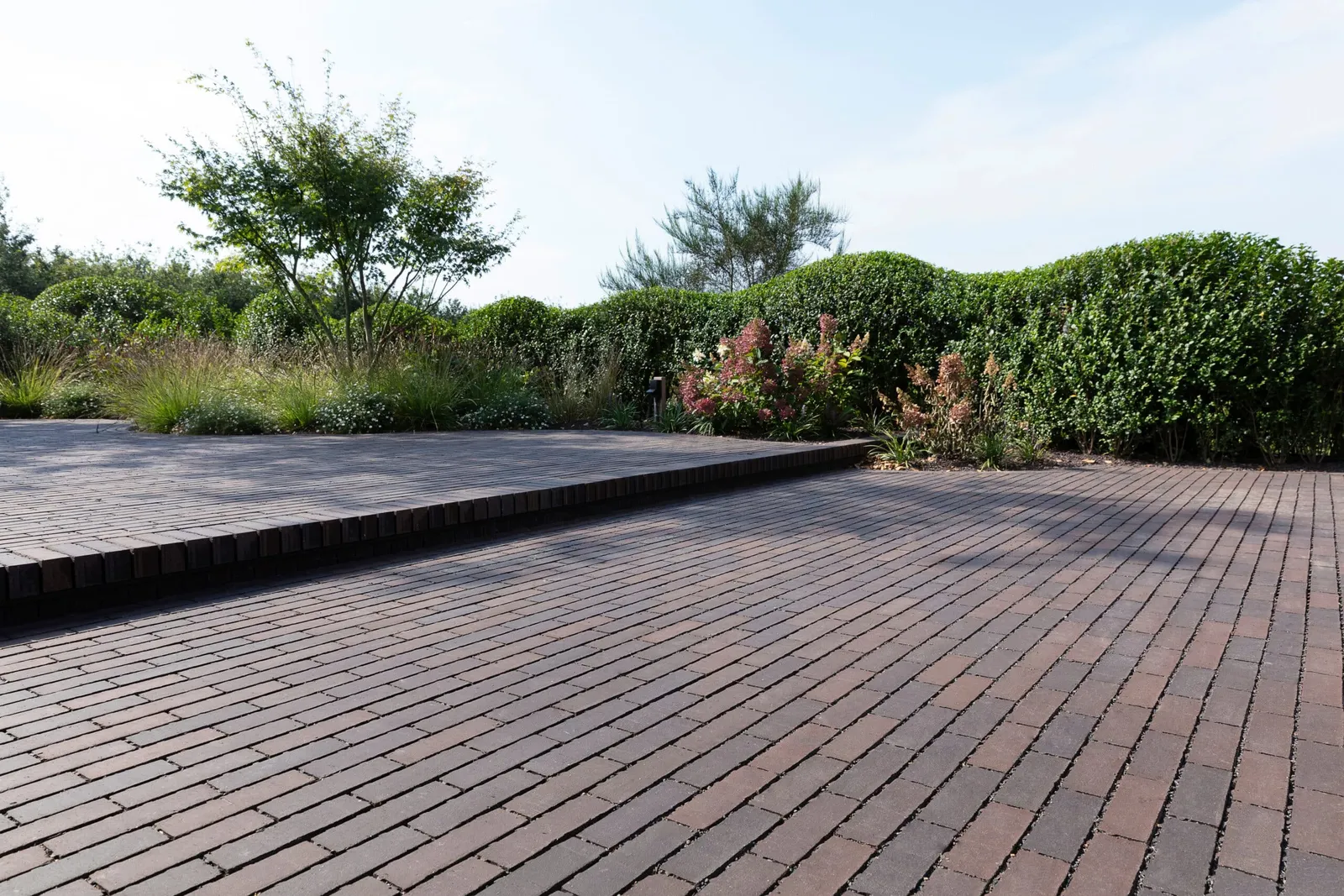
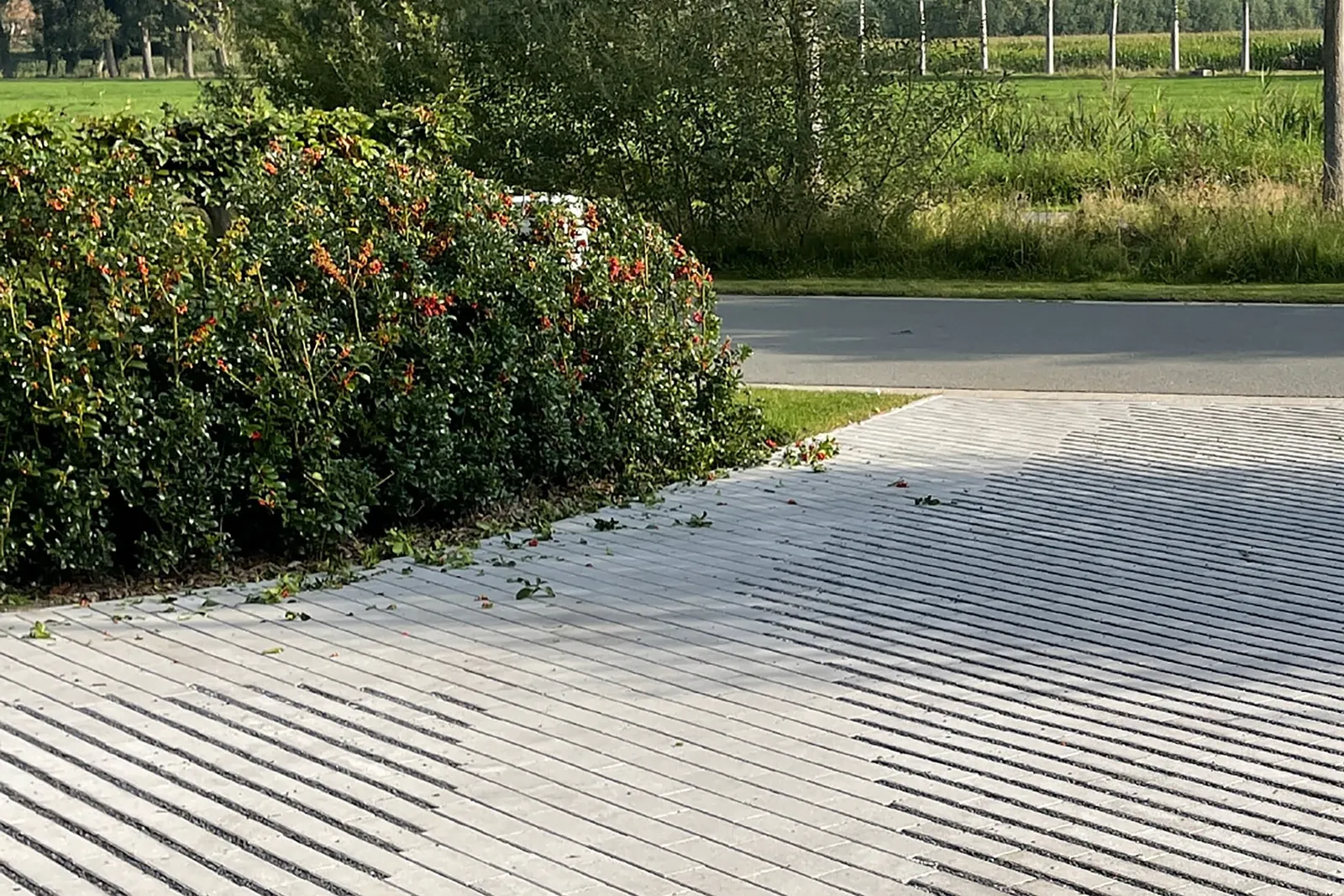
The average Fleming remains attached to block paving for driveways. The alternative is water-permeable versions with integrated spacers, combined with a permeable sub-base. They are now available in concrete and authentic clay pavers, in a range of sizes and colours. The range is also evolving in response to demand for aesthetics and sustainability. Lower clay pavers, which require less material and therefore reduce both the environmental footprint and the cost, are now on the market. When resurfacing an existing block-paved driveway, path or patio, reusing the pavers is, of course, the most sustainable choice.
Loose spacers can also be used to lay reclaimed pavers correctly, keeping the joints sufficiently open to meet Flemish infiltration standards. The size of the paver is an important factor. The larger the paver, the fewer joints there are per square metre, and therefore the smaller the open area available for water infiltration.
Creative patterns
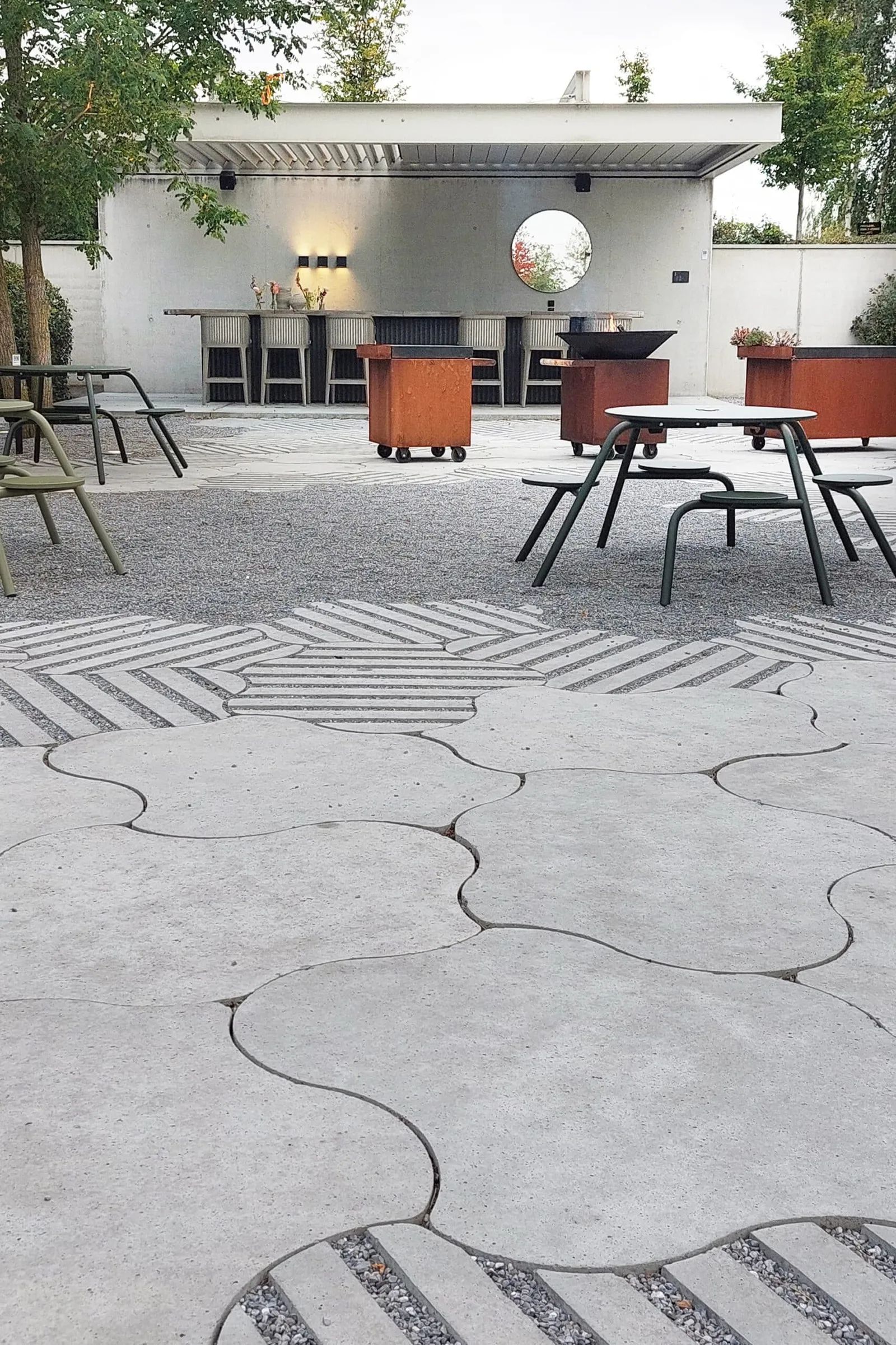
Water-permeable and original? The two go together perfectly. Alongside pavers, there are various concrete elements and grass pavers that lend themselves to creative patterns, including in residential projects.
This gives a driveway or patio its own character. Grass pavers are now available in versions that go beyond pure functionality and also have clear design appeal. The robust concrete structure provides load-bearing capacity, while the infill is entirely up to you: classic grass or gravel, or even herbs or clover. The result is a unique look for every project.
Aggregates with a binder
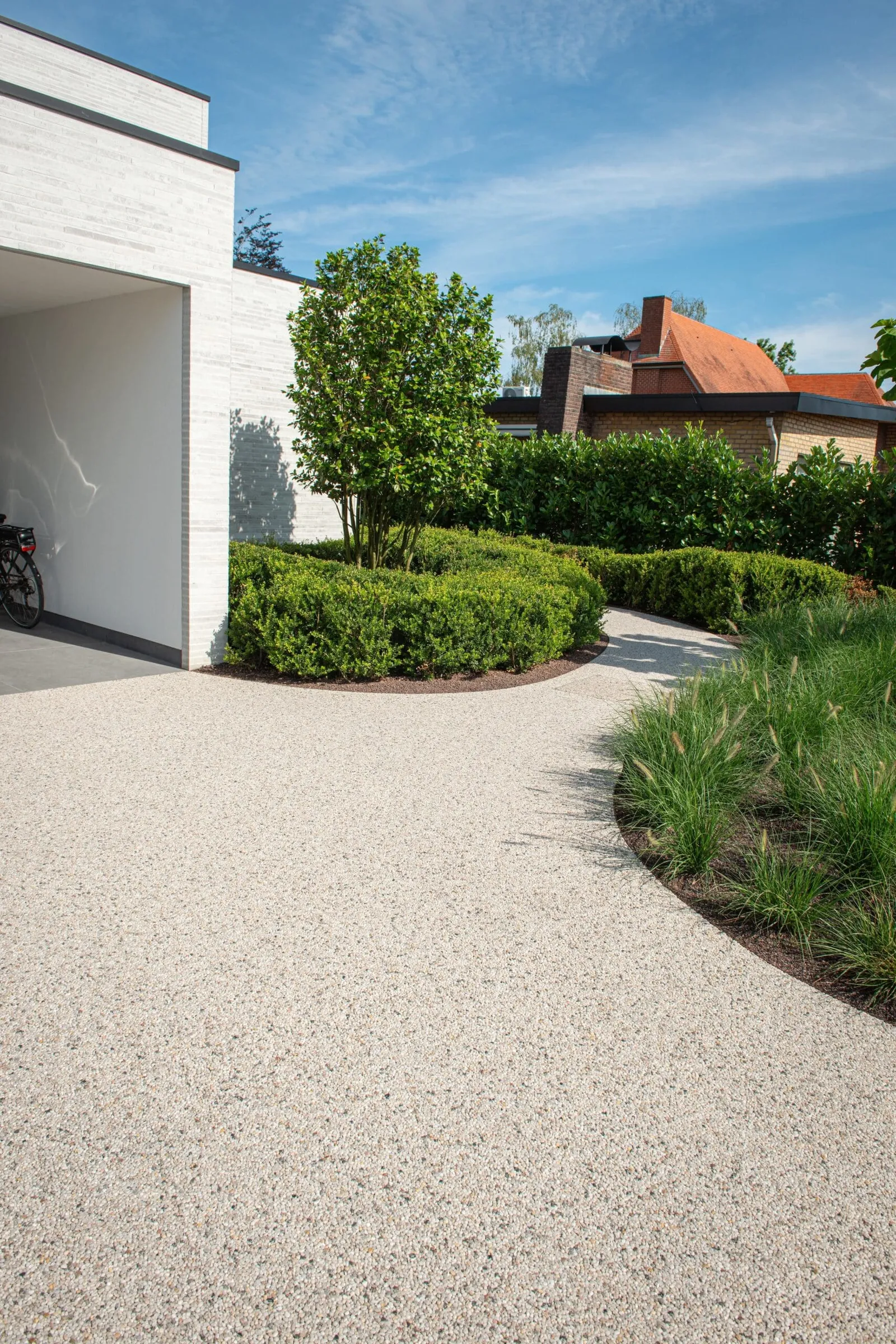
Alongside water-permeable solutions, there are also fully permeable alternatives. One example is paving made from aggregates bound together with a binder such as resin or polyurethane. The result is neither loose chippings or gravel nor a system with open joints, but a solid, even surface that still lets water through. The paving can be shaped entirely to suit your requirements: seamless, in a broad palette of colours and, if desired, with graphic patterns or even logos. Paths can follow organic lines that complement the architecture and garden. The result is an exceptionally neat paved surface that remains functional.
This type of paving also helps suppress weeds, provided it is brushed regularly or cleaned carefully. Water management thus becomes not a constraint, but a source of inspiration for architectural design that brings ecology and aesthetics together.
Question about this story? Ask your question
Keep following this
Get an email when a new story is published. No account needed.
- ThemeSpace for water and green infrastructure
- SubjectGeneral







