









PODCAST: Modular construction without limits: flexibility, comfort and sustainability in one solution
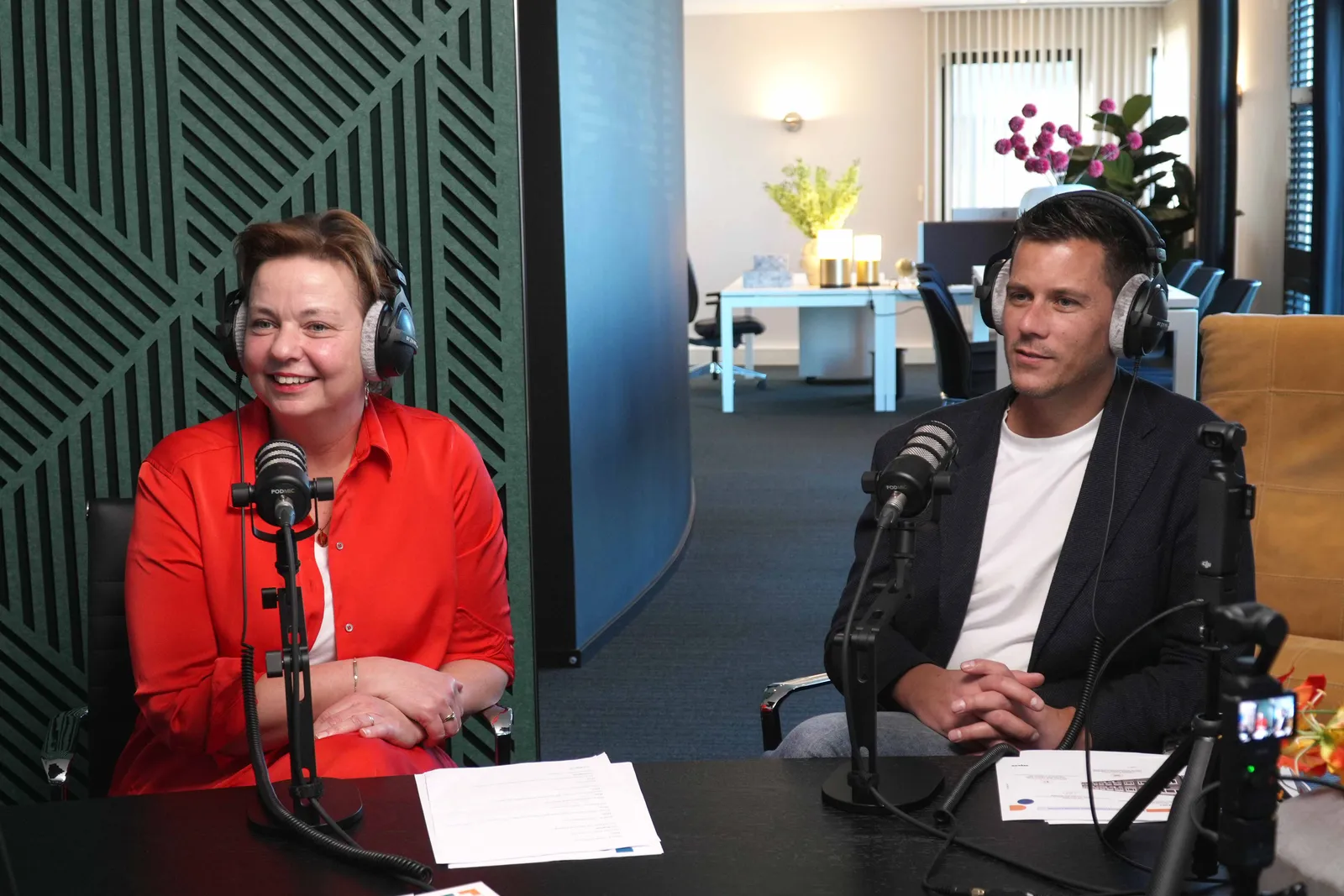
A conversation with Annemiek Glorie and Joris Billen of Algeco
Modular construction is no longer just an emergency solution. What was once seen as a temporary arrangement of containers has now become a fully fledged, high-quality alternative to permanent construction. With state-of-the-art insulation, fire-resistant solutions such as Fire-X, solar panels, ventilation systems and even pressurisation systems to keep out fine dust, modular construction is increasingly moving towards comfort, sustainability and innovation.
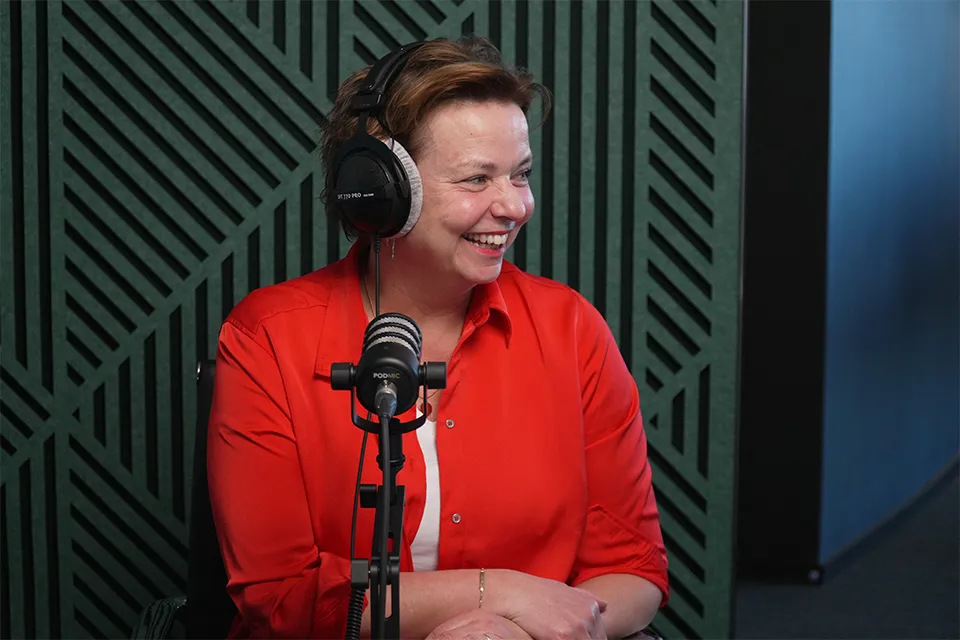
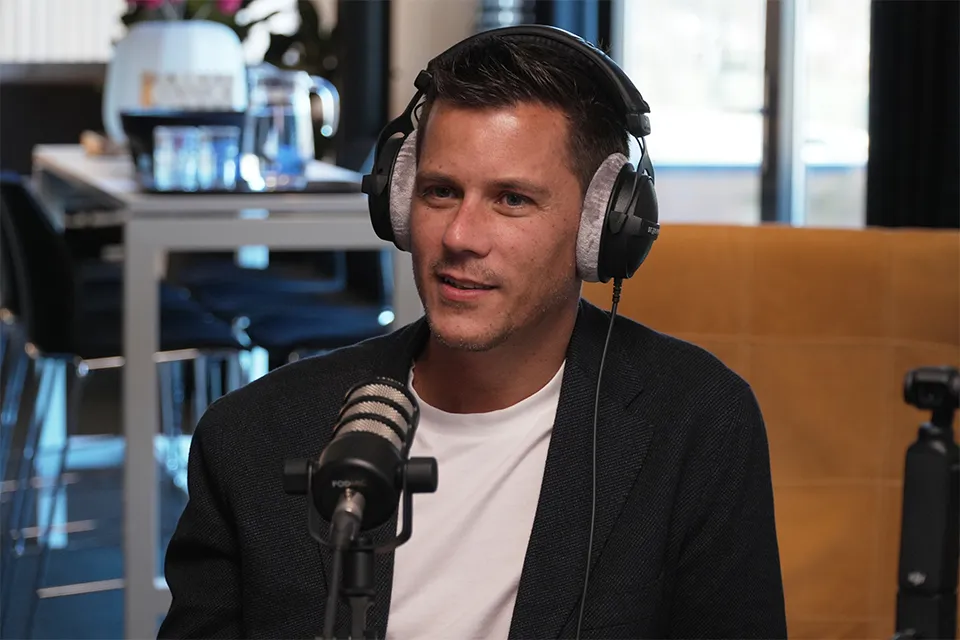
In this episode of the Louwers Mediagroep GWW podcast, host Roel Van Gils talks to Annemiek Glorie, Regional Brands Manager North at Algeco, and Joris Billen, Lead Technical Office Benelux. Together, they discuss the development of modular solutions in the Netherlands and Belgium, the impact of tighter energy regulations, the difference between renting and buying, and how Algeco is focusing on reuse, standardisation and European innovation.
One thing quickly becomes clear: the possibilities offered by modular construction are virtually endless. And the future is set to be even more ambitious.
Een zakelijke vraag aan Algeco Belgium? Get in touch
Full transcript
All chapters (21)
- Introduction and guest introductions
- Role and responsibilities at Algeco
- What are modular solutions?
- Is modular construction an emergency solution?
- Why is modular construction more relevant than ever?
- Misconceptions about modular construction
- Preconceptions about containers and comfort
- Options for rental and purchase units
- When do customers choose to buy or rent?
- Customisation and comfort
- Differences between the Netherlands and Belgium
- Technical differences and legislation
- Showcase projects and Fire-X development
- Sustainability and standardisation in Europe
- Options and tendering
- Production and service centres
- Panel cabins and sheds
- Looking to the future
- European regulations
- What should listeners remember?
- One Benelux
Introduction and guest introductions
Roel Van Gils Welcome to the Louwers Mediagroep studio in Weert. Today we’re taking a closer look at the world of modular solutions, with the future of flexible construction at the centre of the discussion. Just how flexible is modular construction? What are the differences between the Netherlands and Belgium? And why are more and more businesses, schools, care institutions and public authorities choosing this construction method? I’m joined by two special guests who know all there is to know about modular construction. Welcome, Annemiek and Joris. Perhaps you could start by introducing yourselves.
Annemiek Glorie Yes, thank you, Roel. My name is Annemiek Glorie. I’ve worked for Algeco for ten years as Regional Brands Manager North. That means I’m responsible for the three branches, both commercially and operationally. I work with Joris in this role.
Joris Billen Yes, good afternoon. I’m Joris Billen. I’ve been with Algeco for four years now. I’m responsible for the technical side of the organisation. That means I lead the technical office across the Benelux.
Role and responsibilities at Algeco
Roel Van Gils Could you give us an example, or explain exactly what that involves?
Joris Billen What exactly does it involve? We play an active part in developing new units, and wherever possible we also give the sales team full support by producing drawings and budgets. We also try to develop solutions on an ad hoc basis when we encounter problems at customer sites. It’s not just about supporting sales, either. We try to extend this to the whole organisation, particularly in the area of safety. If there are safety issues, we always try to step in and propose the most appropriate solution we can, so that we can eliminate the risks. But our work also extends to operations and other departments.
Roel Van Gils I see. That’s great, and welcome once again.
Joris Billen Thank you.
Roel Van Gils But let’s start at the beginning. If you had to explain at a birthday party what modular solutions or modular units are, what would you say?
Read the full transcriptCollapse transcript19 more chapters
What are modular solutions?
Annemiek Glorie I always start by explaining that a modular solution is something temporary and flexible. Algeco provides not just units, but also partitioning systems and warehouses. I also explain that we’re a global market leader. We operate in 25 countries, and with 180 service centres we can provide flexible accommodation to everyone in all of those countries.
Joris Billen I tend to explain it using Lego. I always say that we play with big blocks. These blocks are essentially ready-made offices or classrooms, or facilities for care institutions. They’re delivered from the factory, and we can use them to create buildings ranging from two units to 200 units. So we can offer the solutions our customers need, in terms of size, layout and finish. In short, we can provide all kinds of solutions to serve our customers as well as possible.
Is modular construction an emergency solution?
Roel Van Gils So could you see it as an emergency solution?
Joris Billen It can be used as an emergency solution. We’ve seen that recently during a number of crises, including the COVID and coronavirus crisis in Belgium and the Netherlands, when there was a great need for temporary hospitals and waiting areas for people who needed to be tested. Those were genuine emergency solutions. But I’d also like to point out that we’re seeing a growing shift towards industrial customers and schools that really need extra space. For schools, it can still be an emergency solution. But we’re also increasingly seeing permanent buildings put up using modular units. Industrial customers recognise that they may grow in the coming years, but still want to build in the flexibility to create more or less space, depending on the number of people they employ.
Why is modular construction more relevant than ever?
Roel Van Gils Joris, you said it’s more relevant than ever. Why exactly is modular construction more relevant than ever?
Annemiek Glorie Because we’re seeing demand for flexibility and temporary solutions growing in both countries, Belgium and the Netherlands. We’re seeing investment fall behind in most of the sectors in which we operate. This isn’t just about construction, but also industry and education. In particular, we’re seeing demand because people aren’t always investing in permanent premises or accommodation. So we now use the term emergency solution only for crisis situations, such as a fire or COVID. It’s much more a flexible solution, and one that’s becoming increasingly relevant.
Roel Van Gils But it is temporary, isn’t it?
Annemiek Glorie It is temporary, yes. Definitely temporary.
Roel Van Gils Is there a maximum duration?
Annemiek Glorie We consider temporary to mean anything from one week up to five to ten years. If it’s longer than ten years, we tend to call it semi-permanent. Other solutions often come into play then, beyond just the solutions we offer. Our solutions can certainly be used for longer than ten years, too.
Misconceptions about modular construction
Roel Van Gils But you see other players entering the market when something becomes semi-permanent. What are the biggest misconceptions about modular solutions?
Joris Billen The biggest misconception about modular solutions is that people think they’re cheap. They’re not a cheap solution, but they do have other advantages that more than make up for that. For example, the time we need to install a modular building is much shorter than for a permanent building. We can also guarantee quality more effectively, because modules are assembled in a factory environment, where quality can be much better controlled. It’s also easier to forecast costs. The waste generated when units are manufactured in factories is generally far lower than the waste generated when building a permanent structure. So there are much greater benefits than the main drawback, which is that it is, after all, a costly option.
Annemiek Glorie Another drawback can arise if you initially put up an emergency building or a temporary modular solution expecting to use it for two years, and you’ve reserved it for that period, but later find that you need it for four or five years. In that case, we might have offered you a different solution.
Roel Van Gils For example, buying instead of renting?
Annemiek Glorie Yes. So that can be another drawback.
Preconceptions about containers and comfort
Joris Billen One of the biggest preconceptions we encounter among customers is that they think all we deal in is containers. They’re not containers. Never call a unit a container. The level of comfort we can currently offer in the solutions we deliver to customers is often on a par with, or certainly higher than, that of permanent buildings put up here and there as an alternative.
Roel Van Gils Yes, that sounds good. Take us inside a modular unit. We’re doing a podcast, of course, but what can you expect? What are the possibilities?
Options for rental and purchase units
Joris Billen The possibilities are endless. There are two main distinctions: we have rental units and units for sale. With rental units, we’re of course bound by a number of standards we’ve set in advance. For example, there’s a fixed number of sanitary units for a given number of offices, and so on. But when it comes to a building for purchase, we always say: the sky is the limit. We can provide pretty much anything the customer wants. We also use very good insulation and the latest materials, with a strong focus on the recyclability of materials at the end of their life cycle. You name it, we can provide it in a unit. But that’s with units for purchase.
Roel Van Gils Or can you do that with rental units too?
Joris Billen With both rental and purchase units. I think one of the most recent projects we worked on was for a customer who wanted a lift in the middle of the building, with a glass staircase leading upstairs.
Roel Van Gils In a modular unit?
Joris Billen In a modular unit. So none of that is a problem. Of course, these solutions also cost a lot of money and aren’t within everyone’s reach. They’re not standard products we can offer on every project. So if a customer asks for them, we can provide them. But they’re not standard, and it’s not something we do every day.
Roel Van Gils And was that a purchase or rental solution?
Joris Billen That was a purchase solution, yes.
When do customers choose to buy or rent?
Roel Van Gils So when do you decide to buy?
Joris Billen It’s generally worthwhile to buy when certain factors come into play. One of the biggest factors, of course, is what we call capex. This is the same for many customers. If there’s plenty of capex, if there’s a lot of cash or budget available at the start of the project, they often opt to buy. If there’s no capex available, and many industrial customers depend on parent companies and are in the same situation, receiving capex and budgets only in small amounts, as Annemiek has just explained, they’re more likely to opt for rental. Why? Because that allows them to spread the investment over a longer period. The duration is certainly one of the factors involved.
Annemiek Glorie So for a rental customer, if they know it is going to last longer than two and a half years, they could also choose to request a quote for a building to buy.
Roel Van Gils Is it also possible to start out renting and then eventually switch to buying?
Annemiek Glorie That is possible. It is not something we actively offer as a matter of course, but it is certainly one of the options within the financing structure.
Joris Billen And in terms of financing, capex and so on, it is also possible to offer a leasing arrangement. That means the customer pays a monthly amount and, at the end of the term, after four, five or six years, has the option of paying a residual amount to become the owner of the building.
Customisation and comfort
Roel Van Gils You just gave an example of a luxuriously fitted-out unit. So customisation is definitely possible?
Joris Billen Customisation is possible. Unfortunately, this is a podcast, otherwise we could show you some photos or videos. But the range of what is currently possible in modular construction is remarkable. We very often hear from customers that they are amazed by the quality and comfort they get from modular solutions. Something that is very important to me too, as I have a background in construction and have spent a lot of time in modular units over the course of my career, is making sure we provide customers with that level of comfort. Why? Because people working in these modular units often spend eight, nine or even ten hours a day in one. In fact, they spend more time in these units than they do at home. So this is definitely a priority for us: we aim to provide customers with the most comfortable solutions possible.
Differences between the Netherlands and Belgium
Roel Van Gils What are the main differences between the Dutch and Belgian markets?
Annemiek Glorie I think we have the same types of customers. In both Belgium and the Netherlands, we have a lot of events, both dance and sporting events. We have those in both countries, as well as industry, education and construction. I think the differences mainly come down to the way we work here. The cultural differences are positive, but there are differences in how we approach each other and deal with customers. Looking at the enquiries we receive, we see that in Belgium’s industrial sector, demand is currently for certain high-specification buildings. In the Netherlands, the industrial sector is still at a lower level, and we mainly supply the higher-specification segment to schools, childcare centres and hospitals. I think that is one difference at the moment. We also see a difference in the pharmaceutical industry, which is much larger in Belgium than in the Netherlands.
Roel Van Gils So higher-specification means more comfort?
Annemiek Glorie Yes, more luxurious. Much more luxurious.
Technical differences and legislation
Joris Billen Exactly. But that is more my area. There are also technical differences and differences in legislation between Belgium and the Netherlands. For example, in Belgium we have EPB compliance. This means buildings have to meet certain regulations on insulation, renewable energy and so on. The legislation differs between Belgium and the Netherlands. The rules in the Netherlands are a little more relaxed than in Belgium. In Belgium, a building has to comply with EPB requirements after two years of rental or two years on site.
Roel Van Gils So it is the same as for a permanent building?
Joris Billen It is the same legislation as for a permanent building. In the Netherlands, it only applies after a period of fifteen years.
Roel Van Gils Fifteen?
Annemiek Glorie Yes. In the Netherlands, we build and install everything in accordance with the Building Decree, so we have to comply with it. In addition, for industry, we follow rules such as those set by Deltalinqs. So yes, legislation is a major difference between the Netherlands and Belgium, and sometimes a challenge for us as a company.
Roel Van Gils Are there also differences in the fit-out or insulation standards?
Joris Billen We try to use the same standard units as much as possible throughout the Benelux and across the board. The only major difference when we transport units from Belgium to the Netherlands is something very small but annoying: the socket outlets. In the Netherlands, sockets have side earthing contacts, while in Belgium they have an earth pin. So the Netherlands is more aligned with Germany, while Belgium follows the regulations in France.
Roel Van Gils So you cannot just swap them around?
Joris Billen No, it is a minor job. It does not take long to replace the sockets. I think we have about six or seven sockets per unit, so I think the whole lot can be changed in about an hour.
Annemiek Glorie But they do have to be changed, because it is crucial. You would not want to end up with the wrong ones. So electrical fittings are important.
Showcase projects and Fire-X development
Roel Van Gils Could you share a project you are proud of, or one that you would call a real flagship?
Annemiek Glorie Yes, I would like to talk about a project we completed in the Netherlands. It is a school in Soest, which we installed using a new Fire-X unit. In both the Netherlands and Belgium, demand is growing, and requirements are driving it too, for fire resistance and fire safety. We built a two-storey secondary school with a learning commons and classrooms, finished to a high standard in terms of both insulation and ventilation. Ventilation has, of course, become a major topic since the COVID period.
Roel Van Gils Especially in schools, of course.
Annemiek Glorie Especially in schools, with lots of children in each classroom. And this is temporary, for two or two and a half years, but you still need to provide comfort. After all, you have to go there every day. It is lovely to have a good learning environment. This is one of our flagship projects at the moment, and we are very proud of it in the Netherlands.
Roel Van Gils But you must have one in Belgium too, Joris.
Joris Billen I do not really have one favourite project in Belgium. I think I am most proud of the latest unit we introduced, the Fire-X you mentioned earlier. Why? Because it gives us a real asset for the future. It is a unit where we have invested heavily in insulation, as well as, and now I am getting technical, thermal breaks in the various building elements. Acoustics are very important too, and we have also focused on modular solutions within our modular units for ventilation, emergency lighting and so on. In that respect, I think we have received very positive feedback from customers on all the projects we have completed so far. They see it as a solution they would also like to continue investing in for the future. We have also added a modular package of solar panels. We can deliver them by lorry and install them on the customer's unit. It is essentially a plug-and-play system that allows us to add renewable energy to these units. That is what I am most proud of from our work over the past few years.
Sustainability and standardisation in Europe
Roel Van Gils That is a good segue into sustainability and the future. So the unit you just mentioned is your state-of-the-art, latest development, is that right?
Annemiek Glorie Yes, and this unit will be rolled out worldwide, or at least across Europe. That is a very good development when you consider sustainability. If we use the same type of unit in all those countries, we can see how much easier it will be to exchange units, putting electricity aside, how much more cost-effective we can be, and how much more sustainable it will be to use them in a different way. We are also seeing a lot of interest from the market in things like rainwater collection and greywater, so that we can move away from the solutions we often use now, with clean-water and wastewater tanks. When you consider that those tanks have to be filled, topped up and replaced every time, whereas you could use a collection system, the possibilities are endless. Anything you can think of for your home, we can eventually put in a unit too. We already use heat pumps in some situations. And at the moment, for example, we have a number of projects at Schiphol where particulate matter is a concern. We use pressurised systems in the units to make absolutely sure the particulate matter stays outside. These are real developments for the future.
Options and tendering
Roel Van Gils So as a customer, do you get a menu of options, where you can choose this, this, this and this, and it all fits into the unit?
Joris Billen Yes, that is right. But I should say that customers usually come to us with what they need. They tell us they need office space for seventy people, changing rooms for a certain number of people, and that it has to meet these requirements. Then we try to work out what is possible using the standard solutions we have available. We look at which of our products are the best fit technically and economically. Then we work with the customer to see what is and is not feasible, and try to offer them the best possible solution. But we are definitely seeing this trend in the specifications issued by various public-sector clients: there is much more emphasis on sustainability. In many cases, public-sector clients use various criteria to award projects. More and more, sustainability, or the green credentials of modular units, is becoming a deciding factor in the process. So I expect that to become even more common in the future.
Roel Van Gils The green aspect also includes reuse, of course. Are units reused when they come back from a project? Can they be reused as they are?
Annemiek Glorie Well, once we’ve deployed a project and then collect it again, it comes back to one of our service centres. There’s a team of people there ready to check the unit. They look at what needs replacing and what can be reused. And what we’ve implemented very successfully in both countries is that, as Joris said at the beginning, our units are like Lego bricks. We can also move the walls, doors and windows around. They can be clicked in and out. We also have what we call a refurbishing line at our service centres. If a wall inside a unit is no longer in good condition, we ask which parts we can reuse. Can we put them back into service in this way? Units have an average lifespan of thirty years, so in principle we carry out a lot of maintenance on our products.
Production and service centres
Joris Billen We should bear in mind that after those thirty years, around ninety per cent of all the materials in the unit are actually recycled. That’s important to know, too.
Roel Van Gils Where are they manufactured?
Joris Billen We manufacture them in the Czech Republic, France and Spain.
Annemiek Glorie Those are our own factories. They serve the whole of Europe. But as I said, we operate in 25 countries. We’re also present in other countries, but I’m talking about Europe here. Benelux units are made at those three different factories too. The work is allocated according to which factory has capacity, so it operates on a time-slot basis.
Roel Van Gils So they get to supply them?
Annemiek Glorie They get to supply them, yes. That’s where we place our orders.
Roel Van Gils And do you have service centres in every country, both the Netherlands and Belgium?
Annemiek Glorie Yes. As I said, there are 180 around the world. We have two service centres in Belgium and three in the Netherlands. In Belgium, that’s Beringen and Perwez. In the Netherlands, it’s Den Bosch, where the panel cabins and sheds are made and prepared, as well as Beverwijk and Moerdijk, which are unit depots, just like in Belgium.
Panel cabins and sheds
Roel Van Gils You just mentioned panel cabins and sheds. We’ve mainly been talking about modular units. Could you tell us a little more about those as well?
Annemiek Glorie Yes. In the Netherlands and Belgium, we can offer two other solutions for modular construction and temporary accommodation. They’re essentially wooden buildings that can be built from six metres up to twenty-five metres long. Two or three storeys high.
Roel Van Gils The traditional site hut, really.
Annemiek Glorie The traditional site hut, as people know it. They’re widely used on joint construction projects and infrastructure projects. We also have sheds. They’re sheds that are, well, Romney sheds, though that’s a brand name. They’re curved sheds, you could say, like the ones you see a lot in industry. In the Netherlands, we often say they’re the kind of shed where Freddy Heineken was held during his kidnapping.
Roel Van Gils Do people in Belgium know about that too?
Annemiek Glorie I think so. No? That was before Joris’s time, I think, Roel. But we also offer those sheds as a solution.
Looking to the future
Roel Van Gils Just briefly, looking to the future: where will we be in five or ten years?
Joris Billen In five to ten years, I expect the regulations for modular construction, and not just modular construction but permanent construction too, to become even stricter. We’re currently talking about certain U-values for insulation, and those will become much more stringent. The amount of renewable energy we need per square metre of building floor area will increase. So regulations on sustainability and energy will only get stricter. On the other hand, the advantage we have as part of a large group is that innovation and the development of new units never stand still. We’re now in the final stages of preparing to launch the new Fire-X across Europe. But that doesn’t mean we’re not already working behind the scenes and thinking about what comes next. We’ve launched this product, so what’s the next step? We’re looking at whether to add further improvements to an existing unit or start from scratch and develop a new unit with a longer lifespan in mind, or with a focus on what the standards will be in ten years’ time. A working group will soon be set up, bringing together specialists from different countries to discuss and debate what the standards will be in five to ten years. We’ll then get to work on that, with the aim of bringing another completely new product to market in two or three years.
Annemiek Glorie And I think there’s another aspect too. Joris has described things from Algeco’s perspective; from the commercial and customer side, what I see is that customers are inviting us in and that we’re actively seeking collaboration with major construction clients in the Netherlands, for example. We look to the future together, because they also have all kinds of requirements to meet. We’re also thinking very carefully about future accommodation. People leaving school now and wanting to work for large companies, we all want the very best staff. But ultimately, of course, you also want to work in a really pleasant environment. So we’re working closely with customers at the moment to hear what they want and how they see the future, and then respond to that together.
European regulations
Roel Van Gils And do you also expect legislation and regulations to be harmonised at some point?
Joris Billen I do, because we’re seeing more and more coming from Europe. At some point, probably in one of the coming years, there will also be European regulations governing this. What we’ve learned from the launch of our previous new unit is that energy, energy efficiency and renewable energy are currently regulated differently in every country in Europe.
What should listeners remember?
Roel Van Gils If listeners should remember one thing about modular solutions, what would it be?
Annemiek Glorie I think the one thing is that the possibilities are endless. You can have pretty much anything you want in a modular solution, whether it’s a unit, a panel cabin or a shed.
Roel Van Gils Even in the panel cabins?
Annemiek Glorie We can do that in the panel cabins too, and even in sheds. So anything is possible. That’s what listeners should remember.
Joris Billen What I’d like people to take away is that modular construction is definitely not the same as the containers we used to talk about. It offers a very high level of comfort and energy efficiency. And, as Annemiek says, we can offer pretty much anything the customer wants. One advantage we have at Algeco is that we see ourselves as a one-stop shop. So even if something isn’t in our range, we’ll go out into the market ourselves and try to offer that solution to the customer. It’s a very good alternative to permanent construction for customers who don’t immediately have the budget to buy. But it really is nothing like the site containers of the past.
Roel Van Gils And by that you mean things like ventilation systems and solar panels, for example?
Joris Billen Yes, tables, chairs, televisions, plants.
Annemiek Glorie Acoustic panels, a podcast studio. Honestly, you name it.
Roel Van Gils And why should people choose Algeco?
Annemiek Glorie I think it’s because we’re the world’s market leader, so we have expertise across the board.
Joris Billen And I think it’s because we’re simply the best.
Roel Van Gils I completely agree.
One Benelux
Roel Van Gils And finally, I understand that the Netherlands and Belgium are also joining forces. Is that still in the pipeline?
Annemiek Glorie Since 1 January, we’ve been working towards becoming one Benelux. We see a lot of advantages in that, and ultimately it will enable us to serve customers better. That includes having a technical department, as well as access to a much wider customer base, where we can learn from each other. So yes, we’ve been one Benelux since 1 January.
Roel Van Gils Well, that’s great. Congratulations.
Annemiek Glorie Thank you.
Roel Van Gils And thank you both for your input.
Joris Billen And many thanks to you too.
Annemiek Glorie My pleasure.
Companies in this story
Keep following this
Get an email when a new story is published. No account needed.
- SubjectGeneral
- CompanyAlgeco Belgium







