









Plastics technology for closed aquaculture at sea
Text AGRU Beeld FishGlobe
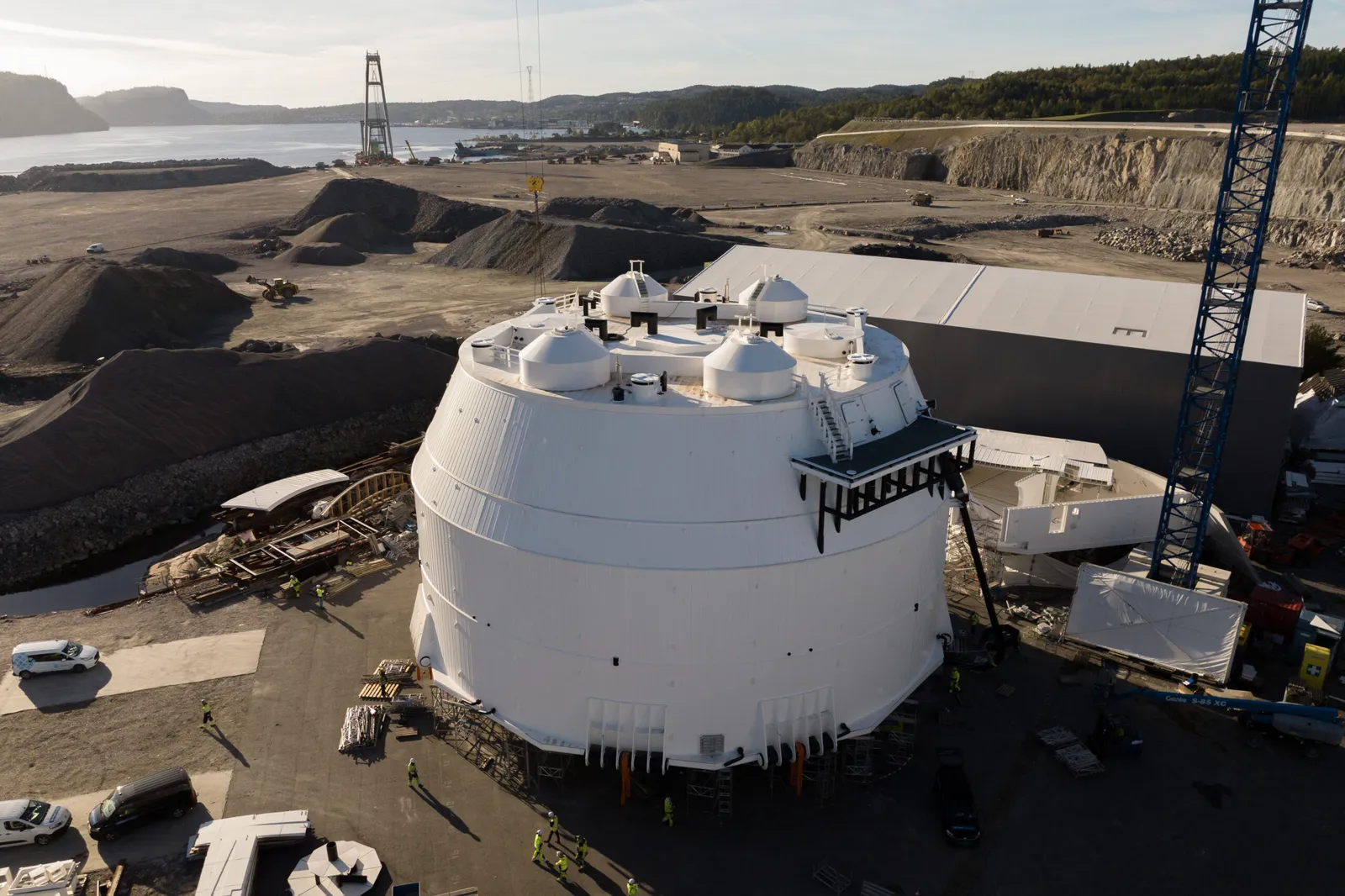
In Norway, Bluegreen built several fully closed polyethylene aquaculture systems for FishGlobe. AGRU supplied structural plastic semi-finished products and piping systems. The installations enable controlled fish production in marine operating conditions.
Material requirements for use at sea
Continuous operation in a marine environment places high demands on both materials and design. Salt water, high UV exposure, pronounced temperature fluctuations between day and night, and continuous mechanical loading caused by wave action all exert a permanent influence on the structure. For large welded structures, material selection is therefore a key factor in the installation’s service life.
PE 100-RC was selected for this application. The material is designed to offer high resistance to slow crack growth and provides considerably greater robustness under notch loading than conventional HDPE. This represents an important safety margin for large-scale aquaculture structures in the 30,000 m³ class.
Polyethylene is also resistant to corrosion from seawater. Additional protective measures such as coatings, sacrificial anodes or cathodic corrosion protection are therefore not required. For use in the climatic conditions of the Red Sea, the material was also stabilised with UV stabilisers and antioxidants to slow photo-oxidation and thermal ageing.
Construction from welded PE sheets
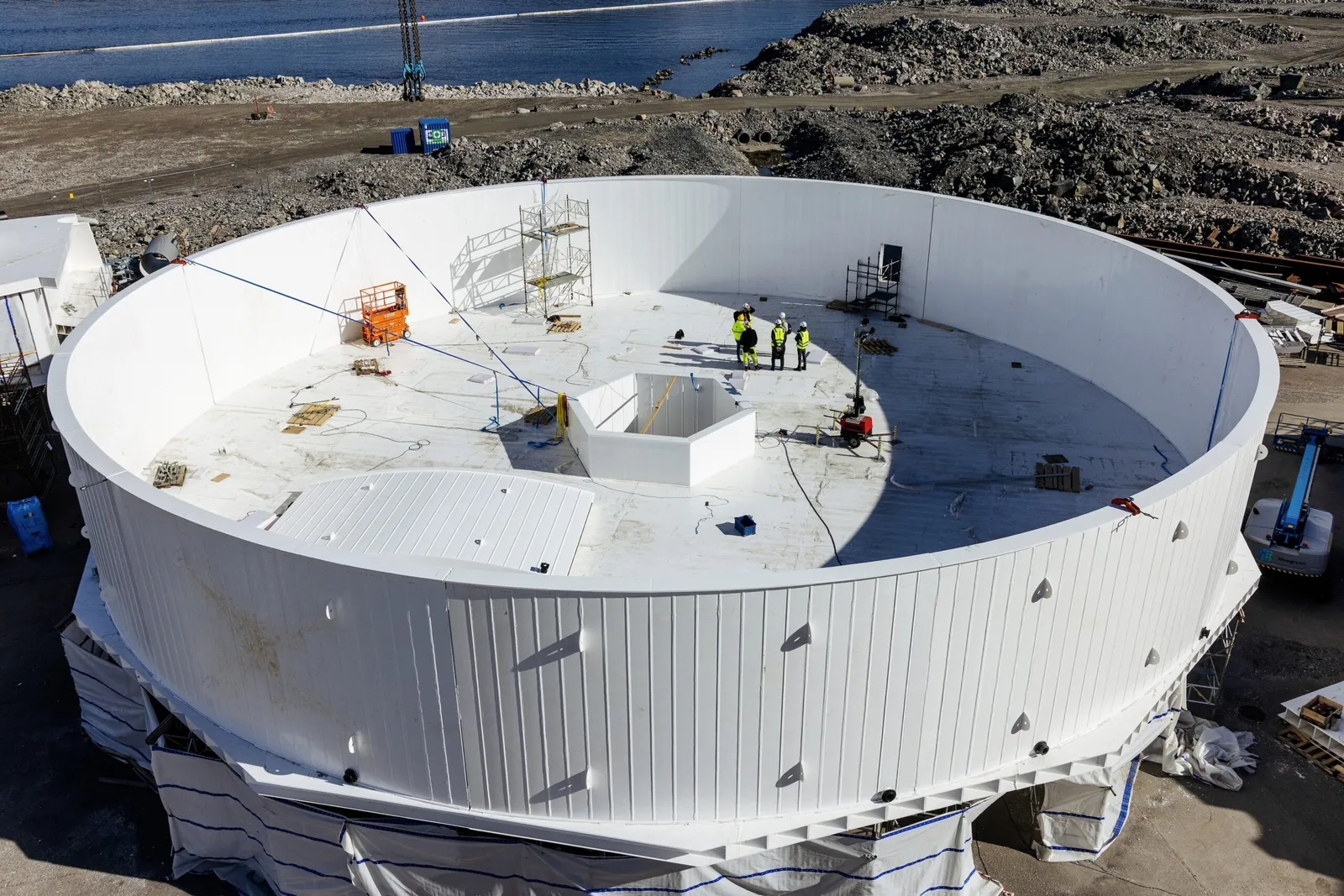
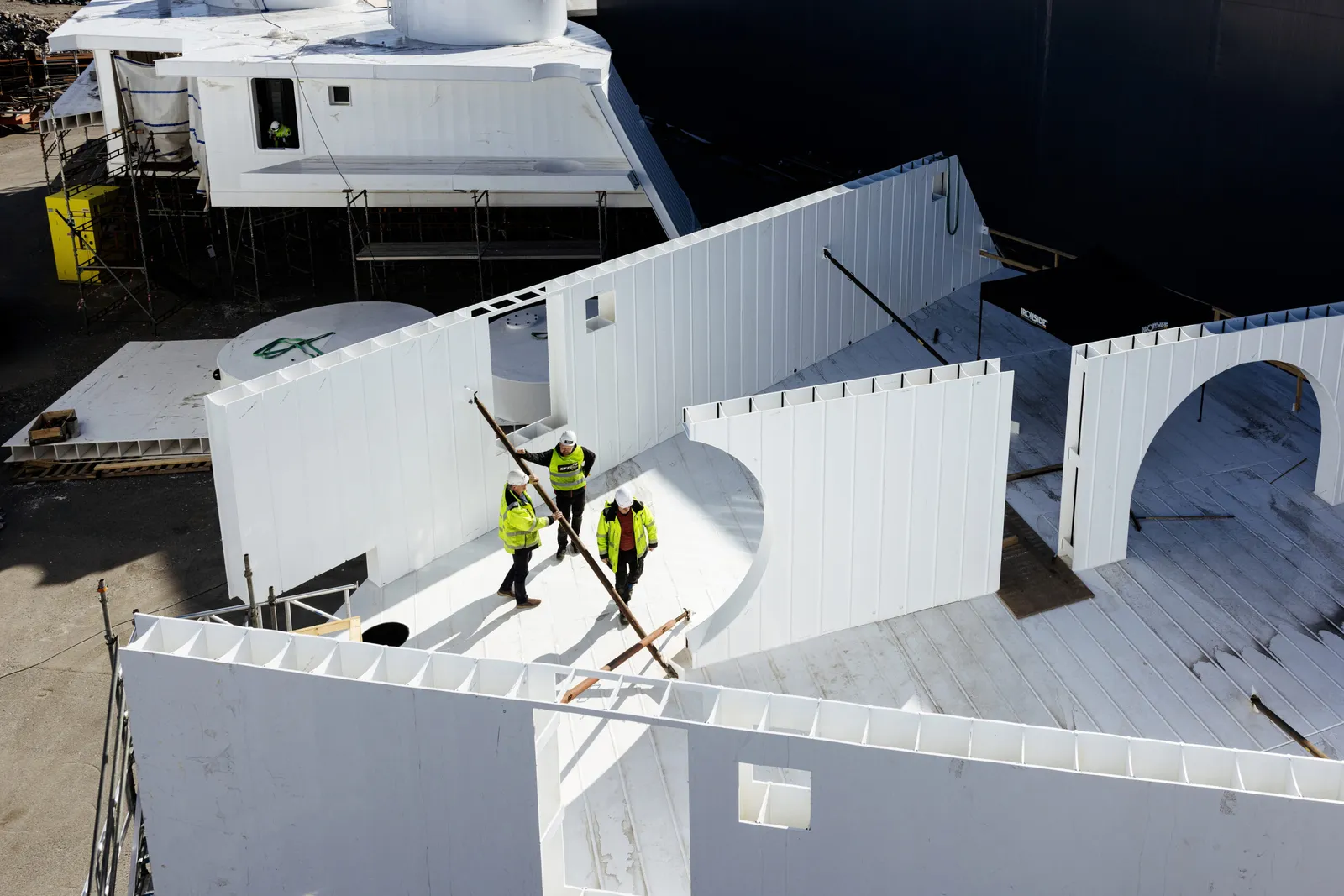
The outer wall of the installations consists of a double-walled welded polyethylene sheet sandwich structure. The large-format sheets were bent into segments on site and then joined using heated-tool butt welding and extrusion welding.
Large-format semi-finished products reduce the total length of the weld seams and, consequently, the number of joints. The reproducible quality of the large-scale welded joints produces connection zones that meet the mechanical requirements for use at sea.
For this project, AGRU supplied approximately 600 tonnes of white, highly UV-stabilised PE 100-RC sheets, measuring 5 by 2 metres and up to 50 mm thick. The supply also included welding rod and more than 200 linear metres of PE 100-RC pressure pipe DN 1200 for seawater intake and discharge.
Closed system for controlled aquaculture
The operating concept behind the installations is closed in both technical and biological terms. Seawater is drawn under controlled conditions from a depth of between 45 and 50 metres and then filtered. This limits surface contaminants and the ingress of parasites, while also taking advantage of more stable temperature conditions.
Solid matter from uneaten feed and faeces is collected inside the installation and discharged under controlled conditions. The smooth PE surfaces make cleaning and hygiene management easier, as marine growth and micro-organisms adhere less readily. An integrated flow channel ensures even water circulation within the installation.
Project delivery
The concept of closed containment aquaculture was developed by FishGlobe. The aquaculture units, with integrated flow channels, were manufactured to project specifications by industrial partner Bluegreen.
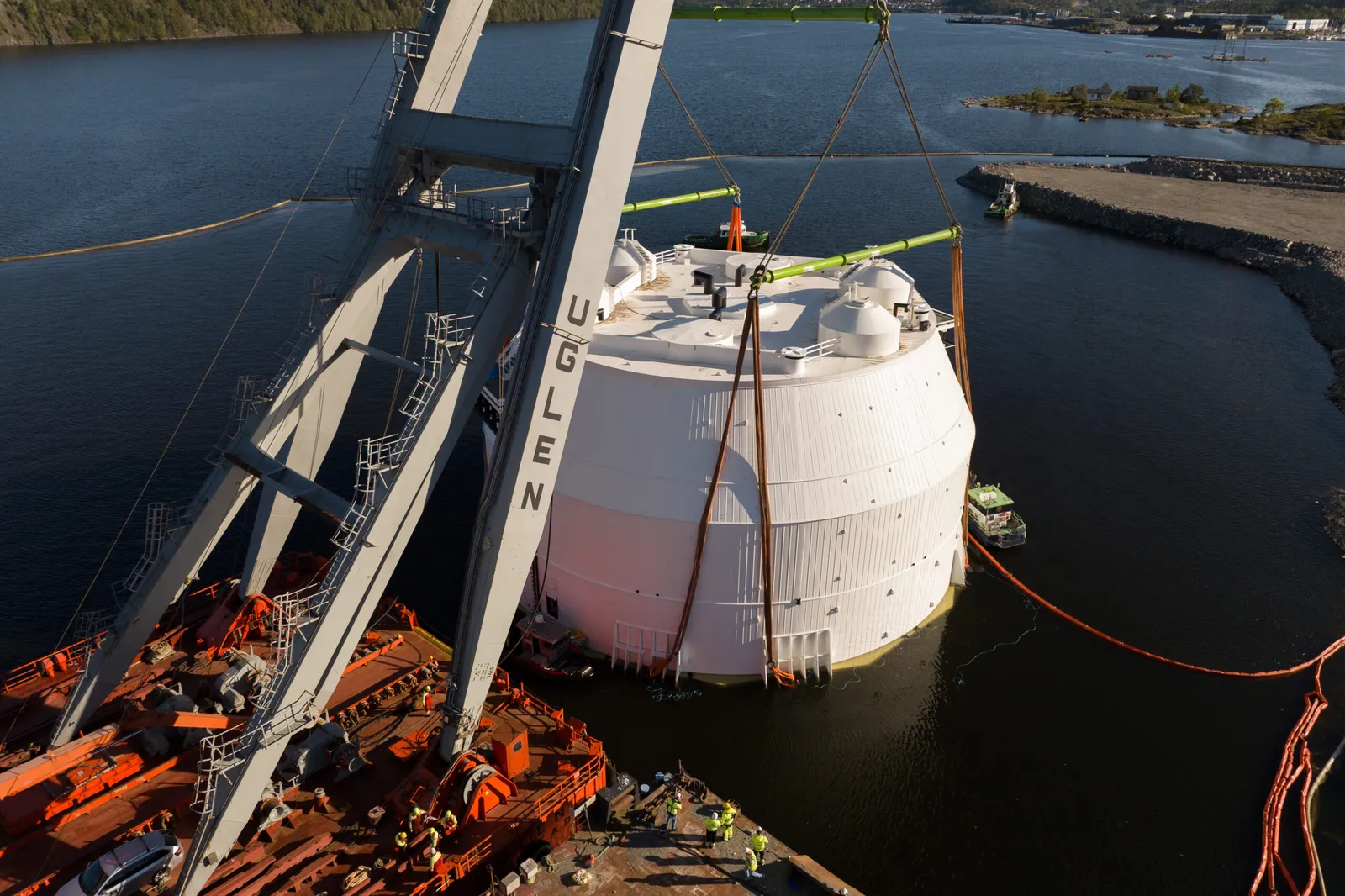
At the end of September 2025, Bluegreen launched the FishGlobe 3.5K (3,500 m³) and FishGlobe 10K (10,000 m³) units at the Frier Vest site as part of a heavy-lift operation. The installations measure 14 metres high and 23 metres in diameter, and 17 metres high and 33 metres in diameter, respectively.
Following inspections and tests, the aquaculture units were handed over to an international customer in Saudi Arabia, where they are now operational.
AGRU as materials and systems partner
AGRU supported the development of the project as a materials and systems partner. Its services included suitable materials for plastic semi-finished products and pipe components, as well as application engineering advice, welding technology, special dimensions and coordinated delivery logistics.
This close integration of services proved particularly important in site conditions involving crane operations, welding and limited time windows. AGRU contributed its materials expertise from the planning and design stages and supported the project with targeted technical recommendations. Preparations are also under way for the largest version of the system to date: the FishGlobe 30K, with a volume of 30,000 m³.
“AGRU’s close collaboration and in-depth understanding of the challenges involved in using plastic products in marine environments made a significant contribution to the successful delivery of the project,” says Albert Lueghamer, Head of Technical Department at AGRU.
Question about this story? Ask your question
Keep following this
Get an email when a new story is published. No account needed.
- SubjectGeneral







