









Plant substrates for an optimal climate-resilient environment
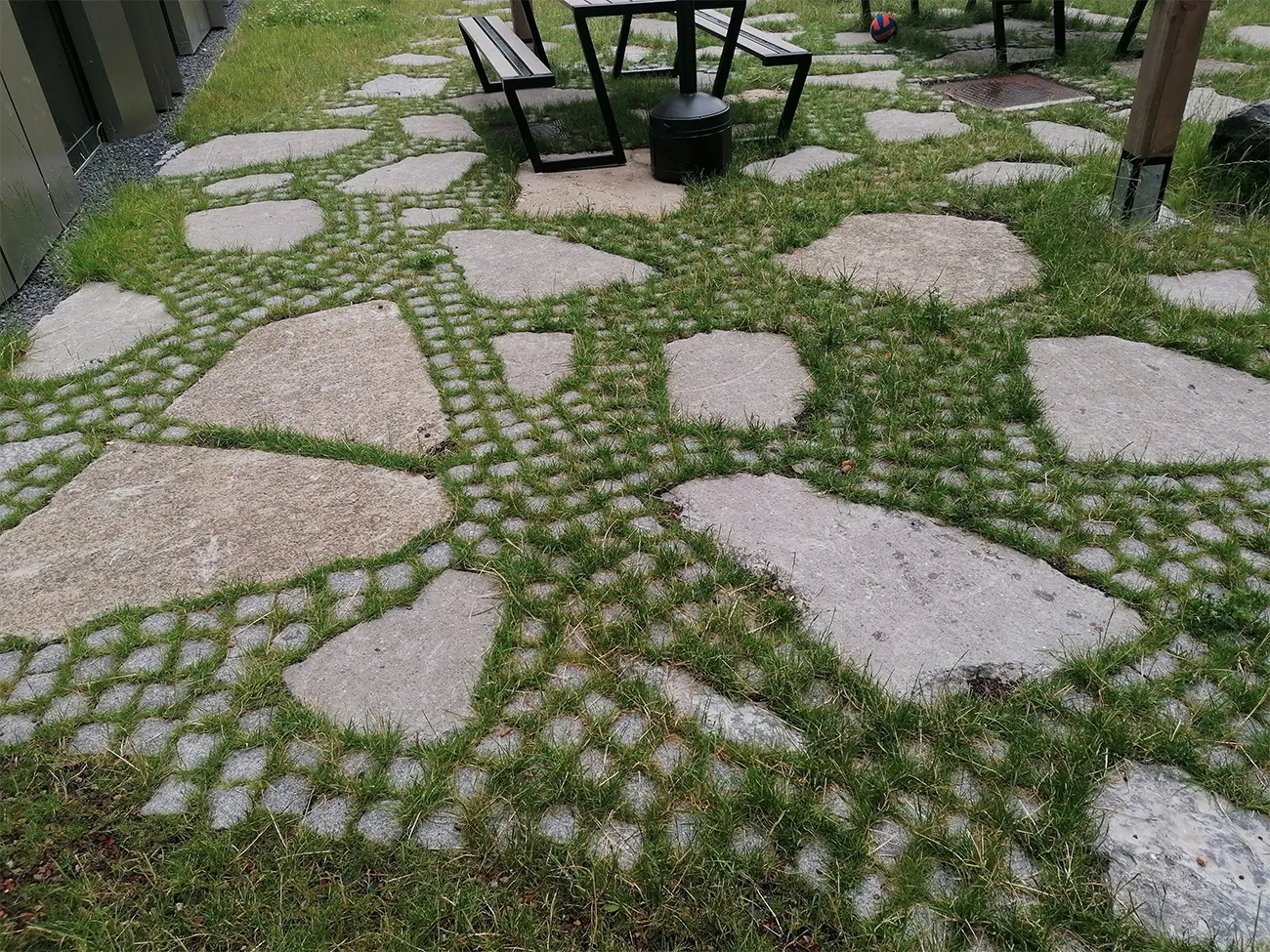
With climate challenges in mind, more and more public spaces are being made climate-resilient, while private individuals are also paying greater attention to water infiltration. Plant substrates are essential to ensuring the sustainability of green spaces. “Our TerraViva® plant substrates are primarily designed for trafficable lawns and underground growing spaces for trees in urban areas,” says Bart Geerts, managing director of Acterra, which produces the TerraViva® substrates.
TerraViva® plant substrates have been developed to help landscapers and road construction contractors carry out their work as efficiently as possible. Saving working hours is a key priority. Bart Geerts says: “Our ‘living soil mixes’ have proved their worth. Various types of planting have seen much lower losses after the use of TerraViva® Geel or Groen, even in very poor soils. We have an extensive standard range of substrates, and also have a team of highly technically skilled advisers available through our distributors to develop a bespoke mix for customers where needed.”
TerraViva® Geel and Groen
TerraViva® soil improvers are tailored to the type of soil you want to improve. TerraViva® Groen, for example, has been developed to make light soils heavier, making it ideal for retaining water for longer in sandy subsoils. Bart Geerts says: “TerraViva® Groen is a high-quality soil improver that not only nourishes plants, but also improves the physical structure of the soil. The addition of bentonite ensures that even the most extremely sandy soils retain sufficient moisture. TerraViva® Geel, in turn, is ideal for lightening heavy soils. Like its green counterpart, it nourishes plants and improves soil structure. This substrate opens up heavy soil and contains a controlled amount of readily available nitrogen, promoting steady, vigorous growth without the risk of scorching.”
Tree planting
Planting trees in urban areas has become a highly complex task. There are three zones in the underground growing area. Bart Geerts says: “The growing zone is the same size as the tree canopy’s projected footprint at maturity. The visible planting area, which is not walked on, is best filled with TerraViva® Bomengrond. The zone beneath a paved surface, from ground level down to a depth of 70 cm, is the ideal place for TerraViva® single-graded tree sand. At greater depths, TerraViva® boomplantsubstraat is best suited.”
Climate change
Over the years, Acterra’s trafficable lawn mixes have evolved from monotonous grass cover to composite mixes made up mainly of plants that can withstand trampling. This is important, as more and more public spaces are being made climate-resilient. “Wadis and permeable paving have become essential ways of designing public spaces in response to accelerating climate change. Awareness is also growing among private garden owners that they can do their bit,” concludes Bart Geerts.
Question about this story? Ask your question
Keep following this
Get an email when a new story is published. No account needed.
- SubjectGeneral







