









PFOS contamination at Opel site cleaned up using unique system
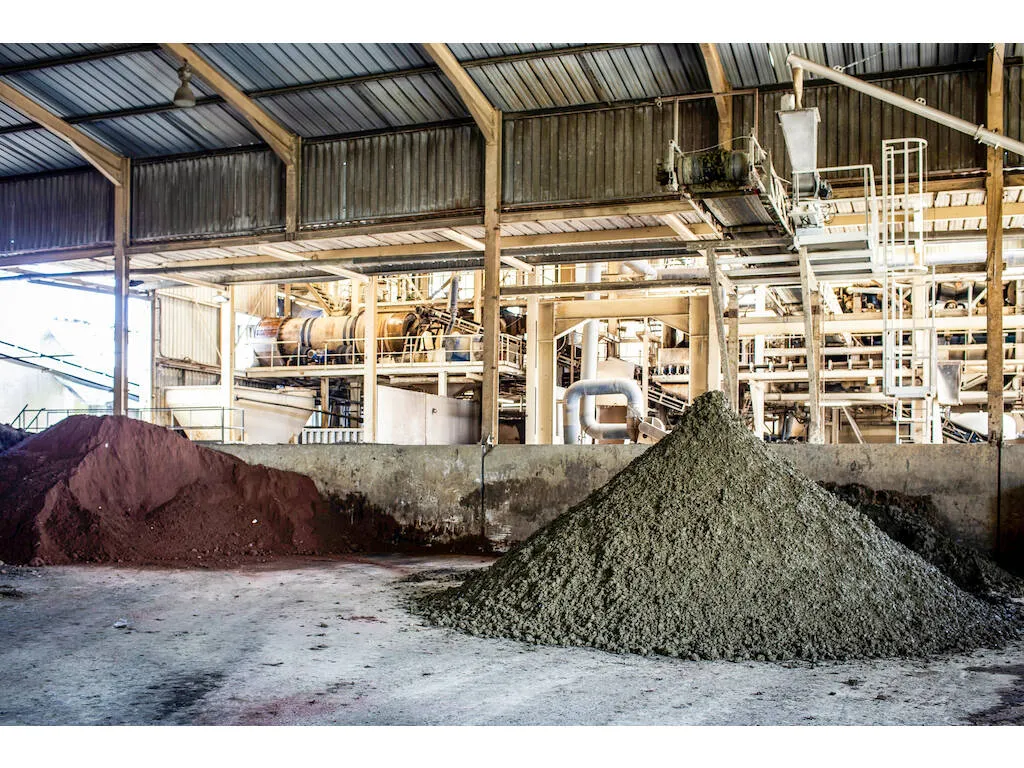
Remediation work at the former Opel site is still in full swing. For the treatment of the heavily PFOS-contaminated soil, client OVAM has called on GRC. The soil treatment specialist, with sites in Kallo and Heusden-Zolder, developed a unique system for treating PFOS-contaminated soil. “Using a range of water treatment techniques, we designed a process to remove the PFOS from the wash water,” says Philippe Goossens, plant manager at GRC.
The soil treatment specialist, with sites in Kallo and Heusden-Zolder, developed a unique system for treating PFOS-contaminated soil. “Using a range of water treatment techniques, we designed a process to remove the PFOS from the wash water,” says Philippe Goossens, plant manager at GRC.
GRC, part of the joint venture between Belgium’s DEME and the Netherlands’ Mourik, received the first PFOS-contaminated loads from the 96 ha Opel site at its treatment facility in Kallo after the Easter holidays. Philippe Goossens: “Under OVAM’s supervision, the site is being excavated and the soil transported to our facility. All the soil has now arrived, and soil and wall samples have been taken to assess the quality of the excavation. The treated soil will be transported back to the site for reuse. According to the schedule, we will complete our work by the end of August. This project fits perfectly with GRC’s core business, but the new PFOS contamination certainly presented a challenge. The scale of the project, involving 23,000 tonnes of soil, is also unusual in Flanders.”
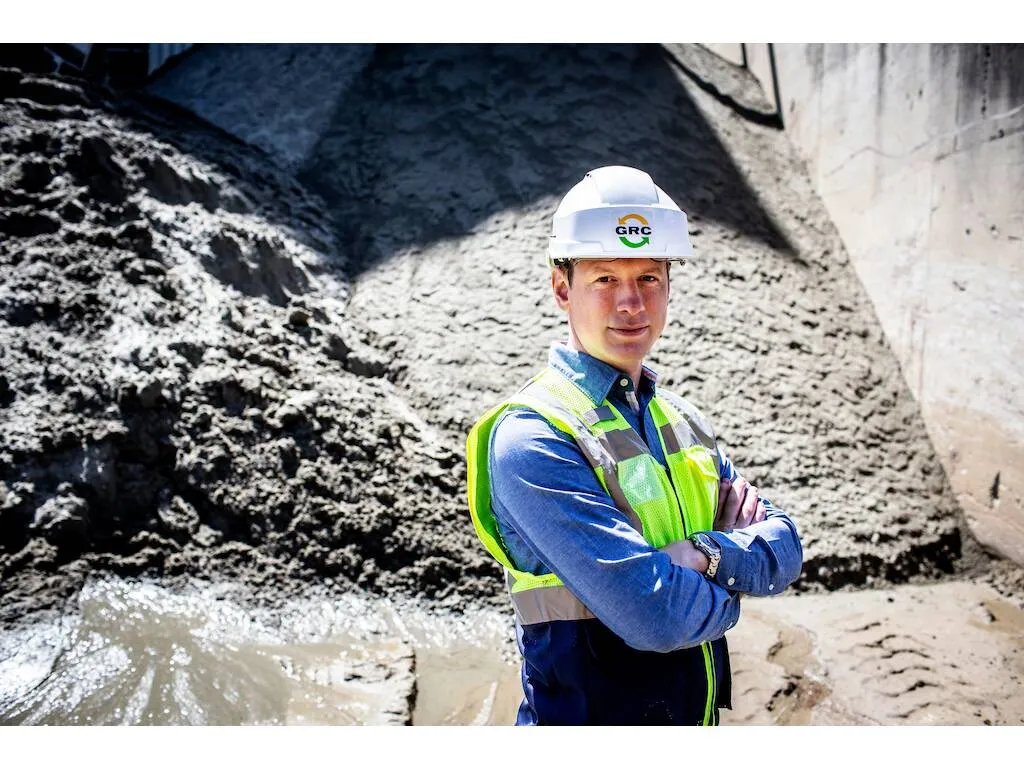
Firefighting foam
PFOS are persistent chemicals that are not only resistant to high temperatures, but also repel water, grease and dirt. Philippe Goossens: “PFOS are part of the PFAS group. This is a group of around 6,000 fluorinated compounds, of which PFOS is the one we encounter most often. This is mainly due to the high concentration of PFOS in firefighting foam, which was the fire-extinguishing agent of choice in the 1950s and 1960s. PFOS were also used in, for example, the textile, carpet, mining and oil industries. However, the heaviest PFOS contamination is found in places where fires broke out in the 1950s and 1960s and were extinguished with foam. The level of contamination also depends on local conditions, such as possible spread via groundwater. The PFOS contamination at the Opel site is thought to have resulted from a leak in a large firefighting foam tank at the former GM factory.”
Ingenious system
GRC has long established itself as an expert and innovator in soil treatment. Philippe Goossens: “At our site in Kallo, we developed the first physicochemical soil washing plant. This is a process that has now been fully refined. In brief, the plant separates sand and rubble from the remaining contaminants, which are concentrated in the residual fraction. This process has been used for years to treat common contaminants such as oil, heavy metals and hydrocarbons…”
“The problem with PFOS is that, because of their characteristic properties, they are much harder to remove,” Philippe Goossens continues. “From the very first step, washing and therefore wetting the soil, PFOS treatment differs from more conventional treatment. PFOS dissolve in water immediately, like salt. It is then virtually impossible to remove the contamination without taking additional measures. The wash water in a physicochemical soil washing plant also circulates internally, meaning that PFOS would remain in the system. This is not a problem with ordinary contamination.”
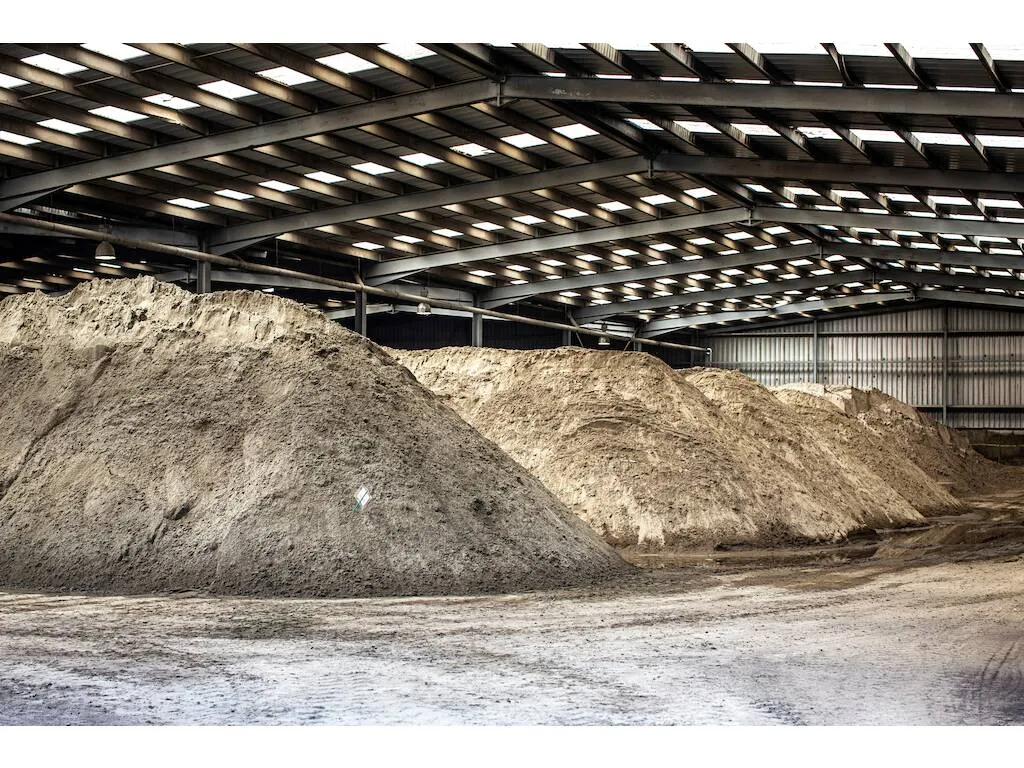
Ingenious system
Using existing water treatment techniques, GRC developed an ingenious system to remediate stubborn PFOS contamination in soil. Philippe Goossens: “By dividing the plant into sections, we create a number of streams. The bulk of the PFOS contamination is removed using activated carbon filters, which treat the wash water. Once a filter is saturated, it is taken to a licensed facility. The activated carbon is completely destroyed at this facility. The soil treatment residue is also sent to a licensed landfill. For PFOS, however, additional measures are taken, with the material stored in a salt cell, a separate section of the landfill. Sand and rubble are further treated to meet the strictest possible standards for reuse in the construction market. For the Opel site, we were asked to return the treated rubble and sand to the site for reuse.”
GRC has an R&D department that is continuously involved in research and development. “For example, we continually map mineral waste streams to see which ones are suitable for treatment. The PFAS family is very much in the spotlight now, but there are other substances whose risks are still not 100 % known. If we receive such substances, the R&D department gets to work on them straight away. GRC also wants to play a supporting role. If there are concerns about possible PFOS contamination, customers can always come to us for an analysis and a treatment proposal. After an initial discussion, an outline of the situation and analysis of a soil sample, we can determine the possible treatment options relatively quickly,” concludes Philippe Goossens.
Een zakelijke vraag aan GRC – Grond Recyclage Centrum? Get in touch
Companies in this story


Keep following this
Get an email when a new story is published. No account needed.
- SubjectGeneral
- CompanyGRC – Grond Recyclage Centrum
- CompanyOVAM







