









Oosterweel project in Antwerp is a shining example of collaboration
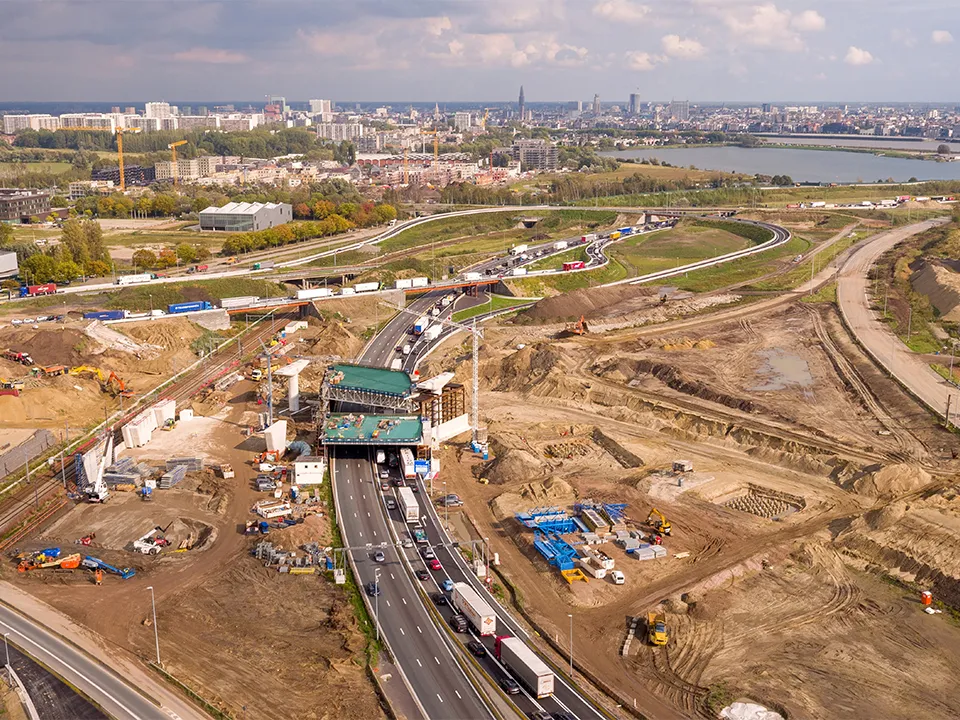
“If there is one thing that characterises collaboration between the Netherlands and Belgium on the Oosterweel project, it is the pride people take in their work.”
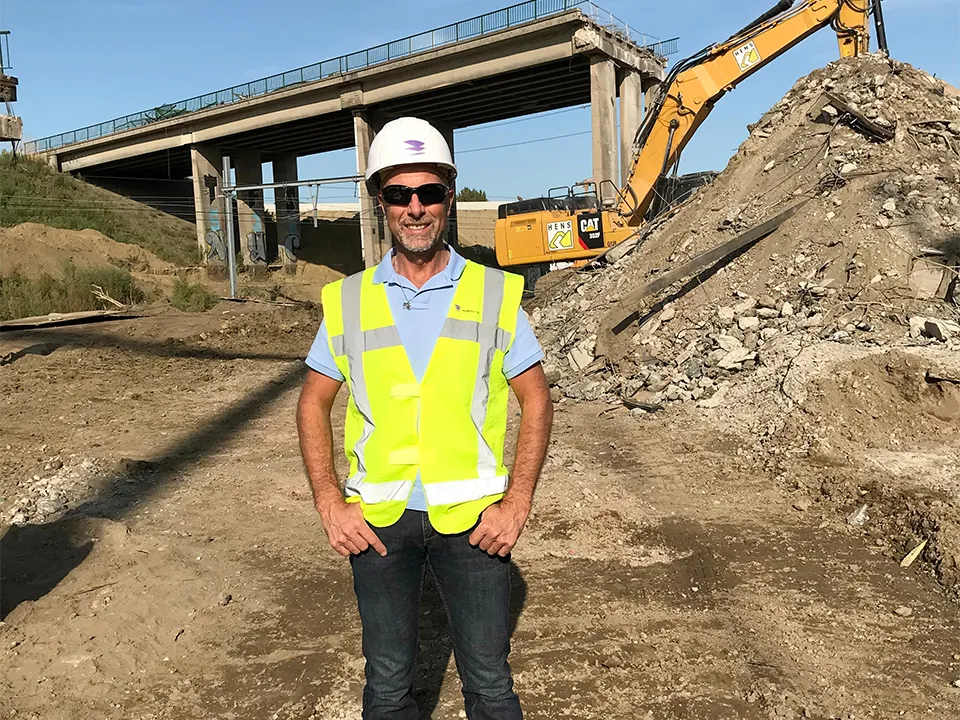
Those are the words of Jaap Geuze, Oosterweel Project Manager at Mobilis. “The colleagues working on one of Belgium’s largest infrastructure projects certainly don’t have a ‘nine-to-five mentality’, and everyone has the right spirit.”
The Oosterweel project is divided into 5 lots (sections). Lot 1 involves improving the flow and safety of the motorway infrastructure on Antwerp’s left bank and in Zwijndrecht, constructing a Park and Ride facility, carrying out preparatory work for the connection to the new Scheldt Tunnel, and delivering a liveability project that includes noise barriers and cycle paths. Lantis awarded the project to Rinkoniên, a temporary joint venture between Mobilis, Stadsbader, CIT Blaton, Artes Roegiers and Artes Depret. TBI company Mobilis is working on lot 1 as part of the THV Civiel construction consortium, alongside Artes Roegiers, Artes Depret and CIT Blaton. Lot 2, which is outside Rinkoniên’s scope, concerns the Scheldt Tunnel itself. Lot 3, the Oosterweel interchange and the renovation of the Royers lock, is still at the tender stage.
Greater safety and less disruption
Geuze describes the Oosterweel project as rewarding work. “We are helping to make things safer and reduce disruption for the surrounding area. A good example is the locations where traffic has to merge onto the motorway from the left. This is extremely dangerous, as is regularly borne out in practice. By adding extra lanes and directing traffic onto them, vehicles can merge from the right. The scope includes 10 km of noise barriers and earth berms, as the project also focuses on improving liveability for the surrounding area.”
Mobilis is responsible for the design and delivery of the project. “This combination of responsibilities is not so common in Belgium. We finalise the design, deliver the project and act as the systems engineers. We have a team of 62 people, including work planners, project managers, site managers, safety staff and quality staff, to get the job done. Our Dutch way of working differs from what people in Belgium are used to. We were awarded the contract on the basis of carrying out audits to assess quality and demonstrate compliance. In Belgium, people are used to carrying out a lot of physical checks in the traditional way, with more site supervisors,” says Geuze.
Complex work
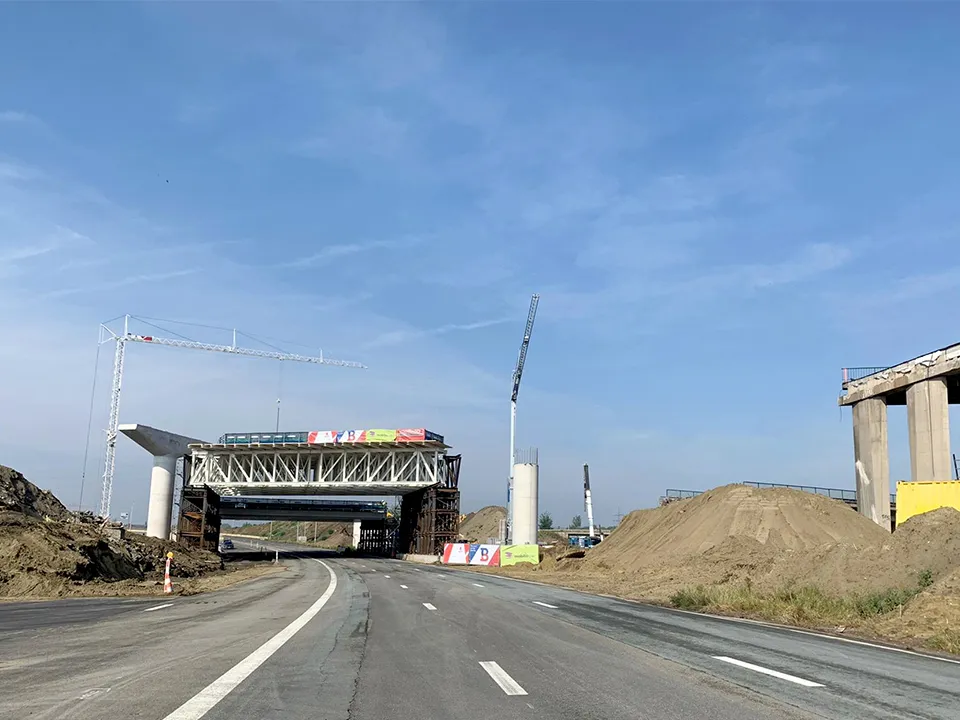
Geuze is on site every day, as are his colleagues. “With all the necessary COVID precautions, of course. This isn’t a job you can do from home, behind a laptop. The work is highly complex, particularly when it comes to traffic diversions. In the MEAT tender, Rinkoniên scored highly with our plan to build temporary bridges and roads to keep traffic flowing. It works well in practice, and traffic can make full use of all the lanes. We are currently working on the flyovers. The new flyovers will be closer together. The schedule is on track here too: in a single weekend, the old flyovers were demolished and a deck was constructed, allowing work to begin on the new flyovers. The project involves a total of 6 flyovers, some of which cross over one another.”
The project began in May 2018, with construction starting in September 2019. “Despite the brief downturn caused by COVID, we are now operating at full strength. We have largely made up the time lost. The major works will take place in 2020 and 2021, and lot 1, including the liveability measures, must be completed by 2025,” Geuze concludes.
Question about this story? Ask your question
Wie aan Oosterweel werkte
- THVRinkoniênIn this story
Keep following this
Get an email when a new story is published. No account needed.
- ProjectOosterweel
- SubjectGeneral
- CompanyRinkoniên







