









Older people in Flanders will increasingly suffer from heat stress in the coming years
Measures to buildings, plots and public spaces can mitigate the impact of hot days
The first hot days of June are approaching, with temperatures set to exceed 30°C. Heat stress is unavoidable, particularly in urban areas. Older people (65+) are increasingly bearing the brunt. Embuild Vlaanderen’s municipal reports show that heat stress will rise dramatically across Flanders: by 2030, almost 30% of older people will be affected. By 2050, this will rise to over 80%. The problem is greatest in cities, while the coast offers some relief.*
Embuild Vlaanderen’s municipal reports show the impact of heat stress in each municipality over the coming decades. They reveal that our town centres and urban municipalities in particular will face climate risks such as heat. Older people in cities and urban municipalities are at the greatest risk. By 2050, this will affect more than 80% of people aged 65 and over in urban areas. In coastal municipalities, the figure is significantly lower, at 25%. But heatwaves are already having serious consequences today. Data from Sciensano show that the August 2020 heatwave was associated with 1,500 additional deaths. The causes include extreme daytime heat and exposure to ozone in the evening. This is worrying, given that the likelihood of hot days is increasing significantly year on year.
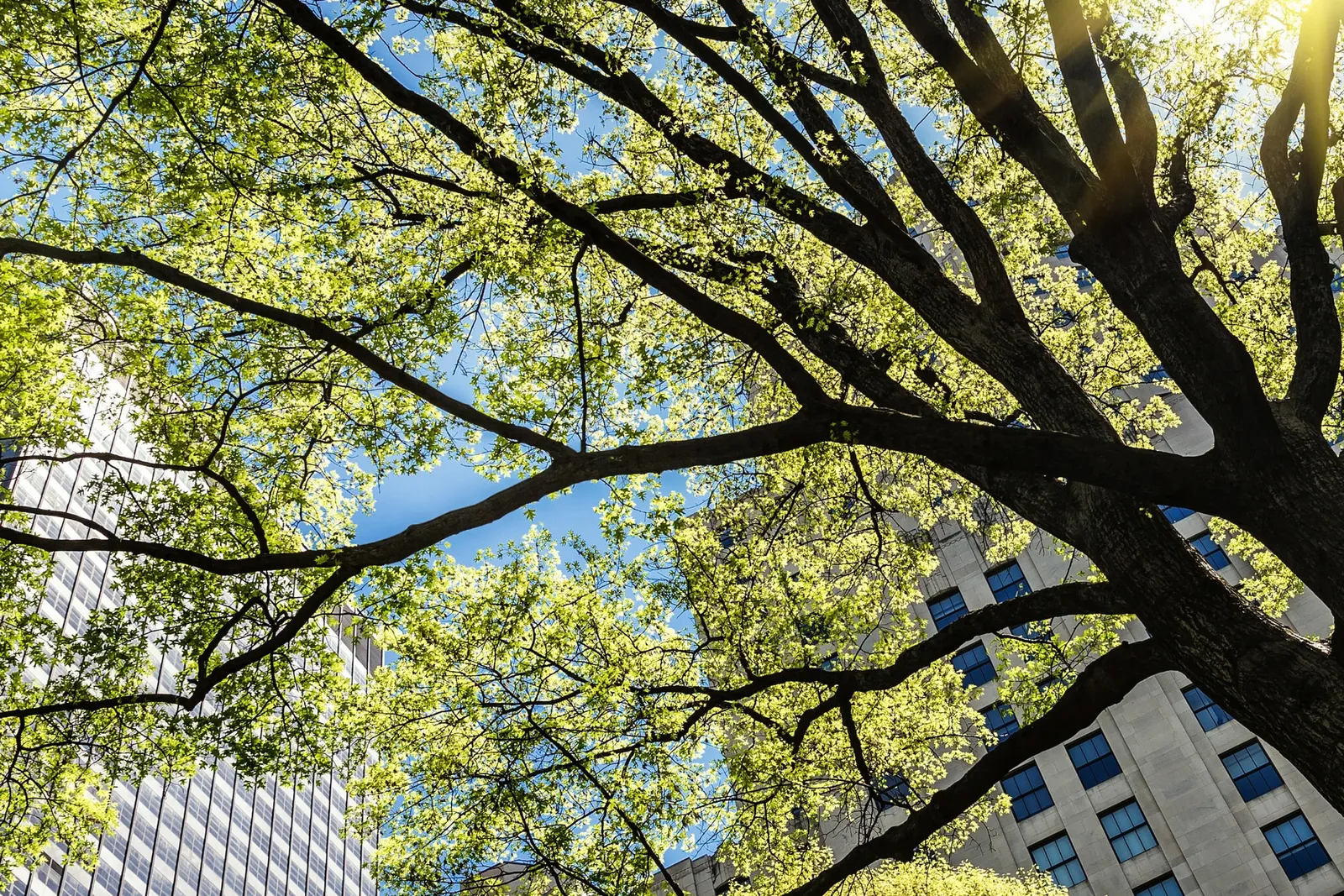
Changes to public spaces in cities and towns are essential to combat heat stress. These include creating additional parks as refuges on hot days and planting trees, nature’s large-scale air conditioning, to provide shade; adding water features to offer relief from the heat; installing permeable paving that heats up less quickly; and providing green roofs and façades to prevent buildings from overheating.
The green-blue index also offers numerous tips for making your plot climate-resilient, including planting suitable greenery and improving the soil’s permeability. You can also make a range of changes to your home itself. External shading, such as awnings, screens or shutters, helps prevent direct sunlight and heat from entering. Night-time ventilation helps cool the building down. Choose insulation and materials with high thermal mass. This means a building can store heat during the day, helping to moderate peaks in indoor temperatures. Dense insulating materials such as rigid wood fibre boards and hemp-lime help dampen heat better than wood wool and rock wool. The thickness and density of interior finish materials also matter. For example, 22 mm clay boards perform better than 12.5 mm plasterboard. Good workmanship, with careful attention to vapour and airtightness, is also crucial.
* Vulnerable people exposed to high heat stress impact in 2050
| Type of municipality | Vulnerable people exposed to high heat stress impact in 2050 (%) |
|---|---|
| Municipalities with economic attraction | 88.3 |
| Major cities and regional cities | 83.7 |
| Coastal municipalities | 24.7 |
| Rural municipalities | 64.3 |
| Urban municipalities | 86.6 |
| Flemish Region | 81.7 |
| Residential municipalities | 76.7 |
Recommendations:
- Investing in infrastructure that can withstand heatwaves, such as green roofs and permeable paving, can reduce exposure to heat stress.
- Integrating climate measures into policy areas such as health and housing can make action to combat heat stress more effective.
- Creating public spaces with shade and water points can protect vulnerable people from extreme heat.
Question about this story? Ask your question
Keep following this
Get an email when a new story is published. No account needed.
- SubjectGeneral







