









No Mow May? Along roads, sometimes May is precisely the time to mow
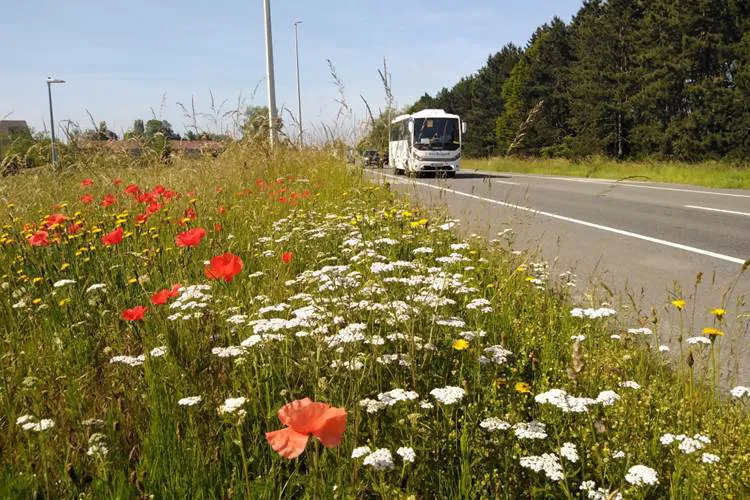
May is traditionally a month when the Agency for Roads and Traffic (AWV) receives more queries from the public about verge maintenance. Depending on the type of verge, it may not be mown at all, or it may be mown more often.
These days, the Roads Contact Point regularly receives reports about grass on verges. People want extra mowing, or the opposite: they ask for the grass to be left undisturbed as part of ‘No Mow May’. Where and when AWV mows depends on the type of verge and whether or not there is a risk to road safety.
Ecological verge management
AWV mowing in May is not unusual. Although the guidelines in the so-called Verge Decree state that the first mowing can take place only after 15 June, with a possible second cut after 15 September, mowing earlier in the year can actually be more beneficial to the biodiversity of a verge.
How does that work exactly? The Verge Decree aims to give herbs and flowers the chance to grow well in spring and protect them from mowing. But many verges are very grassy and benefit from extra mowing, including before 15 June. To reduce soil fertility and give herb-rich vegetation a better chance to grow, the grasses need to be cut back and, importantly, cleared away immediately after mowing. Sheep, such as those seen on the verges alongside the E17 in Waasmunster, offer an alternative way of controlling grasses.
To obtain an exemption from the time periods set out in the Verge Decree, AWV must draw up an ecological verge management plan, with mowing dates tailored to the type of vegetation on the verge. The plan must also be approved by the Agency for Nature and Forests (ANB).
Another reason why some mowing takes place in May is road safety. Cycle paths in particular can become overgrown with long grass from the verges beside them.
More wild orchids
Ecological verge management pays off, as shown, for example, by the increase in herbaceous plants such as wild orchids, field scabious and yellow-rattle on verges where efforts have been made to reduce soil fertility. More flowers and herbs also improve animals’ chances of survival on verges by providing more shelter, and provide more food for wild pollinators such as bees and butterflies.
At the same time, AWV is seeing more invasive alien species, such as Japanese knotweed and giant hogweed. The dangerous giant hogweed is removed before it flowers.
Question about this story? Ask your question
Keep following this
Get an email when a new story is published. No account needed.
- SubjectGeneral







