









New stops for DeWaterbus
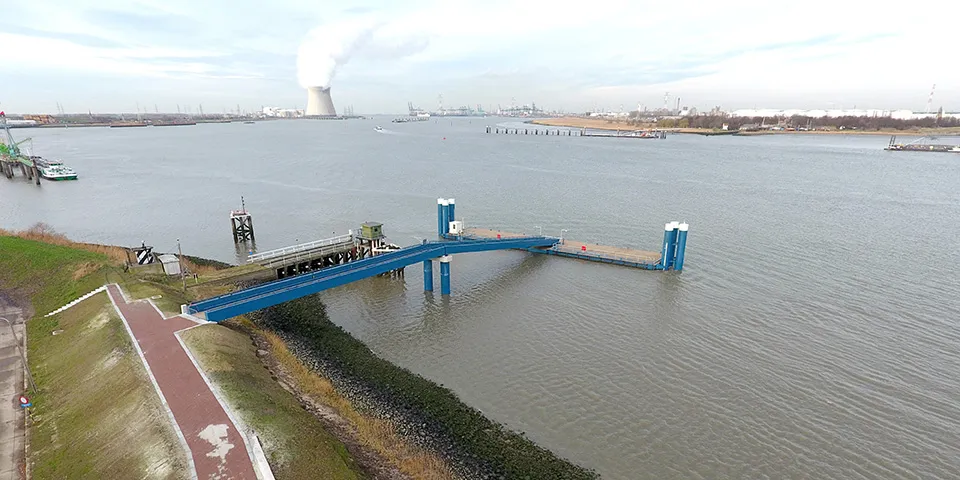
With DeWaterbus, which has been operating on the Scheldt since July 2017, the City of Antwerp offers a reliable alternative for commuting. To take that alternative to the next level in 2019, a number of additional stops were built in 2018 at Kallo Lock, Fort Liefkenshoek and Zuiderveren, among other locations. Herbosch-Kiere, part of Eiffage Benelux and a specialist in port, river and maritime works, led the construction work.
DeWaterbus provides an alternative means of transport for people travelling to Antwerp from Hemiksem and Kruibeke. Following the success of the southern route and the need for mobility solutions, the Port Authority extended the waterbus route in autumn 2018 with a northern route in the port area, including several stops. Herbosch-Kiere’s expertise was called upon to build them.
Kallo Lock
“The work at Kallo Lock involved building a floating landing stage, two bridges and a few pontoons,” says Stef Buyck of Herbosch-Kiere. “We took responsibility for the entire project, from start to finish. That is one of our strengths: delivering the work properly from beginning to end. Bespoke solutions are also crucial. If the piles and foundations are in place and the pontoon does not fit between them, you have a major problem. But everything went smoothly, partly thanks to the good arrangements made with shipping, the port and the pilots. The necessary permits are, of course, also applied for from the relevant authorities.”
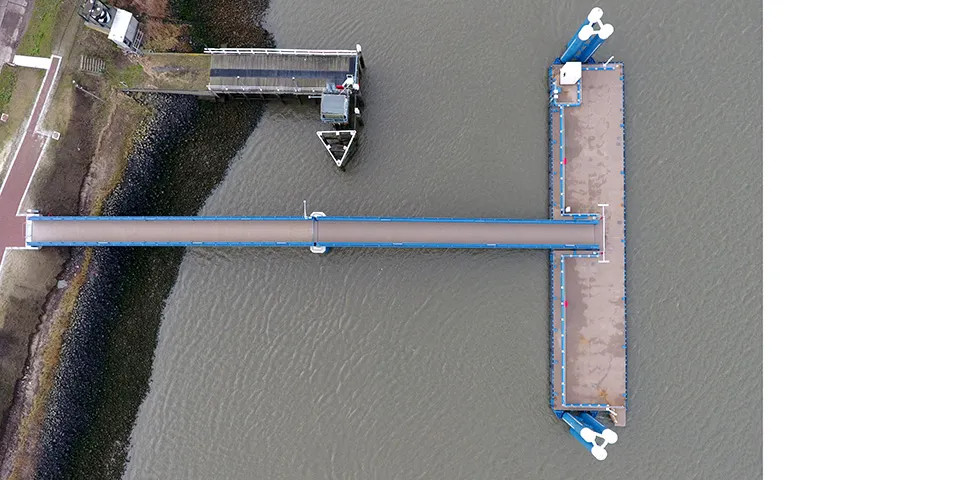
To take DeWaterbus to the next level, a number of additional stops were built in 2018 at Kallo Lock, Fort Liefkenshoek and Zuiderveren, among other locations.
Fort Liefkenshoek
A new stop was built not only at Kallo Lock, but also at Fort Liefkenshoek. “This project consisted of several elements,” explains Ernest Baele of Herbosch-Kiere. “An access road, a fixed bridge resting on an abutment and a pier abutment, a pontoon between six fixed piles, and a movable bridge resting on the pier abutment and the pontoon. Cyclists had few options for getting from the left bank to the right bank. This project provided not only an additional stop, but also an extra crossing point. Measuring equipment for the Flanders Hydraulics Research laboratory was also installed at the landing stage.”
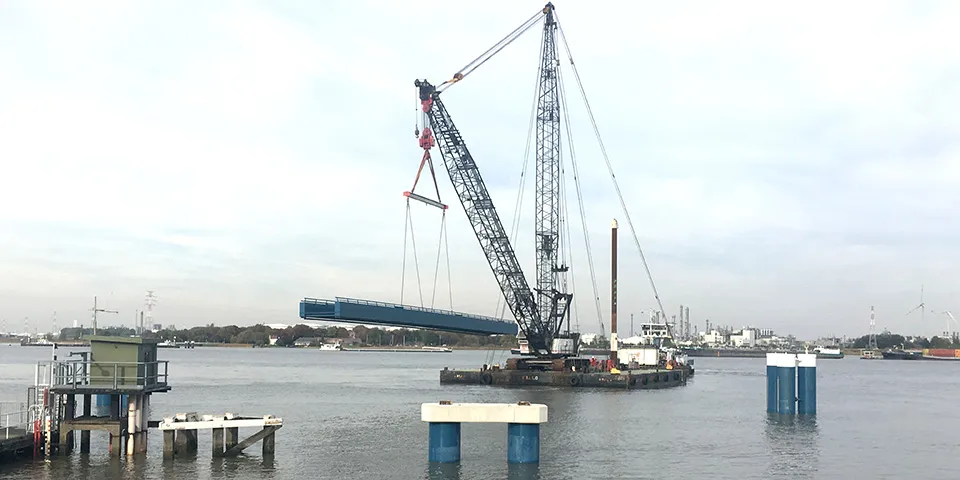
The bridges at Fort Liefkenshoek were installed using a 320-tonne cable crane mounted on the pontoon.
Zuiderveren, Hoboken
As well as the new builds at Kallo Lock and Fort Liefkenshoek, Herbosch-Kiere was also brought in to carry out a replacement at Zuiderveren. Wouter Roes of Herbosch-Kiere says: “An inspection showed that the floating landing pontoon on the right bank of the Scheldt at Hoboken needed replacing. A completely new pontoon, with all the necessary facilities and fittings, is being supplied. It will be welded and fully fitted out in the steel workshop. It will then be transported to the site by water. In June 2019, the old pontoon will be replaced by the new one on a day at the weekend. This will limit disruption to the ferry service to just one working day.”
The new pontoon at Zuiderveren has to be connected to the existing mooring piles, which is quite a challenge. “A perfect preparation is crucial to make sure it fits,” says Roes. Ernest Baele agrees: “The main challenge with projects like these is to coordinate all the activities properly, ensure high-quality execution and complete everything within the stipulated timeframe. The bridges at Fort Liefkenshoek were installed using a 320-tonne cable crane mounted on the pontoon. This kind of millimetre-precise work requires a great deal of coordination.”
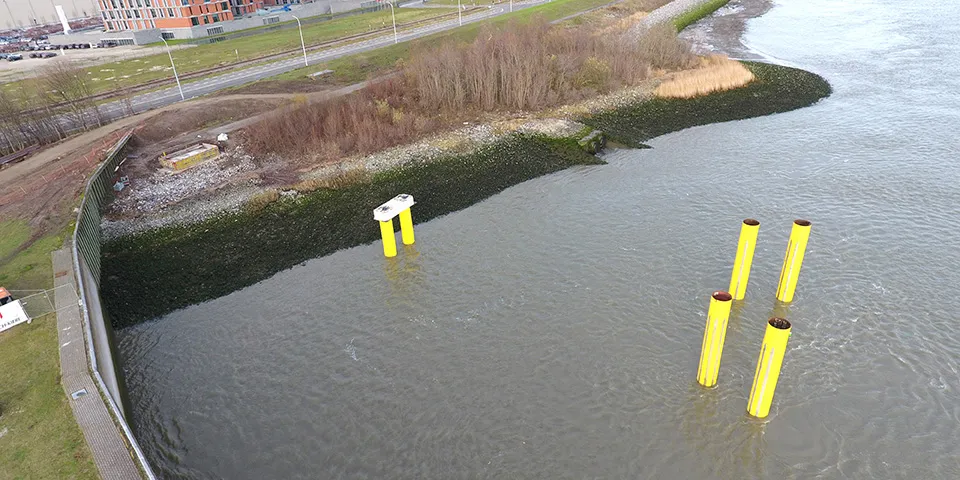
The work at Kallo Lock involved building a floating landing stage, two bridges and a few pontoons.
Mobility problems
As traffic congestion brings Antwerp to a standstill, the expansion of DeWaterbus facilities could provide some relief and offer an environmentally friendly alternative. The completed Antwerp–Kruibeke–Hemiksem waterbus connection highlights the importance of the ferry services built by Herbosch-Kiere. “We have a wide range of specialised floating equipment needed to carry out work on the water. We also have our own quay wall in the Port of Antwerp, which means that pontoon preparation and launching can be carried out in-house,” concludes Wouter Roes.
Een zakelijke vraag aan Herbosch-Kiere? Get in touch
Companies in this story
Keep following this
Get an email when a new story is published. No account needed.
- SubjectGeneral
- CompanyHerbosch-Kiere







