









New range of lime products for circular soil stabilisation
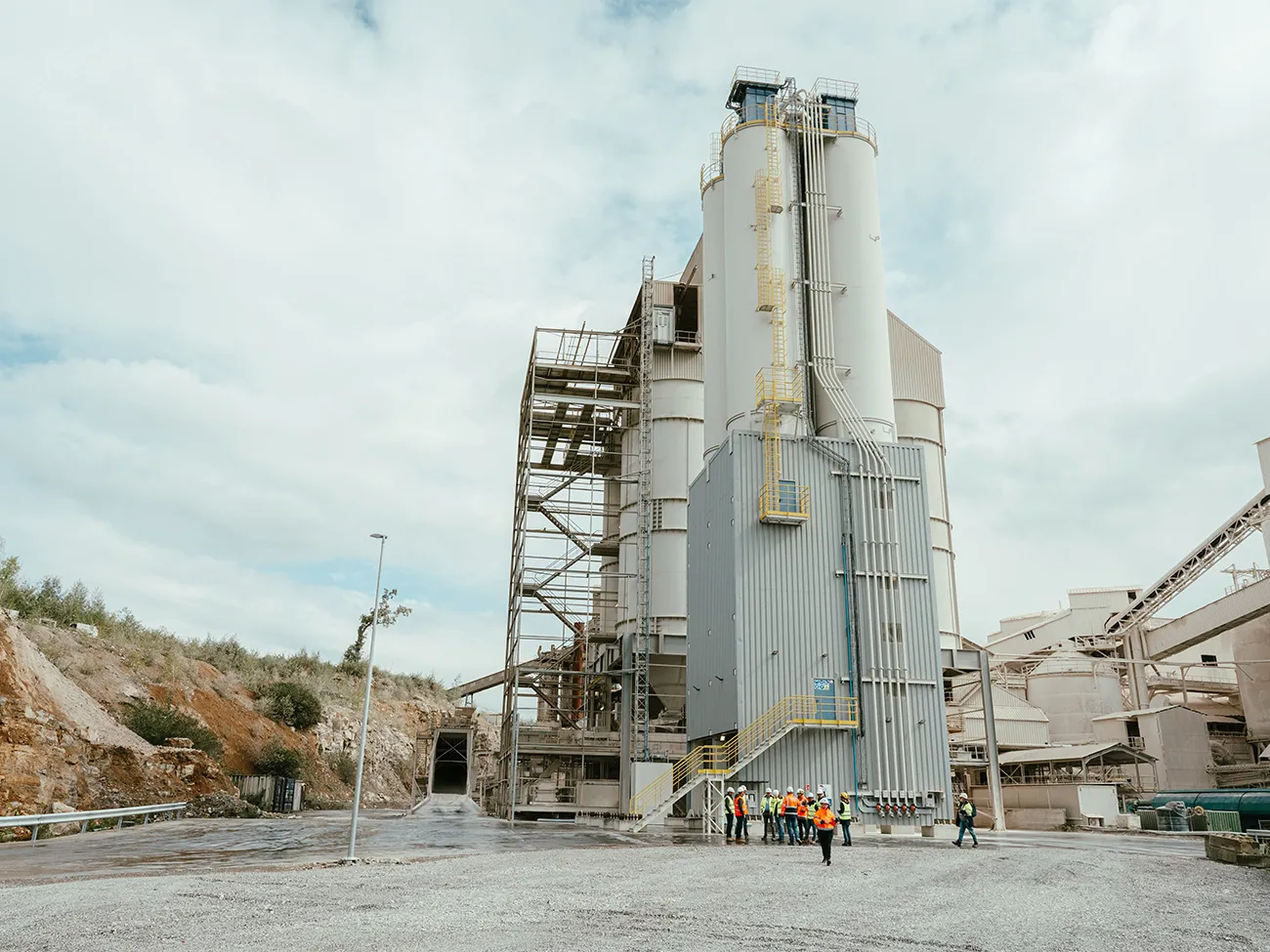
As a global authority on lime-based products, Belgian company Carmeuse is constantly innovating to offer increasingly effective and sustainable solutions for a wide range of applications. A surprising new development was recently unveiled at the Aisemont quarry, the largest in Europe, where an impressive mixing plant has been built to produce ViaCalco binders. These are designed for soil treatment to support circular earthworks.
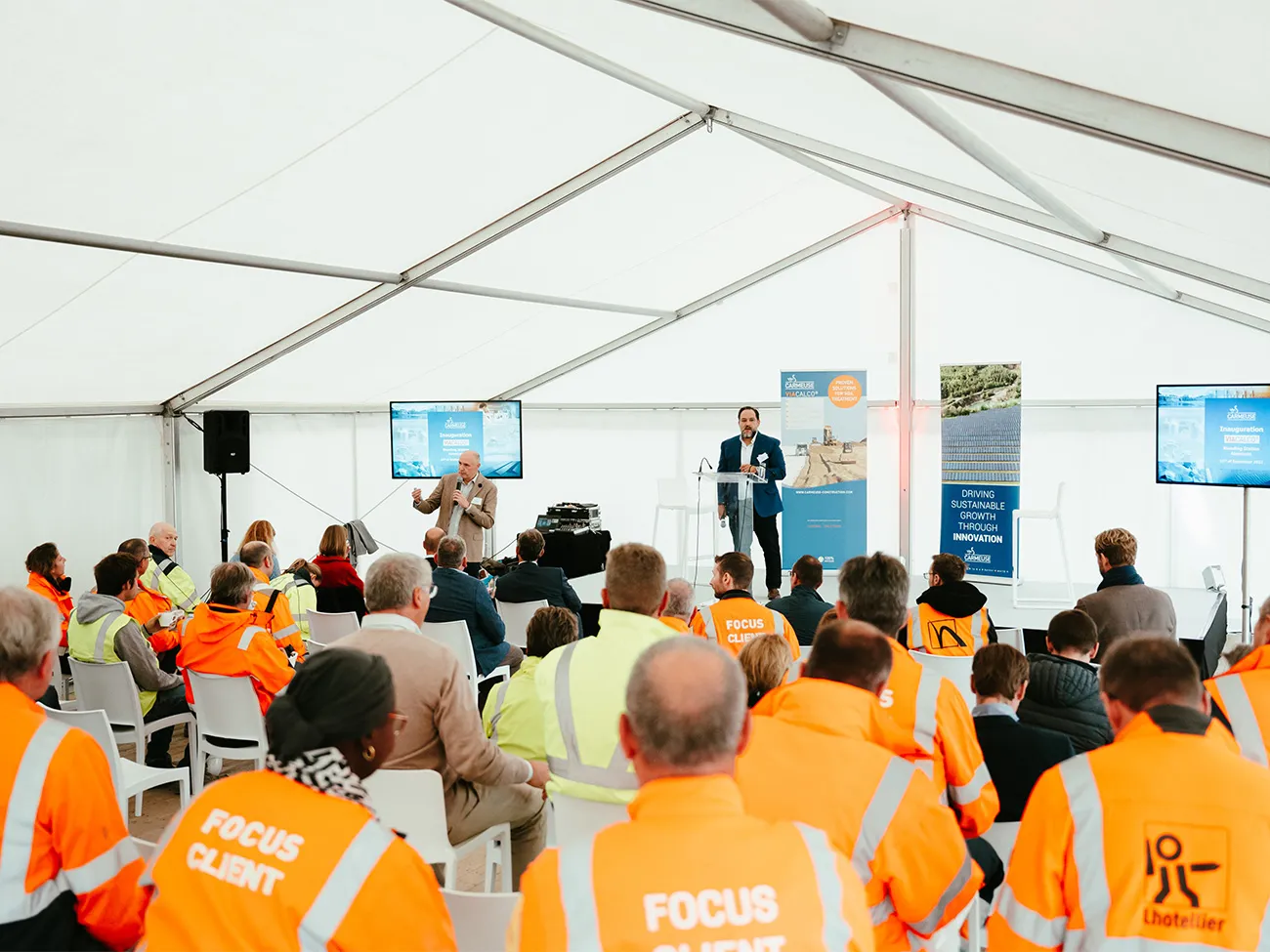
We may not always realise it, but Carmeuse is everywhere in our daily lives. Its lime-based solutions enable manufacturers across a wide range of sectors to offer quality products, from sugar cubes and glass to products for the construction and automotive industries. Working with Ecovadis, the group, based in Louvain-la-Neuve, is reducing its environmental footprint. It is pursuing a range of sustainable development objectives, including the responsible management of raw materials. And with success: Carmeuse’s Belgian sites have been awarded ‘Ecovadis Platinum’, the highest possible rating, achieved by only 1% of the companies assessed.
Reducing the carbon footprint of earthworks
Last year, an innovation was introduced at the Aisemont site that demonstrated Carmeuse’s commitment to actively reducing its customers’ carbon footprint: a new production unit for limestone filler, a substitute product that enables more sustainable concrete to be produced. This time, the target customers are earthworks contractors looking to improve the bearing capacity of soils so they can use locally available material to build a stable platform. Since the late 1960s, treating soil with quicklime has been common practice in Belgium. It was first used for motorway construction, and later for high-speed rail lines, which require even stronger foundations. In the early 2000s, the method was extended to more traditional applications such as industrial estates, airports, commercial and logistics centres, and so on. The Oosterweel Link, which will complete the Antwerp Ring Road, is a major project currently under way. Another major project is on the horizon: the new Seine-Nord Canal, which will require vast earthworks to create an impermeable soil layer. More than 30 million cubic metres of soil will need to be treated so that vessels of up to 4,400 tonnes can use the canal in future. Carmeuse binders are being used on all the associated construction sites.
Inspired by the circular economy
It is against this backdrop that the Carmeuse Group is launching its range of ViaCalco binders in Belgium, giving them a special feature: the recycling of paper ash, as part of the transition to a circular economy with a lower carbon footprint. These mixtures of quicklime and paper ash, incorporated into the soil, will form a layer as hard as one made of aggregates. Depending on the soil type, at the same dosage these products will be just as effective as alternative products, including conventional quicklime. The group has long had this expertise, but it is now being put to even more sustainable use by adding ash, a by-product that contains some quicklime and pozzolanic components.
The new facility inaugurated at the Aisemont site is a 40-metre-high ‘cathedral’ with four silos. Its fully automated continuous operation means a lorry can be loaded ‘just in time’ in less than 20 minutes. It took several years to obtain permits from regional authorities in Belgium and national authorities in France, and Wallonia has approved the use of this new ViaCalco binder for soil stabilisation at a content of 6%. Inspired by the principles of the circular economy, these new products will significantly reduce the carbon footprint of earthworks compared with the use of quicklime.
Christophe Denayer, marketing manager at Carmeuse: “We haven’t invented anything, we’ve simply developed further what already existed in some other European countries and was described in the scientific literature. These innovative products will reduce the carbon footprint by up to 58% compared with the use of quicklime. Overall, this new facility will cut the carbon footprint by 30,000 tonnes a year. A small step for the planet, a giant leap for Belgian earthworks contractors!”
Question about this story? Ask your question
Keep following this
Get an email when a new story is published. No account needed.
- SubjectGeneral







