









Matthias Diependaele: “Systematic use of circular concrete must make the construction sector more productive, competitive and sustainable”
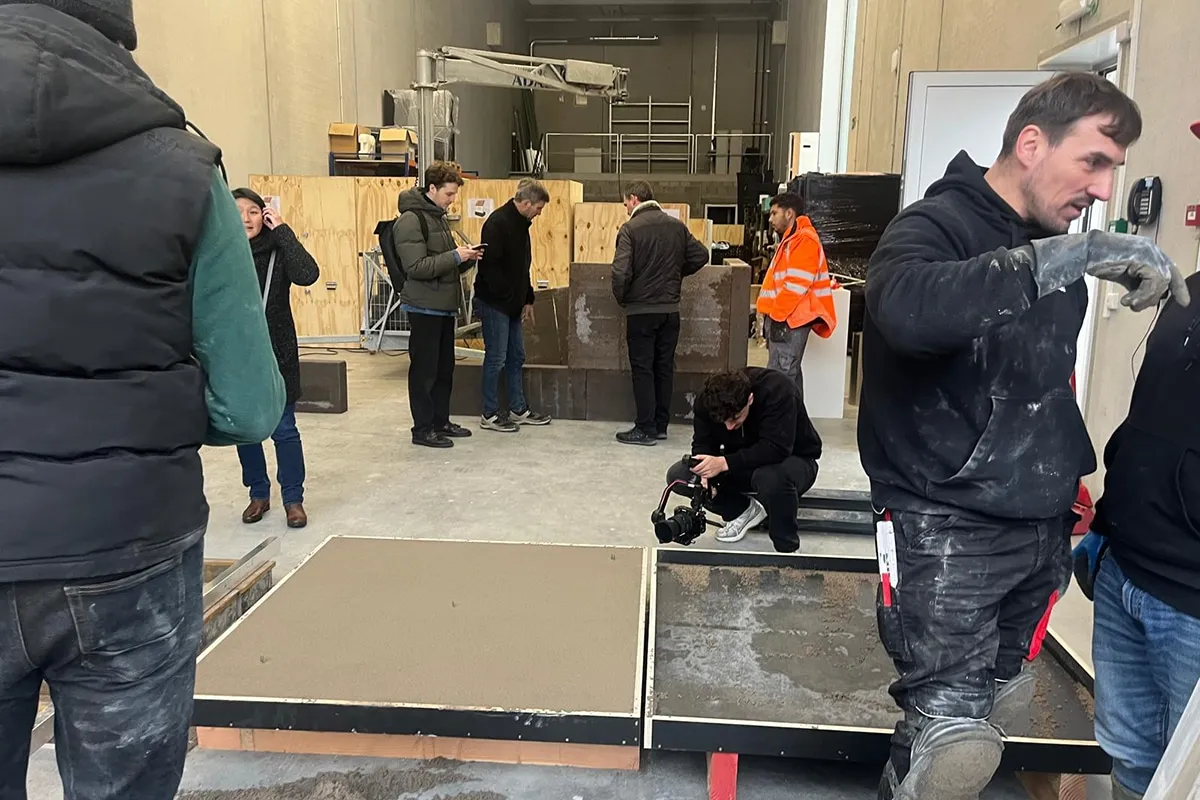
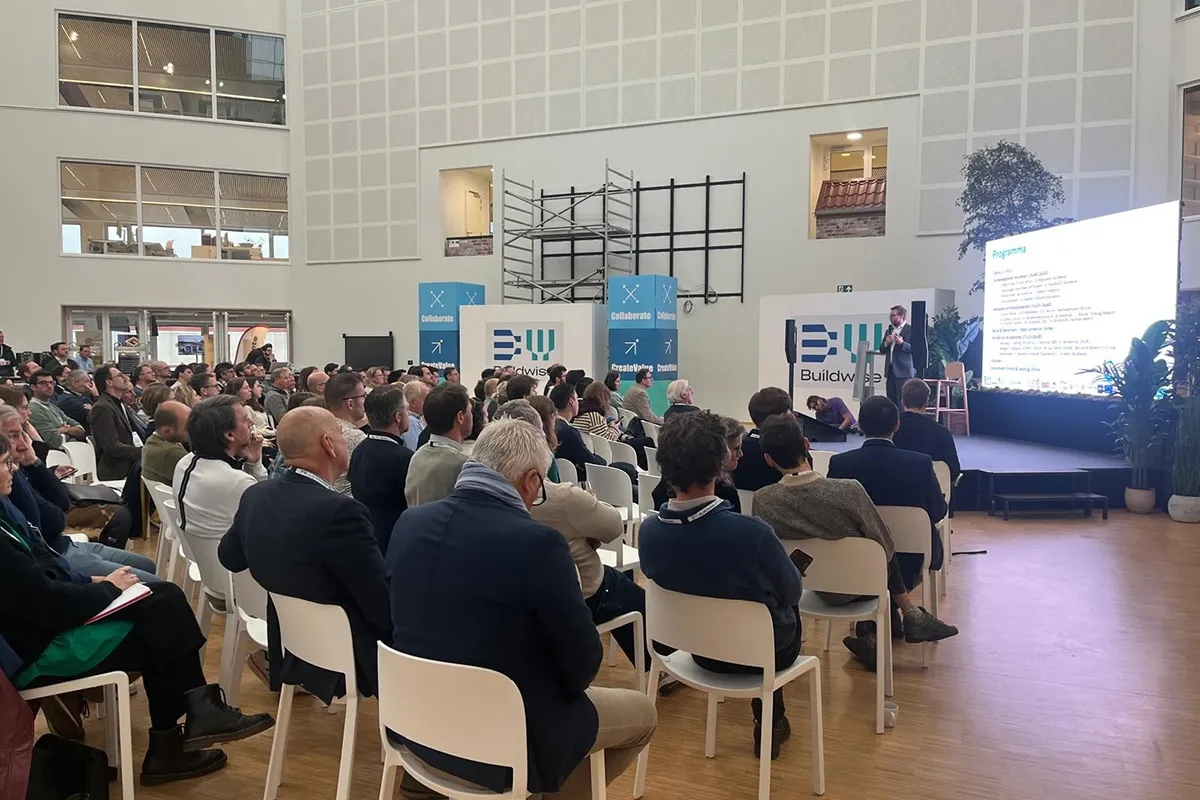
150 construction professionals attend closing event of Living Labs Circular Concrete
Circular concrete is concrete with a lower environmental impact or made with recycled raw materials. On 20 November, more than 150 construction professionals gathered in Zaventem for the closing event of the Living Lab Circular Concrete. This project, led by Buildwise, Embuild Vlaanderen and GroenBetonVert, with financial support from VLAIO and the European Union, aimed to accelerate the uptake of circular concrete by removing both technical and non-technical barriers. This matters because concrete is the most widely used construction material and has a significant environmental impact. Changes to the way concrete is used can substantially reduce CO₂ emissions and save significant quantities of raw materials. In Flanders, extensive and targeted work is under way to achieve this.
Circular concrete?
Circular concrete uses recycled or secondary materials instead of relying solely on virgin raw materials. Alternative binders and fillers can also be used to reduce concrete’s environmental footprint. The concept aims to extend the material’s service life and enable concrete components to be reused later, allowing the construction sector to work in a more sustainable and environmentally friendly way.
“It is possible to reduce a building’s embodied carbon (CO₂) by at least 10% by using circular concrete for the floors,” says Jeroen Vrijders of Buildwise. “Several projects in Belgium have already successfully used circular concrete, both in residential areas and in infrastructure projects. The market potential is considerable. Belgium’s construction sector has a high recycling rate for construction materials, and initiatives such as the Flemish Concrete Agreement are working to remove regulatory and economic obstacles.”
“Innovation is the key to sustainability, productivity and, in turn, prosperity. That applies to businesses, but just as much to government,” says Flemish Minister-President Matthias Diependaele. “When renovating our government buildings on Martelaarsplein, we used circular concrete, among other materials. It is a high-quality material with a long service life that can be fully reused. In this way, the Flemish Government is also helping to make the construction sector more productive, competitive and sustainable.”
“An innovative construction sector is one that builds circularly. Not only to reduce its environmental footprint, but also because circularity is a structural driver of a strong construction sector and a resilient Flanders. Many raw materials are energy-intensive, and are also subject to geopolitical dynamics that make supply vulnerable. Circular construction offers an effective response. This ranges from reuse, urban mining and recycling to modular construction techniques, new materials and design principles,” concludes Caroline Deiteren of Embuild Vlaanderen.
Project results
Over the past three years, the Living Lab has worked with all relevant stakeholders in the sector to make circular concrete much more accessible through new certification options, changes to standards and technical support. The concrete standard has been expanded, and work has begun on developing a standard for cement-free geopolymer concrete. To advance practical use, the quality of mixed aggregates was improved so that recycled concrete aggregate can be reused in concrete. A map of all suppliers, along with a practical guide, was developed. Five ambitious pilot projects were carried out, setting an inspiring example for the sector.
Tools have been developed to narrow the gap between innovation and certification and help circular innovations gain wider uptake more quickly. The Innovative Concrete Certificate and the innovation certificate from COPRO & Procertus enable producers to bring their circular concrete mixes to market more quickly, with the appropriate checks in place. At the same time, major players across the sector are committing to embedding circular solutions as standard practice. Clients are updating their standard specifications, cement-free applications are being explored for wider adoption, and the sector is working on a collective approach to concrete EPDs, which are crucial for objective comparisons and tenders.
The project has created a strong ecosystem that strengthens collaboration and knowledge-sharing across the sector on a lasting basis. An online community of 200 members from across the construction supply chain hosted six thematic sessions and more than 700 one-to-one meetings. Today, the platform makes it easy to find partners, share expertise and launch practical applications of circular concrete in projects. It has created a lasting network that will continue to support the scaling-up of circular concrete solutions.
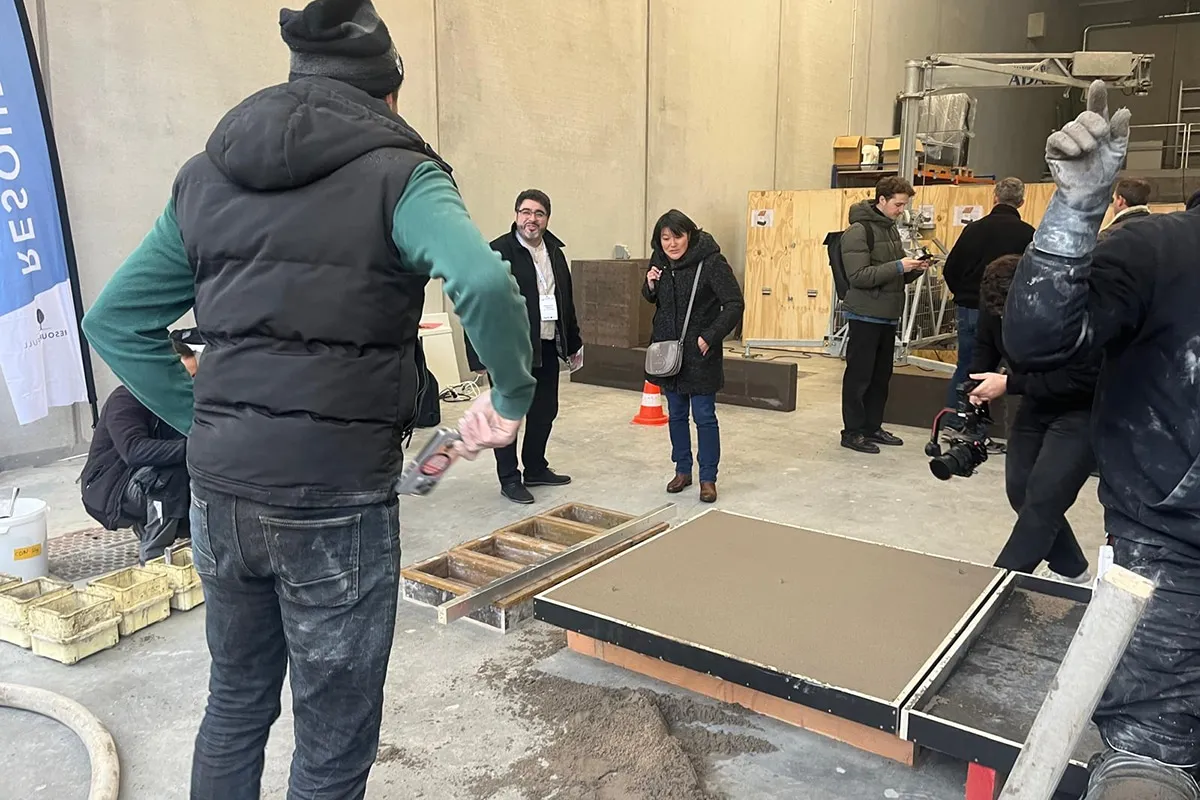
A successful closing event!
The more than 150 attendees at the closing event in Zaventem got an inspiring insight into three years of research, innovation and practical experience. At the demonstration market, they were able to see the latest circular concrete applications up close, including cement-free screeds and demountable concrete blocks. The plenary session then brought together the most notable results, from new quality assurance solutions and insights into environmental impact to practical tools that clients and producers can use immediately.
At a panel discussion, representatives of Colruyt Group, Facilitair Bedrijf, ILVO, Strabag and Furnibo, among others, shared lessons learned from the various pilot projects. They highlighted how circular concrete is already being used in real construction projects and the steps that proved essential in overcoming technical and organisational barriers. The programme concluded with a forward-looking debate in which leading sector players discussed the action now needed to embed circular concrete at scale.
The Living Lab Circular Concrete is an initiative by Buildwise, Embuild Vlaanderen and GroenBetonVert. It runs from 1/1/2023 to 31/12/2025 in collaboration with Fedbeton, VITO, VSOR, Procertus, COPRO, Colruyt Group, Facilitair Bedrijf, POM West-Vlaanderen, Strabag Belgium and ResourceFull. With financial support from VLAIO and the European Union.
Question about this story? Ask your question
Companies in this story
Keep following this
Get an email when a new story is published. No account needed.
- ThemeMaterials with a lower environmental impact
- SubjectGeneral
- CompanyCopro
- CompanyPROCERTUS







