Road construction specialist tests unique dynamic plate load tester
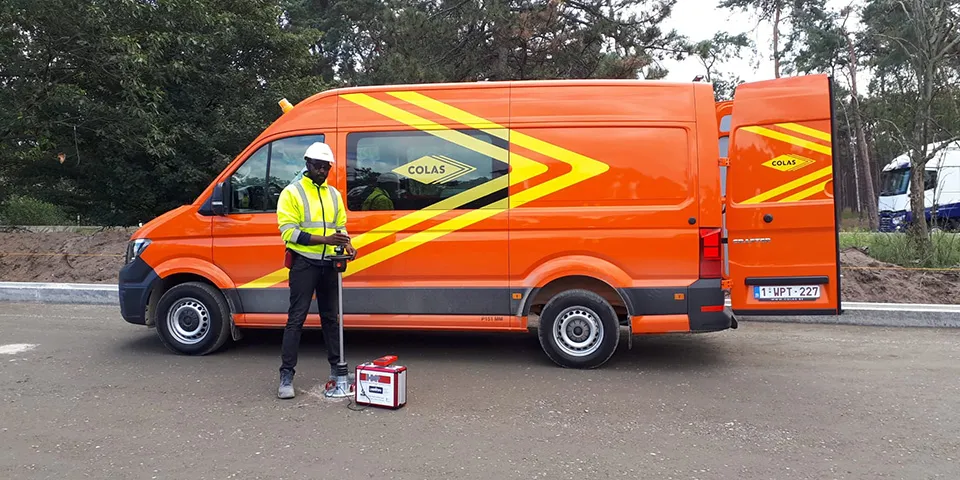
Plate load tests are needed to determine the degree of compaction of a subgrade or (sub)base. This is much simpler with a dynamic device than with static models. Road construction specialist Colas Belgium recently began using the HMP LFGpro from the Lasertopo range, supplied by experts in measuring and testing equipment, and is pleased with the results.
Colas is currently using the dynamic device on the works on the E34 in Mol-Postel. The company is using it alongside the static plate load test so that the results can be compared. Hans Van de Craen, technical manager at Colas Belgium, explains: “We are testing the device and can immediately assess whether our foundation is on the right track. This also tells us whether we can work this way in future. The device quickly and easily provides the information we need, enabling us to decide straight away whether or not to carry out additional compaction.”

A transport cart makes it
easy to move around the site.
Ease of use is a key factor
Colas Belgium chose the device from Lasertopo. The company has supplied the road construction specialist with several other devices in the past, and the partnership has once again proved successful. Few companies are yet able to supply this technology. Hans Van de Craen says: “Ease of use is a major strength of the HMP LFGpro. The compact device is easy to handle and requires only one operator. A static device needs a counterweight, such as a lorry or crane. That means extra costs that you avoid with a dynamic device. You can get started straight away and see the results immediately. Lasertopo also offers it at a very competitive price.”
“Just two minutes”
“Plate load testing equipment has been available for some time, but using the standard device is much more cumbersome,” says Fiona De Smet, owner of Lasertopo. “The Lebeck device remains reliable, but setting up the test can easily take 15 minutes. Users of the dynamic device need no additional equipment. The result is an extremely quick test that takes just two minutes. On large projects, dozens of plate load tests are sometimes carried out in a single day. With the dynamic plate load tester, the job is done in a few hours, and you can carry out the tests whenever it suits you best.”
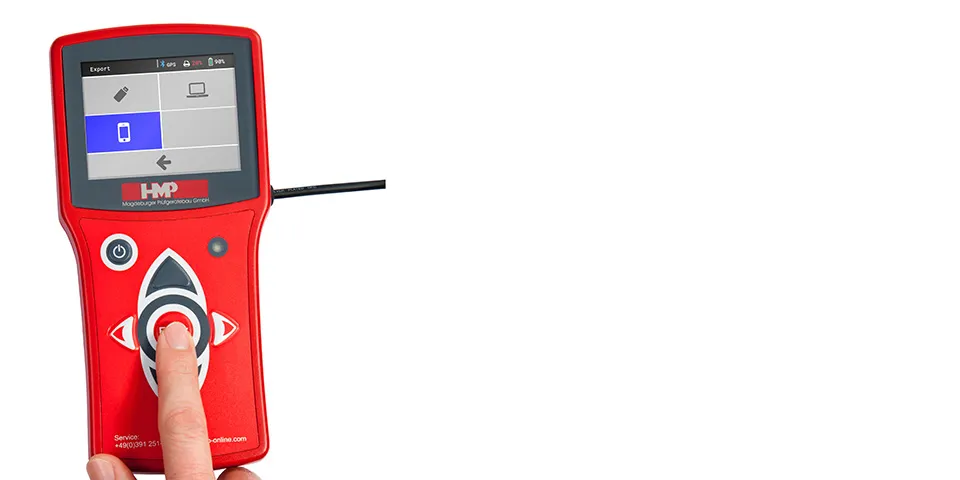
Data can be exported or shared at the touch of a button.
Easy sharing of data
Dynamic devices also allow users to work digitally. Hans Van de Craen says: “That is also part of what makes it so easy to use. We can share our measurement results straight away with anyone who needs them. It is quick and efficient. You can save all the results and export them to a PC at a later stage, making reporting easier. The device also has a built-in GPS module, which lets us use Google Maps, for example, to see where we carried out the tests.”
Standard Specification 250
Version 4.1 of Standard Specification 250 includes the dynamic plate load tester as an alternative to the static device. From next year, Colas Belgium will use these devices more widely. Fiona De Smet says: “That was not the case before, and it means that every contractor carrying out roadworks under a public contract will have to buy a dynamic plate load tester or use a laboratory that has one. It is no surprise that many contractors have been asking for this, as the device is very easy to use.”
Een zakelijke vraag aan Lasertopo BVBA? Get in touch
Companies in this story
Keep following this
Get an email when a new story is published. No account needed.
- ThemeFuture-proofing roads and railways
- SubjectMachines & equipment
- CompanyLasertopo BVBA