Pile-supported embankments on low-bearing-capacity ground
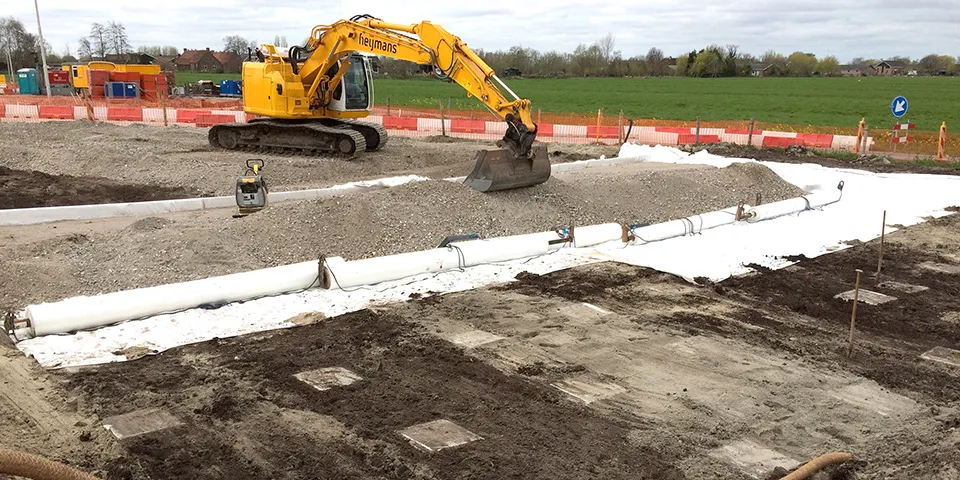
Constructing roads, railways or embankments on low-bearing-capacity ground is a common challenge. Using a geosynthetic as internal reinforcement within the soil mass prevents failure and limits differential settlement. But what about overall settlement? If the ground does not have sufficient bearing capacity, additional support will be needed. For infrastructure works, a pile-supported load transfer platform makes it possible to build embankments using a limited number of piles.
Pile cap
A cap is placed on top of the pile to increase its bearing area. Typical pile cap dimensions are 0.75 x 0.75 x 0.45m. As the cap has a larger surface area than the pile head, the distance to be bridged between piles is reduced.
Granular mattress
A strong, low-deformability geotextile or geogrid is unrolled tightly over the pile caps. Standard rolls are typically 5m x 100m. Careful planning of the installation is required, as the correct roll widths and positioning must be selected to ensure sufficient anchorage through friction after backfilling. As the geosynthetic has a limited width and therefore does not provide continuous strength in the transverse direction, a second layer of geosynthetic is unrolled at right angles to the first. The two layers are placed in contact with each other, or, alternatively, a layer of aggregate is placed between them. Marco Hazenkamp of TenCate, who has around 15 years’ experience in this field, stresses the importance of this installation plan, as complex geometries often arise, for example where the embankment meets bridges. Ideally, during the design phase, the pile pattern is determined so that it matches the dimensions of the reinforcement layers. It is important to be well prepared for construction, with the correct roll lengths and widths and a marked-out installation plan.
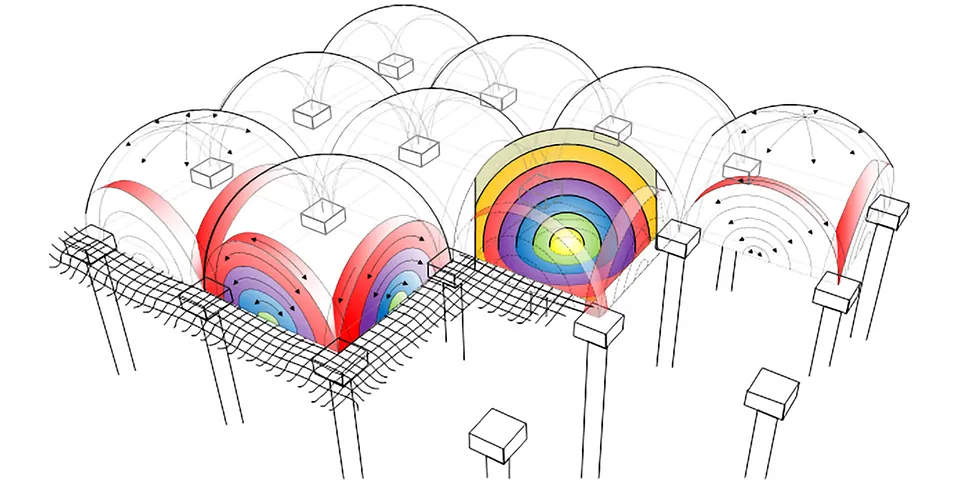
The pile-supported load transfer platform works through arching. As with the vaults in a cathedral, the applied forces are transferred to the supports. (Image: Suzanne van Eekelen, Deltares)
Arching
A pile-supported load transfer platform works through arching, with the mattress directing the load towards the piles. These transfer the forces to the underlying ground. After backfilling and compaction, and construction of the earthworks embankment, road foundations and asphalt, little or no residual settlement occurs once the road is in use.
Benefits of a pile-supported load transfer platform
Steven De Maesschalck of Texion points out that good load distribution to the ground, combined with the strength of the geosynthetic, also counteracts lateral displacement. The piles can therefore be driven at relatively wide spacing, resulting in savings for the client.
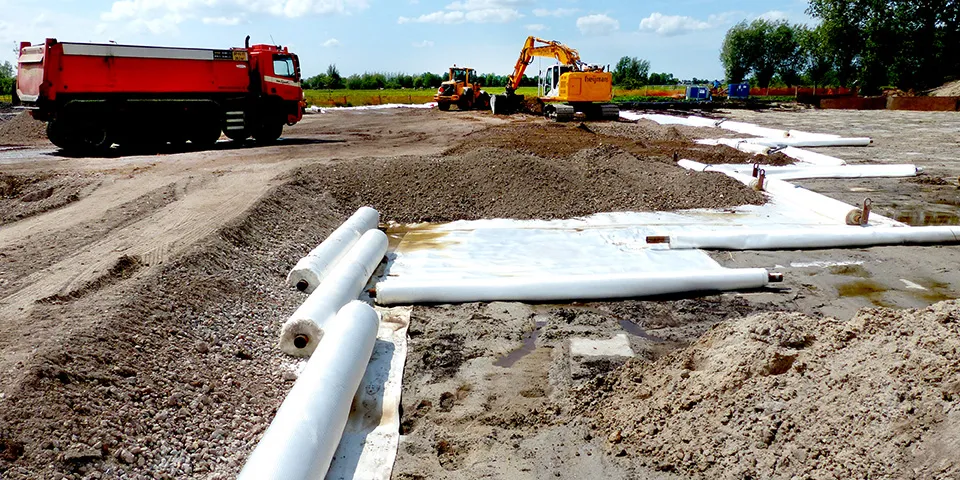
Two layers of geotextile (or geogrid) are laid at right angles to each other to ensure high strength in both principal directions.
Designing a pile-supported load transfer platform
For free, no-obligation advice and calculations using a specially developed design programme, contact [email protected]
Een zakelijke vraag aan Texion? Get in touch
Companies in this story

Keep following this
Get an email when a new story is published. No account needed.
- ThemeMaterials with a lower environmental impact
- SubjectMachines & equipment
- CompanyTexion