Permeable asphalt tackles a pressing environmental problem
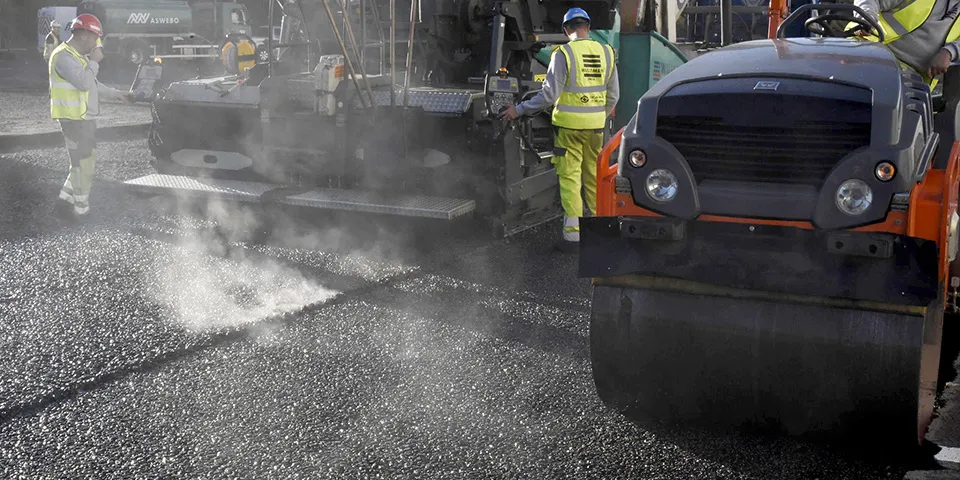
The Databank Ondergrond Vlaanderen (DOV) is clear: groundwater levels are at a historic low. One of the main causes is the amount of paved surface. In Belgium, 14% of the land area is paved and therefore impermeable to water. With its new, innovative Drainphalt asphalt surfacing, Willemen Group is helping to tackle this pressing environmental problem. The permeable asphalt was unveiled at the end of November in the car park at Flanders Expo in Ghent.
For years, too much surface water has been reaching our sewers and drainage channels too quickly. This causes flooding. That is why most planning applications must pass a water assessment as one of the requirements for obtaining planning permission. “The assessment stipulates that if you want to pave an area, you must ensure the ground has sufficient infiltration capacity,” says Tom Willemen, CEO of Willemen Groep. Drainphalt was developed to meet this requirement. It is a permeable asphalt surfacing that passes the water assessment and is specifically designed for car parks, driveways and roads around buildings.
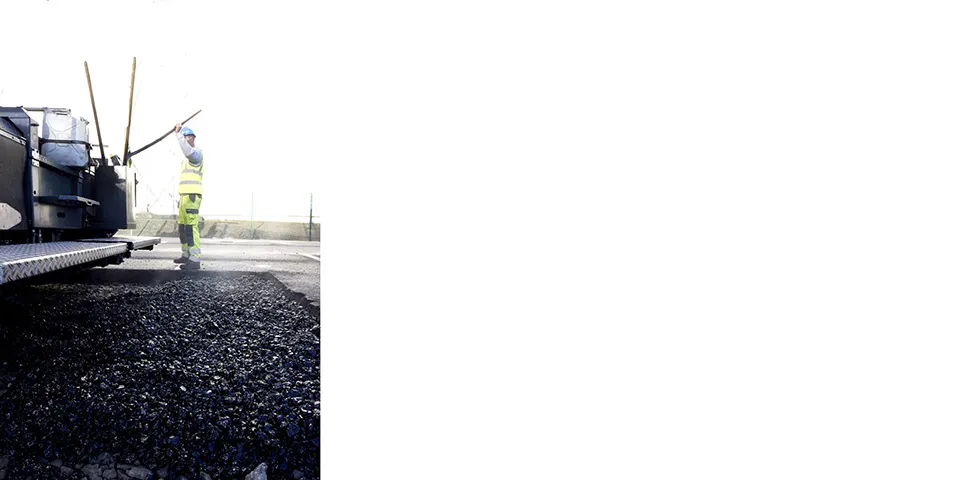
Drainphalt is a permeable asphalt surfacing that passes the water assessment and is specifically designed for car parks, driveways and roads around buildings.
Attenuation
Tom Willemen: “The asphalt stores rainwater so that it can gradually seep down into the groundwater. This makes attenuation ponds, sewers, drainage channels, gullies and ditches unnecessary. Drainphalt is therefore a cost- and space-saving solution. I am very proud that today we are combining our many years of experience in road construction with the fresh energy within our company to find answers to current societal challenges. Drainphalt is a new variant of an existing product. Innovation is often associated with new technology and entirely new products. That is important, but innovation in existing products such as asphalt also deserves due attention, especially in the construction sector.”
Drainphalt was presented to the press in Ghent at the end of November. A 20 m² strip of Drainphalt was laid in the car park at Flanders Expo and then drenched with 1,400 litres of water from a simulated cloud, equivalent to Belgium’s average monthly rainfall. The master of ceremonies, Marcel Vanthilt, saw the test pass with flying colours. “To put it to the test, we simulated a storm. The result was impressive: not a single puddle remained,” said Tom Clerinx, Innovation Coordinator at Willemen Groep.
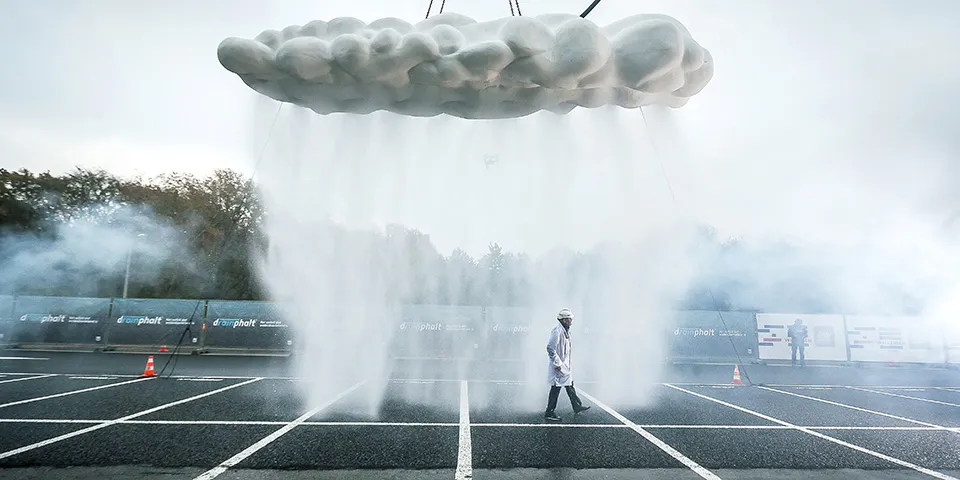
At the end of November, a 20 m² strip of Drainphalt was laid in the car park at Flanders Expo and drenched with 1,400 litres of water from a simulated cloud, equivalent to Belgium’s average monthly rainfall. The master of ceremonies was Marcel Vantilt. (Image: James Arthur)
30% void space
Drainphalt was developed by two sisters from Ghent, Inge and Els Vancompernolle. Both work for Willemen Groep and came up with the idea during an in-house innovation competition. “Drainphalt has a very coarse structure,” explains Inge Vancompernolle. “It has 30% void space, allowing water to pass through and be stored in the 20-centimetre-thick layer. It can then slowly infiltrate the ground.”
Despite its coarse structure, Drainphalt is just as hard as asphalt and can therefore be used as a road surface, but only for cars. Inge Vancompernolle: “It is not (yet) strong enough for lorries. One option is to lay a conventional asphalt wearing course over a layer of Drainphalt. When water runs off the conventional road surface onto a strip of Drainphalt, it infiltrates the ground there. Drainphalt can store 300 litres of water per cubic metre.”
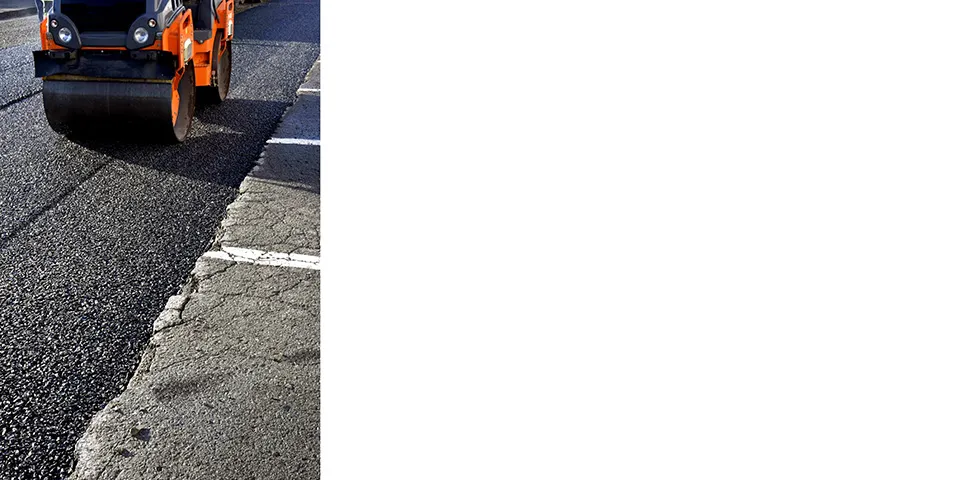
When water runs off the conventional road surface onto a strip of Drainphalt, it infiltrates the ground there.
Room for innovation
Tom Willemen is a proud CEO. “We are proud that the idea came out of our own innovation competition and that two of our talented engineers are behind this innovation. The construction sector is moving faster than ever. In the past, the best companies were those with the best bricklayers and road builders. Those days are behind us. Room for innovation and the freedom to put ideas into practice are essential. Our experience in asphalt goes back sixty to seventy years, and that experience, together with our drive to innovate, underpins these developments. The fact that we are also addressing a pressing environmental problem is an added bonus.”
Question about this story? Ask your question
Keep following this
Get an email when a new story is published. No account needed.
- ThemeFuture-proofing roads and railways
- SubjectMachines & equipment