









Integrated solar panels in noise barriers demonstrate their huge energy potential
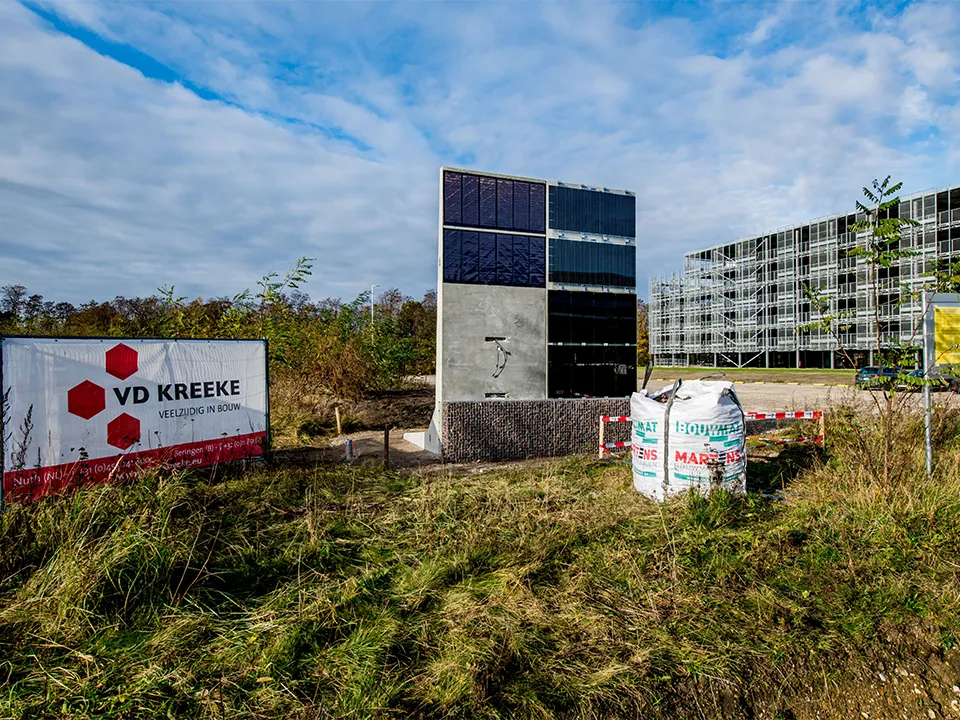
Researchers from Hasselt University and imec are building a 13 m-long test installation of noise barriers with integrated solar cells as part of the EnergyVille collaboration.
For a year, they will monitor the panels’ energy yield and stability. “This will demonstrate to the public, industry and investors that this technology is viable alongside our motorways and cycle paths,” says Prof. Dr Michaël Daenen (UHasselt/EnergyVille).
As part of the Interreg Rolling Solar project (Meuse-Rhine Euroregion), scientists are investigating whether and how solar cells can be integrated into road infrastructure such as cycle paths, motorways and noise barriers. At Thor Park in Genk, the Belgian partners in the project are working on a test installation of noise barriers with integrated solar cells. Their Dutch partners are working simultaneously on similar test installations in the Netherlands, with the aim of jointly bringing the technology into widespread use quickly.
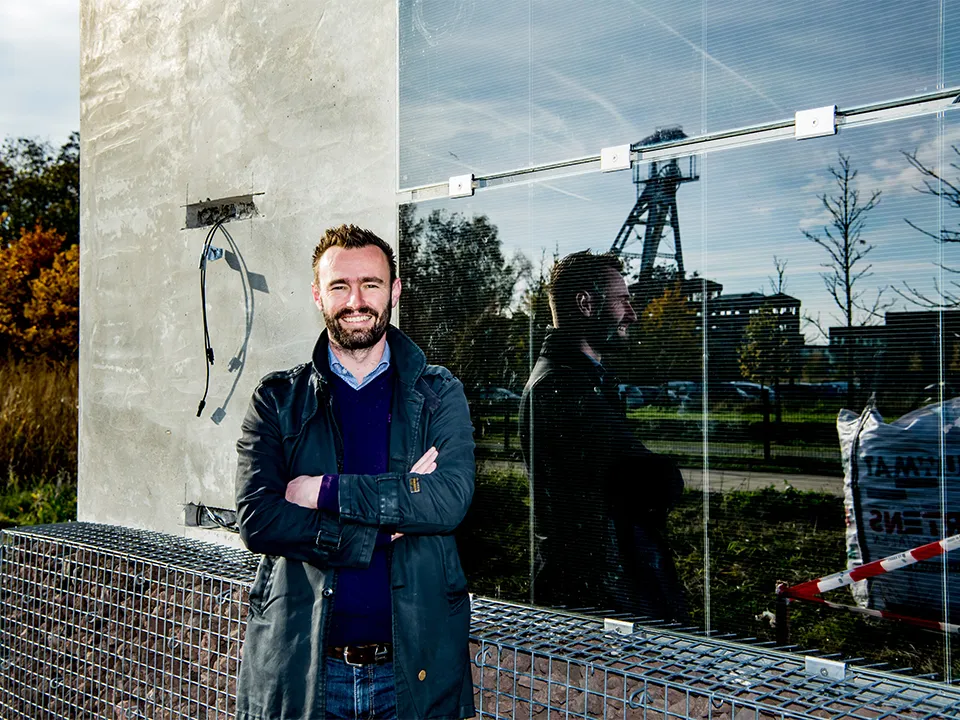
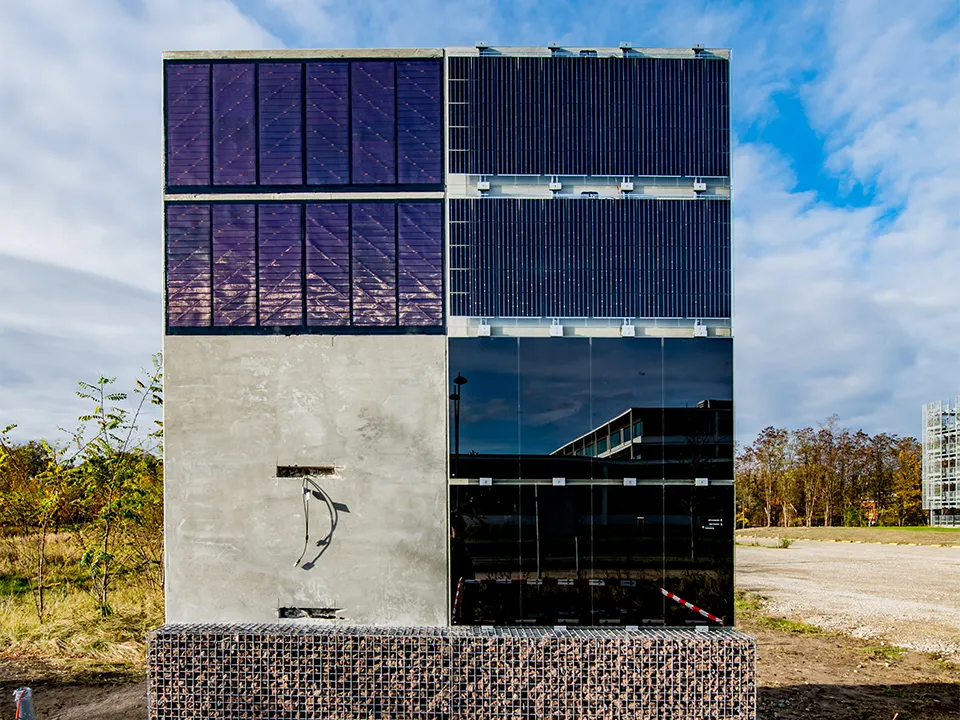
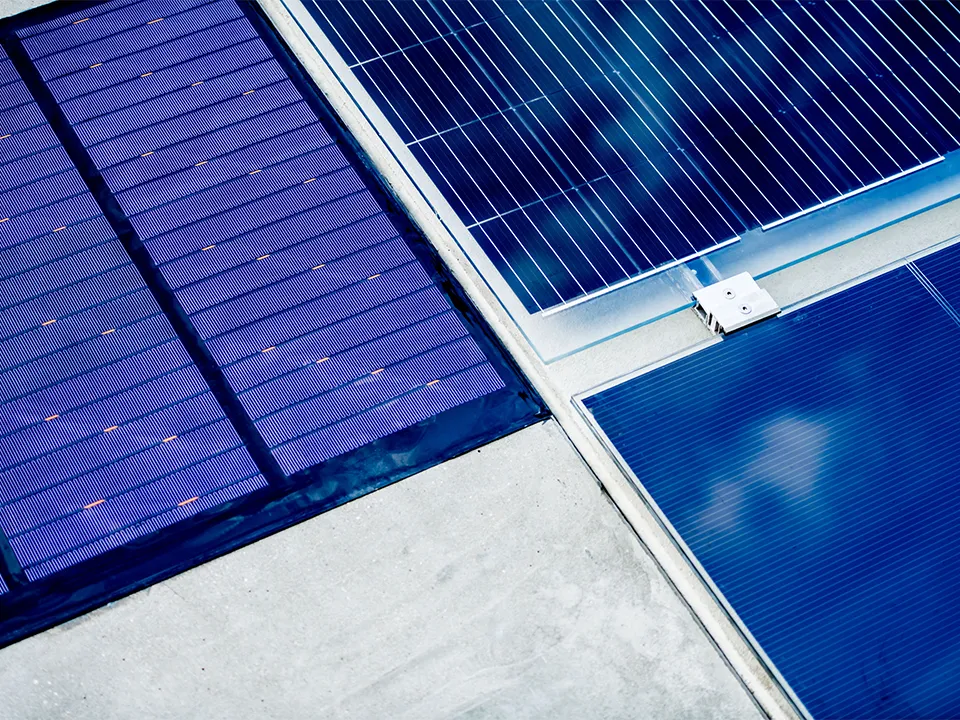
They will soon test whether solar panels can be integrated into opaque walls measuring 13 m long and 5 m high in total. To do this, they will glue conventional solar panels and wafer-thin, flexible thin-film solar panels onto concrete retaining walls or attach them to frames. Michaël Daenen: “We are also investigating the potential of a semi-transparent installation. This consists of metal frames into which we slide solar panels that can capture solar energy on both sides, known as bifacial PV. These will be installed in a few weeks.”
Tom Vandeput, Provincial Executive for the Economy and Chair of POM: “This project is highly innovative. Giving the space occupied by road infrastructure a new function as an energy producer delivers greater public value. It also makes things more sustainable. This creates endless opportunities in urbanised Flanders. If we succeed in applying this new technology to the road infrastructure of municipalities in Limburg, Limburg will truly stand out in the energy transition.”
Monitoring energy yield and acoustics
For a year, the researchers will monitor the energy yield of the different types of solar cells and assess the stability of the materials used. To do this, they will install numerous sensors in the modules, allowing them to continuously measure factors such as temperature and mechanical stress. This will give them insight into how (extremely) high or low temperatures affect energy yield. They will also investigate the effect of a heavy passing lorry or a strong gust of wind on the technology’s stability. The researchers will also have the noise barriers’ acoustic performance tested in accordance with the standard.
imec’s expertise was called upon to inform the choice of materials and technologies and to model energy yield. “Our mission is to help our partners turn new ideas into real-life demonstrations,” says Eszter Voroshazi, who leads the photovoltaic research group at EnergyVille/imec.
The technology’s potential
Led by the Netherlands Organisation for Applied Scientific Research (TNO), this project aims to demonstrate the potential and wide range of possibilities offered by solar cells integrated into road infrastructure. Bas van de Kreeke (industry partner): “As an infrastructure contractor, we see a lot of potential. Working with research institutions gives us the opportunity to further industrialise the process. I expect that soon we will be able to attach the solar panels to the noise barrier in the factory, in optimal conditions, so that it then only needs to be installed alongside the road. A plug will protrude from the noise barrier, which we will connect to the electricity grid.”
New jobs
“Projects like this fit perfectly with SALKturbo’s priorities. To build a crisis-resilient economy and create high-quality jobs, we need to excel. Innovation contributes to this. EnergyVille is at the forefront of research into the smart energy transition. We are using this leading position to make our businesses more innovative, stronger and more competitive. Limburg’s construction and road-building sectors already have an excellent reputation. If this project succeeds, it will strengthen the competitiveness of our businesses. That will be good for business growth, safeguarding employment and even creating new jobs, and ultimately for prosperity in Limburg,” concludes Tom Vandeput.
Question about this story? Ask your question
Keep following this
Get an email when a new story is published. No account needed.
- SubjectGeneral







