Grond/Weg/Waterbouw Vlaanderen is part of Louwers Mediagroep: 45+ trade platforms in the Netherlands, Flanders and Wallonia. Trade magazines, websites, newsletters, video and podcasts, since 1987.
In collaboration with Aquafin and the city of Roeselare, Aggéres will build an innovative urban retention and infiltration basin at Kerelsplein, an urban sports and play area with various facilities on the outskirts of Roeselare. By retaining, reusing and infiltrating water, the basin combines several functions. “Our retention and infiltration system also speeds up construction and significantly reduces building costs,” says Oliver Femont, managing director of Aggéres.
“It is an innovative and highly efficient system. It can also be installed in a very short time.”
Aggéres was founded in 2010, when Oliver Femont and his brother decided to find a solution for people who regularly face flooding and waterlogging. Oliver Femont: “The severe flooding around the Dender Valley at the time got us thinking. Surely there had to be a better solution than handing out sandbags, too late? At that time, no company in the Benelux specialised in an effective solution for private individuals. So we started from scratch.”
Self-closing flood barriers & firefighting water barriers
Aggéres soon launched a unique, licensed product: a self-closing flood barrier. “In short, it is a wall that rises out of the ground, without electricity or manual effort,” explains Oliver Femont. “When the water level gets too high, the basin fills up and the wall rises. We have already built the world’s longest flexible flood barrier for Rijkswaterstaat in the Netherlands, and we will soon build an even longer one at the Royerssluis in Antwerp for the Oosterweel connection. Our self-closing flood barrier can help private individuals with a small barrier at their front door, as well as assist public authorities with huge dike-raising projects.”
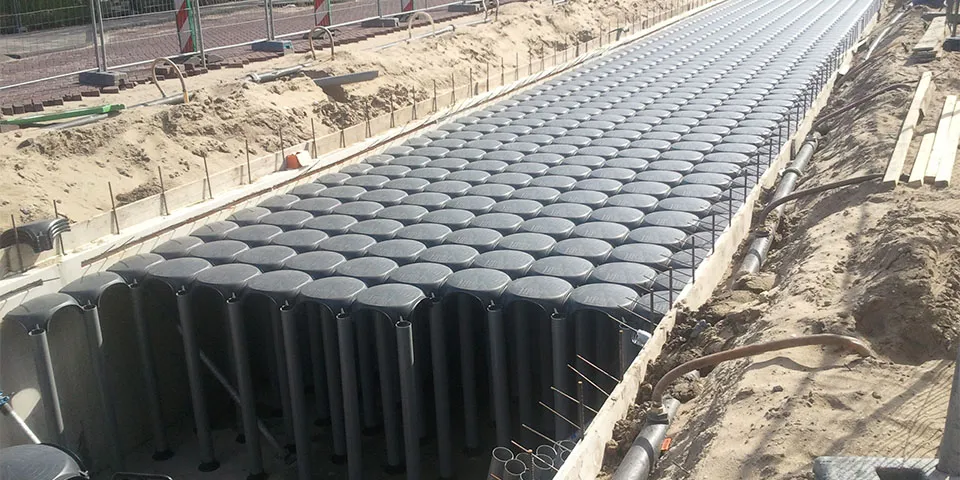
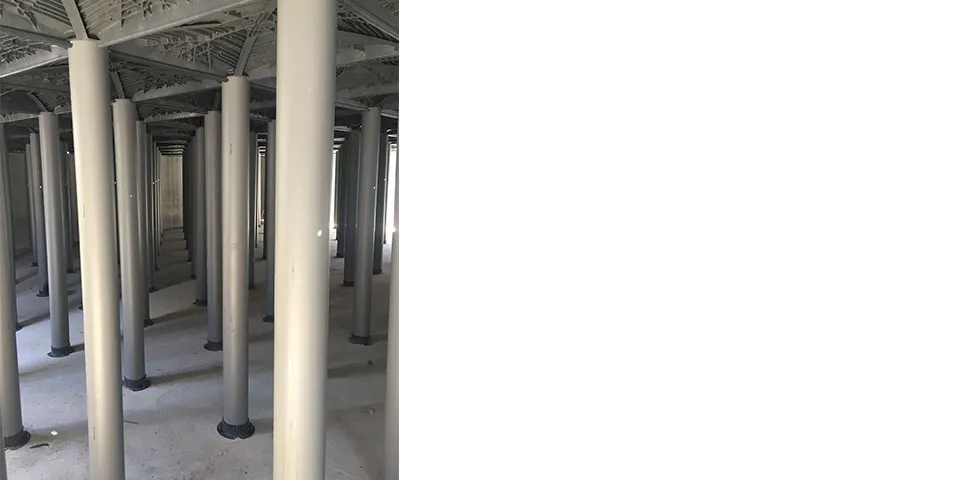
An underground concrete basement with a capacity of 500 m³ is being built.
If you can keep water out, you can also keep it in, Oliver Femont reasoned. And so, around five years ago, Aggéres developed firefighting water barriers, which are required in the chemical industry and in certain storage warehouses, where they must be installed alongside the fire extinguishing system. Oliver Femont: “When the fire extinguishing system is activated during a fire, the barriers automatically block all the gates. We have supplied our firefighting water barriers to H. Essers and Coca Cola, among others.”
Retention and infiltration basin
The third, and most recent, pillar of Aggères’ business is an innovative retention and infiltration basin. Oliver Femont: “The fact that waterlogging goes hand in hand with drought got us thinking again. This prompted us to develop a system that both prevents waterlogging and promotes infiltration. The aim is to avoid discharging a single drop of rainwater unnecessarily and to keep it all on site. We developed a unique basin that will infiltrate water automatically when it gets too full. And it gets even more sophisticated: thanks to smart controls, the basin can predict heavy storms and infiltrate water proactively, discharging it only as a last resort. The basin therefore creates a buffer volume and prepares the ground where water has infiltrated for heavy rainfall.”
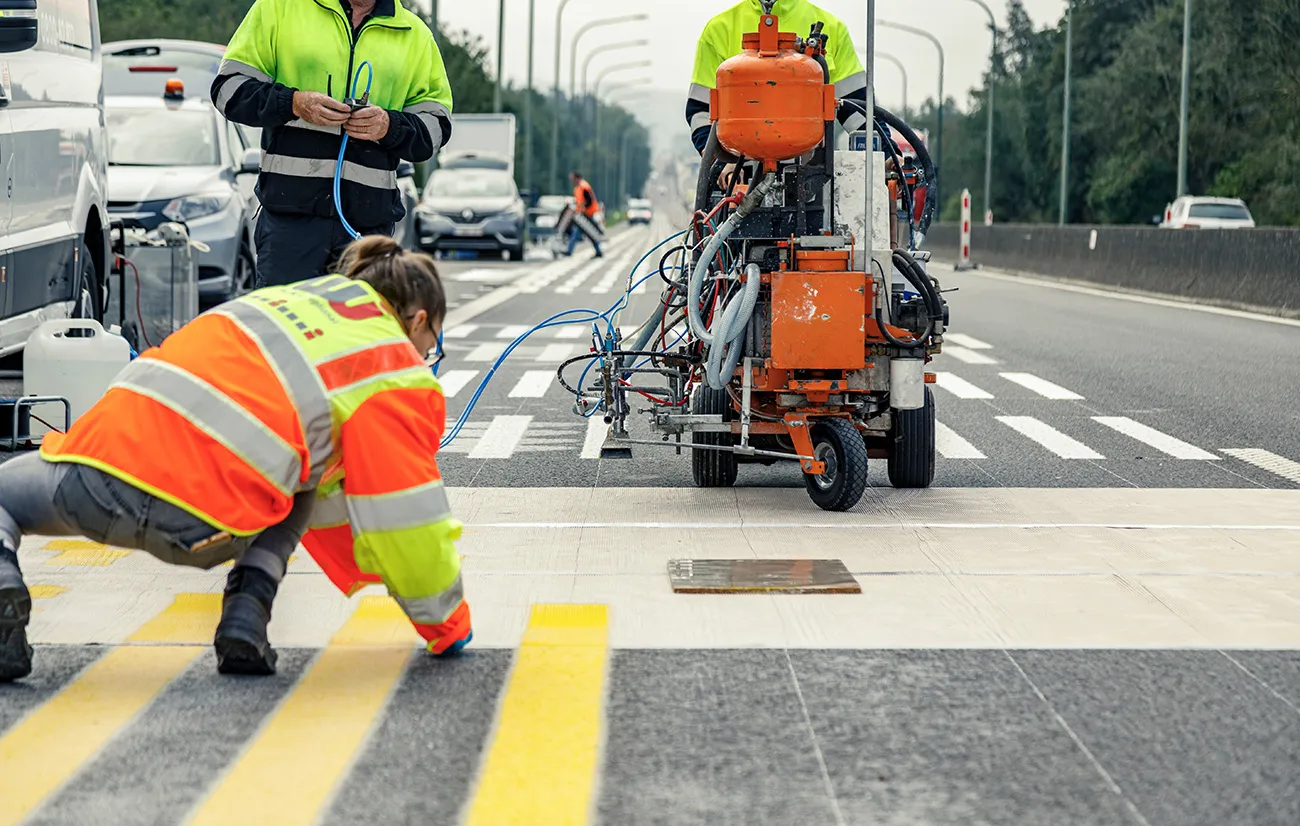
Ook de gele markeringen voor wegwerkzaamheden worden aan een grondige controle onderworpen.
Kerelsplein
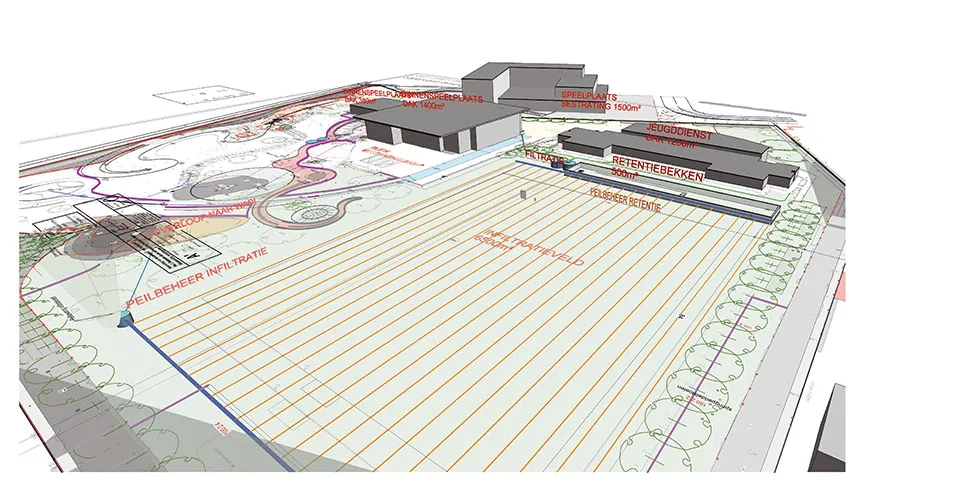
In spring 2019, this system was successfully pitched to Aquafin, which saw Kerelsplein in Roeselare as an ideal pilot project. Next year, flooding in the area around the Collievijverbeek will be tackled by fully disconnecting the rainwater runoff from around 11,000 square metres of paved surface from the brook. Oliver Femont: “An underground concrete basement with a capacity of 500 m³ is being built. The basement would normally have two zones, one for storage and one for infiltration, but given the very dry soil on site, we have opted for drainage pipes to create a huge infiltration field beneath the football pitch. The stored water will also be reused in the sports hall, function rooms and other premises, and to water the football pitch. There are also plans to build an educational water play area.”
The complete scheme to be delivered in Roeselare, with work due to start in spring 2021, is a first. “It is an innovative and highly efficient system. It can also be installed in a very short time, significantly reducing building costs. We expect the project in Roeselare to be fully completed in around three weeks. I am convinced it could become an excellent reference project for Belgium and, by extension, the whole of Europe,” concludes Oliver Femont.
Find the right company in the sectorSearch by product, area of expertise, region or project in the company directory and across all articles from Grond/Weg/Waterbouw Vlaanderen.
We use cookies to keep the site working properly. With your consent, we also use cookies for statistics and third-party banners. Read more in our privacy and cookie statement.