









Innovative milling technique reduces tyre noise
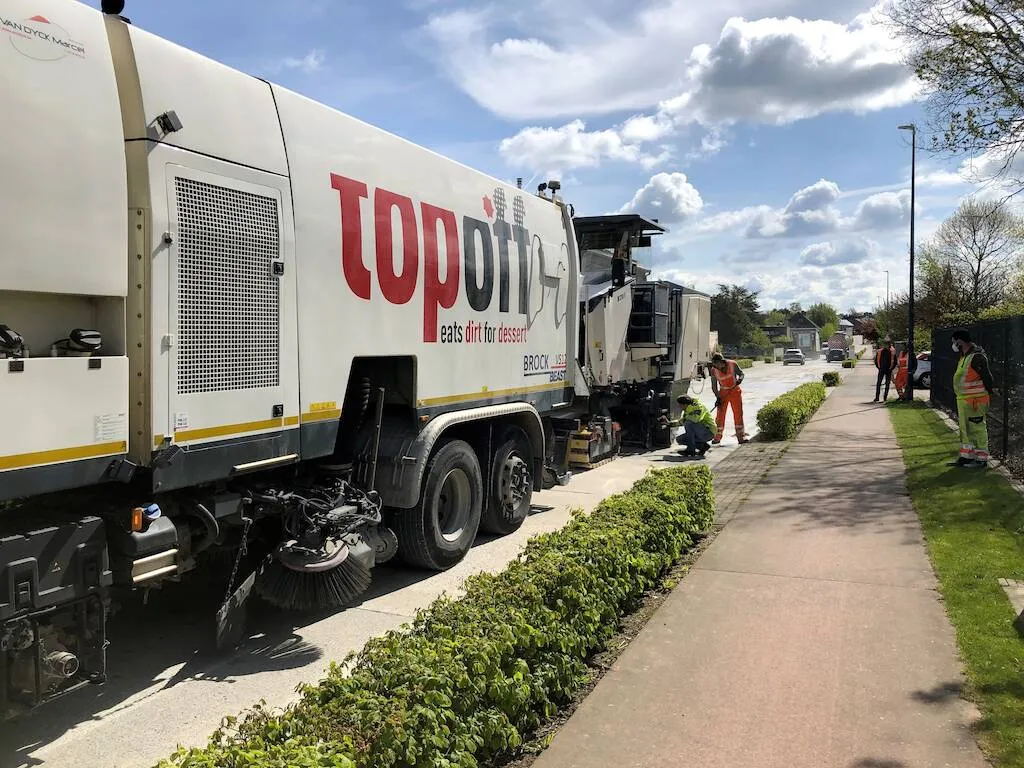
The Agency for Roads and Traffic has been trialling new techniques for quieter roads in Flanders for several years. One example is Next Generation Concrete Surface (NGCS), a finishing technique for concrete road surfaces imported from the United States and developed to reduce tyre noise. Milling specialist TopOff has invested in the necessary equipment and is set to carry out its first project on the Antwerp Ring Road.
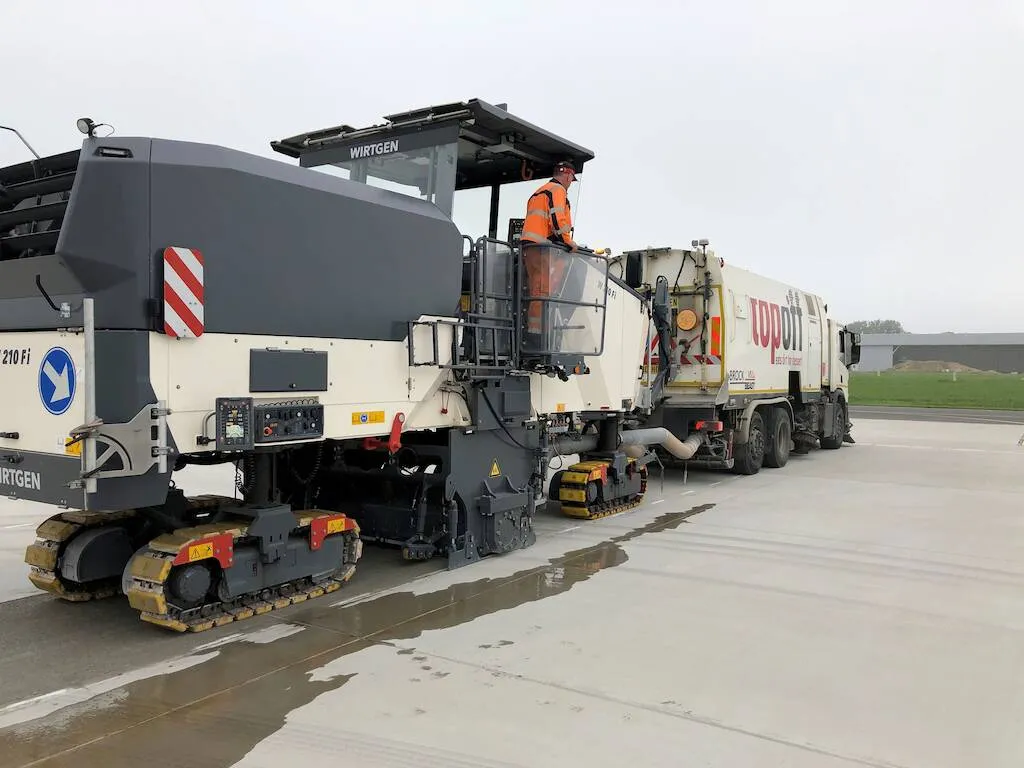
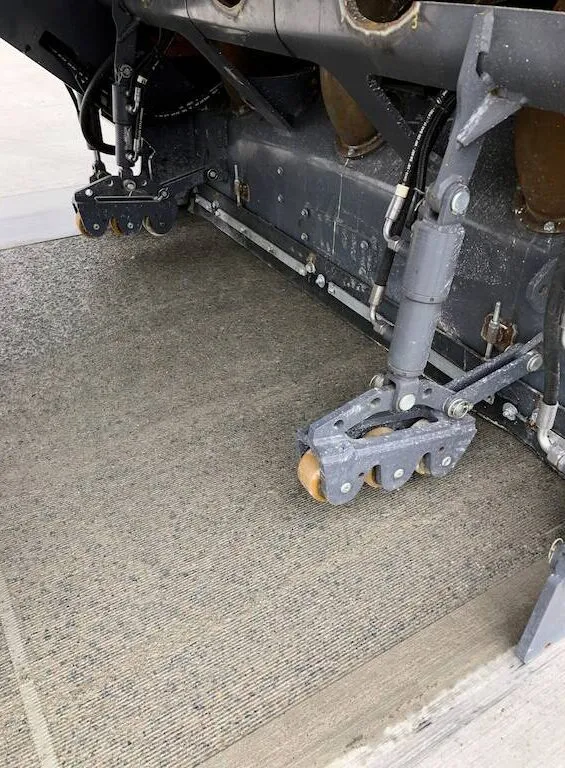
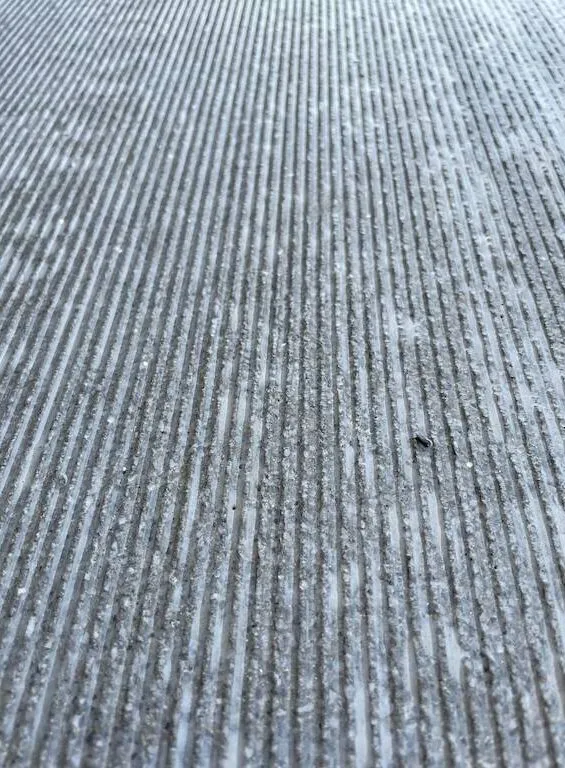
TopOff will grind grooves into the concrete road surface of the Antwerp Ring Road between Berchem and Borgerhout. This is expected to make the Ring Road considerably quieter. A machine fitted with diamond discs grinds a pattern of fine and coarser grooves in the direction of travel: one or four millimetres deep, with a spacing of no more than a few millimetres. The rough-edged grooves help reduce tyre noise, the noise generated by contact between a tyre and the road. “As a forward-thinking and innovative milling specialist, we did not hesitate to invest in this specific application,” says John Vastmans, director of TopOff. “We went to the United States to learn about the technique and set about sourcing the right equipment ourselves. We removed the milling drum from our existing machine and then fitted a grinding drum. A number of technical modifications were also needed, such as adjusting the rotational speeds.”
A clean surface
Top Off has already successfully completed its first project using the grinding technique, for the municipality of Kortenaken. The 12,000 m² section was treated using the technique, resulting in a noticeable reduction in tyre noise. John Vastmans says: “We learned a lot from this project and it gave us the opportunity to fine-tune the machine. We also made sure the slurry is extracted directly from the grinding drum. Once our machine has passed, it leaves behind a completely clean, ground surface. Later this year, we will grind a section of the Antwerp Ring Road between Berchem and Borgerhout using the new technique. Noise measurements will be taken at the same location both before and after grinding, so the results can be compared.”
Research
The Road Research Centre (OCW), like the Agency for Roads & Traffic, has also been researching quieter roads for many years. Since tyre noise becomes the dominant source of noise once a car is travelling faster than 30 to 40 km/h, it makes sense to focus on noise caused by tyre-road interaction. In 1980, a researcher at the Road Research Centre (OCW) was the first to identify the mechanisms that contribute to tyre noise and establish the link between tyre noise and road-surface characteristics. Choosing these characteristics carefully can significantly reduce tyre noise. Demand for low-noise road surfaces has increased since then, and received a boost when the European Commission issued the so-called Environmental Noise Directive 2002/49/EC in 2002. This required EU Member States to draw up periodic noise maps covering, among other things, traffic noise, and to develop action plans for problem areas. The project on the Antwerp Ring Road marks another step towards quieter roads.
Innovation
It comes as no surprise that TopOff is investing in this specialist technique. Innovation is in the milling specialist’s DNA. The company is currently developing its own system for breaking up concrete by vibrating it at a specific frequency. Innovation is also a priority at subsidiary Innotrax, which focuses on the rail sector. Innotrax has worked on the Paris Metro for several years in a row, using its own sophisticated, patented 3D milling technique.
Een zakelijke vraag aan Top-Off NV? Get in touch
Companies in this story

Keep following this
Get an email when a new story is published. No account needed.
- SubjectGeneral
- CompanyTop-Off NV







