









How Vandersanden is helping to create climate-resilient public spaces
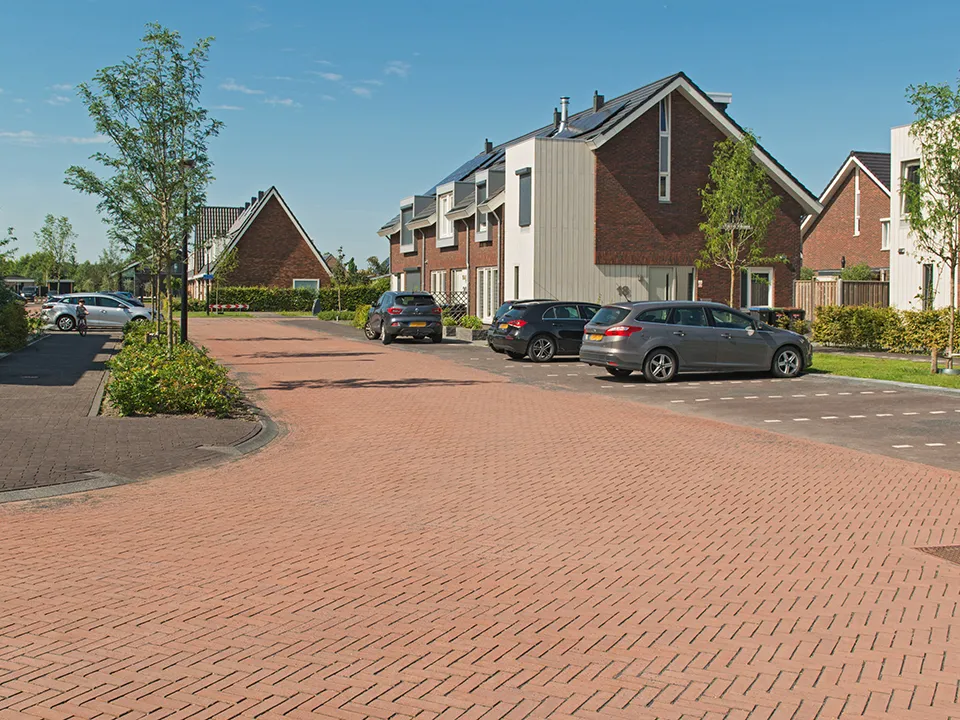
Adapting our public spaces to climate change is one of the biggest challenges facing the Belgian government and construction sector. Vandersanden is leading the way on climate adaptation, developing solutions to address heavy rainfall and soil drought.
Our climate is changing. Across Europe and beyond, summers are getting hotter and periods of heavy rainfall are occurring in increasingly rapid succession. The National Climate Commission estimates that by 2050 climate change will cost Belgium an additional 9.5 billion euros, or 2 per cent of GDP, as a result of extreme heat, drought and flooding. In response, the Flemish Government launched the ‘Blue Deal’ in 2020 to make Flanders better equipped to withstand prolonged periods of drought.
Heat and prolonged drought lead to low groundwater levels and water shortages, affecting agriculture among other sectors. By contrast, periods of extreme rainfall increase the risk of waterlogging and flooding, particularly in urban areas, which are generally less resilient to climate change.
This paradox, with our public spaces suffering from both too much and too little water, poses a major challenge for governments: how can we design our public spaces so that we can not only drain rainwater away, but also retain it?
Climate adaptation at Vandersanden
As a family business, we ask ourselves every day how we can help create pleasant places to live that anticipate today’s and tomorrow’s environmental challenges. We think in generations, not years. That is why we are keen to help create public spaces that remain sustainable, climate-resilient, attractive and high-quality, not only today but also in 10, 50 or 100 years’ time.
We are committed to climate-adaptive solutions based on these three principles:
- Tailored to local needs: climate adaptation goes beyond combining products. Every urban neighbourhood and every village centre is different. To invest in sustainability, we need to develop system solutions that address (hyper)local challenges. These include underground water flows, soil type, changes in elevation that affect water flows, paved and built-up areas, groundwater levels, rainfall intensity and local annual rainfall.
- Simplicity and accessibility: climate adaptation should not be difficult. At Vandersanden, we aim to provide climate-adaptive solutions tailored to contractors, so they need to make few or no changes to their working methods. We believe these solutions should be straightforward and not overly complex, at the lowest possible cost.
- Attractiveness and quality: Vandersanden believes that local authorities should not have to compromise between attractiveness and sustainability when shaping their public spaces. Climate-adaptive solutions should meet the same quality standards as conventional products and look just as attractive and high-quality.
In practice
How can we tackle waterlogging and water scarcity in practice?
In the past, the guiding principle was to drain rainwater away as quickly as possible. That approach is now outdated: we must try to retain water where it falls. Draining rainwater too quickly disrupts the natural replenishment of groundwater, which is particularly important during prolonged periods of heat and drought.
At Vandersanden, we believe water-permeable paving can help address the growing problems of waterlogging and drought.
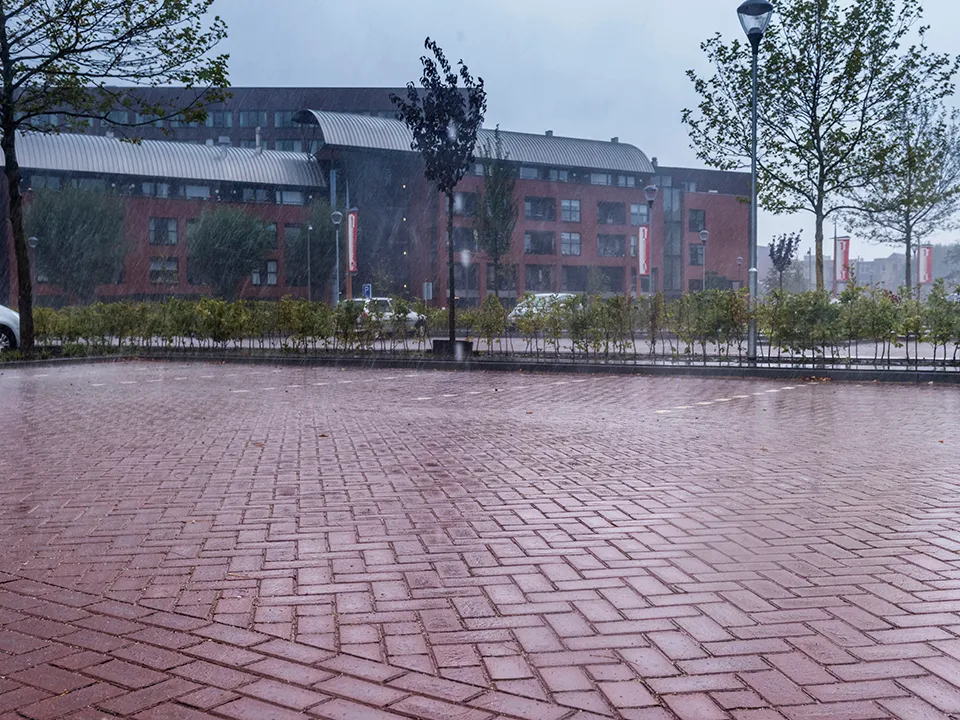
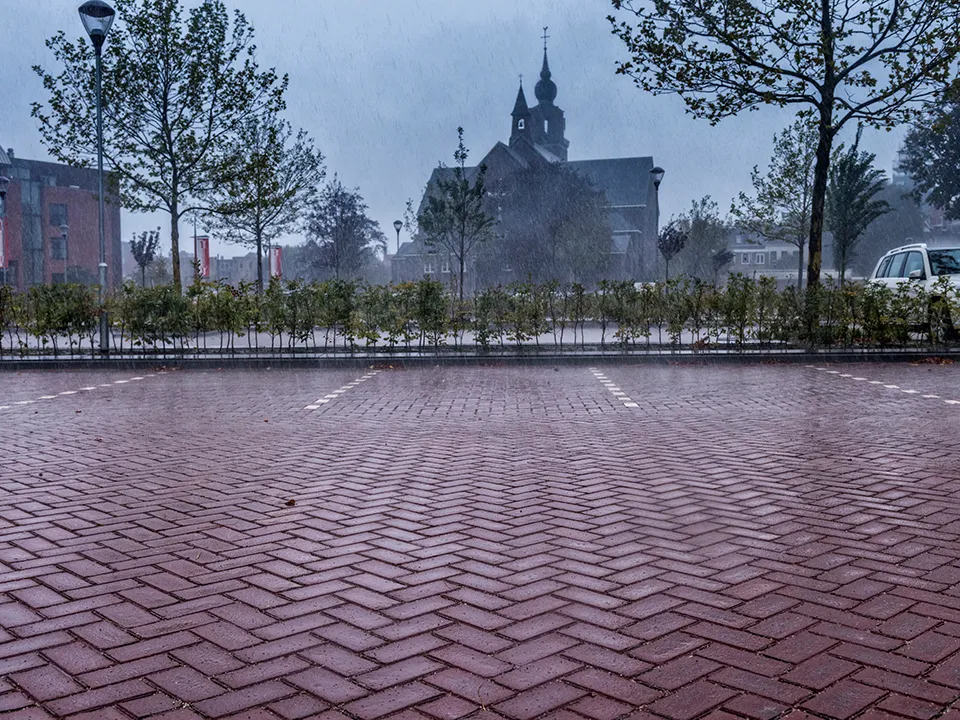
Water-permeable paving allows rainwater to infiltrate where it falls. The water can then percolate into the ground through the sub-base or, for example, be discharged at a controlled rate into a WADI or surface water. Disconnecting rainwater from the sewer system prevents overloading and sewer overflows. Wastewater treatment plants also work more effectively when rainwater does not dilute the wastewater. Water-permeable paving also helps during prolonged periods of drought: by retaining water in the ground, it maintains groundwater levels and reduces the risk of soil desiccation and salinisation.
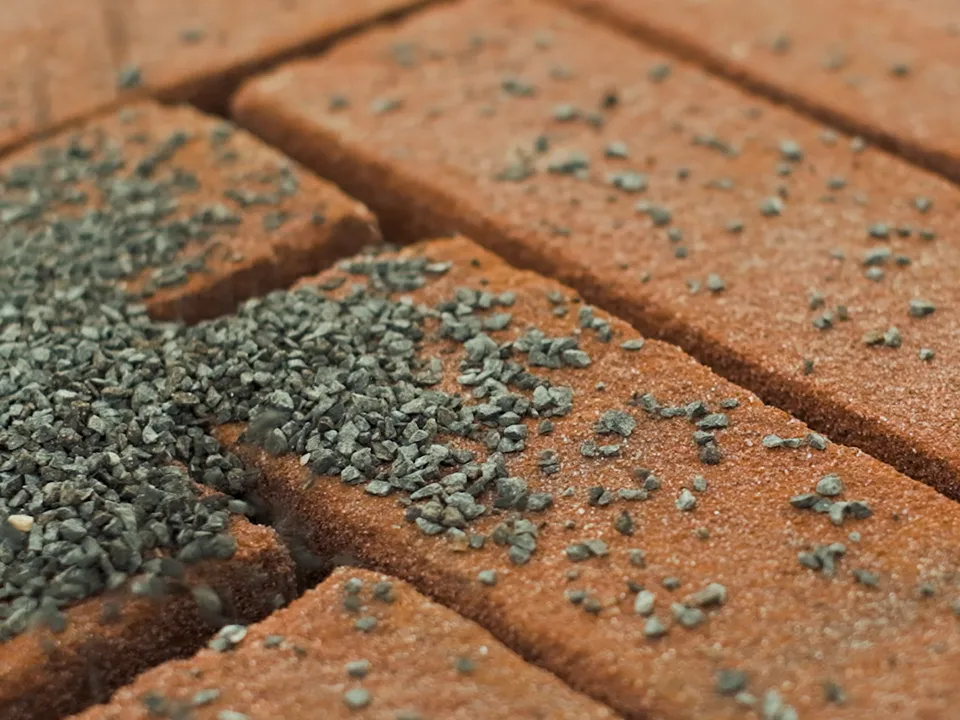
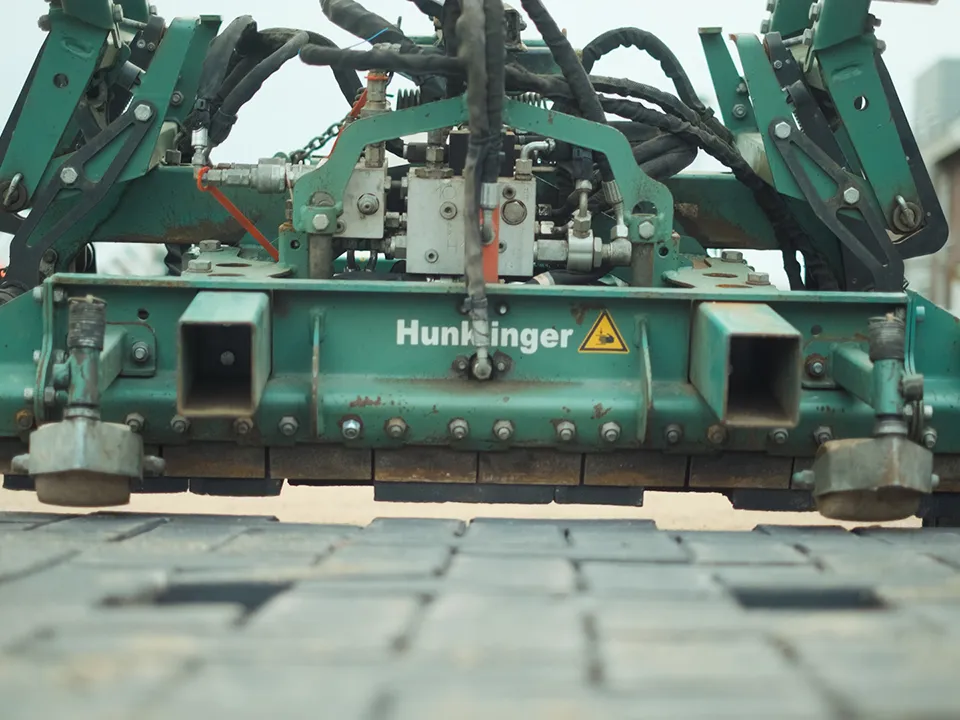
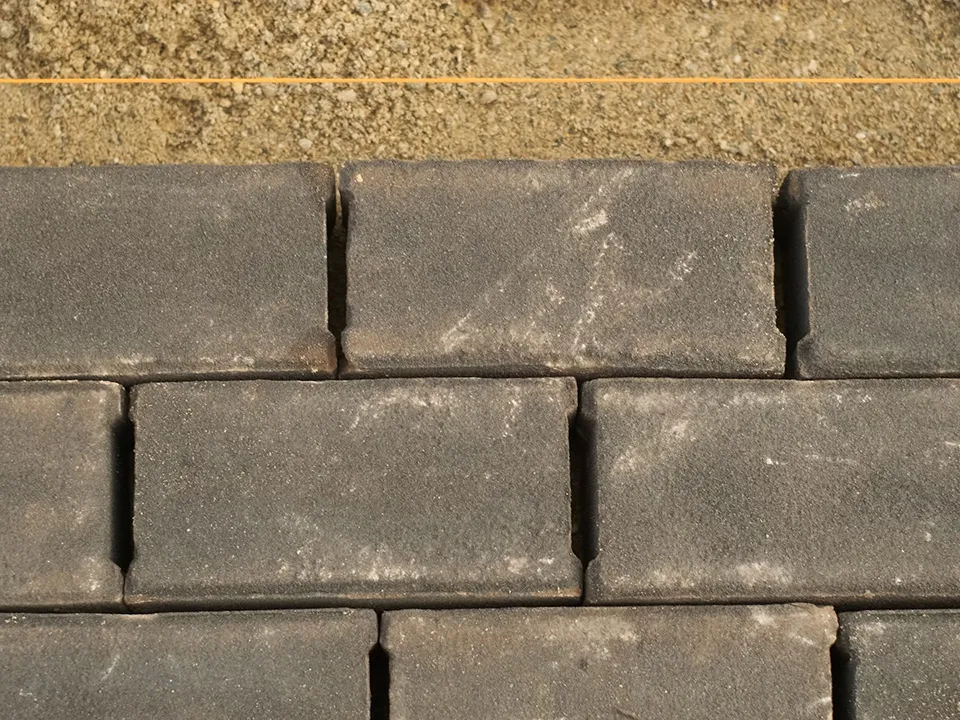
That is why Vandersanden developed Drainflow®: permeable clay pavers that combine the quality of conventional clay pavers with water-infiltration properties. The pavers can be laid mechanically, and their use avoids other complex and costly measures, such as installing separate sewers for rainwater. They are practical and easy to incorporate into existing built-up areas.
In short, permeable clay pavers, combined with the right sub-base, are a simple, attractive and sustainable solution that helps future-proof our public spaces against the effects of climate change.
What does the future hold?
Vandersanden is proud to contribute to the liveability of our public spaces with innovative solutions and tailored advice. In this way, we are helping to create attractive and sustainable cities across Europe.
We are already making climate adaptation a priority, while also looking ahead. The focus is currently on 2050, but climate change will remain a major challenge for decades and centuries to come. That is why we are working, among other things, to develop CO2-neutral and even CO2-negative bricks. Our aim is to minimise the CO2 impact of our bricks, resulting in a favourable life cycle assessment (LCA) and environmental cost indicator (MKI). In addition, our energy-efficient brick kiln in Tolkamer is already helping us reduce CO2 emissions from our production processes.
Finally, Vandersanden as a company will also continue to evolve.
In an increasingly complex world and climate, Vandersanden is evolving from a manufacturer of facing and paving bricks into a partner for local authorities looking to shape their public spaces sustainably and make them climate-adaptive. By joining forces with our partners and local authorities, we are taking a step forward together in making public spaces more sustainable in Belgium and beyond.
Een zakelijke vraag aan Vandersanden? Get in touch
Companies in this story
Keep following this
Get an email when a new story is published. No account needed.
- ThemeSpace for water and green infrastructure
- SubjectGeneral
- CompanyVandersanden







