









How green is the future of our cities?
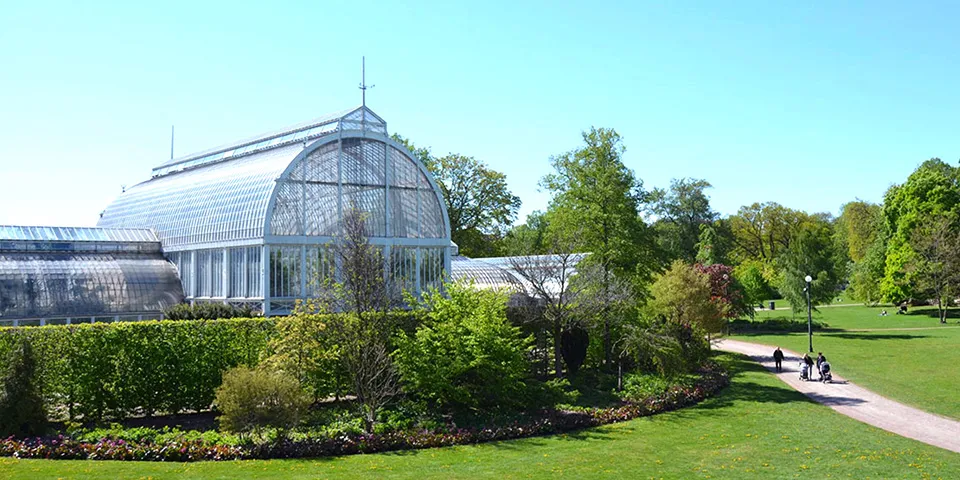
At the end of September, the two-day Living City conference opened in Gothenburg, Sweden. Together with policymakers and a panel of eminent experts, 180 participants from 20 countries explored the measures and interventions needed to make our cities greener and, consequently, more liveable. Husqvarna was the driving force behind the event for the fifth time. For this edition, it joined forces with Johanneberg Science Park and the city of Gothenburg, one of the most sustainable cities in the world.
The conference’s central themes were pro urban landscaping, future urban green-space management and the rise of sustainable smart parks. Technology is playing an increasingly important role in this. Solutions are being sought to improve the efficiency of green-space maintenance, enhance the recreational value of parks and reduce their environmental footprint through the use of digitalisation, automation and electric power sources.
Major challenges
Before long, more than 75% of the world’s population will be living in cities. It is also expected that up to 1 billion people will migrate to more northerly regions because of global warming. Not only countries, but individual cities too, will need to draw up master plans with specific environmental objectives. Transport will have to move away from fossil fuels, and every square centimetre of available land will need to be put to good use. Green public spaces are important for quality of life and social cohesion, as are the rooftop and urban farms that are rapidly gaining ground. Urbanisation also places policymakers under considerable pressure. Planning and architecture will have to be rethought to safeguard liveability in cities. In all this, we will increasingly depend on digitalisation, automation and Artificial Intelligence (AI) to make accurate forecasts.
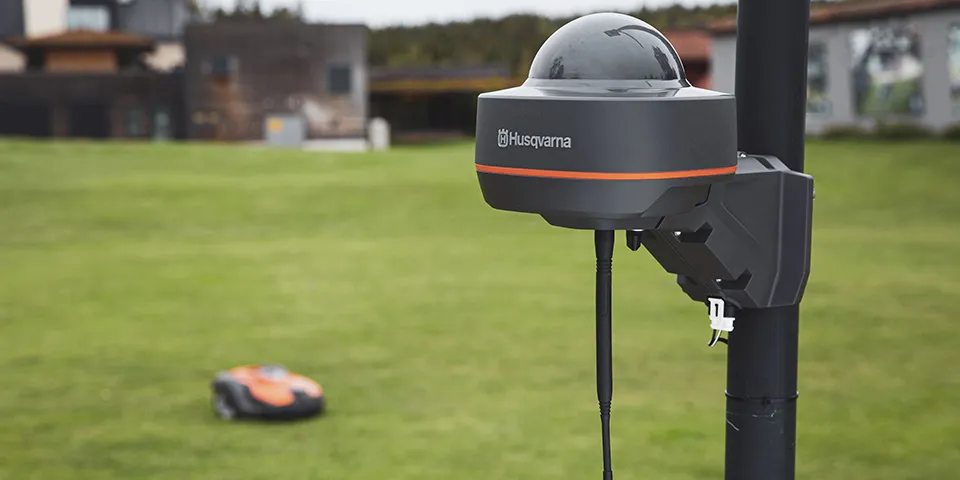
Satellite-guided robotic mower.
Improving liveability
Nico Wissing of the Dutch organisation Green Label outlined a number of solutions for improving quality of life in cities. This will, however, require a major change in mindset. We are too quick to think that we are acting sustainably when we choose a wooden garden shed over a plastic one, overlooking the fact that trees have to be felled to make it. Our current obsession with neatly trimmed lawns, hedges and shrubs is a death blow to biodiversity. Wissing describes it as outright ecocide: the felling of tropical trees, quarries for extracting garden and potting soil, and the immense pollution caused by 2 billion plastic plant pots each year. He is calling for greater environmental awareness among (landscape) architects and city planners. In this context, he also envisages the emergence of new professions, such as drone gardeners, green chefs, eco-educators, and marine and urban farmers … His vision is gaining increasing support internationally.
Making the most of technology
Husqvarna introduced us to the latest developments in battery-powered outdoor equipment and its integration with intelligent systems that make optimal use of automation, digitalisation and AI. Knowledge and experience are being gathered in this area at a ‘testbed’ in a local city park. Sensors record various parameters relating to soil conditions, soil temperature, moisture, acidity, nutrient levels … They help determine the steps needed to maintain the park optimally. Since mowing the grass in a city park can account for up to 75% of the maintenance budget, efforts are also being made to improve efficiency in this area. Robotic mowers form part of an intelligent system that takes the park’s opening and closing times, expected visitor peaks, scheduled events … into account when planning mowing. The irrigation system is also connected to this system. Results from the ‘testbed’ are being used to refine the technology further and improve the quality of public green spaces with less effort.
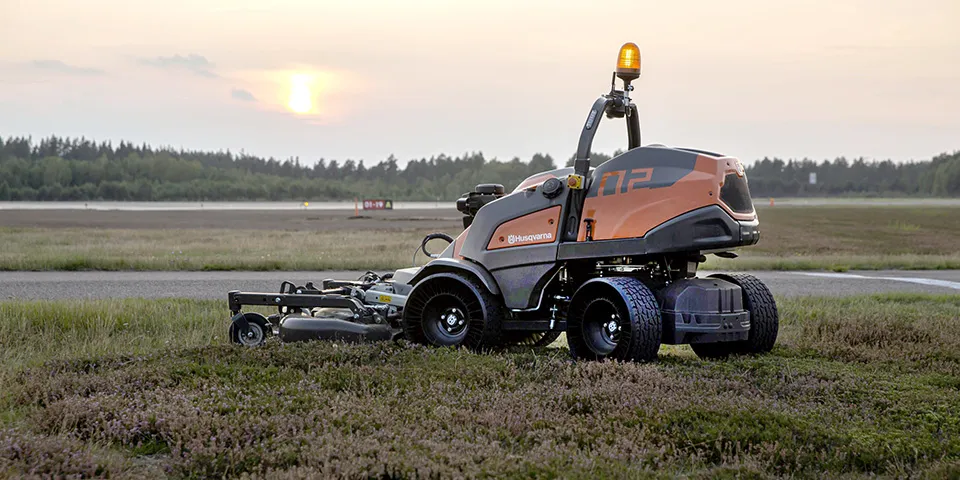
Husqvarna introduced us to the latest developments in battery-powered outdoor equipment and its integration with intelligent systems that make optimal use of automation, digitalisation and AI.
Autonomous machines
Autonomous machines will play an increasingly important role in automating a range of tasks. Both small robotic mowers and larger mowing machines used to maintain parks, sports fields and airports are already being guided by satellite with impressive precision. The operator sets the route and tasks to be carried out on a screen, after which the machines get to work fully autonomously. Planned tasks can be adjusted and modified at any time. This already makes the work much more efficient and safer for the operator.
The greenest city in the world
The conference also saw the presentation of HUGSI’s first results. HUGSI, the Husqvarna Urban Green Space Index, uses satellite imagery and proprietary algorithms to map the quality of urban green spaces worldwide. So far, 98 cities have been assessed in terms of the amount, distribution and quality of their green spaces. The aim is to provide all stakeholders with a policy tool to inform their decisions and highlight problem areas. Durban in South Africa ranked first overall, with more than 60% of its area covered by greenery. Closer to home, Brussels was awarded the label of ‘healthiest urban vegetation’ at European level.
Concern for the future of our cities is great, as is the willingness and creativity to come up with sustainable solutions. New insights were continually shared and technologies presented at the conference, all aimed at making our cities more liveable through urban greenery. It became clear that a change in mindset is still needed, along with the integration and coordination of the many separate datasets already available, so that they can be brought together into a new, overarching and forward-looking vision for urban green-space policy.
Een zakelijke vraag aan Husqvarna Construction? Get in touch
Companies in this story

Keep following this
Get an email when a new story is published. No account needed.
- ThemeSpace for water and green infrastructure
- SubjectGeneral
- CompanyHusqvarna Construction







