









Hot-dip galvanising and sustainable construction
Solutions for a circular economy
Galvanising and circular construction go hand in hand. Together with its sister organisations across Europe, Zinkinfo has published a document under the auspices of EGGA (European General Galvanizing Association), entitled ‘Galvanized Steel and Sustainable Construction: solutions for a circular economy’.
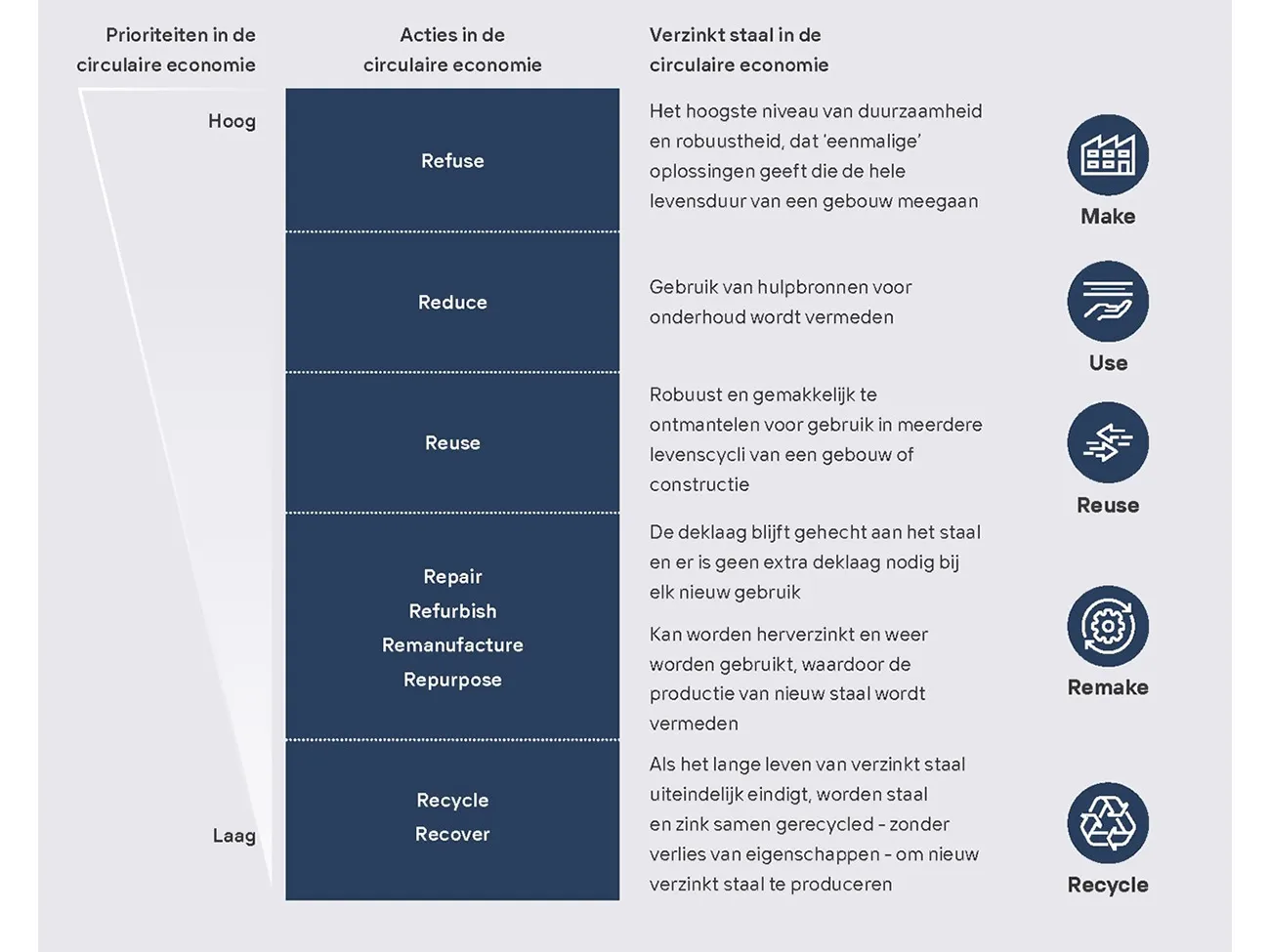
What exactly is a circular economy? A key aspect of the circular approach is that there should be a clear hierarchy of options. There are several ‘hierarchical models’ of the circular economy that show the priorities. The models vary, but they share the same foundations. Actual recycling at the end of a product’s life is therefore considered the lowest priority.
Traditionally, we have always said that metals are circular because they can be recycled at the end of their life without losing their properties. This is true and still very important, but circular thinking is about more than that. “In our publication, we have tried to show what galvanised steel has to offer higher up the hierarchy,” says Zinkinfo.
Reusing galvanised steel
When it comes to circular construction, a distinction must be made between two approaches. The first is to reuse existing structures, giving them a second life in another building or structure. The second is to design new buildings or infrastructure so that all components can be dismantled and reused in the future.
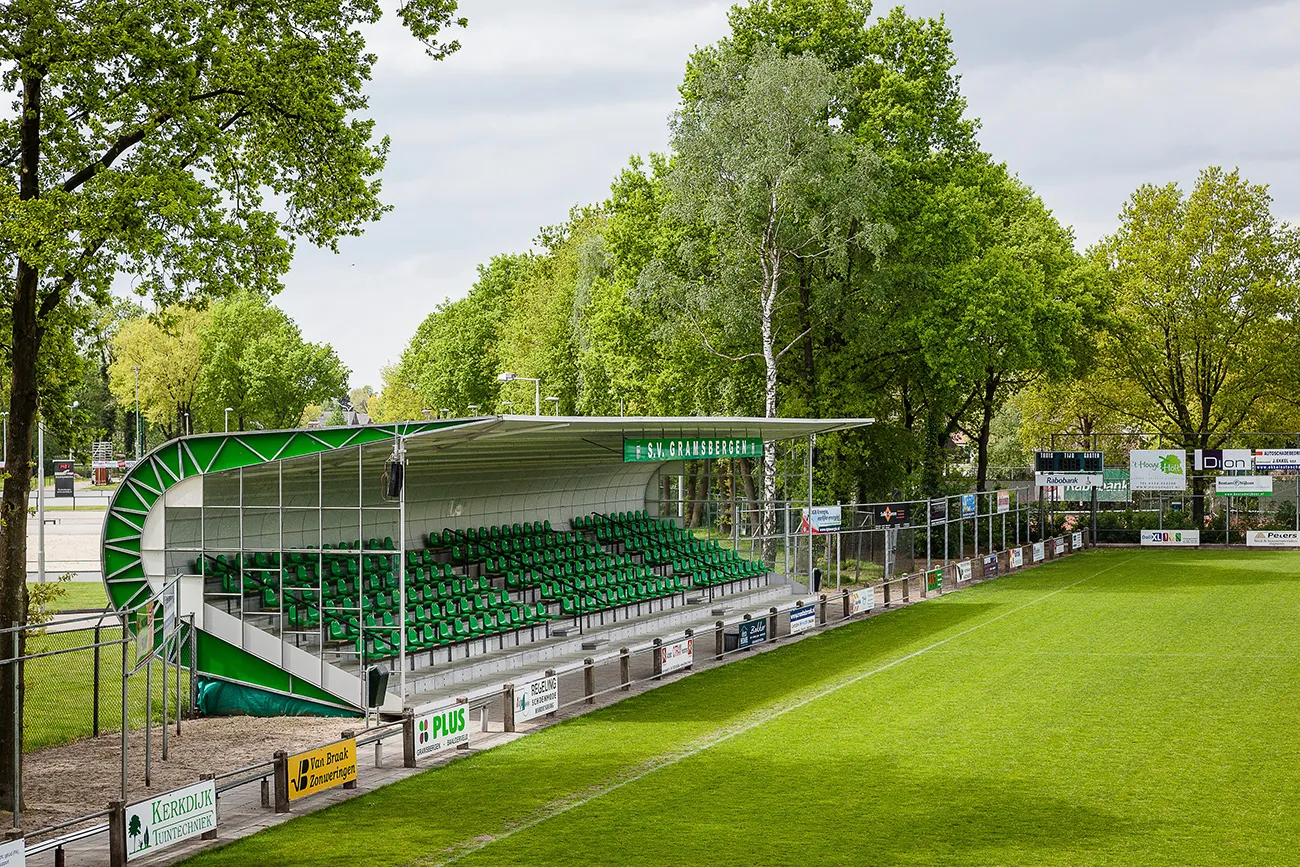
Main stand in Gramsbergen
An existing Elascon stand was saved from demolition thanks to the enthusiasm and decisiveness of an SV Gramsbergen board member, who heard that their neighbours in Hoogeveen were moving to a new sports park. He was struck by the good condition of the main stand, so he bought it for 7,000 euros, including dismantling costs.
The stand was originally built in 1976. At the time, the Hoogeveen board commissioned its construction for 139,200 Dutch guilders. Converted to today’s values, that is equivalent to around 163,000 euros. Within two years, a magnificent 32 m-long stand had been built.
In the end, the stand cost just 35,000 euros, including dismantling and rebuilding, while a newly built stand would have cost at least 200,000 euros. Almost everything was reused. The only decorative painting required was on the inside of the roof.
The excellent condition of the galvanised steel was confirmed during dismantling: it was in perfect condition and did not need to be re-galvanised. The remaining zinc coating is more than 100 μm thick, so the stand will last for decades to come.
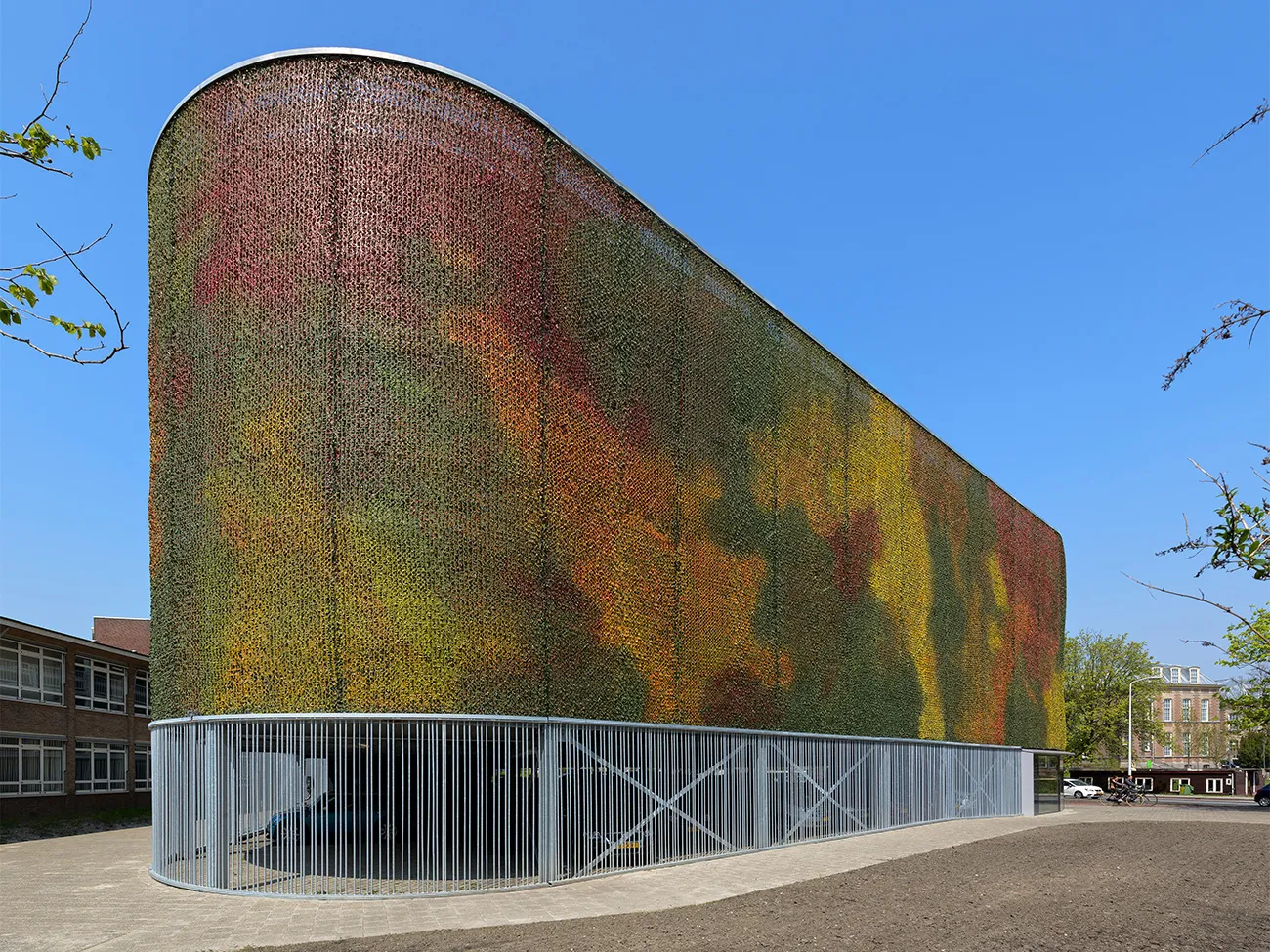
Morspoort car park in Leiden
The mobility sector has been transforming at a rapid pace over the past ten years. More and more cities are banning cars from their centres and building temporary car parks on the outskirts, allowing people to switch easily from car to public transport.
The Morspoort in Leiden is a fine example of a temporary multi-storey car park. The car park is operated by the municipality for ten years. This period may be extended by a flexible ten-year term, both in terms of the structure and its management. Ultimately, the site must once again be made available for urban development. The use of reusable materials makes the building easy to dismantle, remove and rebuild elsewhere
The entire car park structure is made up of hot-dip galvanised elements: columns, beams, crossbeams and railings. Hot-dip galvanised steel proved to be the best choice for designing a car park that could be easily dismantled at a later date.
Question about this story? Ask your question
Keep following this
Get an email when a new story is published. No account needed.
- SubjectGeneral







