









Hoppinpoint subsidy applications ready to go
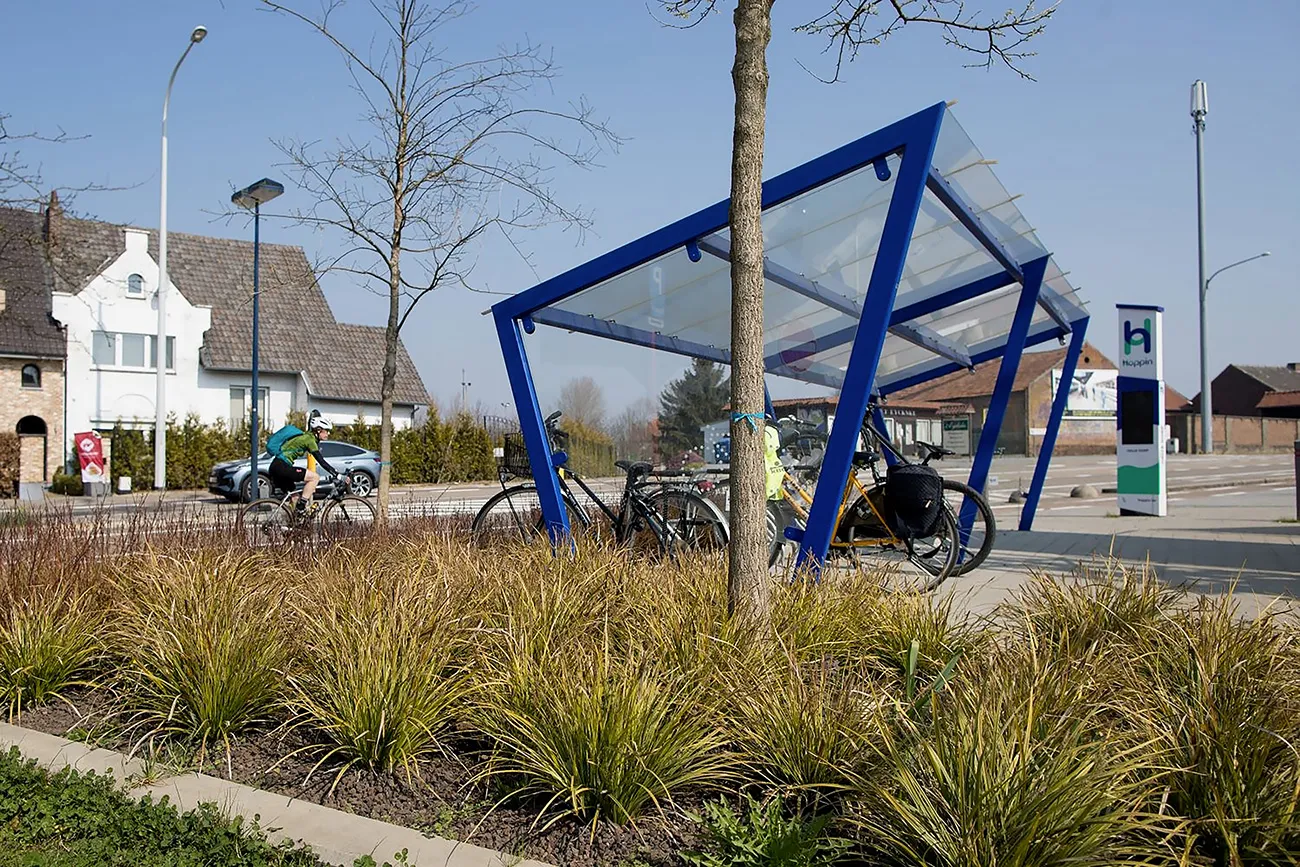
The new Flemish Government Decree on Hoppinpoints came into force on 15 April. Local authorities can now apply to the Department of Mobility and Public Works (MOW) for subsidies to build Hoppinpoints. The Hoppinpoint Design Guide from the Roads and Traffic Agency helps local authorities with the design. “The new Flemish Government Decree on Hoppinpoints broadens the terms for subsidies that local authorities can apply for to build one or more Hoppinpoints along municipal roads,” it says.
Together with Mobipunt vzw, Joris Cornu, Hoppinpoint manager at the Department of MOW, supports local authorities and the Roads and Traffic Agency (AWV) with the construction of Hoppinpoints. He explains how local authorities can get started: “Now that the transport regions have identified the necessary Hoppinpoints and the new Flemish Government Decree on Hoppinpoints has come into force, cities and municipalities are responsible for rolling them out along municipal roads. Basic accessibility starts in July 2023, and Hoppinpoints are an important link in that. Local authorities can use AWV’s Hoppinpoint Design Guide, which sets out in detail what a Hoppinpoint should look like. Cities and municipalities can apply for subsidies under the Flemish Government Decree on Hoppinpoints. As they have to pay the costs upfront and receive the subsidy afterwards, I urge them to include the necessary funding for the rollout in their current multiannual plans. That will enable them to deliver Hoppinpoints smoothly in autumn 2022 or spring 2023.”
Transport hubs
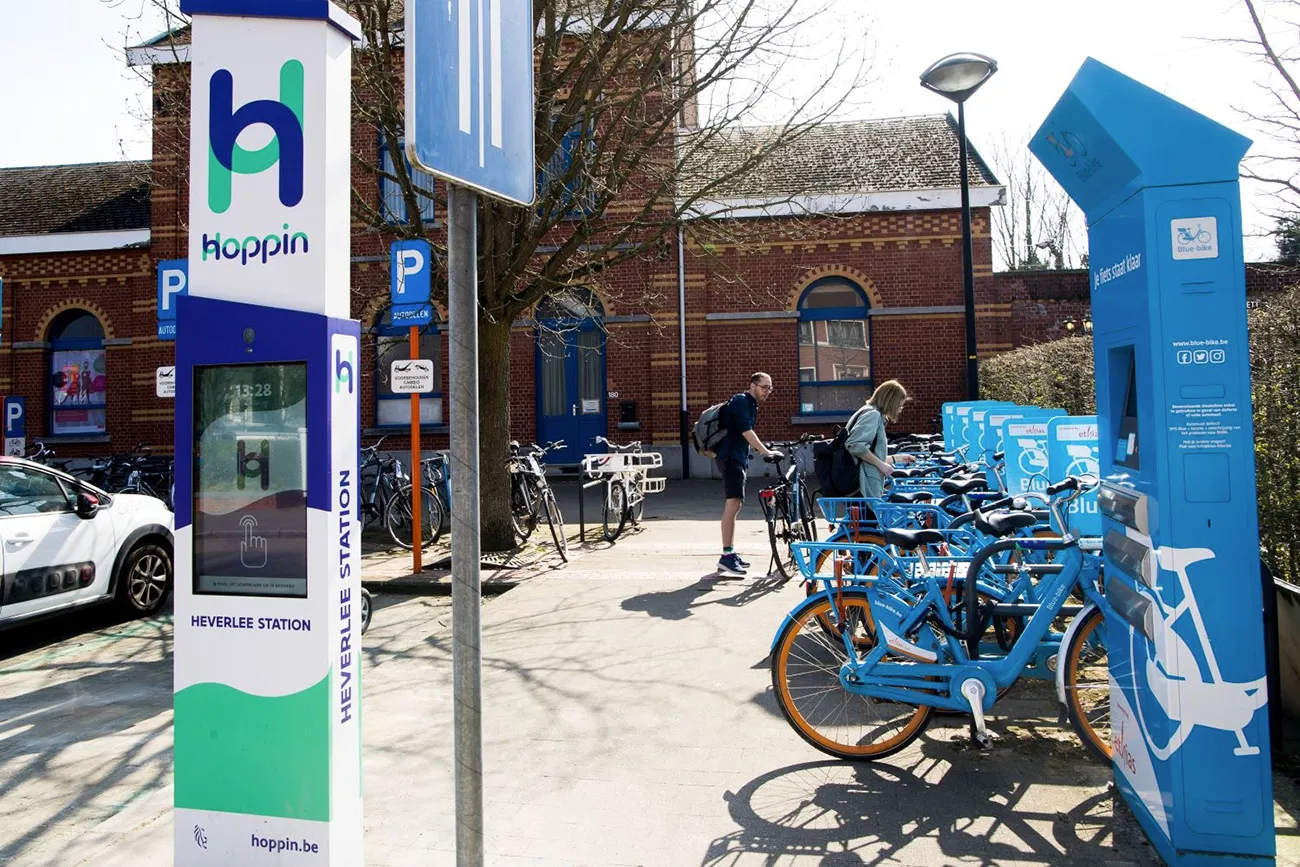
Hoppinpoints are transport hubs where different travel options come together. One example is a station area with buses, shared bicycles and cars, as well as parking spaces. They play an important role in the shift to basic accessibility, the new Flemish vision for mobility, which has been dubbed the mobility shift in communications to the general public. Basic accessibility encourages travellers to explore different transport options and combine them.
Subsidies
The new Flemish Government Decree on Hoppinpoints takes account of feedback from cities, municipalities and transport regions. For example, it places greater emphasis on additional social safety and better integration into the surrounding area. Subsidies have therefore been expanded to cover the costs of building Hoppinpoints. Local authorities can apply for subsidies for:
- Studies and design
- Works at the contractor’s tender price, plus any price revisions, adjustments, additional or supplementary works
- Where the municipality carries out the works itself: materials used, supported by the purchase invoices
- The purchase and installation of bicycle parking, information displays and infrastructure enabling data exchange
- The purchase and installation of bicycle boxes and lockers
- Specific equipment that improves the accessibility of the Hoppinpoint for all users
- The supply and planting of greenery.
There has also been an administrative simplification. Local authorities now need to submit just one subsidy application and receive the full payment once the works are completed. This is faster and simpler. Previously, applications and payments were handled in two instalments. Phased implementation and funding remain possible for large Hoppinpoints.
Design guide
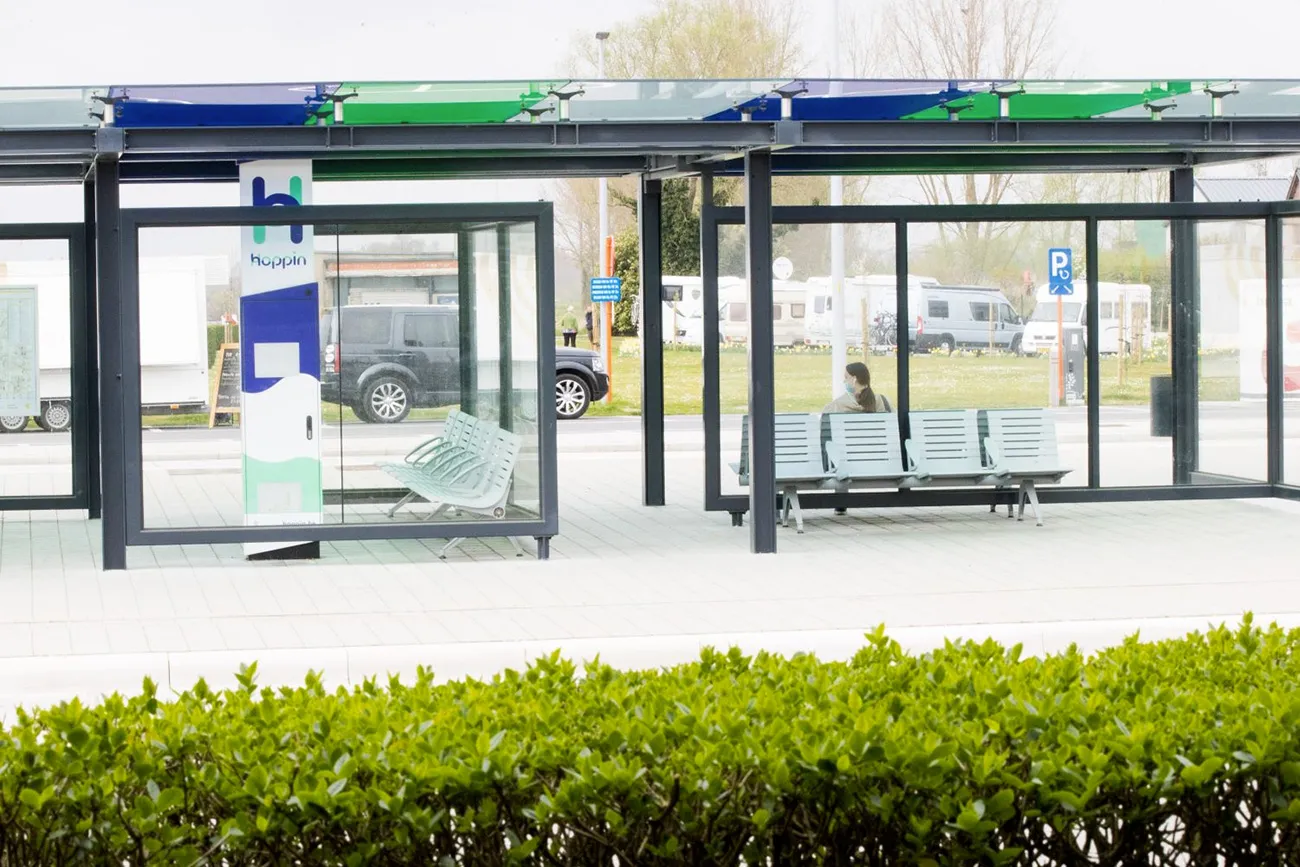
The Roads and Traffic Agency’s Hoppinpoint Design Guide gives local authorities a practical tool for turning each selected location into a functional, comfortable and safe Hoppinpoint. The guide brings together guidelines and design requirements for all Hoppinpoints. Based on a clear vision and a number of key principles, it sets out a series of design principles for the high-quality development of each
Hoppinpoint.
The Department of MOW also has a supporting role here. “We facilitate and coordinate the rollout of Hoppinpoints in several ways: by answering questions from local authorities, organising webinars, removing obstacles and ensuring consistency between Hoppinpoints. MOW mobility advisers and AWV regional managers are an important link between local authorities and the Department of MOW. They visit sites, sit on Hoppinpoint project steering groups and use their expertise to answer most of the questions from local authorities. If they are unable to help a city or municipality, we step in,” concludes Joris Cornu.
Question about this story? Ask your question
Keep following this
Get an email when a new story is published. No account needed.
- SubjectGeneral







