Tailored foundation techniques: the basis of every successful construction project
Text Joris Hendrickx Beeld Mees / ZJA Architecten
Choosing the right, reliable partner for foundation techniques is crucial to the success of any complex construction project. Thanks to its experience and specialist expertise, Mees BV can provide a solid foundation, efficient delivery and minimise long-term risks. The company proved this once again during the construction of a major cycle and pedestrian bridge in Wijnegem and the stabilisation of a dike in Maasmechelen.
Mees BV has been an established and respected name in foundation techniques for many years. Under the leadership of Jan Mees, the family business has built an impressive portfolio of advanced solutions tailored to every project. “We always go the extra mile to deliver innovative and sustainable solutions that meet each client’s specific requirements and the highest safety and quality standards,” says Mees.
Cycle and pedestrian bridge in Wijnegem
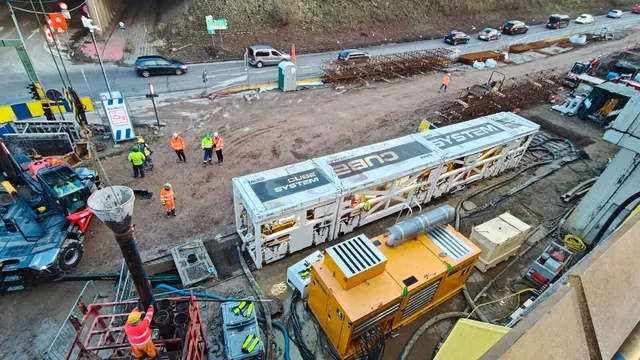
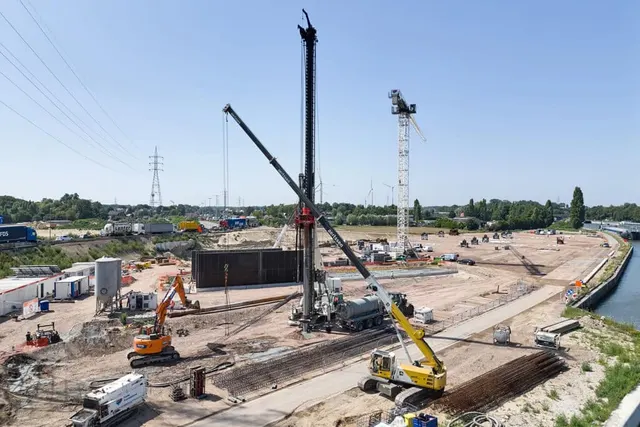
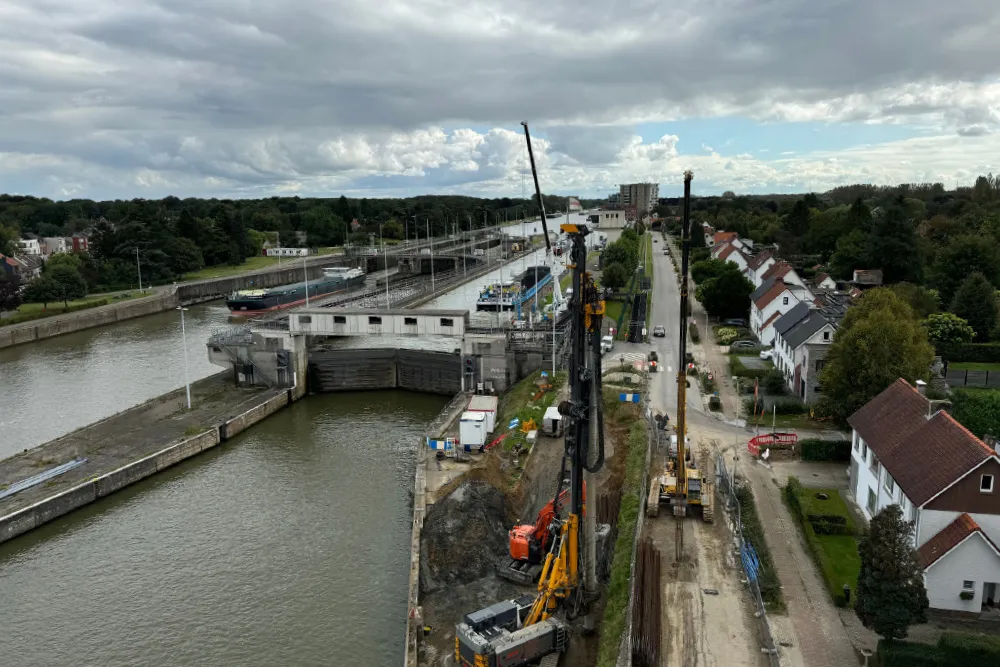
One of the recent projects Mees BV is working on with De Vlaamse Waterweg and Artes Roegiers is the construction of a new cycle and pedestrian bridge over the Albert Canal in Wijnegem. It is being built alongside a new road bridge to replace the iconic ‘banana bridge’ and forms part of a wider infrastructure plan to provide cyclists and pedestrians with a safer crossing.
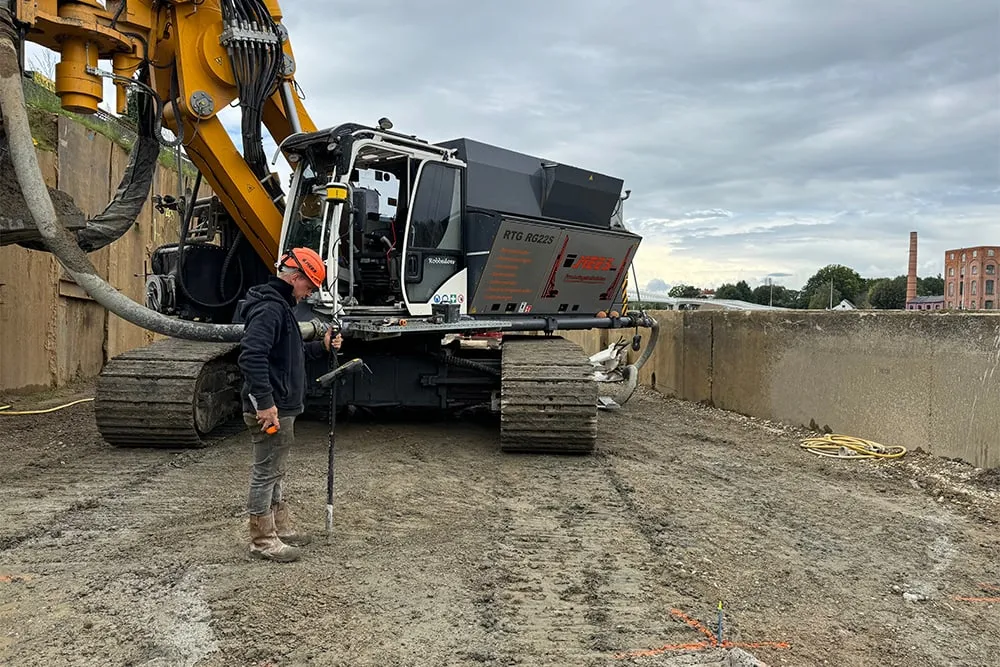
“Our task is to install the bored piles that will later support the bridge piers,” explains Mees. “This required close collaboration between our engineer and several engineering consultancies to ensure our piles could withstand both vertical and horizontal forces. We prepared a separate study and a detailed plan for each pier. What makes Mees BV’s approach unique, however, is that our drilling teams use GPS devices to position the reinforcement in each pile with pinpoint accuracy. This allows us to ensure the reinforcement is correctly positioned eccentrically, and therefore that the pile is stable.”
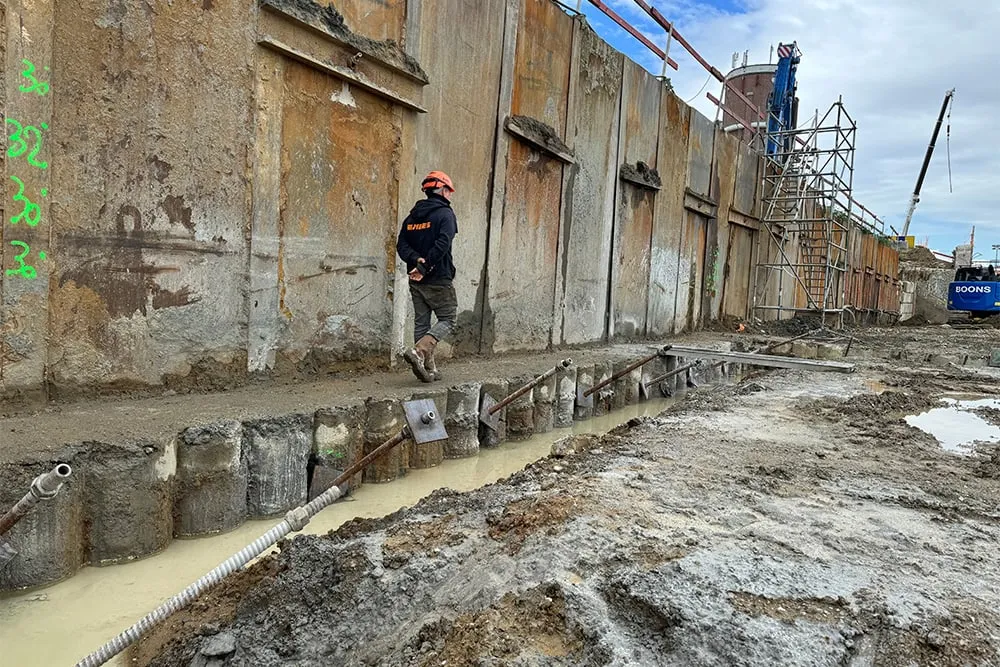
In addition, the foundation of one of the old bridge’s piers, located close to the water’s edge, must be completely removed to make room for the new piles. Mees says: “To prevent water ingress, we first installed a secant pile wall. We also installed a Berlin wall along the bridge ramp, as the bridge piers are lower there than the adjacent road. We have already bored piles for seven piers alongside the same ramp. We will soon also bore piles, each an impressive 21 metres long, for a pier from a pontoon on a narrow spur of the adjacent lock complex in the middle of the canal.”
Stabilising a dike in Maasmechelen
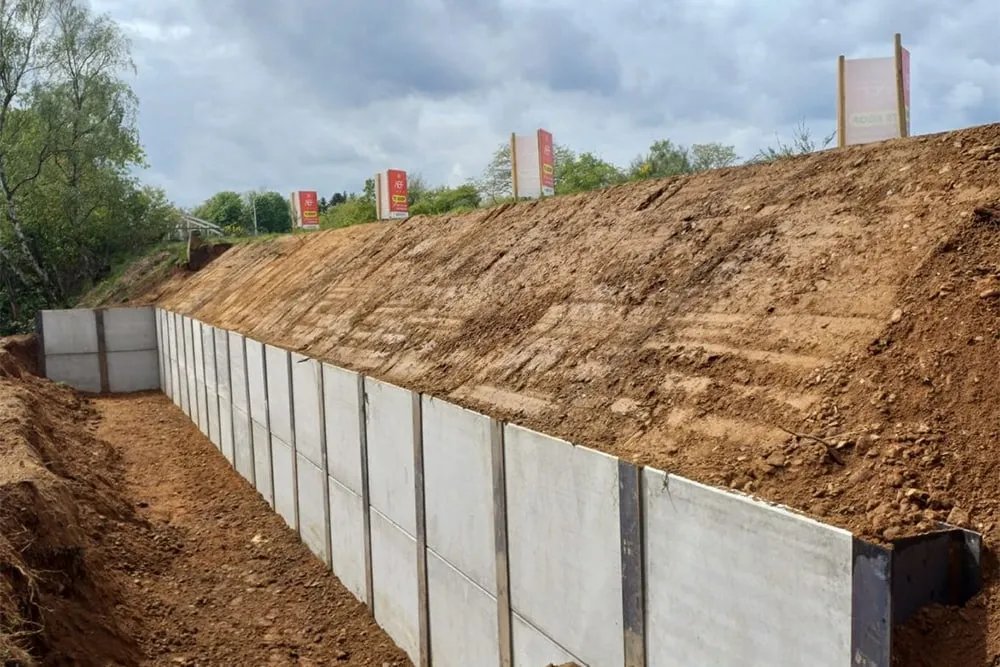
In Maasmechelen, Mees BV stabilised a dike so that a building could be constructed safely behind it. The company was responsible for the preliminary study, developing a concept and carrying out the work on site. “De Vlaamse Waterweg stipulated that we could not anchor into the dike, in order to safeguard its stability. This called for a creative solution,” says Mees. “We also had to position our solution at a specific TAW level relative to the canal’s water level.”
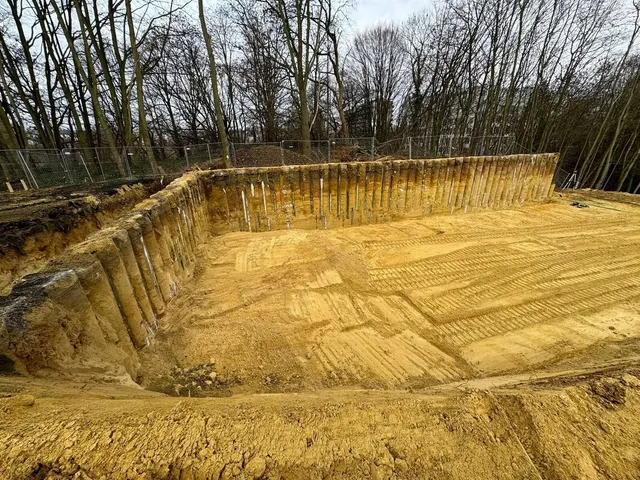
Mees says: “Specifically, we opted to install a Berlin wall. First, we drilled holes in the ground, filled them with concrete and then lowered the wall’s H-sections into them. This made the wall self-supporting. Thanks to the concept we devised, we did not have to drill through water-bearing layers or install anchors, and we could work without vibration. The Berlin wall, originally designed for functional purposes, also had to serve as a garden wall. Despite using large machinery, the work was completed to a very high standard. This project therefore demonstrates not only the creativity and expertise of our engineers, but also the skill of our workforce.”
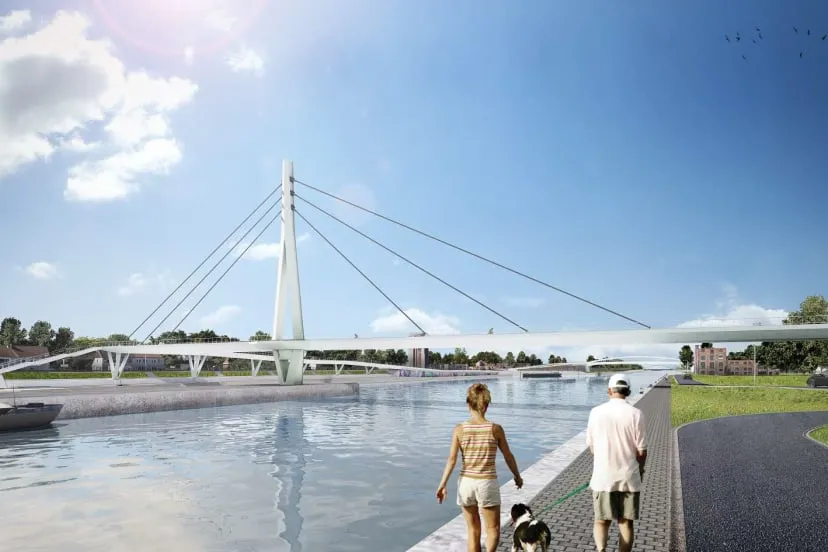
Project in Wijnegem commissioned by De Vlaamse Waterweg nv, with support from:
- ZJA Architecten (renderings)
- THV Arcadis-Sweco
Contractor: TM Artes Roegiers-Aelterman
Question about this story? Ask your question
Keep following this
Get an email when a new story is published. No account needed.
- ThemeUsing and protecting the subsurface
- SubjectFoundation engineering