Hybrid machines as a catalyst for more sustainable construction sites
Text Niels Rouvrois Beeld Van den Heuvel en Cordeel Nederland B.V.
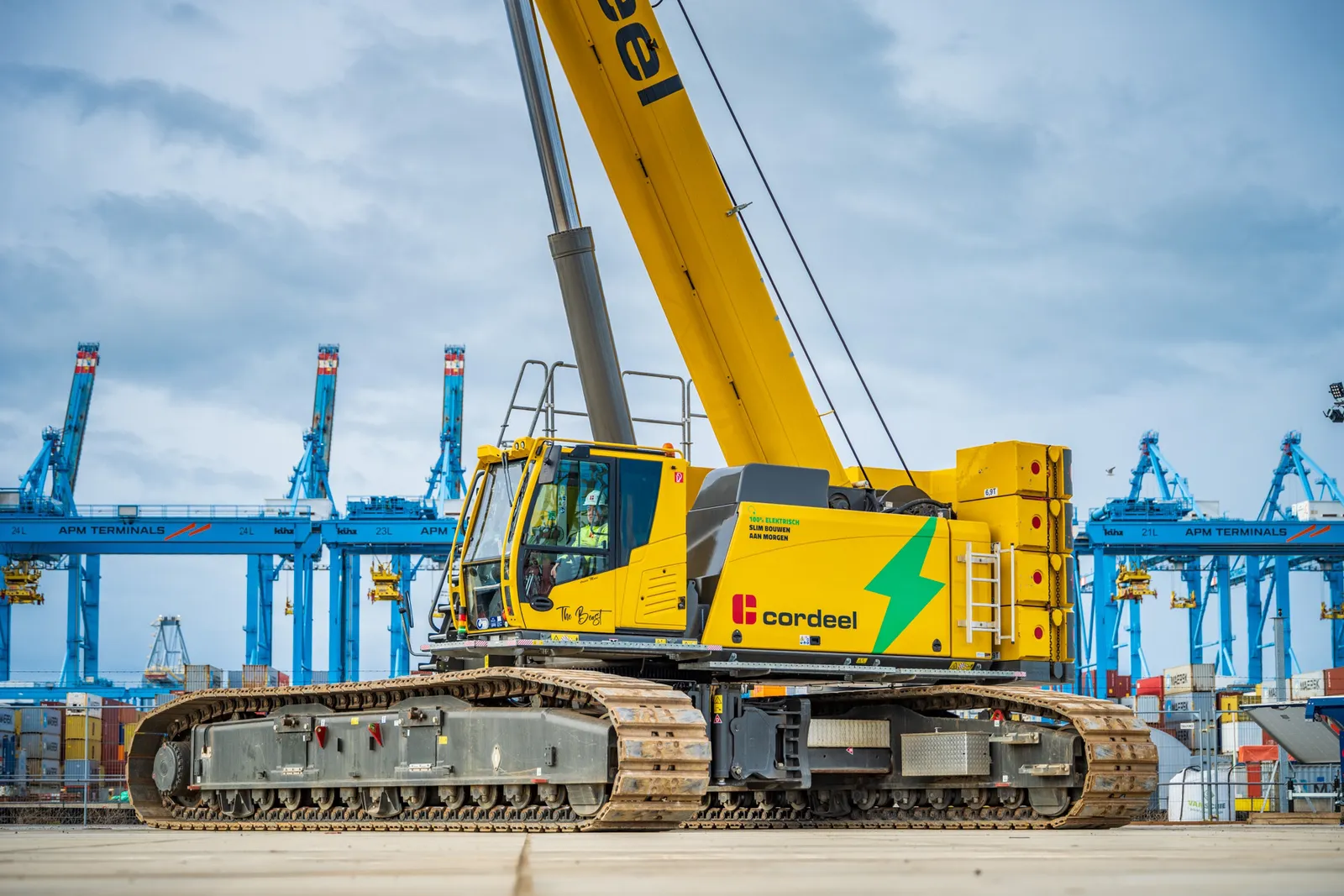
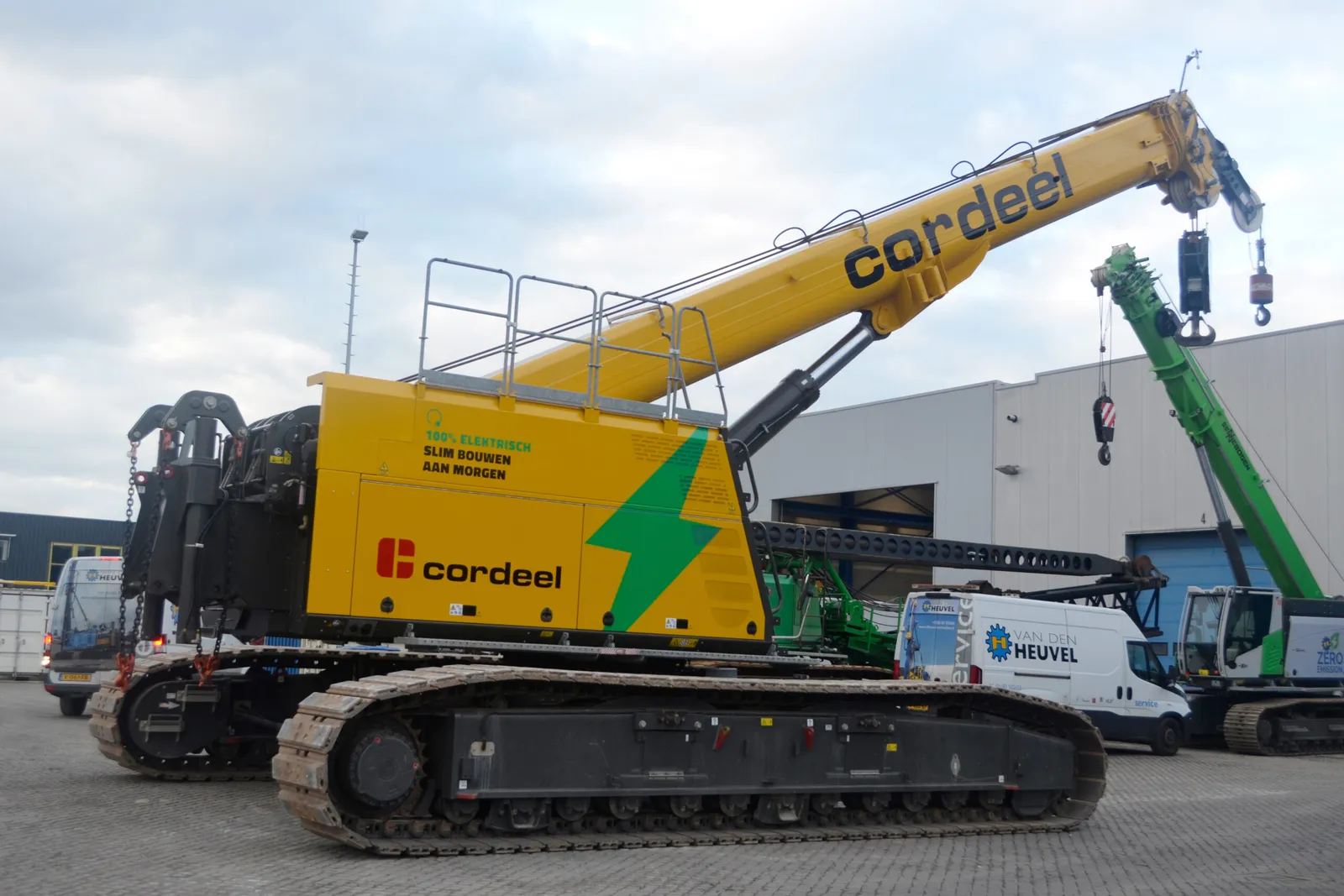
The electrification of construction machinery remains a hot topic in the construction sector in 2025. One development that has been largely overlooked in this discussion is hybrid technology. That is now changing: for Cordeel, Dutch company Van Den Heuvel converted a Sennebogen 6113 crawler crane with a Stage V diesel engine into a fully electric machine with a range extender. A first for the Benelux and a remarkable innovation that Van Haut, distributor of Sennebogen and other brands in Belgium, also welcomes. “A hybrid machine offers exactly the same electric capacity as a fully electric model, but also has a diesel engine as a back-up,” say Van den Heuvel and Van Haut enthusiastically.
Both the Netherlands and Belgium are investing in the electrification of machinery, although the pace and incentives differ from one country to the other. It is no secret that the Netherlands is ahead, partly thanks to a subsidy scheme and greater pressure from the government to electrify construction sites. Marc Timmerman, managing director of Van den Heuvel, says: “We are currently seeing a slowdown because of an overloaded electricity grid. But I expect the market in the Netherlands to keep evolving, partly thanks to additional incentives from the government.” Progress is also being made in Belgium, but the throttle is not yet fully open. “Belgium is a few years behind, but the trajectory is similar. I expect the government to introduce some incentives this year that could speed things up,” says Dries Van Haut, managing director of Van Haut and chairman of SIGMA, the trade association for construction machinery importers.
The major advantage of hybrid technology
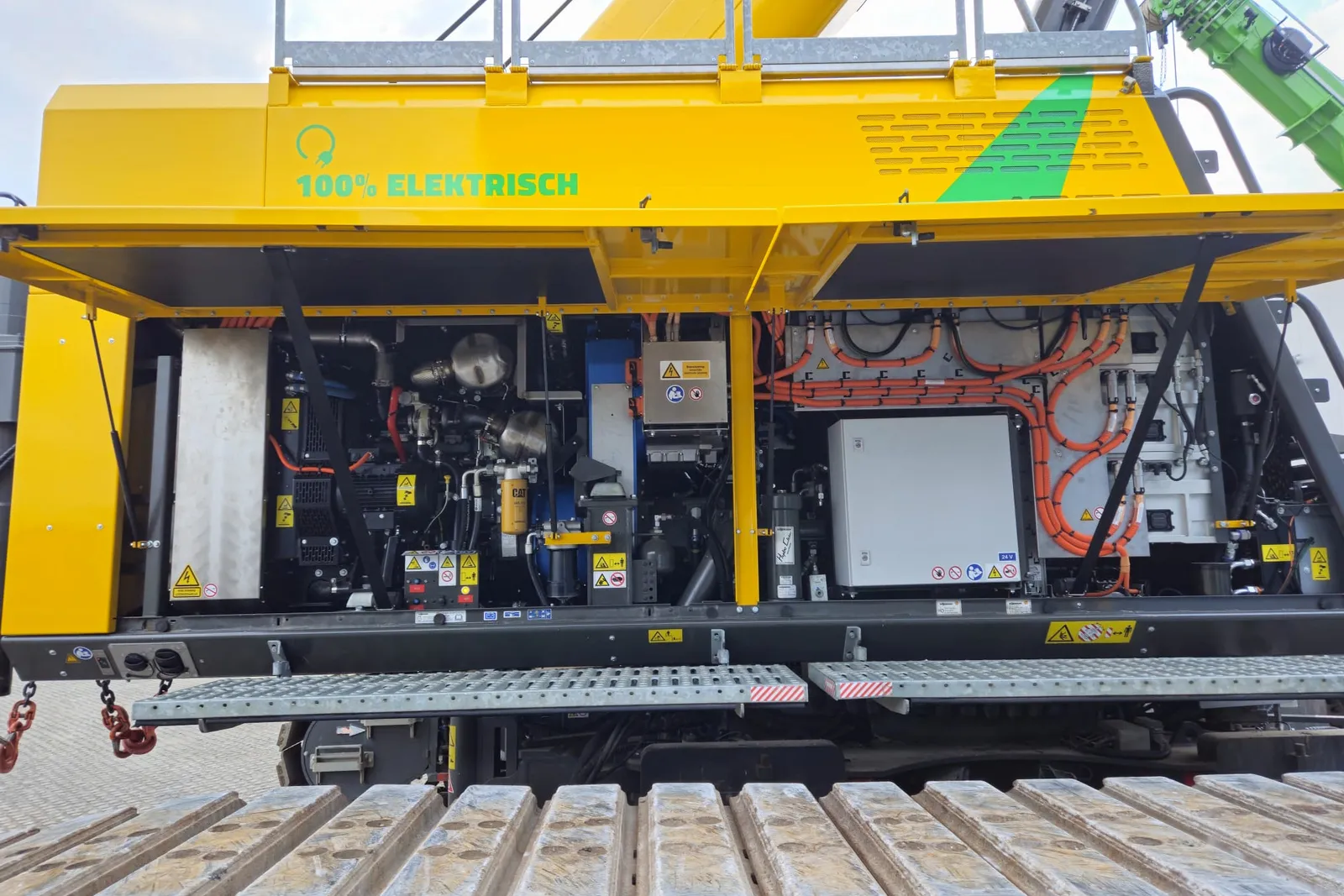
Fully electric machines are gaining ground, but they still often face practical obstacles, such as dependence on charging infrastructure. “Many construction sites have no power supply or only a limited one,” says Marc Timmerman. “A fully electric machine cannot operate on those sites, leading to downtime and lost productivity. That is why I am convinced that hybrid technology is a particularly valuable alternative. Hybrid machines are essentially fully electric, but have a Stage V diesel engine as a back-up. It is only used in emergencies, for example if the power supply fails or work has to continue at night. That is a fundamental difference compared with hybrid cars, where the diesel engine ‘has to’ kick in after 50 to 60 kilometres.”
Dries Van Haut stresses that hybrid technology is not a stepping stone, but a fully fledged addition to the range. “For contractors, this significantly lowers the barrier to investing in a more sustainable fleet. Choosing a hybrid machine can help meet the requirements of sustainable tenders, while ensuring the machine can still be used on sites that lack the facilities for electric operation. In other words, this machine can also be used on sites with no electricity supply. The diesel engine then takes over, still delivering a 30 % reduction in fuel consumption compared with a fully diesel-powered machine. It offers much greater flexibility. At Van Haut, we are watching Van den Heuvel’s efforts closely. It is then up to us to translate that into the Belgian market, depending on customer needs and the current market situation. This also expands the market for manufacturers.”
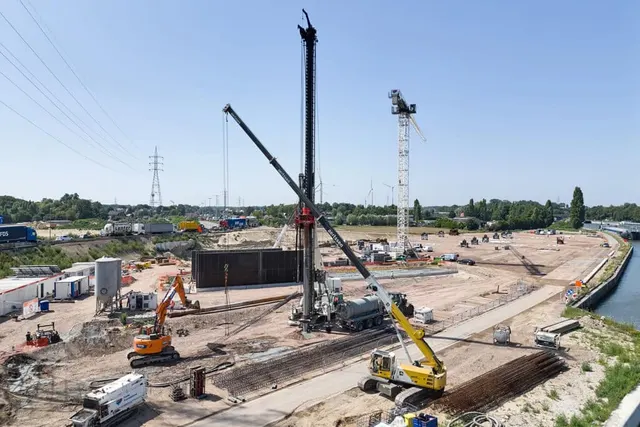
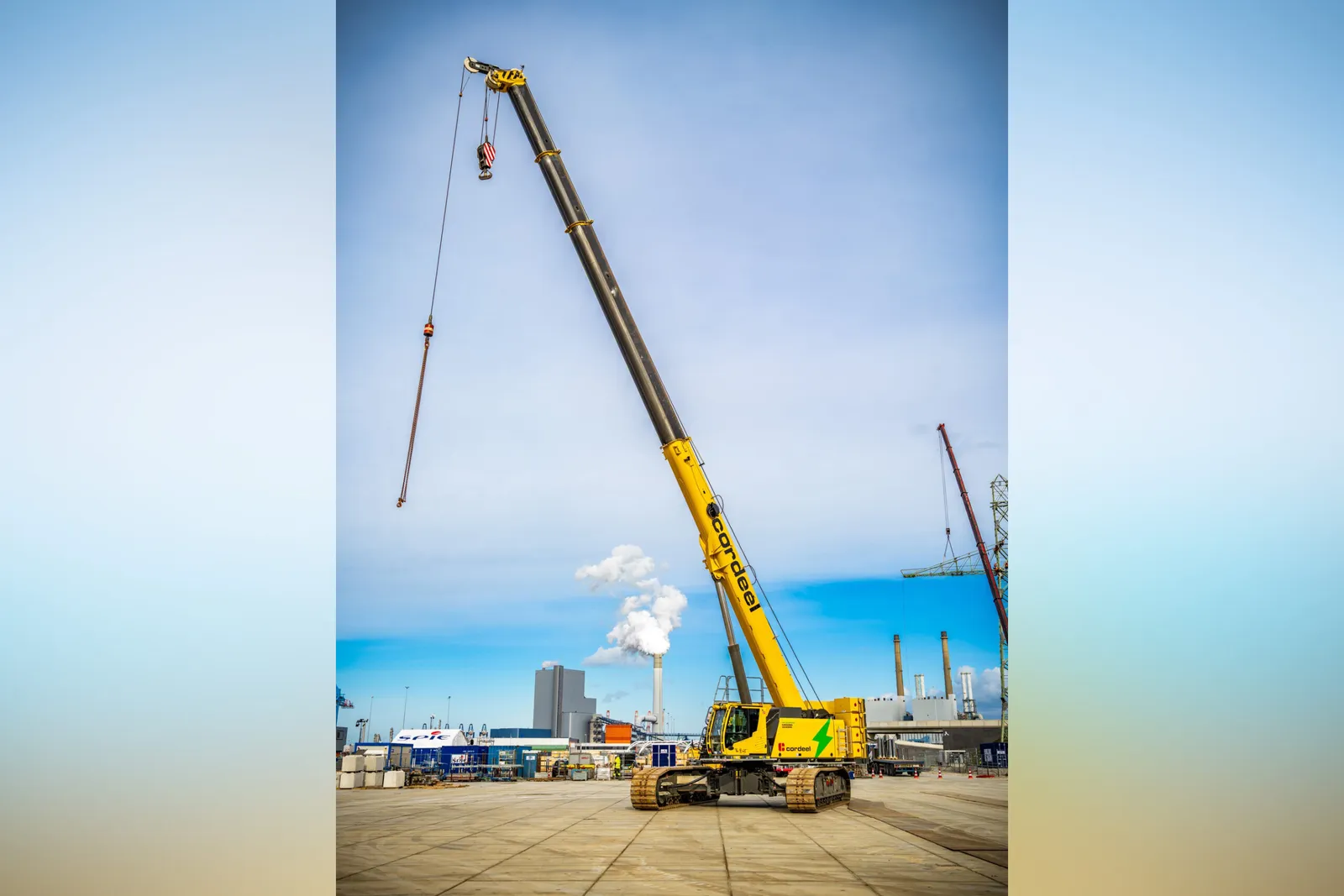
One of the first hybrid crawler cranes on the market was recently put to work by construction company Cordeel on a project in the Netherlands. “The first signs are very positive,” says Marc Timmerman. “The machine can run electrically for 10 to 12 hours without charging, which is even longer than expected.”
Knowledge-sharing and training as essential components
Alongside technological development, operator training is also crucial. “We do not just supply the machines, we also offer courses,” says Marc Timmerman. “Operators need to learn how to work with electric machines, manage batteries and handle the specific characteristics of these machines.” Dries Van Haut adds: “Vibration and noise are kept to a minimum, increasing operator comfort. The machine also responds faster than a diesel model. Like Van den Heuvel, Van Haut regards after-sales service, whether following a sale or rental, as a priority. Training is part of that. So is fostering the right mindset. For example, a crawler crane consumes the most electricity when it is moving. It is therefore important to plan your work so that movements are kept to a minimum.”
Van den Heuvel and Van Haut are clear: using hybrid construction machinery gives contractors and clients the opportunity to work more sustainably without compromising on flexibility and efficiency. With the right incentives and further development, this technology can play a crucial role in the continued electrification of construction machinery. “And anyone who wants to see for themselves how it works in practice without making a major investment straight away can rent an electric crawler crane from Van Haut or Van den Heuvel and experience its comfort and ease of use,” concludes Dries Van Haut.
Question about this story? Ask your question
Keep following this
Get an email when a new story is published. No account needed.
- ThemeSmarter, safer construction site management
- SubjectFoundation engineering