Efficiency and speed are the key benefits of an end-to-end platform for geotechnical design
Text Niels Rouvrois / Cloudpiling Beeld Cloudpiling
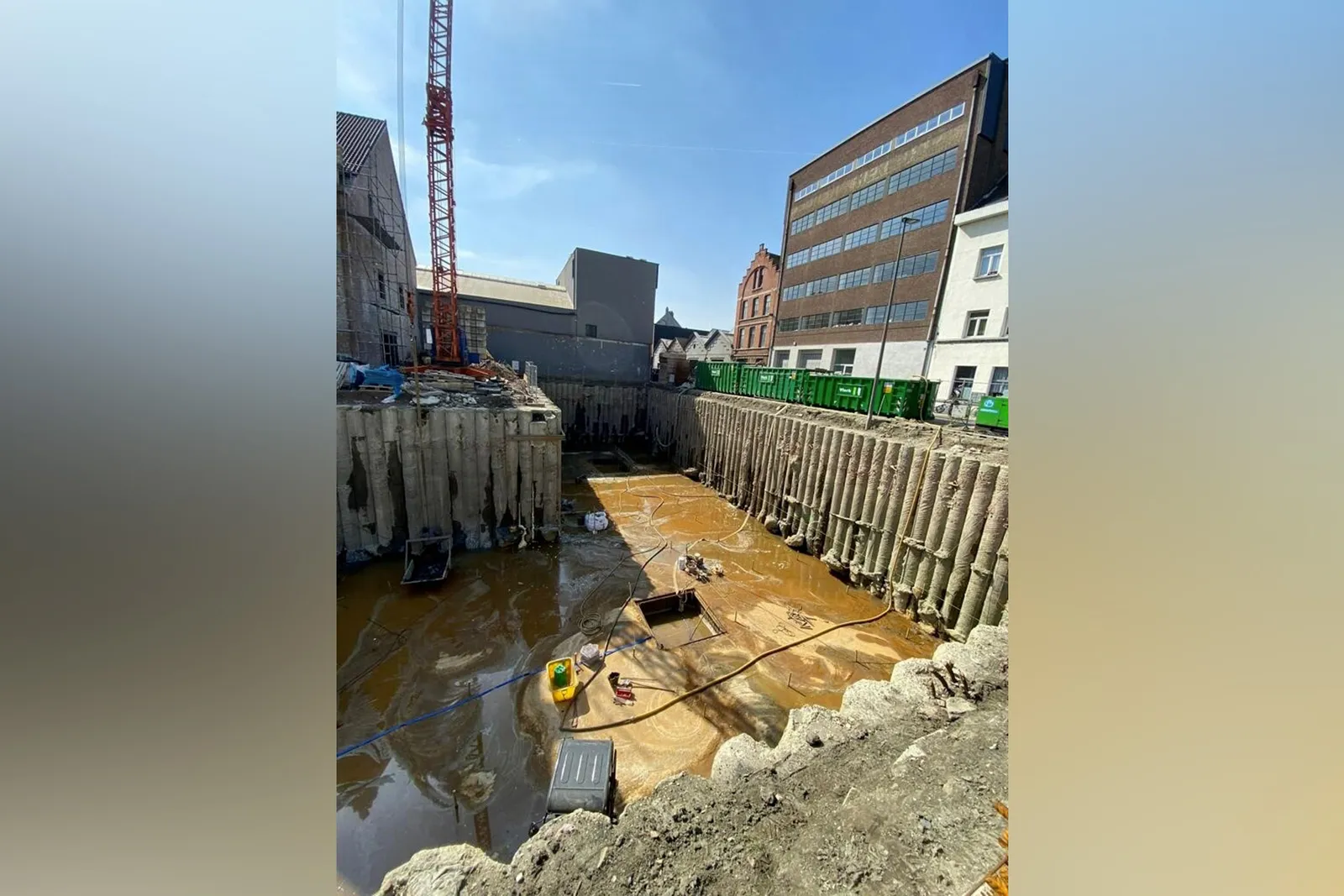
The construction sector is undergoing a digital revolution, and geotechnical design is no exception. Construction pits are a crucial part of urban construction projects, but traditional design methods are increasingly falling short. Time-consuming iterations, error-prone manual data entry and limited software capabilities lead to inefficiencies and unnecessary costs. “CloudPiling offers an innovative solution: an end-to-end platform that makes the design of construction pits and pile foundations more efficient, accurate and sustainable,” says co-founder Michelle Vanhove.
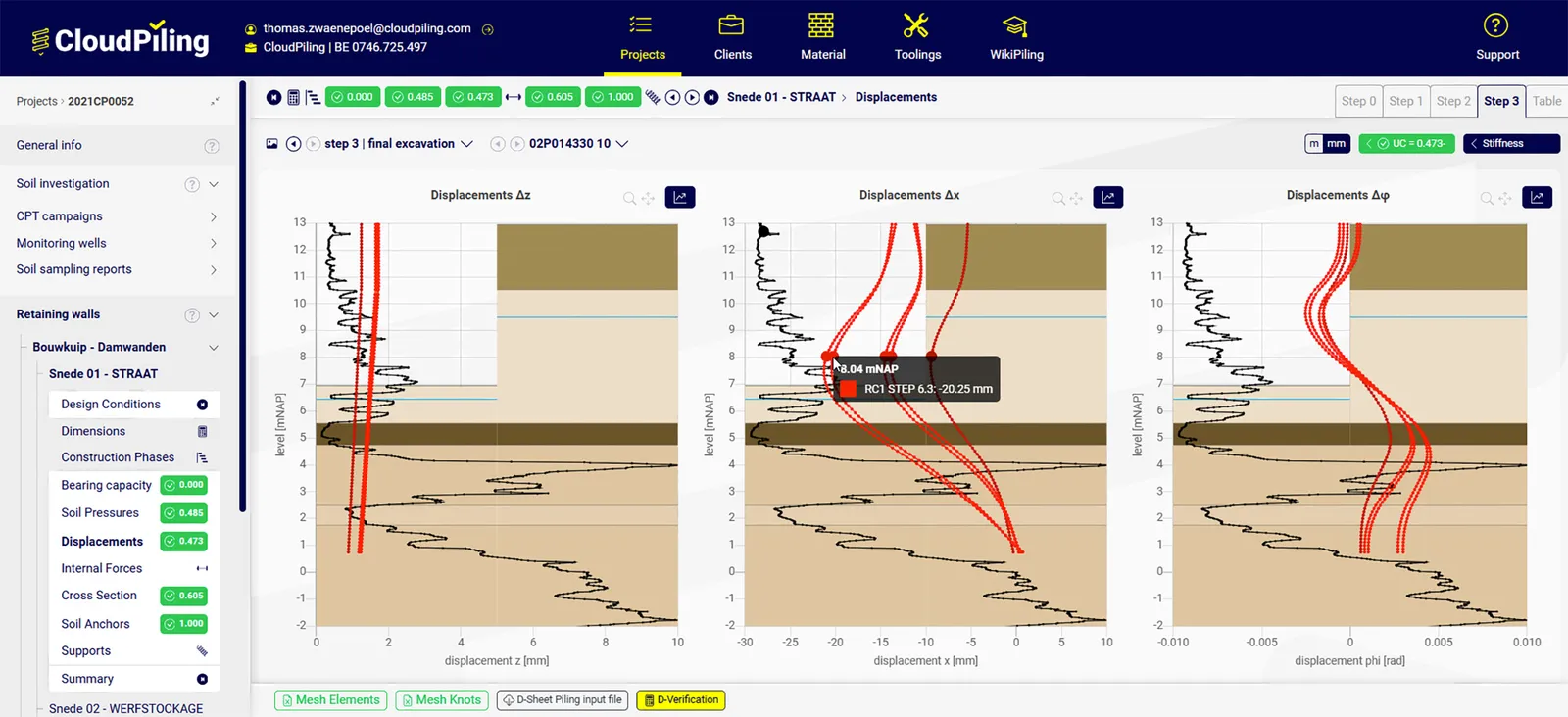
From design to automated reporting
CloudPiling offers a groundbreaking solution that supports geotechnical engineers at every stage of the design process. This SaaS platform brings automation and digital optimisation to the design of construction pits and pile foundations, addressing the shortcomings of traditional methods. In this edition, we focus on the software’s flagship feature: its construction pit module.
What makes CloudPiling unique?
End-to-end integration: the platform supports engineers in gathering all design criteria, performing calculations and generating automated reports. Efficient data input: CloudPiling easily imports cone penetration tests and boreholes via a DOV link and supports multiple file formats, including XLSX and GEF. In addition, a trained PDF reader can extract data directly from cone penetration test reports.
The parametric design tool offers advanced features, including determining the envelope of load effects across different soil layer profiles and structural verification of the axial force and bending capacity of various types of retaining walls: Berlin walls, sheet pile walls, cutter soil mix walls, jet grout walls, diaphragm walls, combi walls and secant pile walls. The tool also automatically calculates the required anchor length based on Kranz stability, eliminating the time-consuming deterministic search for the required length. Ground levels are automatically adjusted to reflect changes to ground anchors and/or strut levels. Thanks to its in-house-developed algorithms, the software calculates twice as fast as traditional software, while being six times more accurate in complex geotechnical cases.
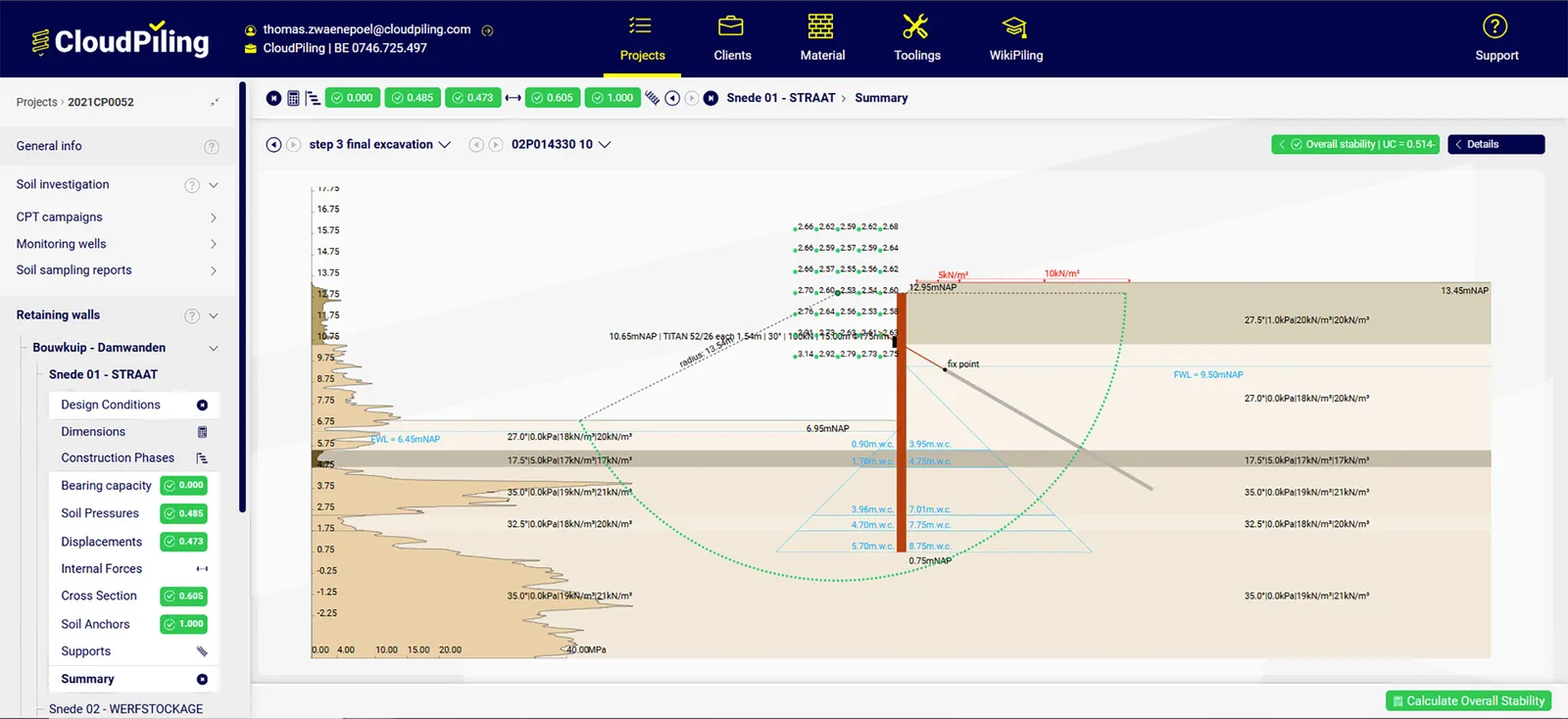
The impact of CloudPiling on the construction sector
This advanced digitalisation offers significant benefits. “Thanks to the advanced platform, teams can design faster and deliver more projects in the same amount of time, while responding flexibly to changes. The risk of overdesign is significantly reduced, resulting in lower material costs and more efficient use of machinery and labour. CloudPiling also contributes to a more sustainable construction sector by optimising materials such as concrete and steel, significantly reducing CO2 emissions,” continues co-founder Thomas Zwaenepoel.
Alongside efficiency and sustainability, CloudPiling offers a strategic advantage in knowledge retention. Project data is stored by location, enabling companies to build a valuable database that facilitates future designs and provides engineers with essential insights. As a SaaS solution, CloudPiling eliminates the need for local installations, ensures the software is always up to date and offers a scalable solution without internal IT complexity. CloudPiling therefore makes construction pit design not only smarter and more efficient, but also future-proof.
Ongoing innovation and new features
CloudPiling continues to evolve in response to customer feedback. Thanks to its cloud-based approach, users always work with the latest version. One of the latest features is an integrated PDF reader that automatically reads cone penetration test reports and extracts data, delivering another major efficiency gain for engineers.
“In addition, the reporting function is now also available in Dutch,” concludes Zwaenepoel. “We remain committed to innovation and listen to our users to keep improving CloudPiling.”
Question about this story? Ask your question
Keep following this
Get an email when a new story is published. No account needed.
- ThemeUsing and protecting the subsurface
- SubjectFoundation engineering