









Flanders could save 15% on construction materials by taking a smarter approach to demolition
Text Joris Hendrickx Beeld Embuild Vlaanderen
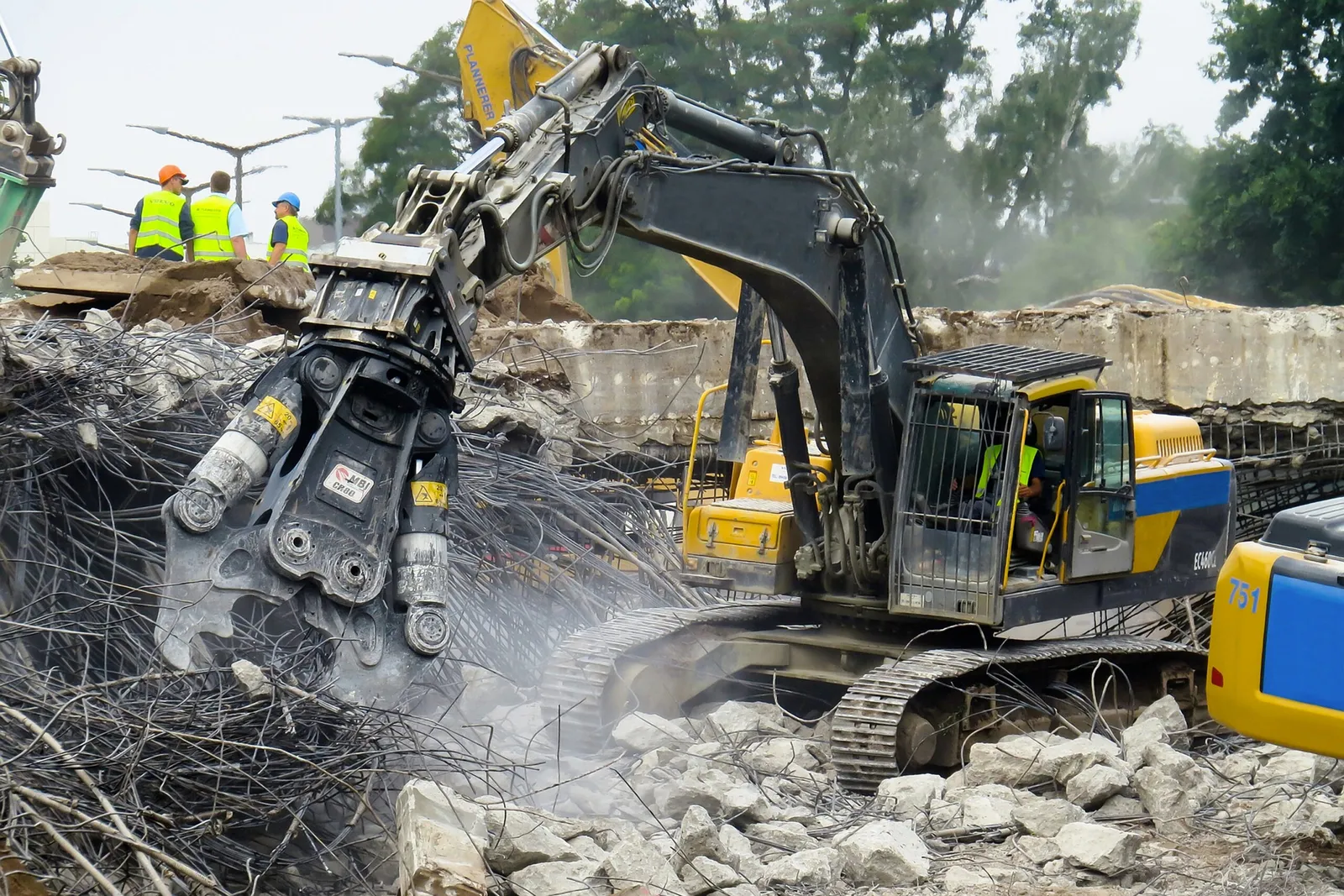
Flanders could save 15 million tonnes of construction materials each year by making greater use of the reuse and recycling of materials from buildings and infrastructure due for demolition. Today, most of this potential remains untapped. Just one per cent of demolition waste is given a second life through reuse. According to Embuild Vlaanderen, this urgently needs to change.
A huge flow of materials, limited use
The Flemish construction sector consumes around 100 million tonnes of construction materials every year. These raw materials are becoming scarcer and more expensive, and extracting and processing them requires a great deal of energy. At the same time, thousands of buildings and infrastructure projects are scheduled for renovation or demolition. This is where a huge opportunity lies. They contain large quantities of materials that can be put to use again, provided a different approach is taken to demolition and construction.
“Flanders has an ageing building stock, and its infrastructure also needs to be renewed. This will release millions of tonnes of materials that we can no longer regard as waste. If we recycle and reuse everything, we could reduce the construction sector’s material footprint by 15%,” says Caroline Deiteren, Director General of Embuild Vlaanderen.
From downcycling to high-quality recycling
The sector is already performing well in downcycling. For example, 95% of rubble is processed for uses such as road foundations. This approach works, but the value recovered remains limited. The next step calls for greater ambition. Within five years, the sector aims to replace half of these lower-grade applications with high-quality recycling, for example by recycling facing bricks for use in new buildings.
Direct reuse is even better, such as reusing entire timber structures or ceiling panels. For now, this accounts for just one per cent. Yet it offers significant environmental and raw-material benefits.
“Circular demolition and construction are becoming a necessity. Not only to reduce our footprint, but also as a prerequisite for a strong construction sector and a resilient Flanders. Many raw materials used to make new construction materials are energy-intensive to produce and, because of geopolitical circumstances, depend on vulnerable supply chains. Reuse and recycling make us more self-sufficient,” Deiteren explains.
One circular demolition team from the outset
A fundamental change in working practices is needed. Traditionally, demolition is carried out quickly and cheaply, with no attention paid to the residual value of materials. Research by Embuild Vlaanderen and Buildwise shows that things can be done differently. The key is to bring together a single circular demolition team from the start of a project.
The client, architect, demolition contractor and suppliers then work together on a single plan. This immediately gives them an overview of the materials available for reuse and recycling, potential buyers, and how storage and logistics will be organised. This makes circular demolition both feasible and efficient.
Proof in practice
This approach has already delivered tangible results. During the demolition of a hospital in Mechelen, a material flow analysis led to the dismantling of materials including timber and bluestone. This resulted in CO2 savings of 6,886 kg CO2. At an office building at Brussels Airport, thousands of square metres of ceiling panels were given a second life in schools. The climate benefit there reached 19,200 kg CO2
“Materials from demolition are still too often considered waste. But we can no longer afford to do that. Half of all the raw materials we use in Flanders go to construction. So every brick counts. But sustainability requires a long-term vision, whereas today demolition often has to be carried out quickly and cheaply, without taking the residual value of materials into account. That is why pilot projects are so important. Public authorities can also help by requiring circular demolition teams in their tenders,” concludes Caroline Deiteren.
More information and useful tools:
buildwise.direct/circulairslopen
Question about this story? Ask your question
Keep following this
Get an email when a new story is published. No account needed.
- ThemeMaterials with a lower environmental impact
- SubjectGeneral







