









Five levers for achieving carbon neutrality
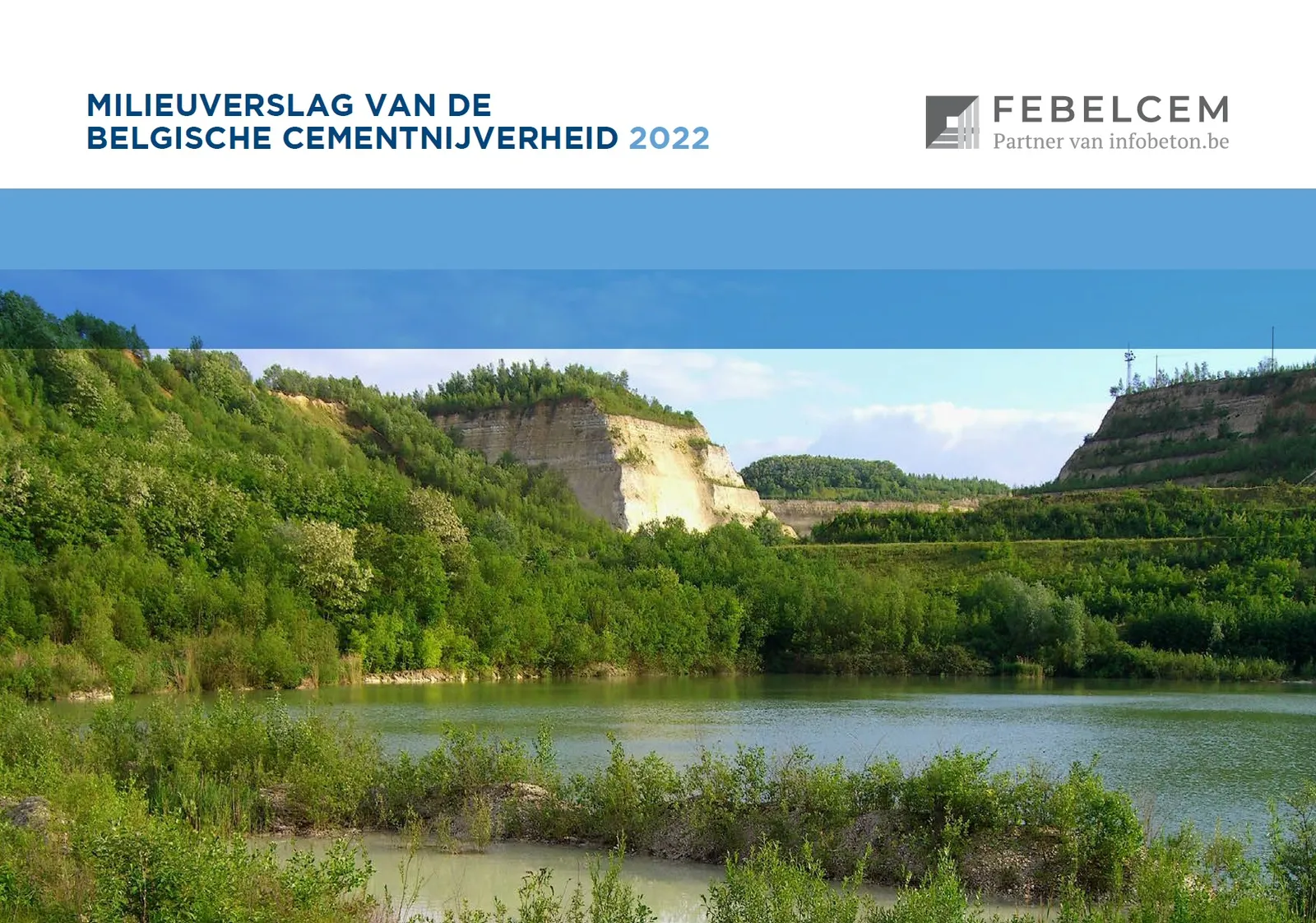
THE BELGIAN CEMENT INDUSTRY UNVEILS ITS 2022 ENVIRONMENTAL REPORT
Cement is an essential component of construction. FEBELCEM’s 2022 environmental report describes the concrete steps taken by the Belgian cement industry to protect the environment and reduce its carbon footprint, in line with the European objective of achieving carbon neutrality by 2050.
At the heart of the circular economy, Belgian cement manufacturers use waste co-processing, which means recycling minerals while recovering energy from the combustible fraction. This enables cement to be produced by combining the circular economy with a reduction in CO2 emissions.
Hervé Camerlynck, CEO of the Federation of the Belgian Cement Industry (FEBELCEM), emphasises: “This 2022 Environmental Report offers a non-exhaustive but representative collection of the concrete steps taken by our industry, giving you a clearer, more objective picture of the Belgian cement industry’s commitment to the environment.”
The Roadmap 2050 for cement and concrete: a commitment built on five levers
To achieve its climate objectives, in line with the European goal of carbon neutrality, FEBELCEM presented its ‘Cement and Concrete Roadmap 2050’ strategy in 2021. More than ever, five key areas are guiding the cement industry’s activities. Represented by the five Cs, these five levers can be described as follows:
- Clinker: the ‘clinker’ lever covers all the actions taken at kiln level, from energy efficiency to the use of decarbonated raw materials and the co-processing of waste;
- Cement: the carbon intensity of cement produced in Belgium, an essential component of construction, fell by around 29% between 1990 and 2018, giving it one of the lowest carbon footprints in the world. This positive trend will continue, mainly through the development of new types of cement;
- Concrete: ultimately, cement remains an intermediate product, but an indispensable one, as it gives concrete its valued properties. Concrete must meet very strict quality criteria, which are being further refined through digitalisation;
- Construction: the entire construction value chain needs to be transformed, with every stakeholder involved: from clients to contractors, architects, material producers and public authorities;
- (Re)carbonation: a phenomenon also recognised in the IPCC’s (Intergovernmental Panel on Climate Change) 6th Assessment Report is that concrete structures naturally absorb some of the CO2 in the atmosphere. Some projects aim to accelerate this process by exposing construction waste to CO2 streams, while also improving the quality of recycled aggregates.
‘Net Zero’ objective and local jobs: reconciling the climate challenge with the economy
At the heart of the cement industry’s commitment is the objective of achieving ‘Net Zero’ carbon emissions by 2050. FEBELCEM’s members are fully committed to this goal at a time when the climate challenge calls for a shift in economic activity and jobs. Without cement, there is no construction, and without construction, there are no jobs. It is therefore important to note that, in addition to around a thousand direct jobs, the cement industry supports almost 10,000 direct jobs in the concrete industry and many more in the construction sector. This economic structure consists mainly of SMEs and self-employed people.
The ‘accords de branche’ in Wallonia and the certification of its activities: the cement industry works with the public authorities
Belgian cement companies have undertaken to keep their environmental impact under control in every respect. The introduction of environmental management systems, the systematic organisation of monitoring committees and strict compliance with environmental permits demonstrate their willingness to make a long-term commitment to an industrial policy that takes all environmental impacts into account. Since 2004, this commitment has included the voluntary conclusion of an ‘Accord de branche ciment’ with Wallonia, in the form of an environmental agreement aimed at meeting targets for reducing CO2 emissions and improving energy efficiency. Between 1999 and 2012, the cement industry undertook to reduce its greenhouse gas emissions by 9.5%. This target was comfortably exceeded, with an 18.8% reduction over the same period. The commitment was renewed in 2013 and extended in 2019, with the aim of reducing CO2 emissions by 18.1% between 2005 and 2023.
Industrial symbiosis…
Cement production requires large quantities of minerals and energy. The characteristics of the cement process, together with the non-renewable nature of the raw materials, have prompted the industry to develop and promote the use of secondary materials and alternative fuels, while maintaining the technical quality of its products.
Through the circular economy and co-processing, the cement industry fully meets the objectives of energy independence and waste recycling by recovering value from alternative fuels. This process reduces the use of conventional fossil fuels and recovers the energy and mineral content of the waste. This gives the waste a second life instead of it being incinerated or sent to landfill.
…. and biodiversity: using raw materials responsibly
Carbon neutrality goes hand in hand with respect for biodiversity. Cement production has always been closely linked to the availability of its main raw material: limestone. Cement plants are usually located close to limestone quarries. A key priority for the cement industry is to protect and preserve the rich ecosystems that thrive in and around the quarries.
In practice
Numerous projects need the support of a range of stakeholders to get off the ground, including citizens, local workers and political decision-makers. One example is Holcim’s ‘Go4Zero’ project, at its site in Obourg (Mons), which aims to replace two kilns with a brand-new ‘dry process’ technology. Holcim initially aims to reduce its CO2 emissions by 30% before moving on to CO2 capture. CBR’s (Heidelberg Materials) ‘Anthemis’ CO2 capture project will reduce CO2 emissions from its plant in Antoing by almost 97%.
In the long term, estimates by the Federation and its members indicate that the Roadmap 2050 strategy will reduce the carbon footprint by 65% to 78% compared with 1990, on top of the 29% already achieved.
Question about this story? Ask your question
Keep following this
Get an email when a new story is published. No account needed.
- ThemeMaterials with a lower environmental impact
- SubjectGeneral







