









First: C-biotech and Trafiroad install the country’s first circular, CO2-negative traffic bollard in Lokeren
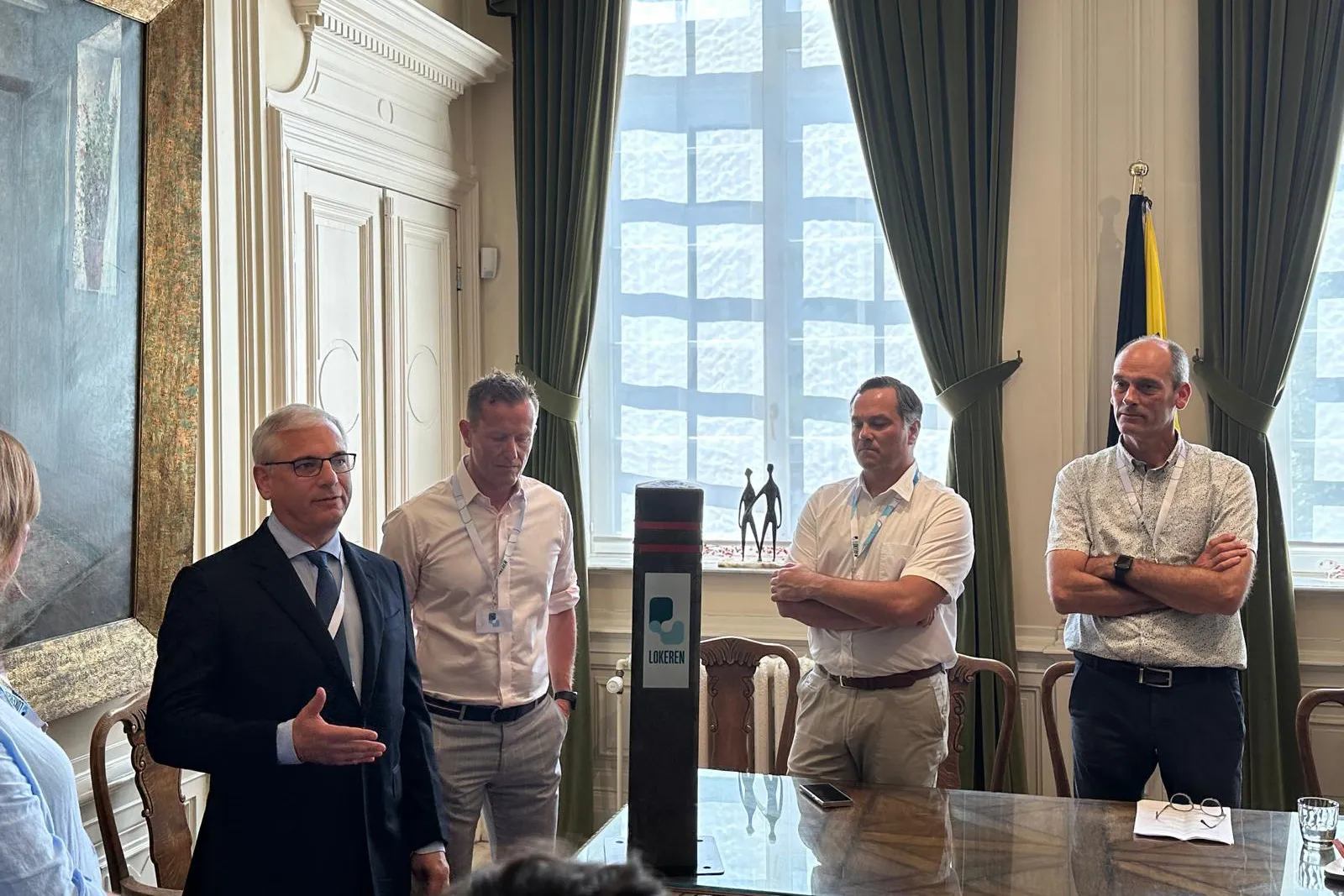
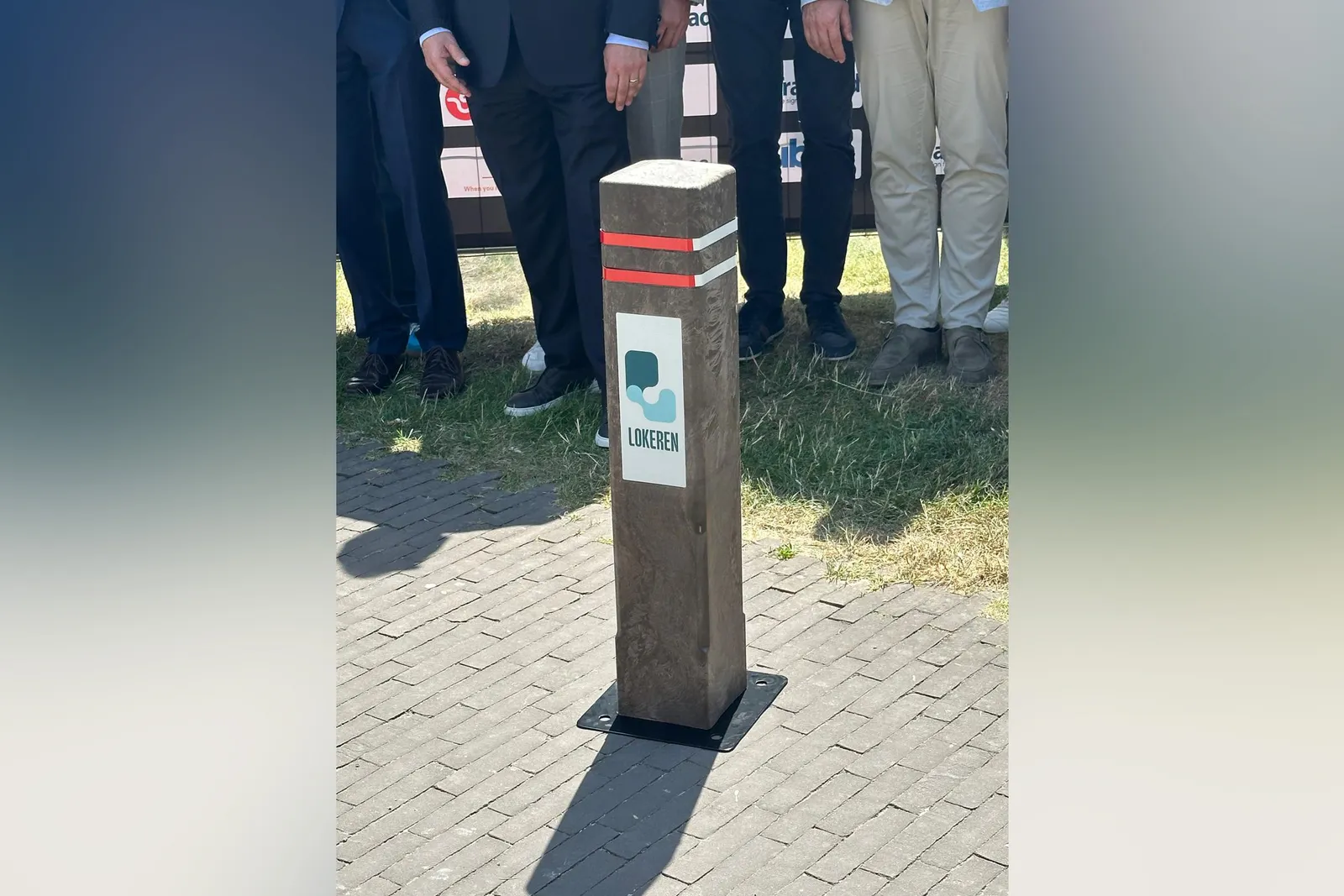
Innovative anti-parking bollard offers a sustainable local alternative to tropical hardwood, made from recycled waste and industrial hemp
Following a unique collaboration between eight partners, including UBQ Materials, SGS, delaware and Microsoft, road signage specialist Trafiroad and C-biotech, a subsidiary of Cordeel Group and a pioneer in the use of bio-based (construction) materials, today installed the country’s first CO₂-negative diamond-head bollard in Lokeren. This first is the result of an innovative production process focused on local production, job creation and sustainable technologies. The project fits seamlessly with Trafiroad and Cordeel Group’s vision of focusing on innovation to develop smart, energy-efficient and low-carbon solutions.
Local production using local raw materials
The CO₂-negative diamond-head bollard, ceremonially installed in front of journalists near Lokeren town hall, is made from recycled plastic, recycled household waste and industrial hemp. It was developed by Trafiroad and C-biotech and manufactured by Anziplast. The product is innovative not only in its composition, but also in its production process and impact. By using locally available raw materials and processing them through Belgian production partners, this project shows that sustainability can go hand in hand with economic logic.
“Making products from raw materials that we own ourselves should become the norm,” says Tony Marien, COO of Trafiroad. “These products are often more sustainable than foreign alternatives. By producing locally at a market-competitive price, we not only stimulate employment and entrepreneurship, but also reduce our dependence on foreign suppliers. Our diamond-head bollard is the start of what ‘products of the future’ can be: local, sustainable and economically viable.”
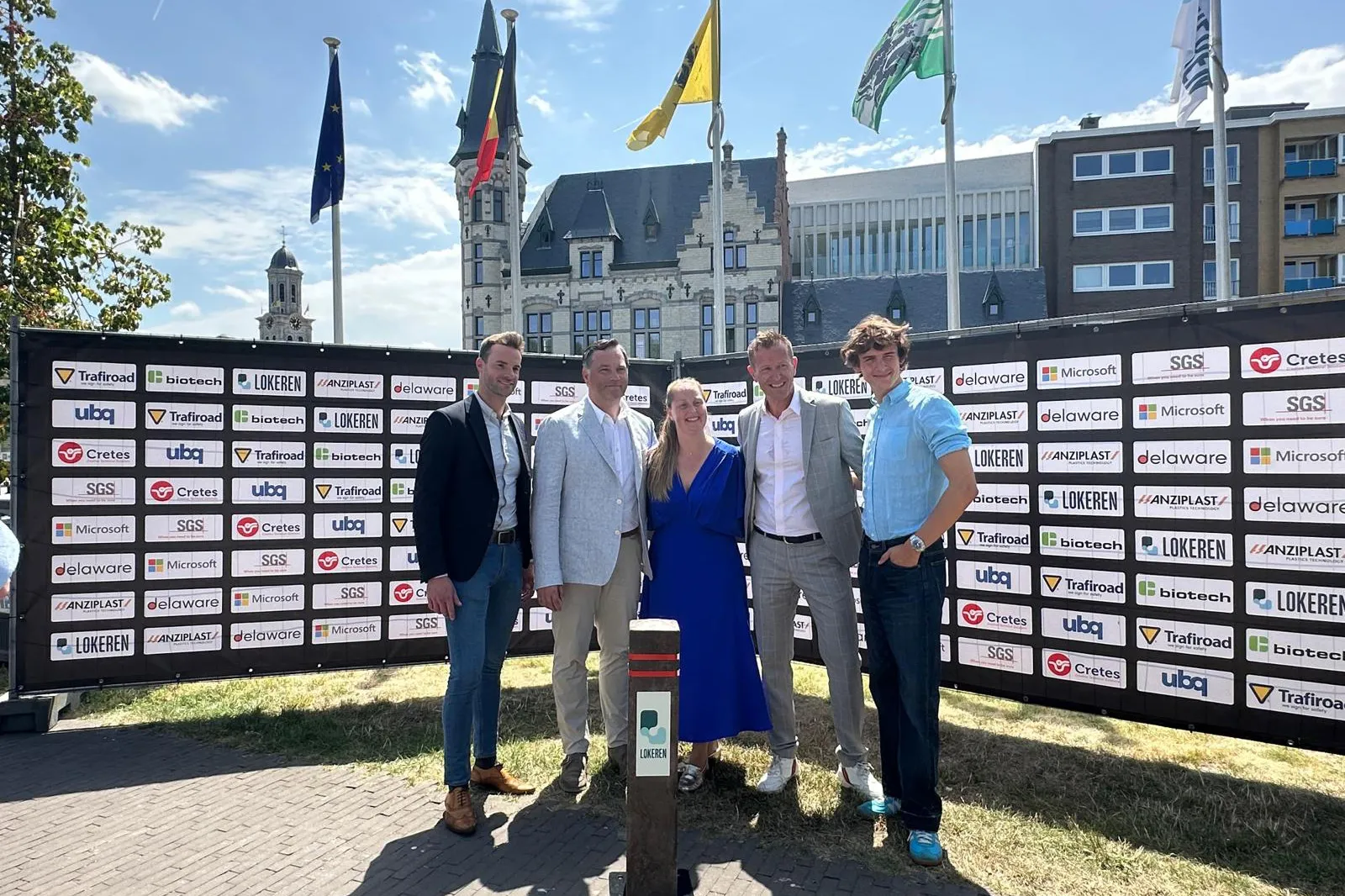
A streamlined production process involving nine partners
The CO₂-negative diamond-head bollard is the result of close, transparent collaboration. To develop its idea of using bio-composite for this application, C-biotech brought together no fewer than eight parties. Alongside Trafiroad and the City of Lokeren, Anziplast, UBQ Materials, SGS, delaware and Microsoft also contributed to the project.
“And that is essential,” says Frederik Verstraete, CEO of C-biotech. “If you want to build a new economy, you need a lot of strong shoulders. We chose partners with international expertise in their respective fields, so that we could deliver a robust product that is both scalable and credible.”
Circular and CO₂-negative
Household waste is collected at UBQ Materials’ 55,000 m² plant in Bergen op Zoom. Trafiroad and C-biotech combine it with recycled plastic (HDPE) and locally grown hemp to develop an innovative bio-composite. This is good for the environment. Hemp is a CO₂-negative raw material that helps prevent erosion and offers an alternative to tropical hardwood, a material that is becoming increasingly scarce and expensive. At Anziplast’s state-of-the-art plant in Izegem, energy-efficient injection moulding machines are used to make traffic bollards from this bio-composite. Trafiroad then distributes them to cities and municipalities in Northern Europe.
“As a market leader in road signage, we are proud to be the first to bring a 100% circular and CO₂-negative diamond-head bollard to market”, continues Tony Marien. “As well as preventing timber harvesting and reusing waste materials, our bollard provides adequate warning and helps prevent damage in the event of a vehicle impact. This diamond-head bollard marks the beginning of a series of applications in road signage and street furniture that are fully in line with our commitment to a sustainable future.”
“By recovering household waste destined for landfill or incineration and converting it into high-quality construction products without compromising on quality or price, we offer a scalable circular model that can immediately help decarbonise the construction sector. This shows that Europe has the tools, technology and urgency to take a leading role in a climate-positive future, not tomorrow but starting today”, says Albert Douer, CEO of UBQ Materials.
Full traceability
To prove the sustainability of the end product, traceability throughout the entire production process is essential. To meet this technological challenge, Cordeel Group is working with Microsoft, which has used its expertise in data processing and blockchain technology to set up a fully transparent system. Every stage of the production process is recorded in a digital chain, from the hemp field to the finished product. With the support of satellite data and sensors on the machinery involved, it is possible to monitor and calculate the CO₂ impact of every stage, enabling C-Biotech to scientifically demonstrate exactly how much CO₂ is stored in the product at the end of the process.
delaware, one of the country’s largest IT service providers, also plays an important role: it built a platform for Earth+ to visualise this entire chain scientifically and connect it in real time, ensuring full traceability of the process.
SGS, recognised worldwide for inspection, verification and certification, can independently validate all the sustainability claims made by C-biotech. SGS certifies products such as bio-based or recycled products using scientifically substantiated methods and in accordance with the various applicable standards. The parties have jointly drawn up a certification process, which C-biotech intends to complete in the short term. Working with SGS enables C-biotech’s claims to be verified using evidence-based methodologies. SGS can draw on many years of expertise in this field.
Roots in Lokeren
The decision to install the first completed diamond-head bollard in Lokeren was no coincidence. C-Biotech, its CEO Frederik Verstraete and Trafiroad all have deep roots in the Waasland city. For years, the growing trend towards an innovative circular economy has been noted and welcomed here. There is also a strong belief that producing and selling the diamond-head bollard will significantly reduce CO₂ emissions.
“As a city, we are of course delighted that we can also count on local businesses to do their bit towards the highly ambitious climate targets we are all working towards,” says Peter De Bock, Alderman for Sustainability and Climate.“
“This innovative collaboration by and for the people of Lokeren makes us enormously proud to introduce and launch the first CO₂-reducing diamond-head bollard in our city. We wish them every success with the further roll-out of their product and thank them for the positive impact they can and want to make on our climate,” adds Sarah Poppe, Alderman for the Economy.
Question about this story? Ask your question
Keep following this
Get an email when a new story is published. No account needed.
- SubjectGeneral







