









First Belgian green hydrogen plant expected to receive permit by mid-2022
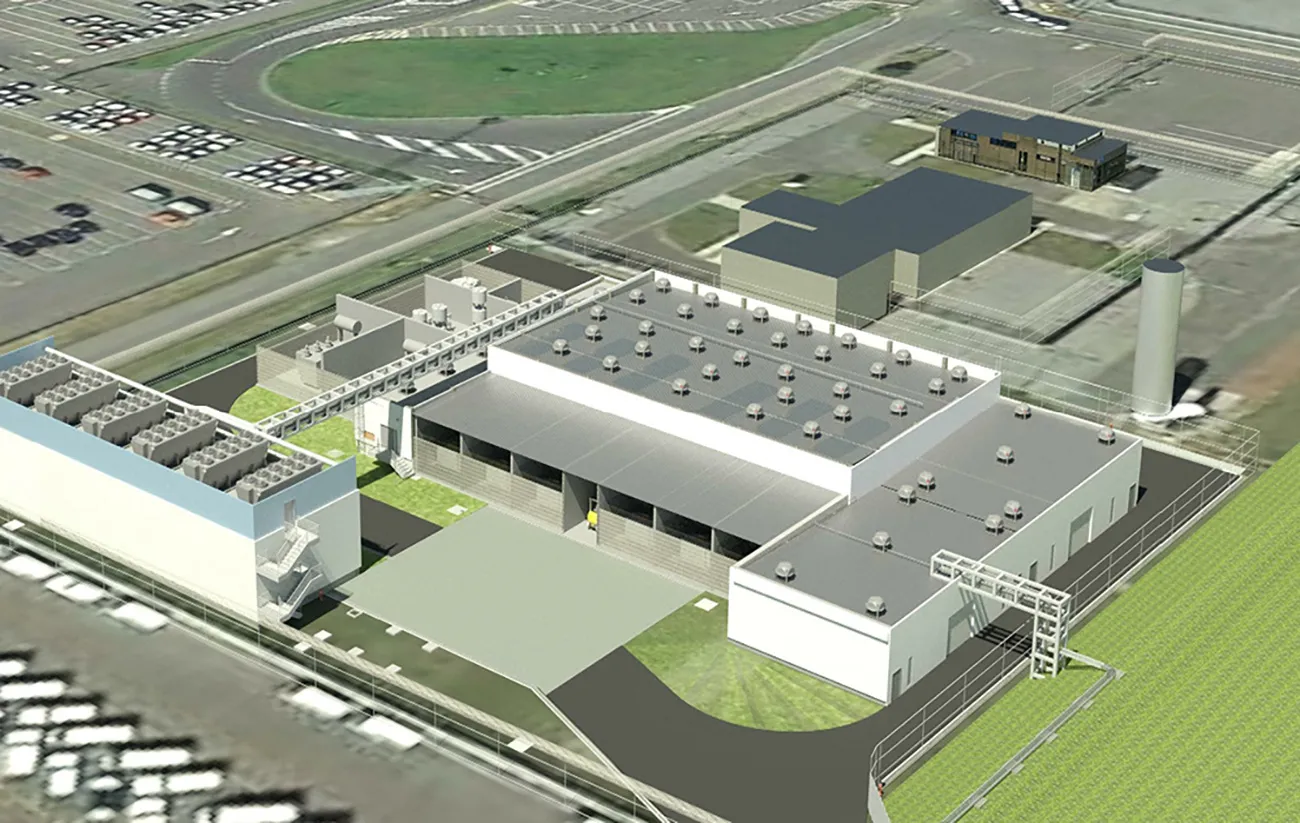
Engineering consultancy Sweco is overseeing the permitting process for the 25-megawatt green hydrogen production unit in Zeebrugge. A first for Belgium, the project will give fresh impetus to the country’s hydrogen ambitions. The client is the Hyoffwind consortium (Virya Energy and Fluxys), which selected John Cockerill and BESIX as its technology partner and as partner for the design and delivery.
Sweco is responsible for applying for the necessary environmental permit for the construction and operation of the green hydrogen electrolysis plant, as well as for subsidies. Our energy specialists are also involved in other green hydrogen developments in Belgium and the Netherlands, providing engineering for compression, cooling and storage systems that meet the strict safety requirements for hydrogen at high pressure.
The permit application was submitted at the end of 2021, and the consortium expects to receive a permit by mid-2022. The final investment decision, which is also subject to the award of subsidies by the Flemish Government under its recovery plan, will be taken in the course of 2022. Flemish Minister for the Economy and Innovation Hilde Crevits has supported the project since 2020, as it fits perfectly with the Flemish hydrogen strategy.
Tom Van Den Noortgaete, Division Director Energy & Environment at Sweco Belgium: “Sweco has strong technical expertise in the engineering of industrial process plants and plays a distinctive international pioneering role in hydrogen projects. We are also responsible for the complete design and for applying for permits and subsidies for Vision H2’s two green hydrogen plants in the port area of North Sea Port. The completion of all these plants will make our economy and society more sustainable.”
Sara Vander Beken, Operational Manager Energy Transition at Sweco Belgium: “Hydrogen will play a vital role in Europe’s future energy mix. Belgium has stated its ambition to become a leader in this field. Our central location, existing industry and infrastructure put us in a strong position to do so. Green hydrogen is therefore intended for activities that cannot easily switch to electricity, such as heavy industry, freight transport and shipping.”
On the way to a hydrogen economy in Belgium and Europe
In the first phase, the planned project will comprise a plant capable of converting 25 MW of electricity into green hydrogen. In the second phase, the partners aim to scale this up to 100 MW. This pioneering project, combined with the development of hydrogen infrastructure, will make an important contribution to hydrogen strategies in Flanders, Belgium and Europe, taking the first step towards establishing Flanders and Belgium as a European hub for green hydrogen.
Partners working together across the entire energy chain
The Hyoffwind project is being developed by a consortium whose activities span the entire energy value chain. The consortium comprises Virya Energy (renewable energy production and commercialisation) and Fluxys (transport of green molecules), and aims to develop a power-to-gas plant that can convert renewable electricity into green hydrogen.
Green hydrogen is a crucial building block for an economy based on renewable energy, as it can be used as a feedstock for industrial processes and for a wide range of mobility applications. Hyoffwind will also help make the energy system more flexible and balanced by providing an effective solution to the increased variability of renewable electricity production.
Question about this story? Ask your question
Keep following this
Get an email when a new story is published. No account needed.
- SubjectGeneral







