









Durable wearing course gives Zelzate Bridge some breathing space
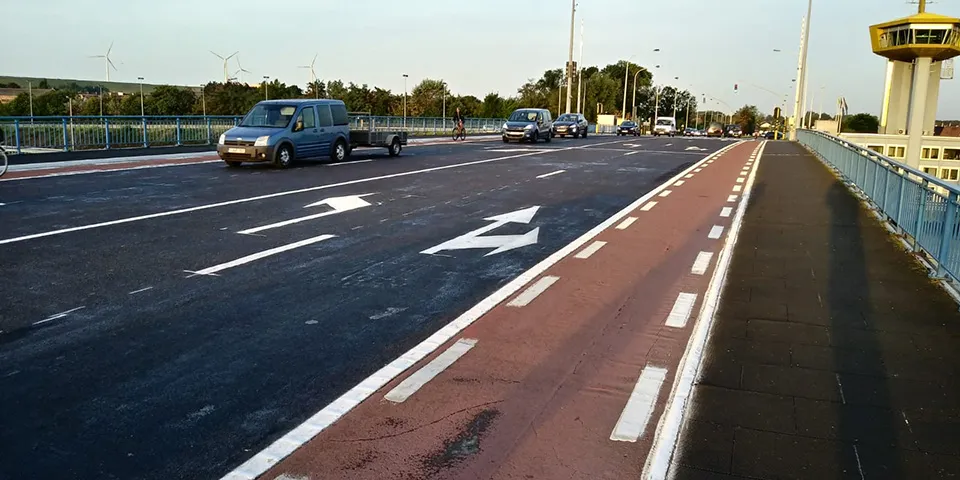
Zelzate Bridge spans the Ghent-Terneuzen Canal and plays an important role as the final link in the ring road around Ghent. But the 1968 structure has been suffering the effects of age for years, and a major renovation is urgently needed. While awaiting that renovation, the bridge was given a new, durable wearing course last summer.
Zelzate Bridge, which is also used by through-traffic carrying ADR goods, looked like a patchwork after numerous minor repairs. These temporary repairs were no longer adequate, so RESIPLAST NV recommended using a flexible POLYAC® system based on PUMA. “This was a test case for the client, De Vlaamse Waterweg,” says export manager Jean-Christophe Hendrickx. “Epoxy has been the specified product for years, but a metal bridge like this moves, causing epoxy, which is very hard, to crack. The entire trafficked area was therefore overlaid with our more flexible and durable POLYAC®PUMA system.”
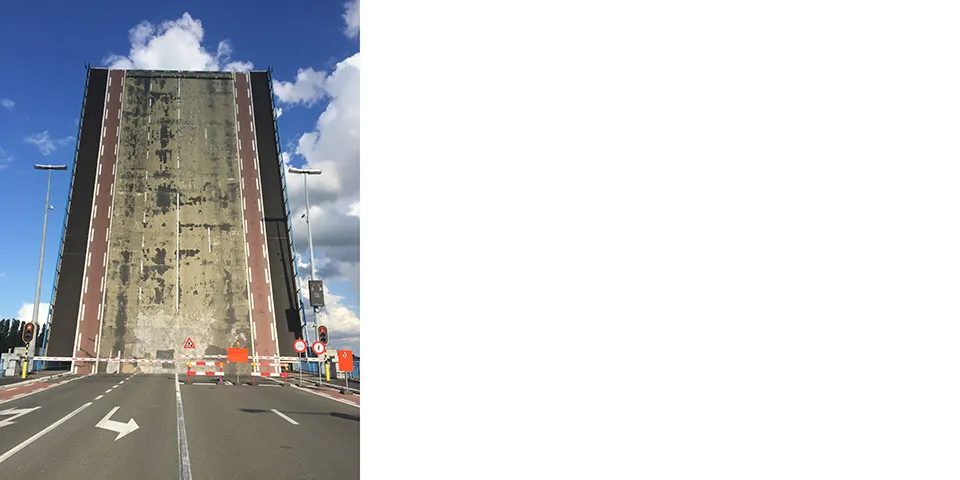
Zelzate Bridge, which is also used by through-traffic carrying ADR goods, looked like a patchwork after numerous minor repairs.
Levelling and anti-slip wearing course
Trafiroad carried out the work. Because of its poor condition, the entire wearing course was milled off in August last year. Jean-Christophe Hendrickx: “There were sometimes holes 10 to 15 centimetres deep, especially along the edges of the bridge’s metal frame. Trafiroad first expertly levelled all the holes with a fast-curing, flexible PUMA mortar. The carriageway surface was then primed with POLYAC®14 and the steel surfaces with POLYAC®15. The next step was to apply a POLYAC®55 wearing course, creating its anti-slip effect by broadcasting corundum granules into the course. Finally, the surface was finished with a black POLYAC®61 topcoat.”
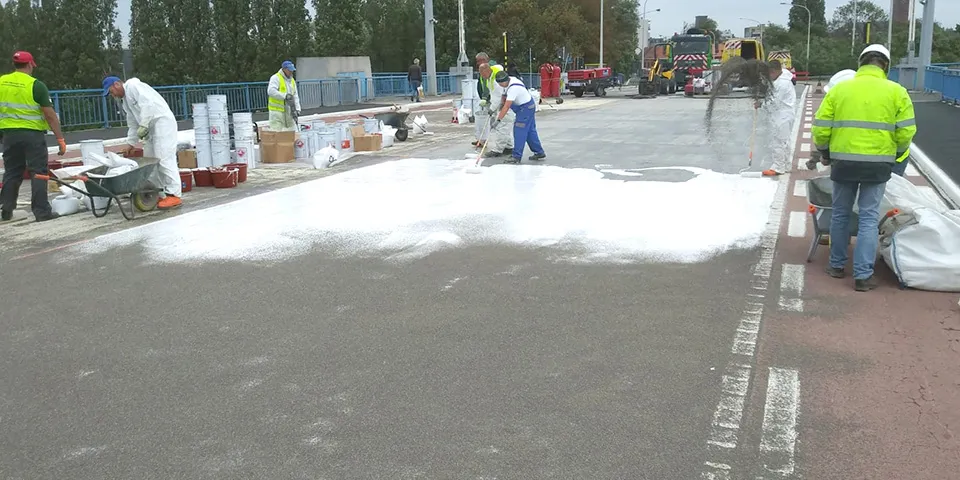
A POLYAC®55 wearing course was applied, with its anti-slip effect created by broadcasting corundum granules into the course.
Fast application
Zelzate Bridge opens an average of 20 times a day for 10 to 20 minutes to allow shipping to pass. “It was therefore very important to keep the bridge out of service for as short a time as possible,” says Jean-Christophe Hendrickx. “In the end, the work took three days. Alongside its fast application, the material’s elasticity and strength are the system’s greatest advantages. We are the only producer of it in the Benelux. This wearing course is a temporary solution until the major renovation takes place, but in principle it should keep the bridge going for at least another ten years. What’s more, local repairs in areas subject to heavier loads are much easier to carry out, without turning the surface into a patchwork.”
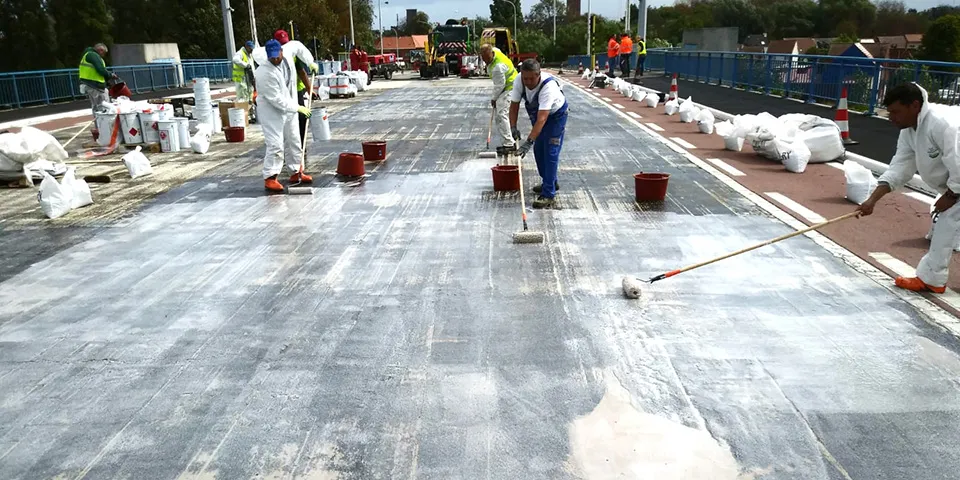
The carriageway surface was primed with POLYAC®14 and the steel surfaces with POLYAC®15.
Question about this story? Ask your question
Wie aan Zelzatebrug werkte
- clientVlaamse WaterwegIn this story
- engineering consultancyWitteveen+BosMentioned in Zelzate Tunnel: On the Road to a Sustainable Future
Keep following this
Get an email when a new story is published. No account needed.
- ProjectZelzatebrug
- ThemeExtending the life of bridges and tunnels
- SubjectGeneral
- CompanyVlaamse Waterweg







