









Dordrecht prepares for installation of Prins Clausbrug
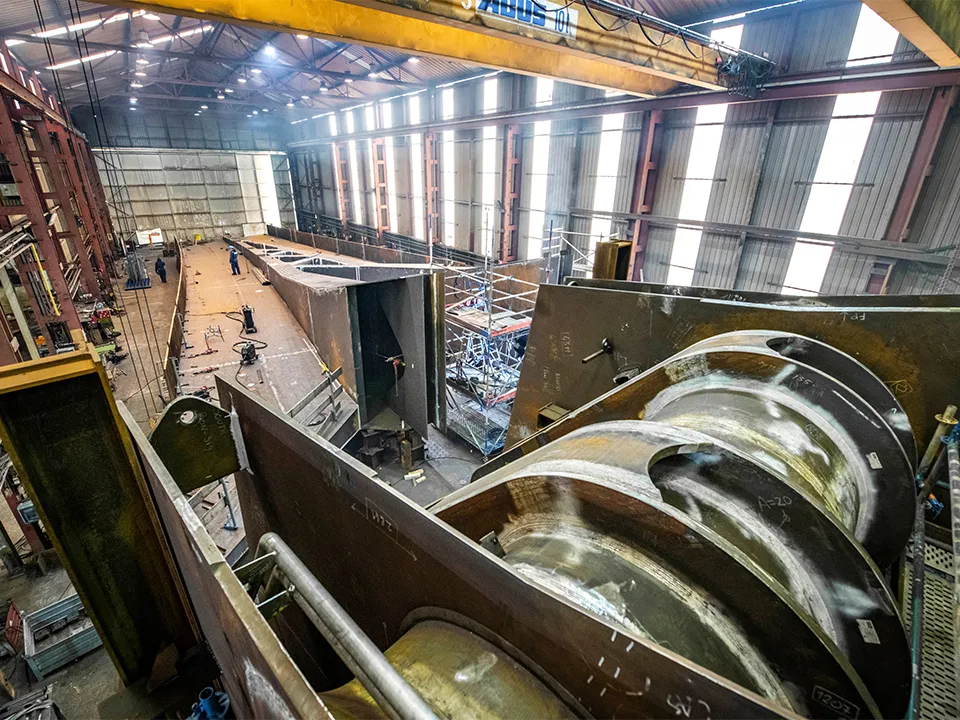
Hillebrand, part of ASK Romein, is working with Dura Vermeer on the construction of Prins Clausbrug in Dordrecht. This impressive feat of engineering is nearing completion, with the first section of the superstructure due to be installed in April.
“It was a great challenge to bring the architectural design together with our technical design,” says Martijn Kuzee, project manager at ASK Romein.
Prins Clausbrug in Dordrecht, designed by René van Zuuk Architekten, will form a striking sculptural landmark for the municipality of Dordrecht. The mast of the movable cycle and pedestrian bridge rises an impressive 55 m into the air. The construction of the bridge, which will ultimately link the new Stadswerven district with the centre of Dordrecht, is therefore full of challenges and is distinguished by its exceptional architectural design. This design calls for a remarkable system of moving parts, with all the mechanisms housed in very narrow spaces. Hillebrand and Dura Vermeer joined forces with IV Group, a multidisciplinary engineering firm, to engineer this iconic bridge. Through close collaboration between Hillebrand and IV Group, they developed a model that is not only visually striking but also meets all these challenges.
Installation of first section
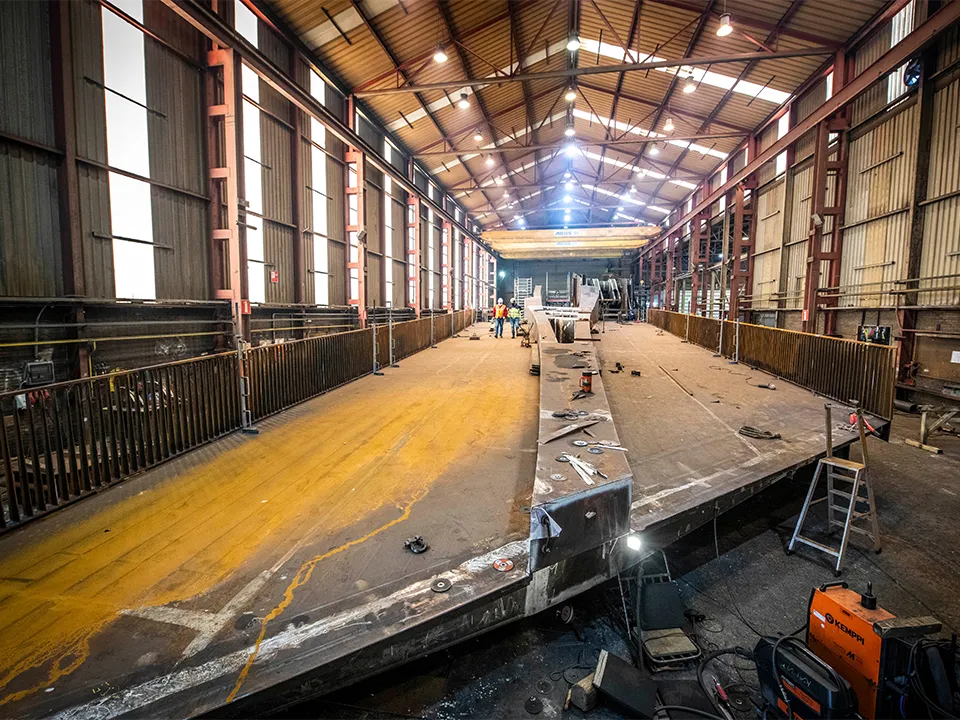
“The architectural design is very complex,” says Martijn Kuzee. “It took a lot of work to make it happen, but construction is now well under way. Dura Vermeer, meanwhile, is working on the substructure, including the foundations, piles, earthworks, concrete works, electrical installation and the fender system that will protect the bridge from collisions. The substructure works are now virtually complete, and according to the schedule, the first section of the superstructure will be installed in April. We manufacture all the steel components in our factories. The piers are being made in Rotterdam, while all the other concrete works are taking place on site in Dordrecht.”
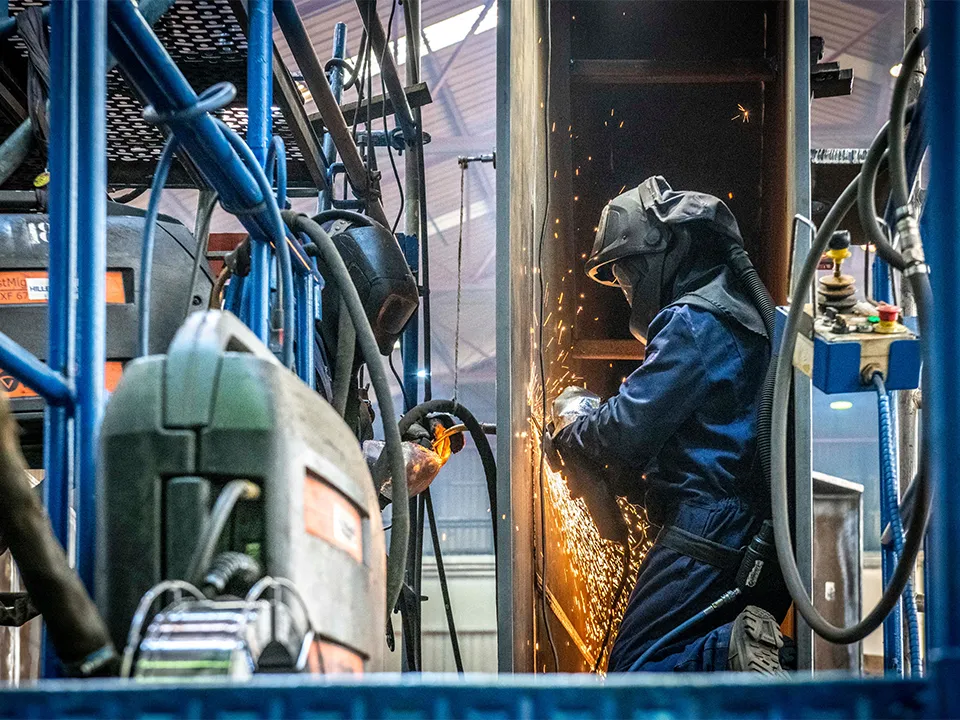
As part of the consortium, Hillebrand is responsible for the superstructure, specifically the steelwork for the bridge structure. Martijn Kuzee says: “This includes the design and construction of the hydraulic drive system. The design, with all its scale and complexity, is undoubtedly the biggest challenge in this project. The structure is very slender, leaving little room to accommodate the forces involved. And given the size of the bridge, those forces are considerable. As with every project, we aim to meet the architectural design requirements as technically and economically as possible. Precision welding and high-quality materials are crucial here.”
An impressive calling card
The bridge will be 140 m long in total. The 350-tonne mast, which is weighted to act as a counterweight, works with cylinders to lift the 46 m-long bridge deck. An imposing ballast mast and a pendulum rod rise high into the air, forming the movable section and making a distinctive movement as the bridge opens and closes. “It will be an impressive calling card for the city. The bridge links a new development area with Dordrecht city centre, creating a very fast connection. This is undoubtedly a very special reference for Hillebrand, not least because of its exceptional architecture. Bringing the architectural and technical designs together was no easy task. In that respect, it is always a matter of give and take, but the result is certainly something to be proud of. Our strength lies in incorporating engineering into the design, and I am very proud that Hillebrand can deliver projects like this,” concludes Martijn Kuzee.
Question about this story? Ask your question
Who worked on it
Prins Clausbrug in Dordrecht
- superstructureHillebrand
- substructureDura Vermeer
- engineeringIV Group
- architectRené van Zuuk Architekten
Keep following this
Get an email when a new story is published. No account needed.
- ProjectPrins Clausbrug
- SubjectGeneral
- CompanyHillebrand
- CompanyDura Vermeer
- CompanyIV Group
- CompanyRené van Zuuk Architekten







