









Digital revolution in the concrete sector: efficiency through innovation
Text Joris Hendrickx Beeld Suivo
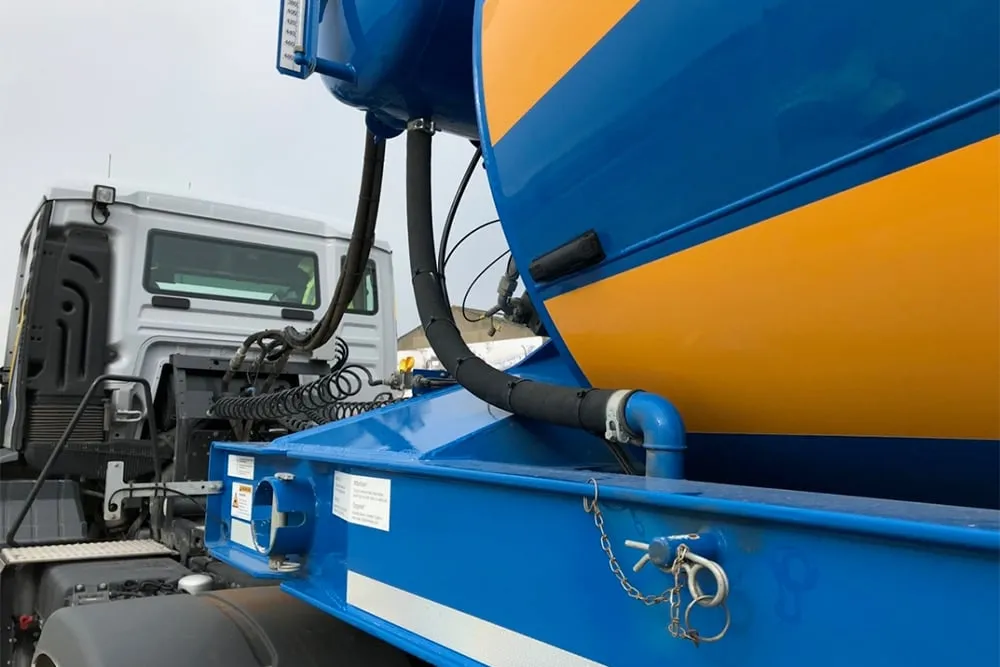
By automating and digitising processes, Suivo helps concrete companies tackle the challenges specific to their sector, work more efficiently and increase transparency. In this article, Willem Naudts (Chief Product Officer) and Stan Verhaert (Account Manager) discuss how their innovative technologies are transforming the concrete industry and setting a new standard for digitalisation in the sector.
One of the biggest challenges in the concrete sector is gaining a clear understanding of production timings for deliveries to construction sites. “It is crucial to know exactly when production needs to start to prevent delays and inefficiencies,” says Stan Verhaert. “Our digital solutions provide real-time insights and automated notifications, enabling construction companies to optimise production planning and make deliveries on time.”
Efficient driver check-in
Checking drivers in at construction sites is a time-consuming process that often causes delays. “Our Check-in-at-work system fully automates this process,” explains Willem Naudts. “Drivers can easily check in via their mobile app, reducing the administrative burden and speeding up the flow of traffic on site. This saves companies time and money while improving operational efficiency.”
Reading vehicle and driver cards
Another important aspect of the concrete sector is reading vehicle and driver cards. “This process is essential for regulatory compliance and fleet management,” says Stan Verhaert. “Our solutions make it possible to read these cards remotely, saving time and enabling accurate reporting. The data can then be used for invoicing and follow-up, streamlining administrative processes.”
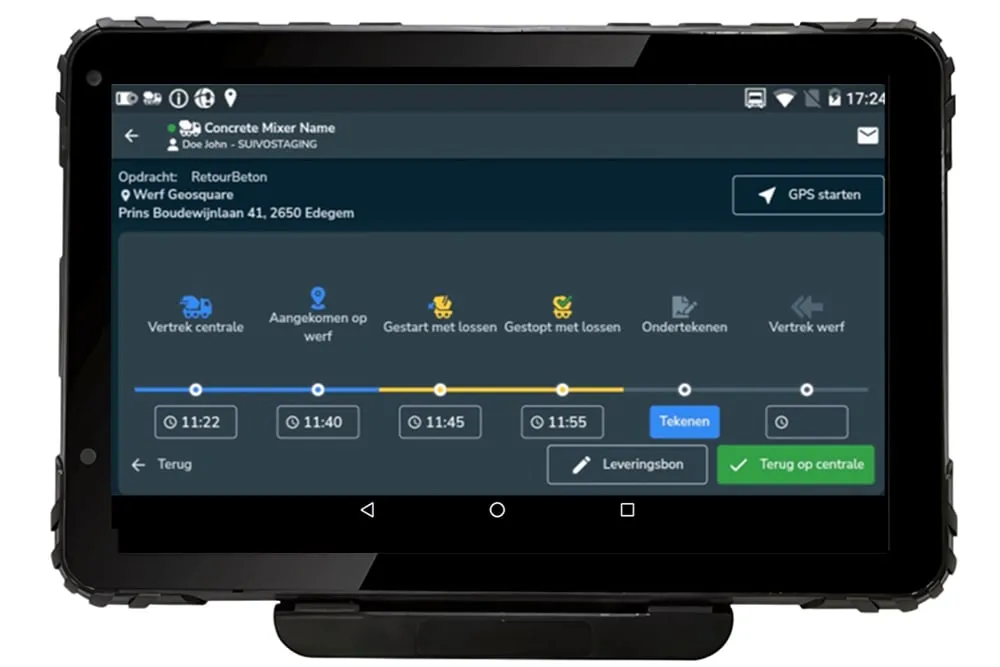
Digitising delivery notes and automating invoicing
Digitising delivery notes and automating invoicing are crucial for the concrete sector. “Traditional paper delivery notes are prone to errors and time-consuming to process,” says Willem Naudts. “Our solution processes all delivery notes digitally and automatically feeds the information back into the company’s ERP system. This ensures accurate, fast invoicing, reduces errors and speeds up payment.”
Seamless collaboration with subcontractors
A complex challenge in the concrete sector is working with subcontractors. “Our ecosystem is specifically designed to integrate subcontractors as if they were company-owned vehicles,” explains Willem Naudts. “This module makes it easier to manage external teams and increases transparency. Subcontractors can use the same tools as in-house staff, ensuring consistent ways of working and better collaboration.”
Technical integrations and in-house development
Willem and Stan emphasise that their team develops both hardware and software in-house. “This enables us to respond quickly to customers’ specific needs, particularly in the concrete sector,” says Willem Naudts. “We have integrated with various production software packages and are working on further partnerships. We also offer clocking-in terminals for time recording and can generate electronic identification documents for the transport of returned concrete.”
Question about this story? Ask your question
Keep following this
Get an email when a new story is published. No account needed.
- ThemeMaterials with a lower environmental impact
- SubjectGeneral







