









Designing healthy cities promotes healthy urban residents
The pandemic has had a major impact on health in general and on the way we live, work and communicate.
It has made us aware of the importance of designing cities that promote the health and wellbeing of the people who live in them. On average, we spend just 10% of our time outdoors, which means that by the age of 80, we will have spent 72 years indoors.
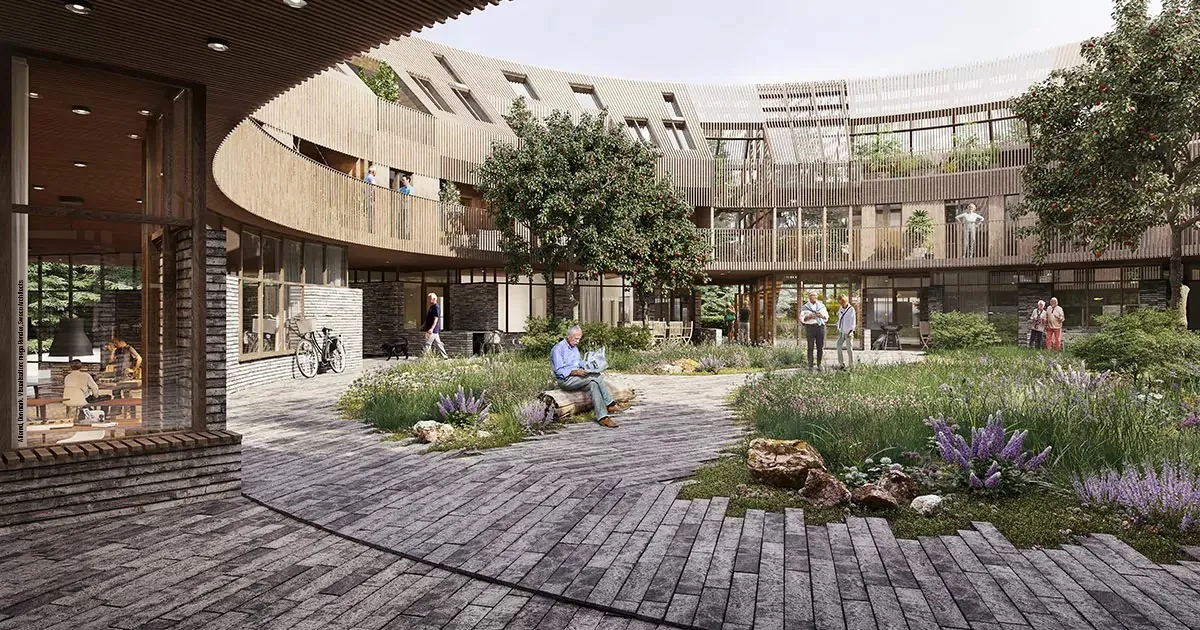
There is a complex relationship between the environment, our social systems and our physical and mental health. A green, welcoming city that encourages physical activity, and healthy buildings in which the indoor and outdoor environments are closely connected, are crucial to our health and wellbeing.
In a new report, engineers and architects from Sweco have joined forces to offer a vision built around three components: green cities, healthy buildings and mindful citizens.
“Studies show that people who had a view of green spaces during the pandemic were in a more positive emotional state and had fewer symptoms of anxiety and depression than those without such a view. This points to the importance of designing cities with more green spaces per resident and higher-quality green spaces,” says Camilla Julie Hvid, engineer and landscape architect at Sweco in Denmark.
The second component of the vision recognises the close link between the outdoor and indoor environments. The COVID-19 pandemic has highlighted the importance of a healthy indoor environment.
“We spend 90 per cent of our time indoors, and there is a clear link between our health and the interior design and climate of the buildings in which we live and work. For example, employees exposed to natural light in the office sleep an average of 46 minutes longer per night during the working week than employees exposed only to artificial light,” says Daniel Hojniak, senior adviser on sustainability and wellbeing at Sweco in Poland.
Thirdly, our future cities and buildings must inspire people to make the healthiest choice when travelling around. To achieve this, engineers and architects must design public outdoor spaces as a fine-grained network of connecting places that encourage interaction and activity.
“Healthy buildings, cities and you” is the second in a series of Urban Insight reports by Sweco on the subject of ‘Urban health and wellbeing’, in which experts highlight specific ideas, solutions and scientific findings needed to plan and design safe and resilient urban environments for the future.
Question about this story? Ask your question
Keep following this
Get an email when a new story is published. No account needed.
- SubjectGeneral







