









Deprez, a link in the chain for waterborne transport
Text and images Deprez
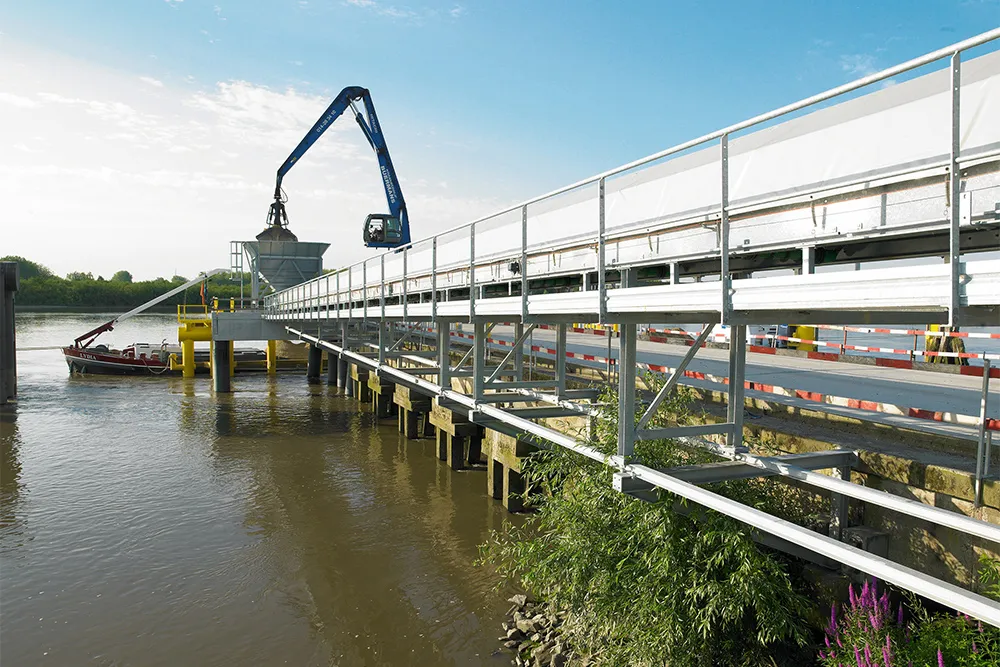
‘Bulk & Recycling’, ‘Logistics’ and ‘Agro-industry’ are the three sectors in which Deprez, based in Kortemark, makes a difference. Over the past 39 years, the company has built various loading and unloading installations (in the Benelux), helping to maximise the advantages of inland shipping. Meet this innovative player.
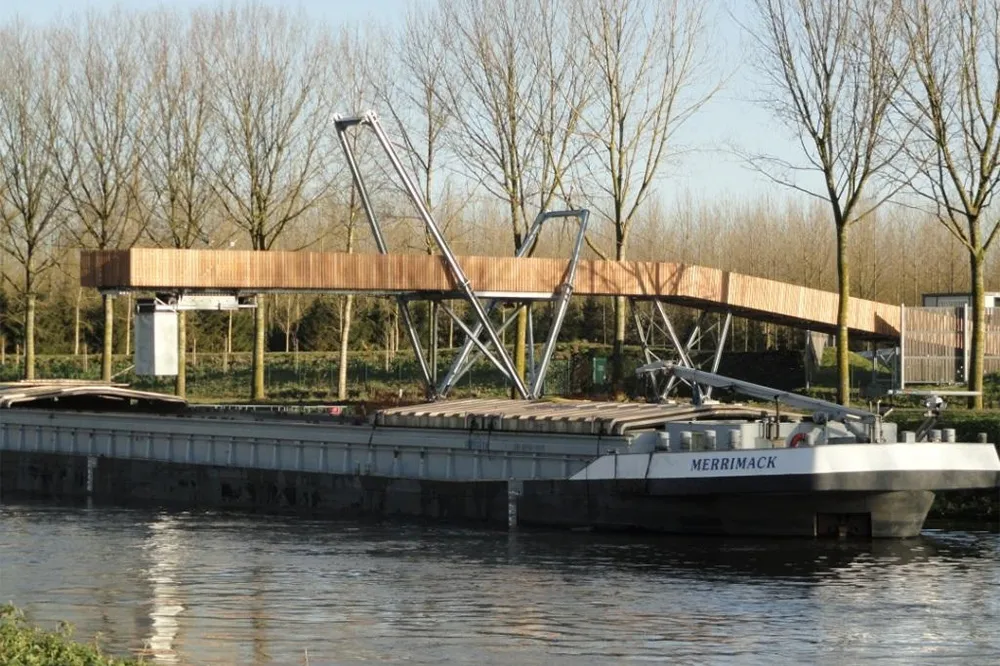
“‘Taking Better Care of Goods’ is more than a slogan for us. Our mission is to create an optimal flow in our customers’ operational processes, across all sectors,” says managing director Jeroen Deprez. “The expertise we have developed specifically in loading and unloading installations for inland vessels goes far beyond simply transporting aggregates from A to B. Customers come to us asking us to tackle a problem. We analyse and break down the request to its essence. ‘Keep it simple’ is important to us, and that is how we deliver the best solution for the customer. The installation has to meet certain requirements: it must be flexible and easy to use, allow for future expansions or changes, be reliable and durable, and above all have low operating costs. You name it, there is a wide range of external factors that help determine what is needed to make an ideal loading or unloading installation perform at its best. Over the years, we have built up extensive knowledge of inland shipping. It is socially, economically and environmentally important to us to support the continued development of inland shipping.”
The company now has 75 employees. Jeroen Deprez: “Our core business is setting up smart, logistical and sustainable processes for our customers. To do that, we have engineers, designers and operational staff in-house. This means all the expertise and know-how is close at hand, and our own project managers can closely monitor our projects. Very often, customers come to us with a challenge or a problem, and the Deprez team sees more than just the solution. In many cases, we offer forward-looking perspectives and guide our customers.”
Simplifying transport and logistics
Permanent installations are built both on fixed quays and, in rare cases, on natural banks. Here are some examples:
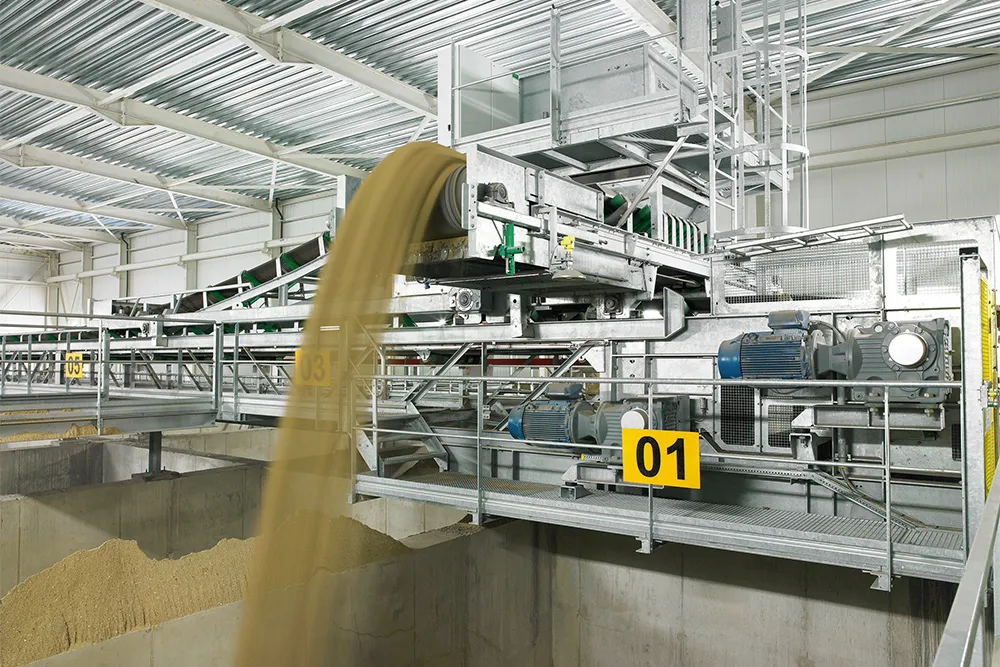
For Devagro (Waregem), a ship-unloading and storage installation was built, which has now transported well over 1 million tonnes. This has taken countless lorries off the road. The aggregates needed for the concrete plant, namely sand and gravel, are delivered mainly by inland waterway.
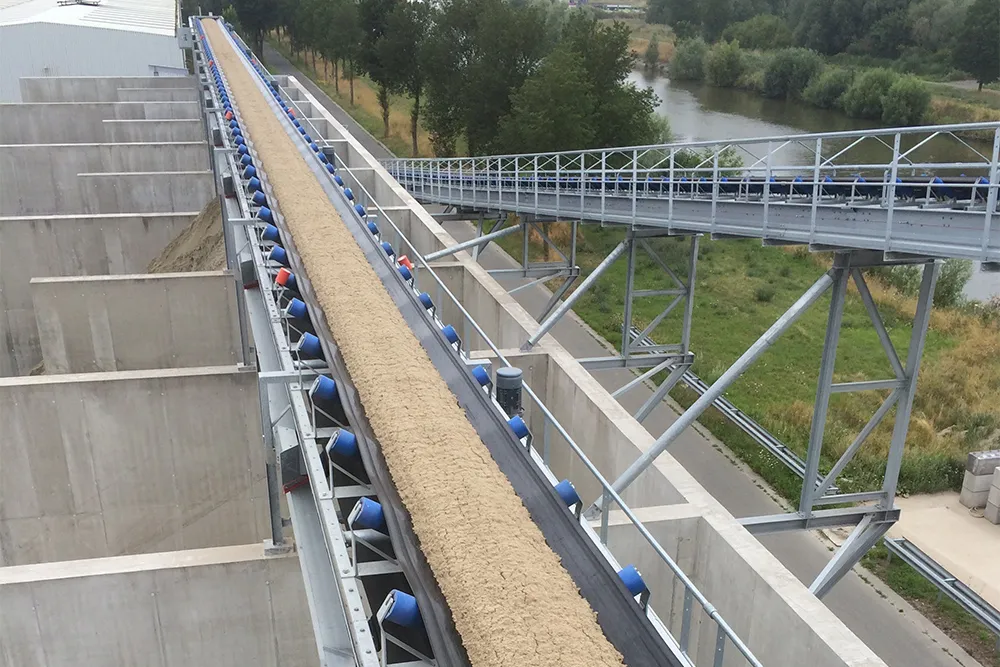
Sometimes the focus is on covering a long distance. At Cordeel’s site in Temse, an installation was built to receive cargo unloaded from vessels. The result was a 420-metre-long conveyor belt with a lifting height of 22 metres.
The aggregates have a throughput of 700 tonnes per hour. Unloading them efficiently is a major challenge.
At Desmedt in Vilvoorde, unloading took on an added dimension. Thanks to the integration of a rotating tower, the same installation can also be used to load vessels. This makes it easy to ship out mixed rubble or aggregates no longer needed on site.
“We carried out some special projects for SPW,” Jeroen continues. “There are settling basins at three locations along the Meuse. Dredging contractors working on these inland waterways pump their dredged material into the basins. After a certain drying period, the basins are emptied and the material loaded onto vessels. We first mill this ‘soil’, then transfer it onto the vessel by conveyor belt.”
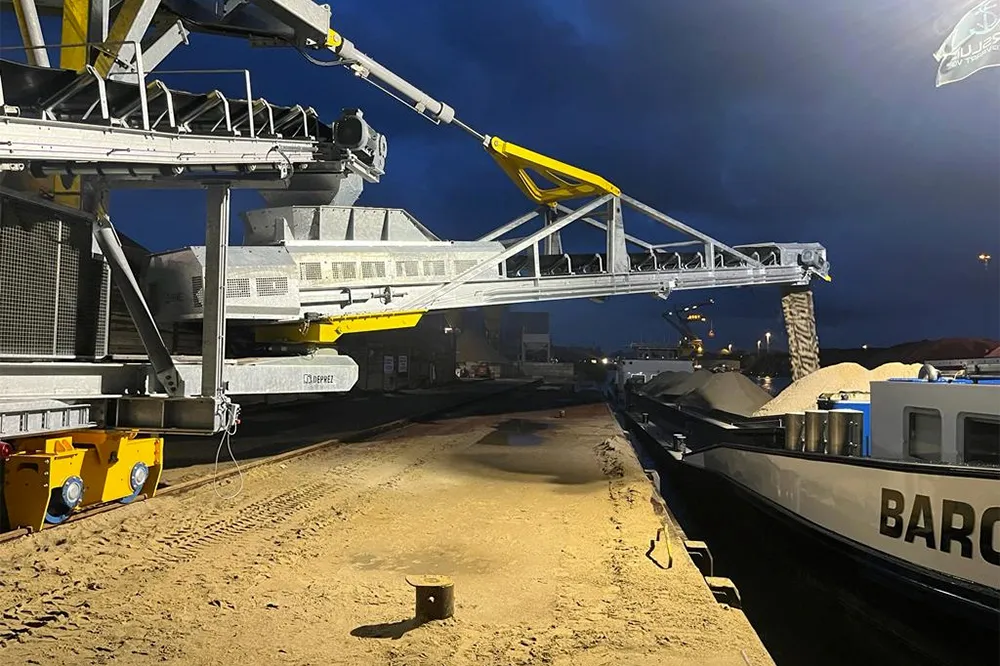
“Finally, at De Hoop (Terneuzen), we built a ‘sand-mixing installation’. It is a 60-tonne machine that runs on rails. A crane also runs on the rails behind the machine. On one side is the quay, where a vessel is moored; on the other is a long wall with a series of separate bays for storing different types of sand. The machine has three hoppers, each with a capacity of 60 tonnes. This allows different sand mixes to be made under automated control. A swivelling loading conveyor lets us choose where to load: directly into the vessel, towards the lorries, or into storage.”
Award-winning powerhouse SOLOMON
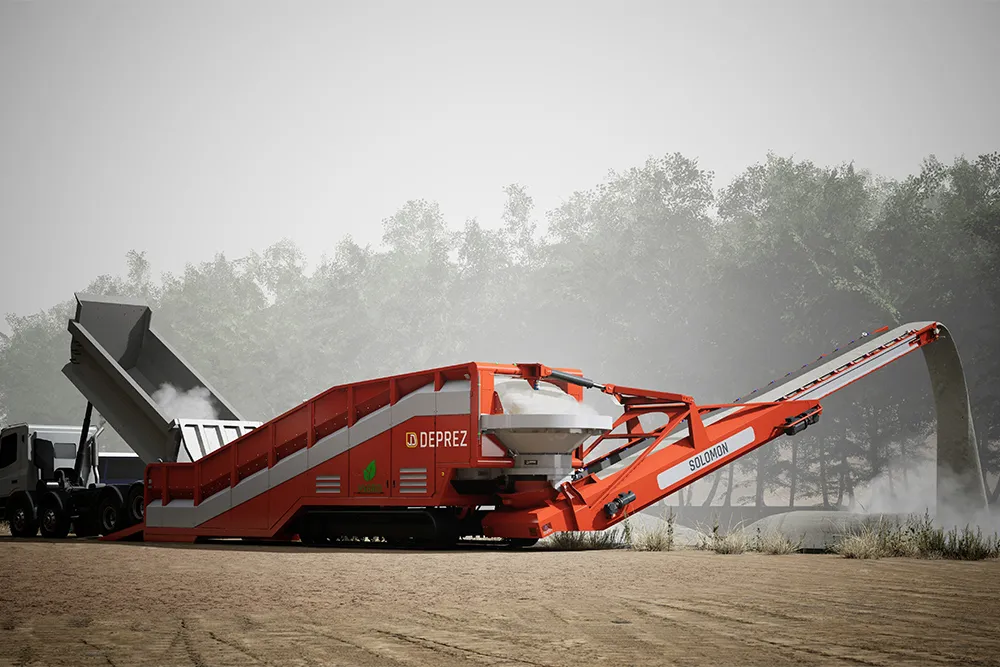
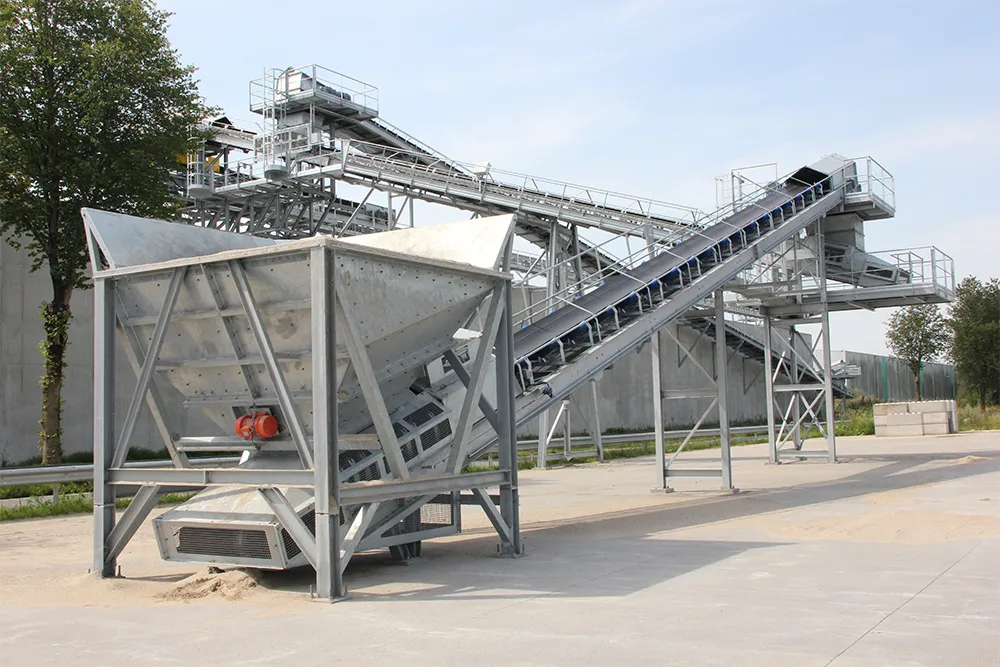
“SOLOMON is an automatic mobile transshipment machine with a remarkably wide hopper, a very wide funnel and a swivelling telescopic elevating conveyor. This combination makes it easy to load inland vessels, even where there is no fixed quay. Thanks to its tracks, SOLOMON can operate on unpaved ground, offering a solution where there is no fixed quay and to the acute labour shortage in earthmoving. The strength of this combination lies in the fully automated loading and unloading process. This leaves both the excavator and its operator free for other tasks throughout the day. SOLOMON comes in a standard configuration with countless options for expansion, allowing every company to adapt it to its own needs.”
“At Matexpo, we became the first company ever to receive the ‘Made in Belgium’ award for this innovation. We also won the bronze medal in the ‘Innovation Award’ category. We are incredibly proud of this recognition and are pleased to share it with the entire team,” says a grateful Jeroen Deprez.
Question about this story? Ask your question
Keep following this
Get an email when a new story is published. No account needed.
- ThemeMaterials with a lower environmental impact
- SubjectGeneral







