









De Witte-Vandecaveye has invested heavily in its rail activities
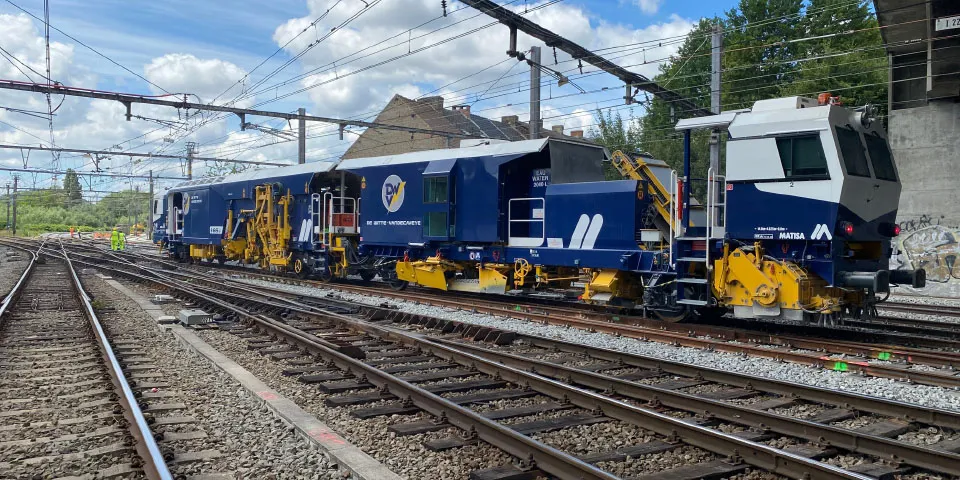
With the recent purchase of a tamping machine, De Witte-Vandecaveye has invested heavily in its rail activities. The electrical engineering specialist from Wingene now has every aspect of railway construction under its roof, enabling it to offer customers a complete package. “This allows us to act quickly and flexibly wherever needed, using our own resources and machines”, says Bert De Witte, who runs the family business alongside his father Paul, his brother Jan and Jan’s wife Mira.
De Witte-Vandecaveye has been active in the electricity sector since 1948, across a range of fields. Bert De Witte: “My grandfather founded the company, and my father, brother and I have since taken over the business. De Witte-Vandecaveye has also been active in the rail sector for many years. We initially specialised in signalling and electrical works. Around five years ago, we decided to focus on railway construction in general. At the same time, however, we are and remain a family business. We are the only truly family-run company in Belgium to handle every aspect of railway construction in-house: signalling, track construction and overhead lines. And we have a fleet of machinery that even larger players might envy, especially now that we also have our own tamping machine.”
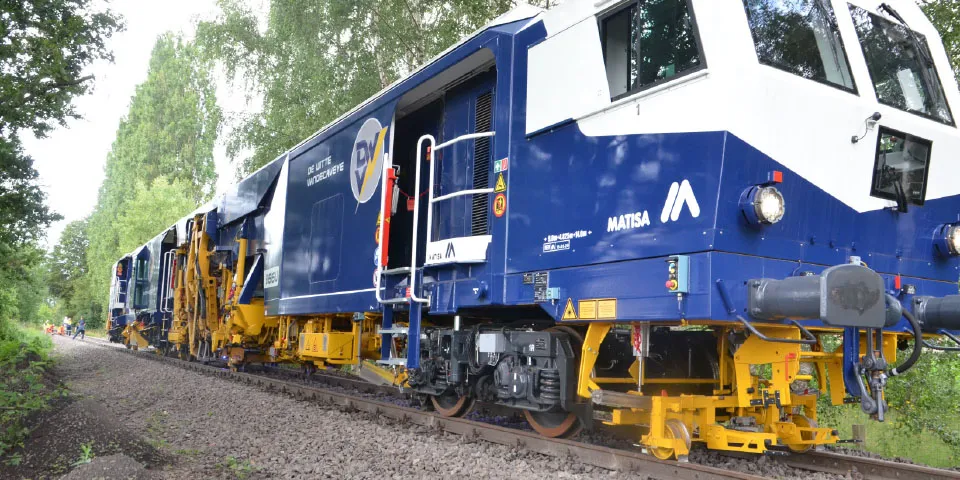
“We now manage every branch of the rail industry in-house, and that is a major added value.”
This substantial investment is a result of the growth the rail division has seen in recent years. Bert De Witte: “That led us to consider buying our own tamping machine, so that we could be as independent as possible. For De Witte-Vandecaveye, this is the final building block that completes our railway construction offering. In the past, we have often come up with alternative ideas and had machines built to our specifications. The purchase of the tamping machine was no different. Naturally, we need to work closely with Infrabel to obtain the necessary permits and approvals, but De Witte-Vandecaveye is fully responsible for this purchase. From the idea and design through to the order and commissioning, everything was initiated 100% by De Witte-Vandecaveye.”
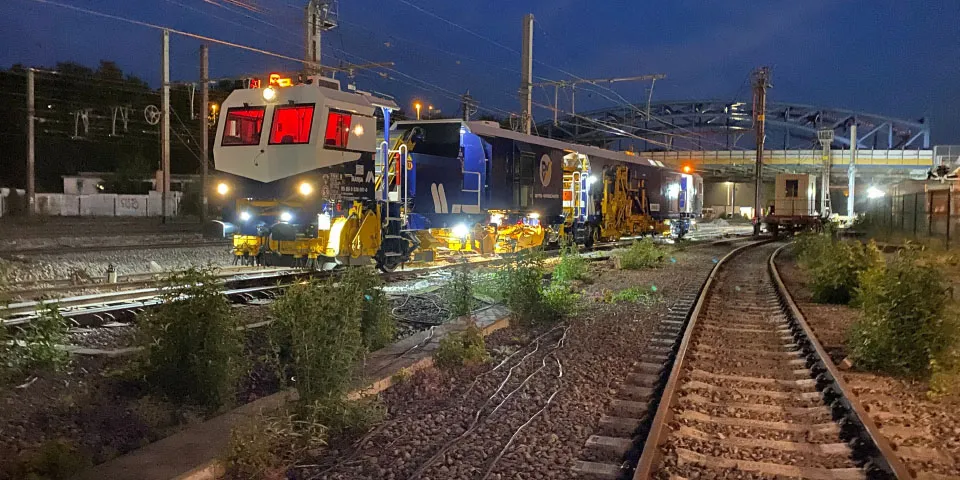
This substantial investment is a result of the growth seen by De Witte-Vandecaveye’s rail division
in recent years.
Rolls-Royce
When laying new track, the main purpose of a tamping machine is to align and position the track precisely as specified in the design. Secondly, it stabilises the sleepers in their final position. Later, during maintenance work, the machine eliminates any irregularities that could disrupt day-to-day train services. “Our machine, from the renowned Swiss manufacturer Matisa (ed.), is one of the few types approved under the revised Bundle 32 for tamping concrete switches”, Bert De Witte emphasises. “Within our railway construction division, we have focused mainly on laying turnout connections. A machine suitable for this work was therefore essential. The B66 U model we bought is the Rolls-Royce of the Matisa range for tamping complex turnouts. The machine is a perfect fit for our work.
The first tests with the new tamping machine produced promising results.
Unique in Belgium
The B66 U is equipped with technology that enables a new form of track stabilisation. Bert De Witte: “This means that new railway lines can be returned to service at higher speeds, reducing the economic impact for the customer. Until recently, this way of working was unknown in Belgium. Our tamping machine is also equipped with a range of new measuring and monitoring equipment, including a system that controls the machine using a total station. This is unique in Belgium. It was a logical step for us, as we also carry out all earthworks in this way.”
Extremely proud
The tamping machine arrived in Antwerpen at the end of March, but commissioning and servicing were postponed because of coronavirus, as the manufacturer’s technicians could not get to Belgium. “After several weeks of testing with our own staff, the tamping machine was put to work for the first time on a site in Bergen, in the presence of one of the manufacturer’s technicians. The first job in Bergen produced promising results for tamping, brushing and regulating the ballast shoulder. For now, the tamping machine is scheduled to work every weekend until the end of the year, and many projects have already been booked for 2021 too. Needless to say, we are extremely proud of this new addition. We now manage every branch of the rail industry in-house, and that is a major added value. This allows us to act quickly and flexibly wherever needed, using our own resources and machines”, concludes Bert De Witte.
Question about this story? Ask your question
Keep following this
Get an email when a new story is published. No account needed.
- SubjectGeneral







