









Construction sector ready to make urban centres and town centres dramatically greener
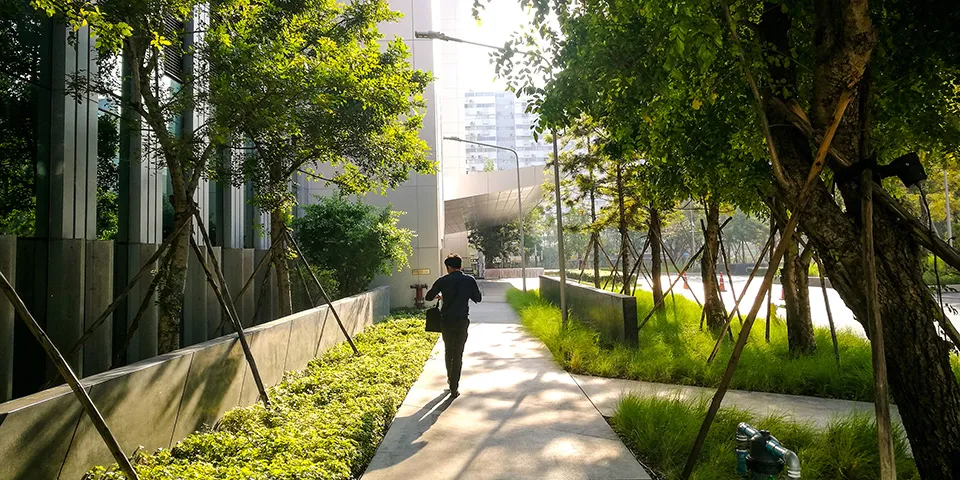
Limburg Governor Herman Reynders has recently launched a plan to plant thousands of additional trees in city and town centres over the coming years. Recent heatwaves have made increasing greenery in urban centres a priority in safeguarding their liveability. Cooling islands and effective water management are essential in tackling climate change.
The construction sector has long had the expertise to create green-blue networks in urban centres. In recent years, for example, the Flemish Confederation of Construction has welcomed an association of green contractors into its ranks, bringing expertise in nature-based engineering and landscaping. Green infrastructure and water management are increasingly required from the design stage of new projects and infrastructure works.
Flooding and prolonged heat. Both underline the urgency of planting more trees and greenery and adopting appropriate construction techniques. During prolonged heat that causes urban heat-island effects, planting trees and carrying out nature-based engineering works are highly beneficial in safeguarding the liveability of urban centres. Blue-green networks, including water features, green roofs and façades, roof gardens and pocket parks, are becoming increasingly important as urban areas grow denser. Smaller living spaces call for high-quality public areas with plenty of greenery and trees. As the Limburg governor emphasises, urban centres urgently need to catch up.
In addition, (water-sensitive) urban centres need water-resilient construction techniques, such as unsealing squares, pavements and planters along streets that function as rain gardens, green roofs and infiltration wells, both of which can temporarily store rainwater, and retention basins. The guiding principles are permeable surfaces and slower infiltration.
Specialising in landscaping
On major projects, construction companies are involved from the design stage to ensure the technical development of water and green infrastructure, such as tree planting. The Flemish Confederation of Construction has long been working to establish a knowledge centre to promote the use of ecological and nature-based materials and methods in construction. It has also welcomed a specialist association of green contractors into its ranks, bringing together contractors with expertise in all kinds of green infrastructure, from green façades to green roofs.
Prolonged drought
The extreme drought last summer caused extensive damage to plants and trees that had been planted at the time. This experience means that, when preparing clearly specified contract documents, contractors must take account not only of extreme weather conditions, but also of the ground conditions and the choice of planting as key considerations.
This growing understanding shows that prolonged drought can have a very negative impact on the successful delivery of landscaping works and on costs for landscaping contractors. The many replantings needed when young plants die, and the extensive watering that in many municipalities can only be carried out at night, significantly increase costs for green contractors. As heatwaves appear to be occurring more frequently, contract documents must address them in detail. This includes, for example, compensation for the additional watering required by landscaping contractors during prolonged drought, as well as adjusting the warranty period to allow for the normal growth of young trees, and so on.
Question about this story? Ask your question
Keep following this
Get an email when a new story is published. No account needed.
- SubjectGeneral







