









Complex dewatering for rail project using short vacuum wellpoints
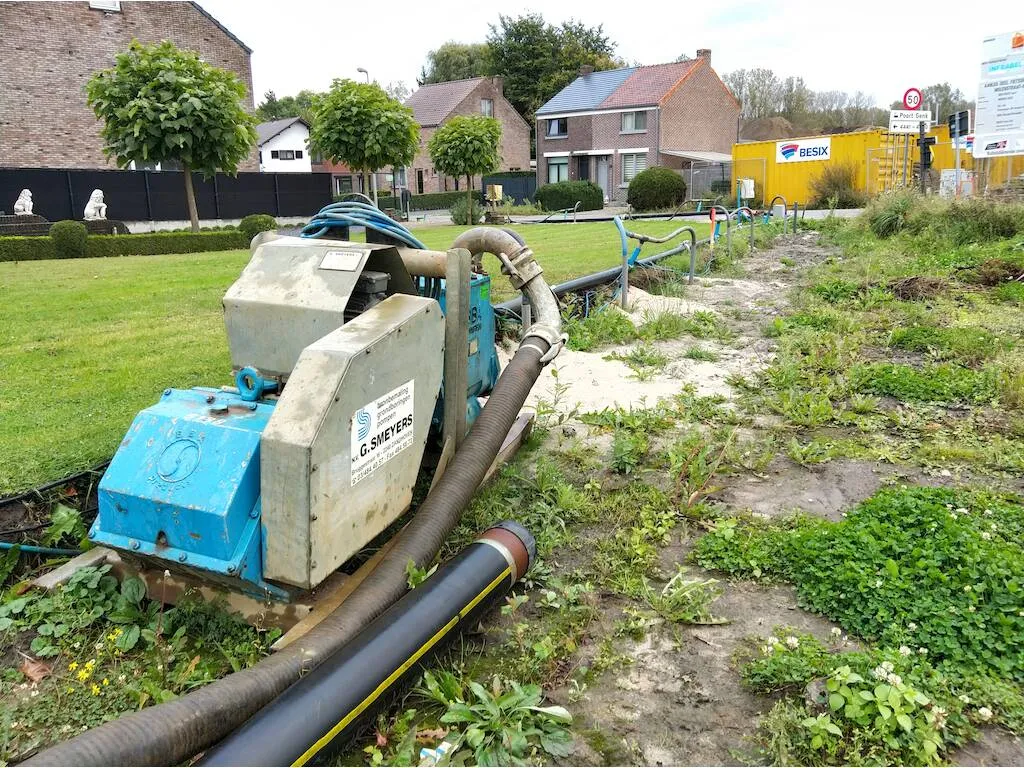
A number of preparatory works had to be carried out in Diepenbeek ahead of the construction of a light rail line between Hasselt and Maasmechelen. A number of existing level crossings are being closed and replaced by a tunnel. The existing sewer in Industrielaan and Molenstraat had to be replaced. For the dewatering works required to deliver the project, main contractor BESIX Infra called on G. Smeyers of Zandhoven.
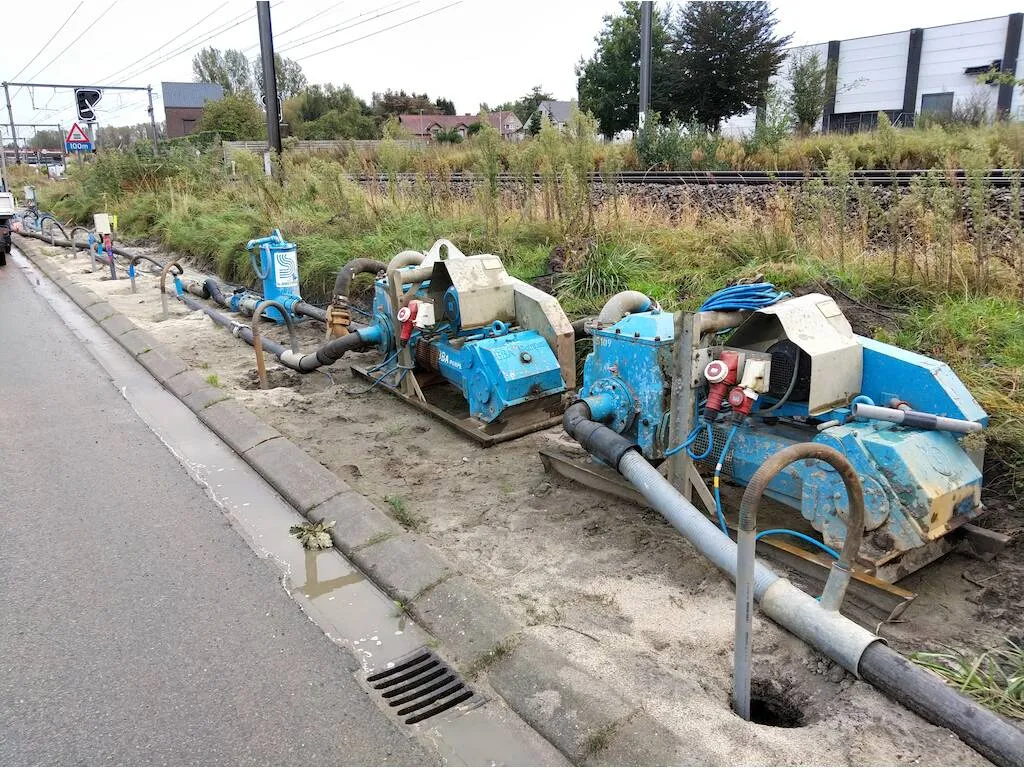
Dewatering was carried out in ground conditions that were difficult to dewater. The ground on site consists of a layer of sandy soil containing clay and silt, approximately 3 m thick, underlain by clay or silty soil with little sand. Tertiary clay is encountered at a depth of 12 m below ground level. Construction of the sewer was made more difficult by the presence of soil contaminated with chlorinated volatile organic compounds (VOCL) near Fremach’s premises in Industrielaan.
BESIX Infra asked G. Smeyers to carry out a dewatering study to assess the impact of dewatering on the known contamination and, where necessary, propose mitigation measures. The section in question is approximately 240 linear metres long and has a slight gradient (a 2 m difference in elevation). The groundwater is approximately 80 cm below ground level and follows the ground surface. The groundwater had to be lowered to a maximum depth of 4 m below ground level. 3D computer simulation model The dewatering study was carried out using a 3D computer simulation model. The different soil layers were entered, taking account of their natural slope. The nearby Demer river was incorporated into the model as a fixed head, and recharge from rainfall infiltration of approximately 240 mm/year was also taken into account. The parameters used for the horizontal permeability of the different soil layers, as well as the overall structure of the model, were discussed in detail with the client, Infrabel.
The 3D simulation model was then calibrated to match the water levels measured in the monitoring wells. Various dewatering scenarios were subsequently simulated, taking account of the contractor’s planned schedule. ‘Particle tracing’ was used in the model to visualise the actual movement of groundwater and thus assess the effect of dewatering on the contamination.
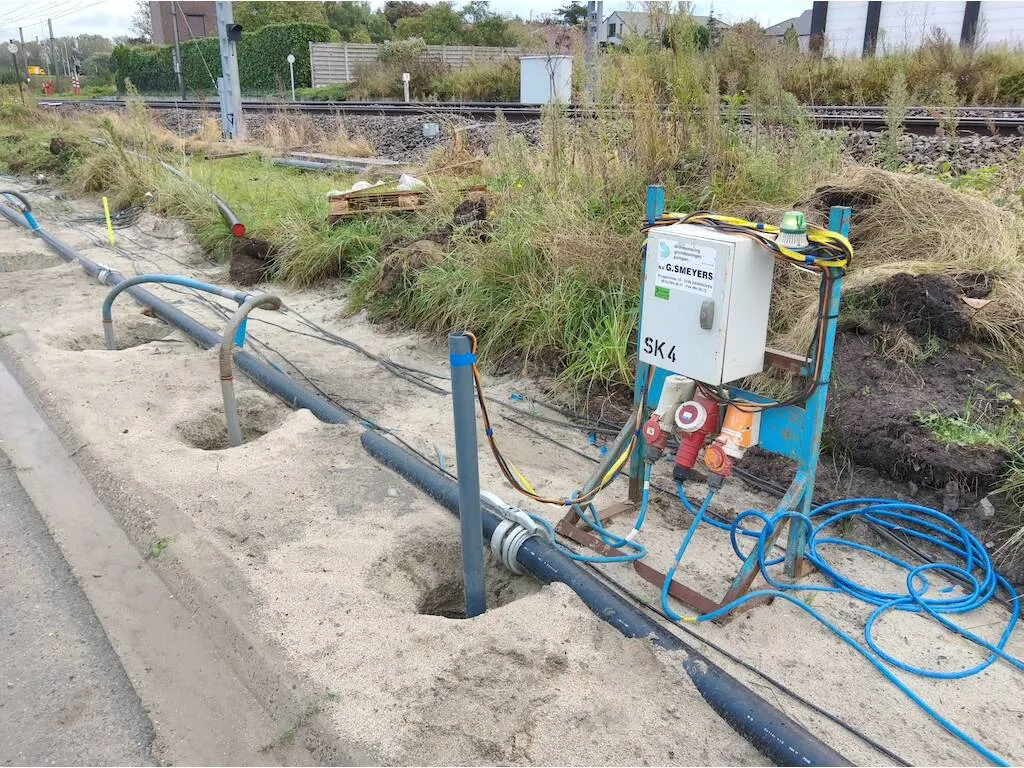
Short vacuum wellpoints
A dewatering system using short vacuum wellpoints was designed, with wellpoints installed on both sides of the sewer trench. This was intended to limit the influence of dewatering on the contamination. Despite this measure, the groundwater contamination would still migrate further towards Industrielaan.
To prevent further migration of the contamination, a counter-dewatering system was planned along the boundary of the Fremach plot. Water pumped by the counter-dewatering system was treated in a treatment plant before being discharged into the sewer. By using short vacuum wellpoints and carrying out the works in phases, the flow rate pumped by the counter-dewatering system could be limited to less than 5 m³/h. This was important for permitting reasons. The overall dewatering proposal, including the method statement, also had to be submitted to OVAM for approval.
Important reference project
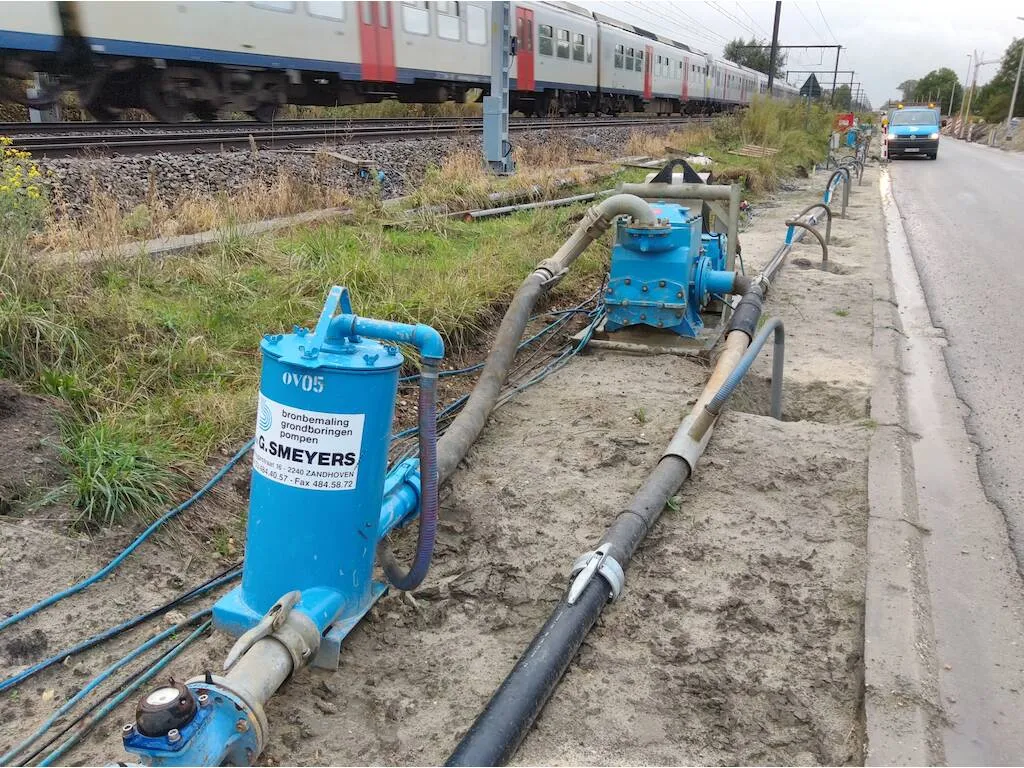
The dewatering system using short vacuum wellpoints has now been installed and is operational. The trench is being kept dry very effectively, and the pumping rates closely match those calculated using the 3D model. The work in Diepenbeek is an important reference project for G. Smeyers. It clearly demonstrates that the company has the expertise to study complex dewatering situations in-house, design suitable dewatering systems and propose appropriate mitigation measures to prevent unwanted adverse effects.
Een zakelijke vraag aan Smeyers nv? Get in touch
Companies in this story


Keep following this
Get an email when a new story is published. No account needed.
- SubjectGeneral
- CompanySmeyers nv
- CompanyOVAM







