









Coastal residents discover what the coast could look like in the long term
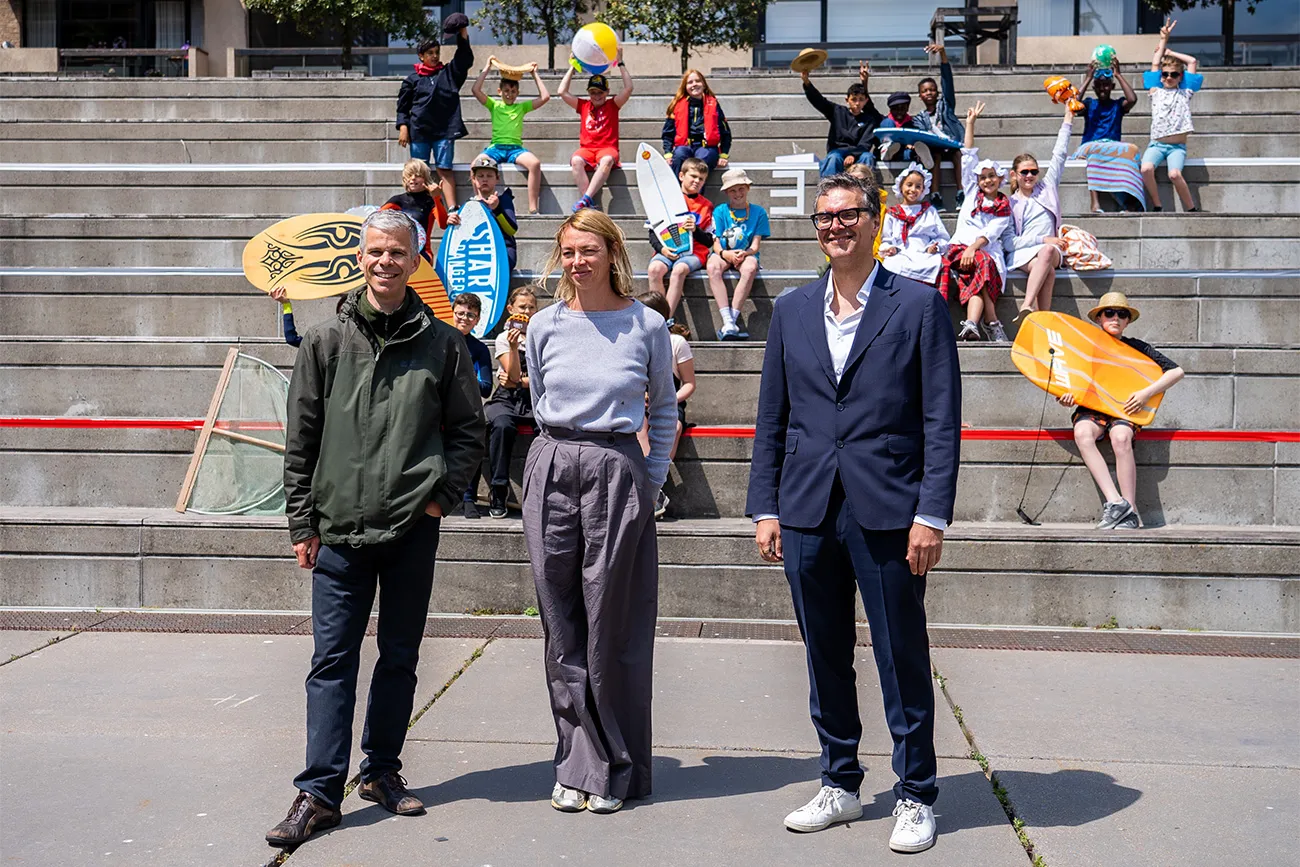
Kustvisie information events get under way in Koksijde
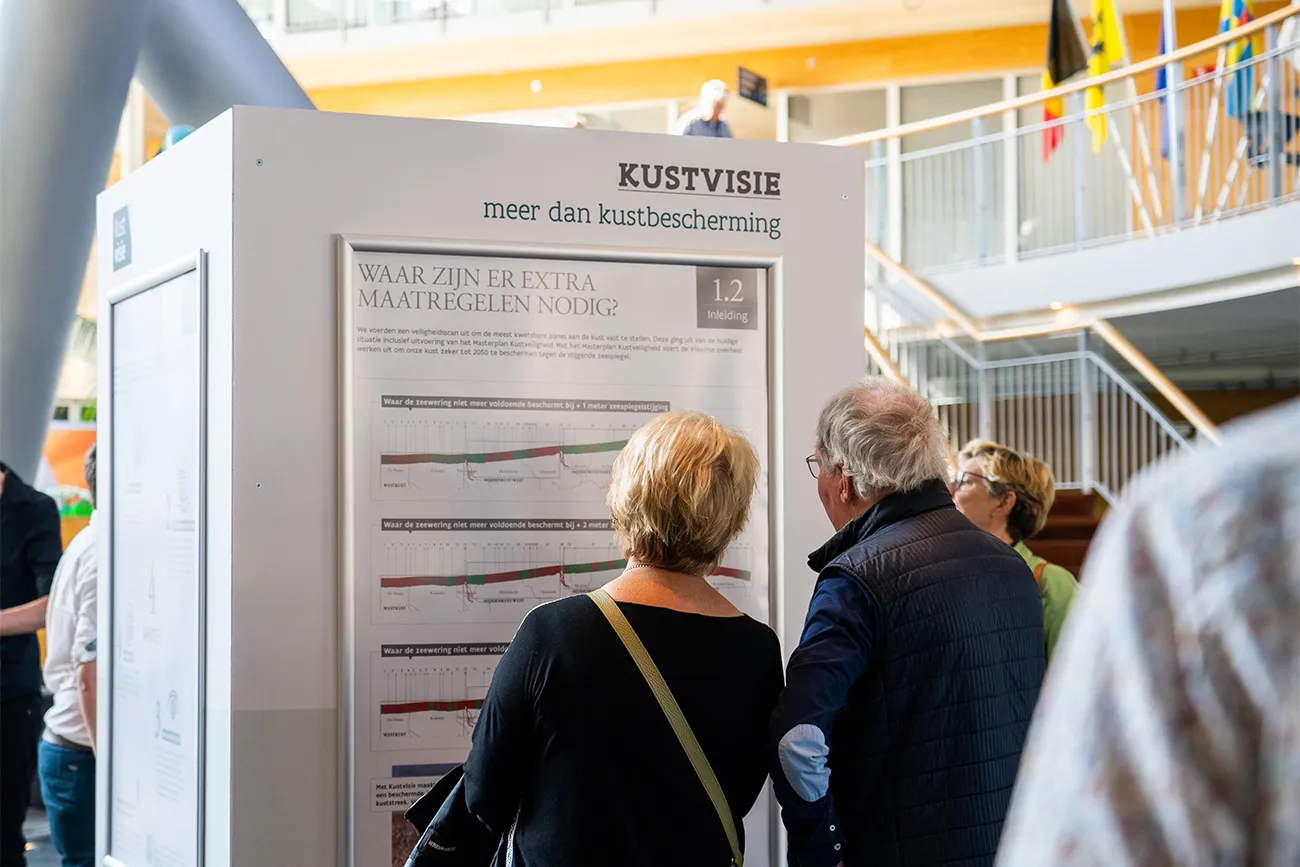
The first public information fair about Kustvisie took place in Koksijde today. Interested coastal residents found out more about how our children and grandchildren can continue to enjoy our coast in the long term, despite rising sea levels and other effects of climate change. The sixth-year class from Leefschool De Letterzee in Koksijde also came to take a look. Each child wore an outfit specially chosen for the visit to represent a coastal function. Over the coming days, the information fair will also stop in Oostende, Blankenberge and Knokke-Heist.
Presenting alternatives
“Over the past few years, a great deal of work has gone into examining all the options for protecting our beaches and ports against rising sea levels in the long term. A handful of alternatives remain. Coastal residents can now give their feedback on them. I urge everyone to visit the information fairs. There, you can find out which coastal protection scenarios are still being considered for each municipality and what a ‘possible’ implementation could look like in practice. Following further research, one preferred alternative will be selected from these options. It will not only provide lasting protection for our coast, but also help create a future-ready and attractive coastline”, Lydia Peeters, Flemish Minister for Mobility and Public Works.
“Over the past few years, a huge amount of (scientific) research has been carried out into how we can protect our coast for the long term. We have also completed a very intensive co-creation process with almost 100 stakeholders from federal, Flemish, provincial and municipal authorities, port companies and all relevant civil society organisations, to develop solutions that are acceptable to all stakeholders and technically feasible, without causing damage. We now want to present these solutions to coastal residents and other interested parties”, Alexander D’Hooghe of the Hoogtij(d) consortium.
“At the information fair, and in videos on our website www.kustvisie.be, we use images for every coastal municipality and port to show what each part of our coast could look like in the long term. This will help everyone get a clearer picture of each alternative. However, in most places, implementation and construction on the ground will not take place for many decades. But this will reassure anyone considering investing that our coast will remain attractively protected for at least another 100 years”, Edward Van Keer, Kustvisie project leader at the Department of Mobility and Public Works.
“We are pleased that today we can present and explain the results to the public. It is important that coastal residents are well informed about the possible scenarios, because the effects on our beach could be significant. It is important to note that these scenarios also offer opportunities for tourism and nature. We must preserve the wealth of our coast for the future. It is therefore good that the first Kustvisie information fair for all residents of the West Coast was held at Koksijde town hall”, Marc Vanden Bussche, Mayor of Koksijde.
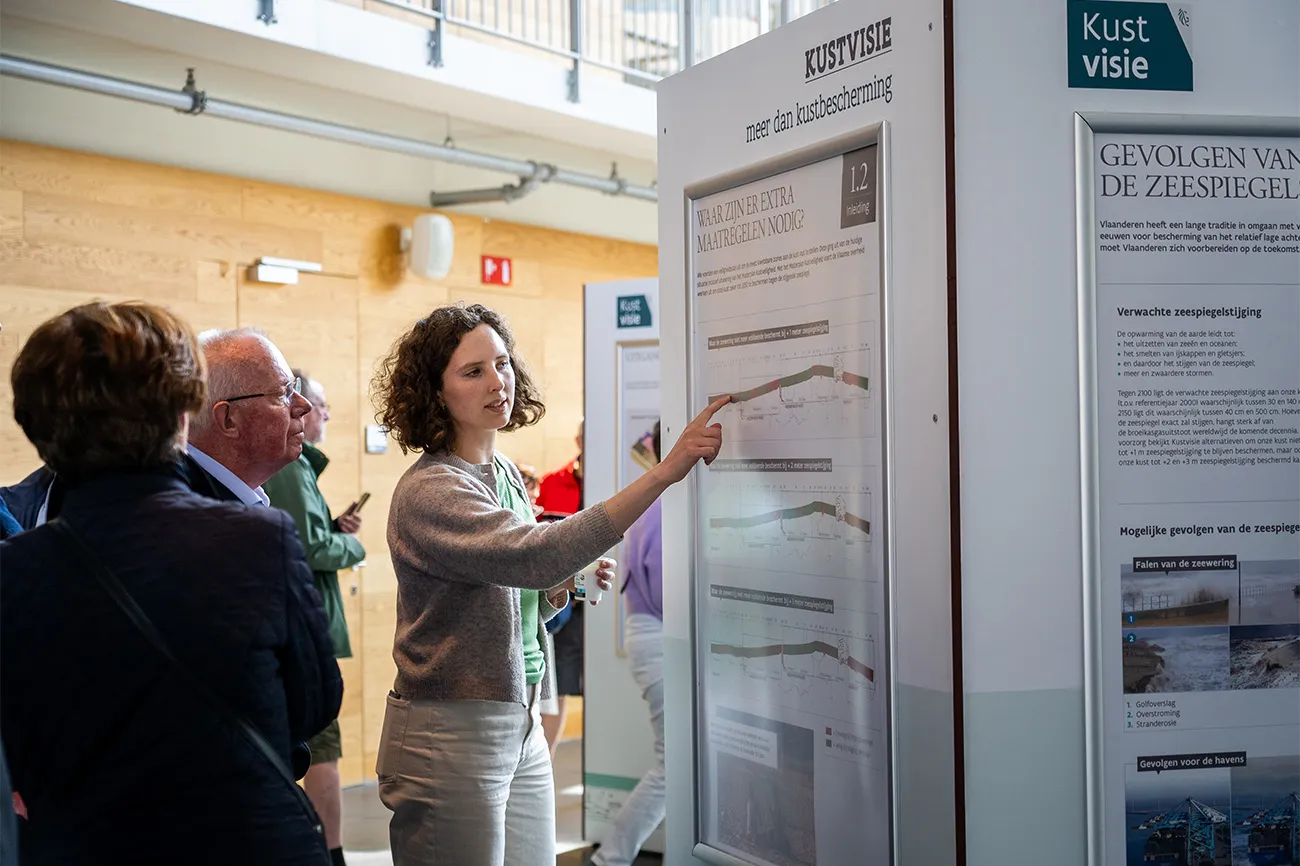
Give feedback on the research note and notification document
At the information events, stakeholders and interested parties can learn about the alternatives, research methods and Kustvisie process. They can also find out how to have their say up to and including 2 July. The information fairs are part of the public consultation period for two documents: a research note and a notification document. The research note brings together all the alternatives for protecting our coast from rising sea levels in the long term and describes all the studies that will inform the selection of a preferred alternative. These include, for example, coastal safety and nautical studies. The preferred alternative will be enshrined in the strategic policy plan yet to be drawn up. The notification document describes how the plan EIA (environmental impact assessment) will be prepared. The Plan EIA will bring together the potential environmental effects of each alternative.
Visit from the sixth-year class at Leefschool De Letterzee in Koksijde
The sixth-year class at Leefschool De Letterzee in Koksijde also attended the information fair in Koksijde. The children came to learn about Kustvisie in ‘suitable outfits’. Each child represented a different coastal function that must be preserved or even enhanced in the distant future: nature, beach sports, tourism, hospitality, fisheries, ports … The Kustvisie project has been set up for these and future generations. The current Masterplan Kustveiligheid protects the coast until at least 2050 (and against sea-level rises of up to 30 cm). The plan is currently being implemented through measures such as beach nourishment, strengthening dykes and building storm walls. Kustvisie looks further ahead, considering sea-level rises of 1 metre, 2 metres and even 3 metres. This will enable the Flemish government to protect our coast for at least another 100 years. Sea levels are expected to rise by between 30 and 140 cm by 2100.
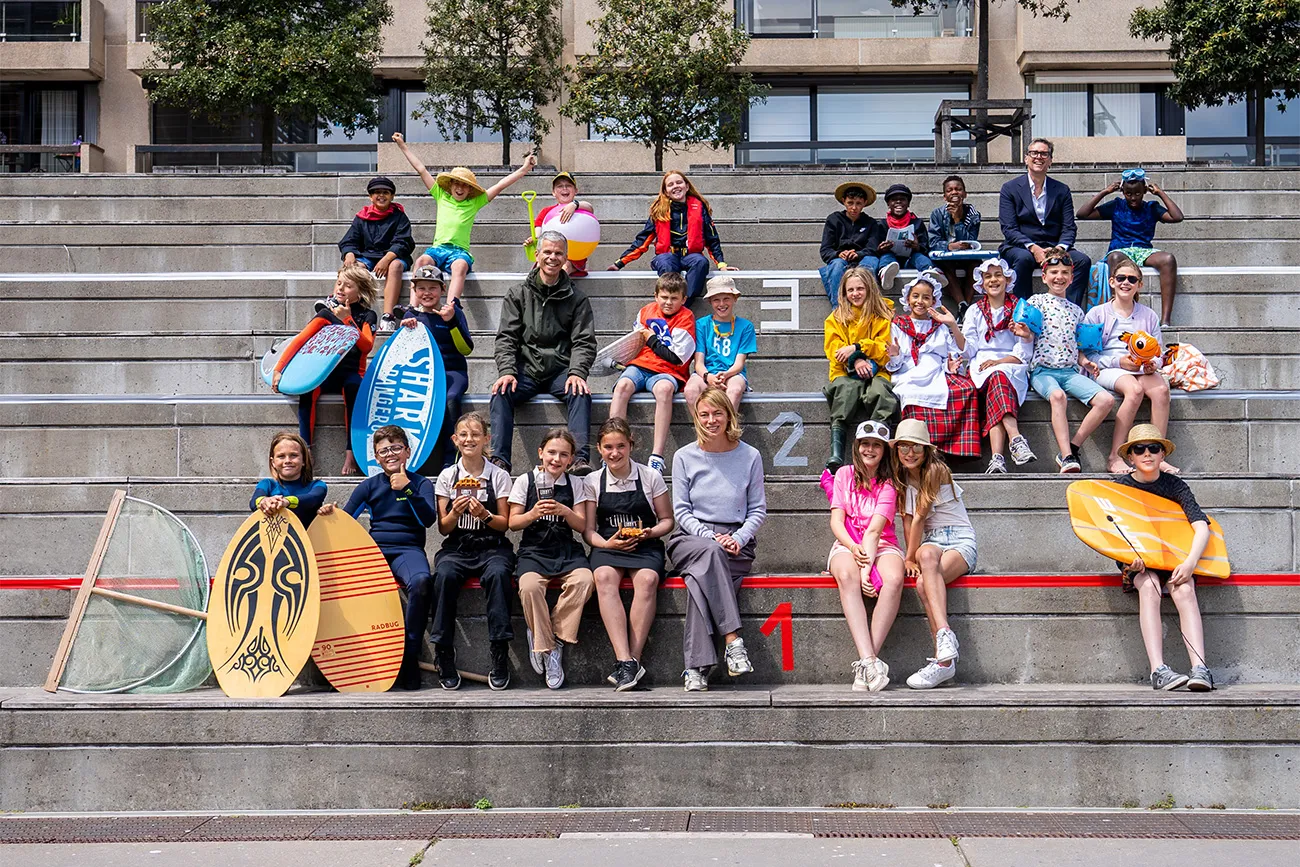
“Children really do care about the environment, and they know that sea levels are rising as the Earth warms. We have been working on this topic all week. The Kustvisie information fair really brings it close to home. With Kustvisie, we can get an idea of what it could mean for our municipality of Koksijde. That is why the children have been getting creative with the ‘coast of the distant future’”, Katrien Scholliers, teacher of the sixth-year class at Leefschool De Letterzee in Koksijde.
Promising alternatives for beaches and ports
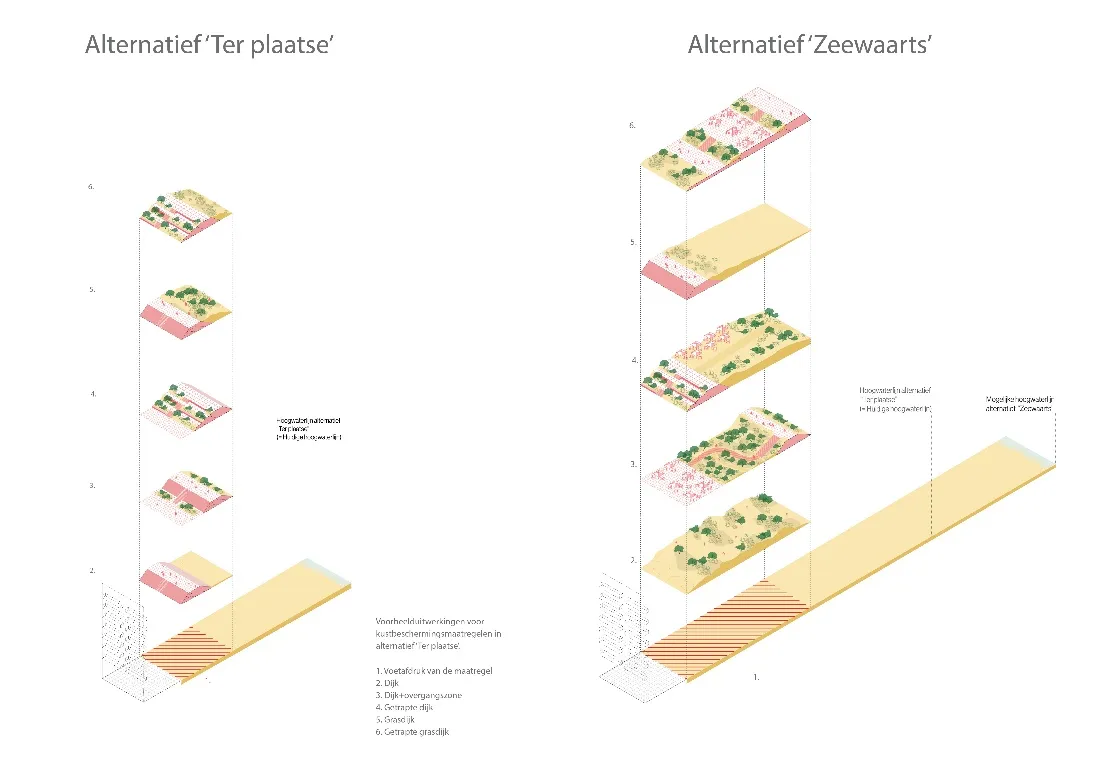
Based on the research carried out, two promising alternatives remain for the beach zones: keeping the high- and low-water lines where they are now, or gradually shifting them seawards by an average of around 100 metres over time. For each of the four coastal ports, a number of promising alternatives remain. Find out more about these alternatives here.
Next steps
Further research will be used to select a preferred alternative from the reasonable alternatives. This will form the basis for drawing up a Flemish strategic policy plan, consisting of a long-term strategy and a concrete short-term action plan. The long-term strategy will define the area (the coastal protection zone) within which coastal protection measures for the (distant) future will be built. It will also include a roadmap setting out the actions that can be taken in the short and longer term.
Question about this story? Ask your question
Keep following this
Get an email when a new story is published. No account needed.
- SubjectGeneral







