









Breathe new life into stressed trees
A targeted approach for long-lasting results
We have long known that ancient forests such as the Amazon rainforest are the lungs of our planet. But what about the fact that every individual tree in our small country of Belgium plays a central role in tempering global warming and all its associated negative effects? For most people, that realisation has only begun to take hold in recent decades. Yet twenty years ago, contracting company De Ceuster had already come up with a solution to preserve our often centuries-old green capital.
“It is mainly old trees that make an important contribution to, for example, CO2 storage, cooling, air quality and the soil’s drainage capacity,” says Andreas Popelier, bio-engineer and technical adviser at De Ceuster. “In the past, an old tree might be felled without much thought and a new one planted elsewhere, but we are now increasingly aware that we should first and foremost protect the existing trees, some of them centuries old. Like other plants, they are suffering more and more from extreme weather caused by climate change, as well as from human impacts such as soil compaction, root damage and excessive use of road salt. So they could certainly do with some help.”
Pioneer
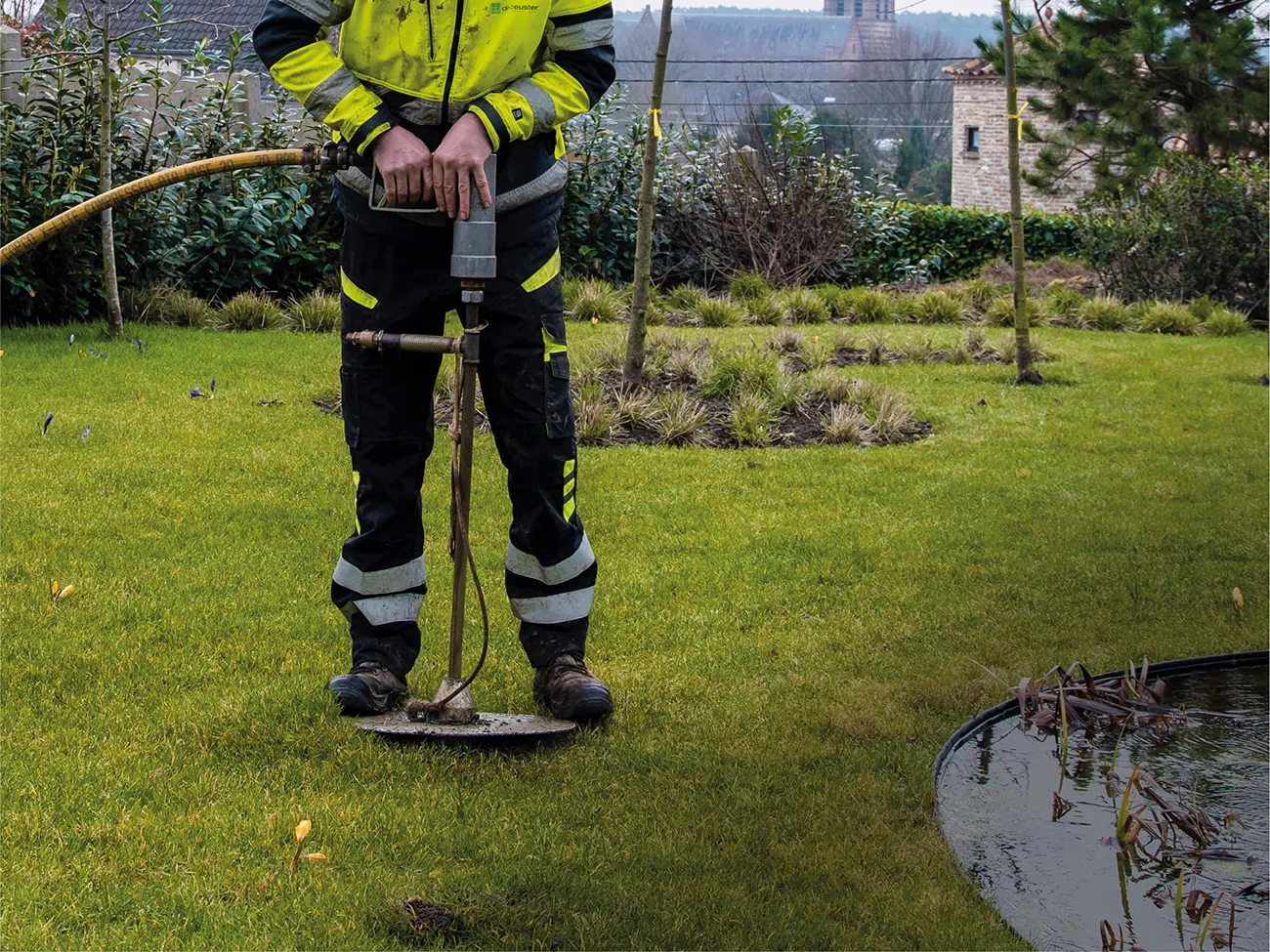
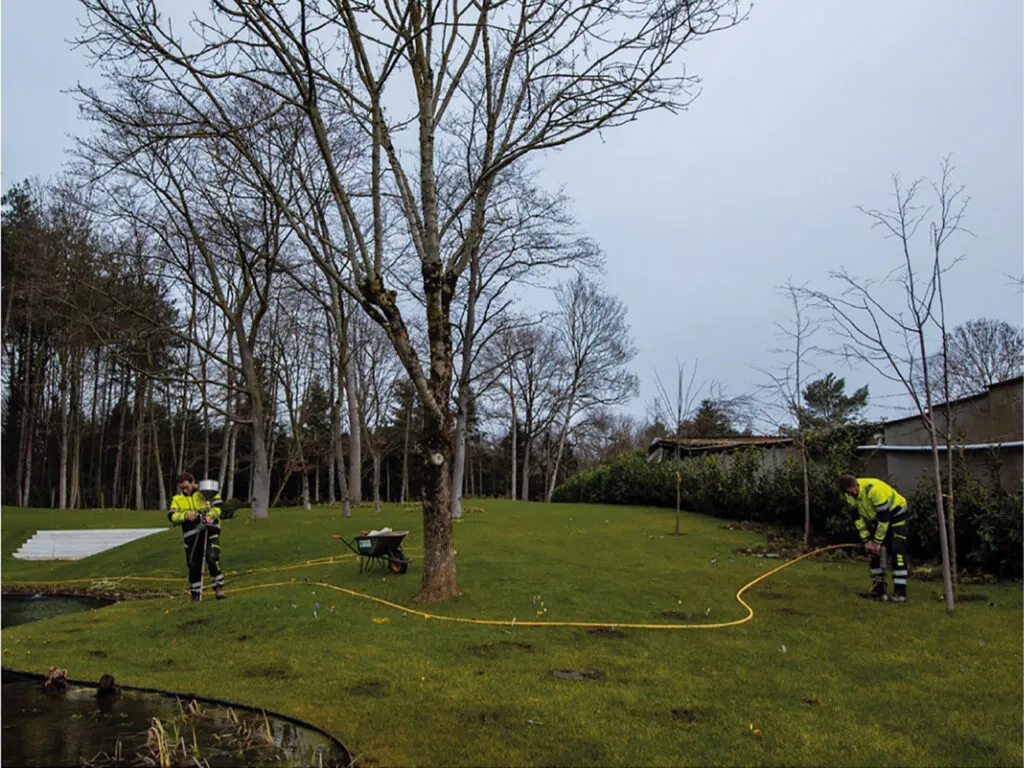
Although De Ceuster is primarily a contracting company specialising in horticulture, parks, infrastructure, and sports and leisure facilities, it also developed the Oxyjet: a machine that loosens the soil beneath a tree’s canopy to improve soil structure, while injecting essential nutrients and a soil conditioner into the root zone in the same operation.
“When we spot a problem during our work for which no adequate solution is yet available on the market, we get the team in our own workshop to work on it,” says Popelier. “That is what we did with the Oxyjet twenty years ago. Back then, only a few people recognised the importance of our trees and the benefits of treatment, but today it is a highly topical issue.”
Comprehensive treatment
The machine and the method itself have changed very little over the past twenty years, but the treatment programme has since been optimised.
“Today we use a comprehensive treatment consisting of three products: a soil conditioner containing biostimulants based on beneficial soil organisms, organic nutrients rich in trace elements, and a solution that neutralises harmful salts so that the tree can no longer absorb them.”
In addition, the extensive network of channels created when the soil is loosened provides space for good air and water circulation in the soil. The channels can also be filled with lava to maintain this drainage effect. “We mainly do this on heavily compacted ground, such as in a car park. Even where there are no trees at all, such as on the grounds of Racing Genk, it provides an excellent drainage solution.”
University research highlights positive impact
With the Oxyjet, De Ceuster aims to provide a long-term solution and protection, which means it can be used not only as a corrective measure but also preventively.
“The challenge, though, is that it can sometimes be difficult to prove this positive effect scientifically,” Popelier admits. “That is why, last year, we launched a research project together with the Laboratory of Plant Ecology at the Faculty of Bioscience Engineering at UGent, in De Tuinen van Adegem.”
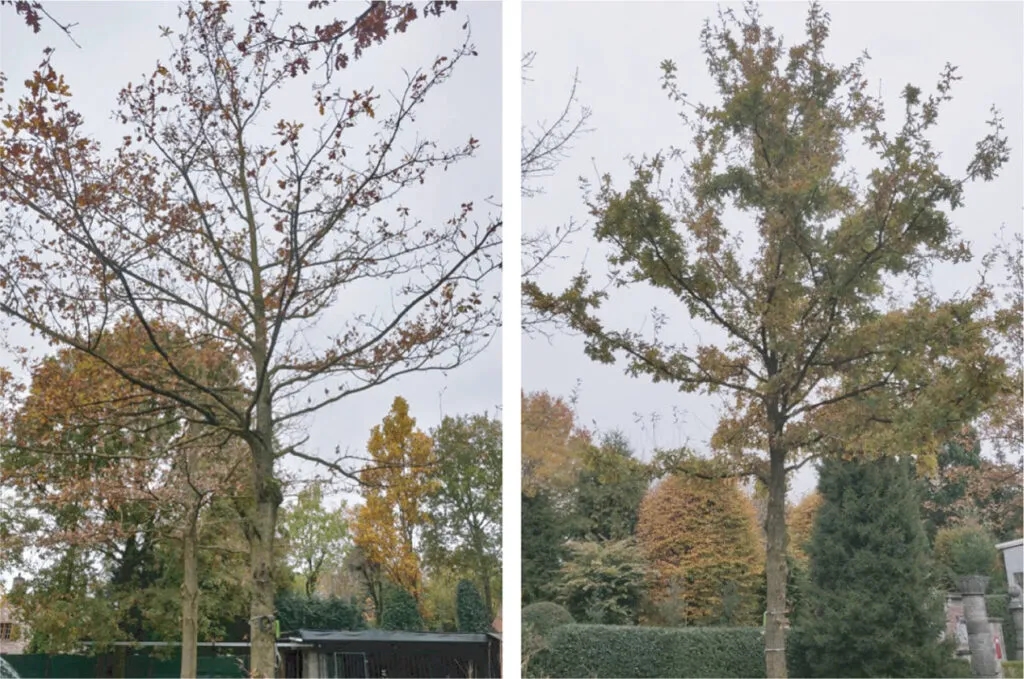
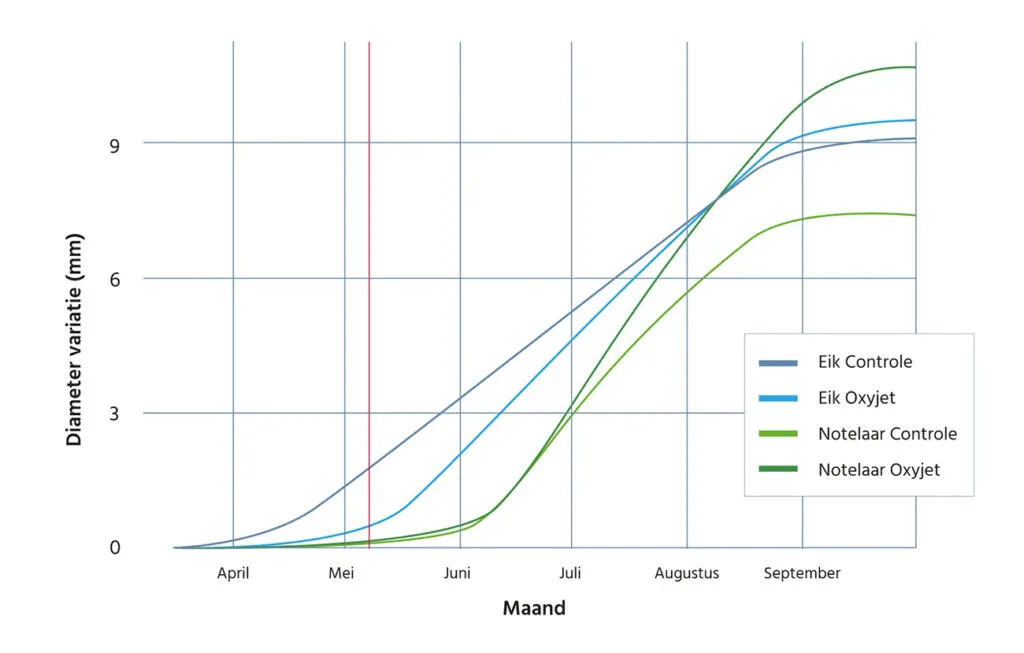
Specifically, the growth and health of two oak trees and two walnut trees are being monitored. One of each species has been treated with the Oxyjet, while the other serves as a control. Monitoring involves not only visual assessments of factors such as the length of the growing season, leaf growth, colour and the number of young shoots, but also specialist plant sensors measuring diameter growth and sap flow.
“In the summer of 2021, we already saw spectacular differences in diameter growth. In July, for example, the treated oak’s diameter growth was 33% greater than that of the untreated oak; for the walnut tree, the difference was as much as 41%. And that was in a wet, temperate summer. So we are eagerly awaiting the results from the hot, dry summer of 2022. They will be available soon.”
Question about this story? Ask your question
Keep following this
Get an email when a new story is published. No account needed.
- SubjectGeneral







