









Belgium performs well in study of resilient electricity systems
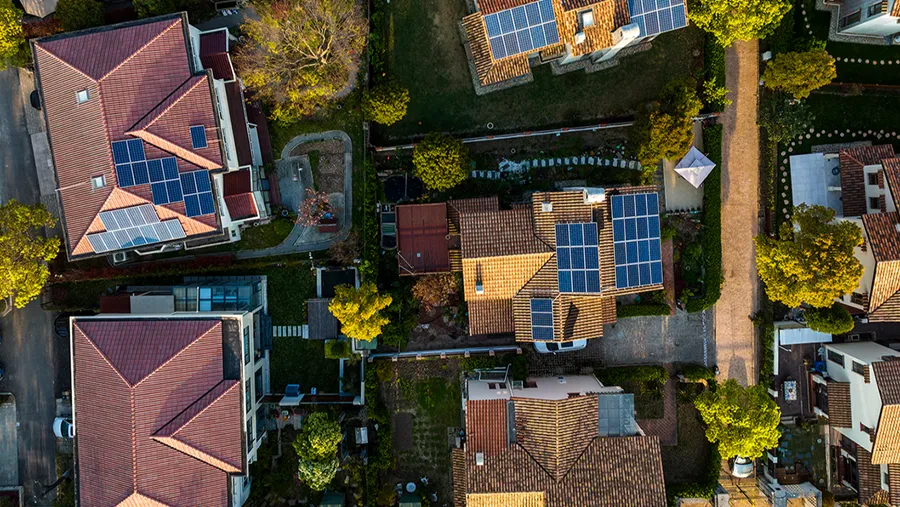
Belgium is among the countries with the greatest potential to improve electricity system resilience by using solar power and emergency inverters in homes. Northern European countries, by contrast, perform worst.
Today, Sweco publishes its study on the resilience of our electricity system. It shows that solar power can play an important role in mitigating the effects of power cuts by providing access to essential basic needs and public services.
During power cuts, low-capacity backup power can support vital functions, such as mobile communication between citizens and the government, access to water or charging essential devices. A promising solution is backup power generated by rooftop solar panels, combined with emergency inverters during the day, or hybrid inverters with full backup batteries.
‘At Terbekehof, we have set up an energy community of five companies and a shared water buffer. The growing interest from other companies on the site points to a trend towards sustainable, resilient business parks. As soon as legislation allows, we will activate ‘island mode’ to ensure a constant power supply during power cuts. This is a major step forward in energy resilience,’ says Daan Ongkowidjojo, Manager Energy for Society at Sweco Belgium.
As standard grid-connected solar power plants stop generating electricity during power cuts for safety reasons, inverters play a crucial role. Emergency inverters, designed to connect smaller loads without the need for batteries, make it possible to run essential devices during power cuts. Hybrid inverters, which integrate batteries or other forms of storage, offer a more comprehensive solution but are considerably more expensive.
Use of solar power systems is growing in the countries studied as a result of the energy transition, falling solar power prices, subsidies and stricter regulations. Germany leads in installed solar power capacity, while the Netherlands has the highest capacity per capita. Belgium ranks third for installed capacity per capita and second for potential resilience by 2028.
‘The remarkable growth of distributed photovoltaic systems in Belgium demonstrates a strong commitment to renewable energy. By investing an additional 400 euros, residents can ensure an uninterrupted power supply, even during unexpected outages,’ adds Alexandra Lybaert, Program Manager Energy Transition at Sweco Belgium.
The study also explores the theoretical potential for improving resilience in critical infrastructure, such as water management and mobile communications, by integrating solar power solutions or locating them close to solar power plants.
Read the full study: Resilience through solar power: backup power from solar panels during blackouts
About the study
Sweco analysed the potential for electricity resilience in nine European countries over the next five years, examining the future development of solar power, as well as the costs and potential load of backup power solutions during power cuts. The countries studied are Belgium, the Czech Republic, Denmark, Finland, Germany, the Netherlands, Norway, Sweden and the UK.
Installed solar power capacity per capita
Note: Installed capacity per capita refers to all installed solar power, not just residential installations. Using installed kWp per capita based on total installed capacity provides a clearer picture of the scale and distribution of solar power in the country in relation to its population size.
Share of the population with potential electricity resilience by 2028
Note: In this scenario, all new residential solar installations from 2023 to 2028 would include an emergency inverter, and each household would supply electricity to three neighbouring households.
Question about this story? Ask your question
Keep following this
Get an email when a new story is published. No account needed.
- SubjectGeneral







