









Belgian railways increasingly affected by climate extremes and taking steps to adapt
Text and images Infrabel
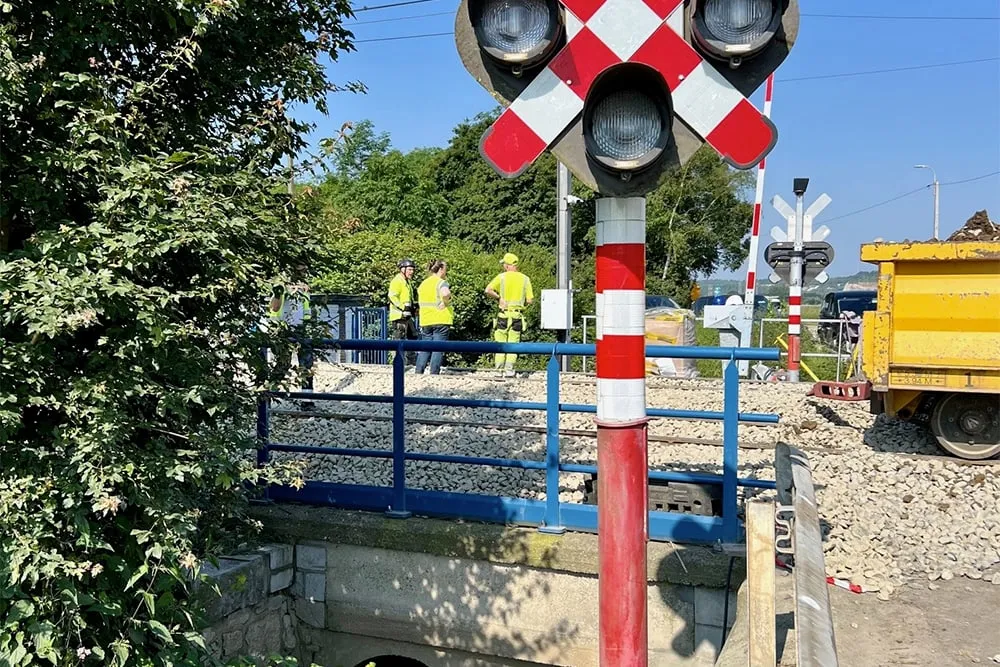
On 17 May this year, eastern Belgium was hit by severe flooding once again, causing extensive damage. In Voeren, a sudden rise in the level of the Berwijn caused serious damage to more than 1 km of railway infrastructure, completely disrupting services to and from the Netherlands. Infrabel teams repaired the damage to the railway installations, but it was decided to extend the line closure. This allows additional major works to be carried out, which are essential to improve protection against flooding in the future.
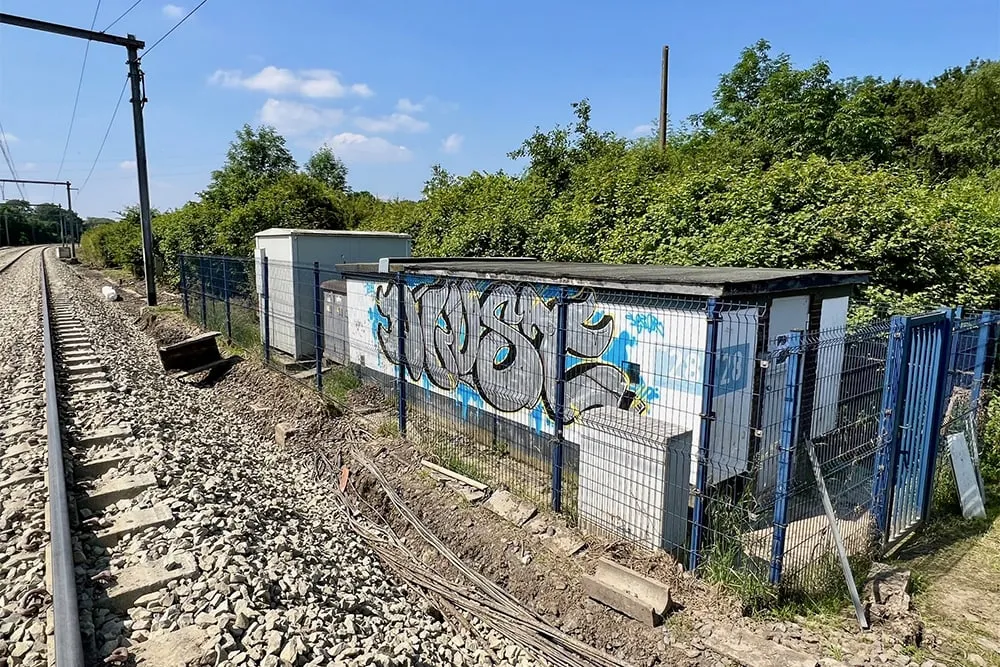
Train services between Wezet and Eijsden were initially due to resume on the morning of Monday 3 June. In the event, trains were not due to run on the line again until 18.00 on Sunday 16 June. The extra time was needed to carry out major works on this section of railway line 40. The aim is to limit, or even prevent, the effects of increasingly high water levels. This area, which runs alongside the Berwijn, has flooded no fewer than 4 times in just 10 years. There are fears that both the frequency and extent of the damage will continue to increase. When the river floods, it carries away thousands of tonnes of ballast (the layer of stones that cushions the track and keeps it stable) and damages the electronic equipment that controls the nearby level crossing and signals.
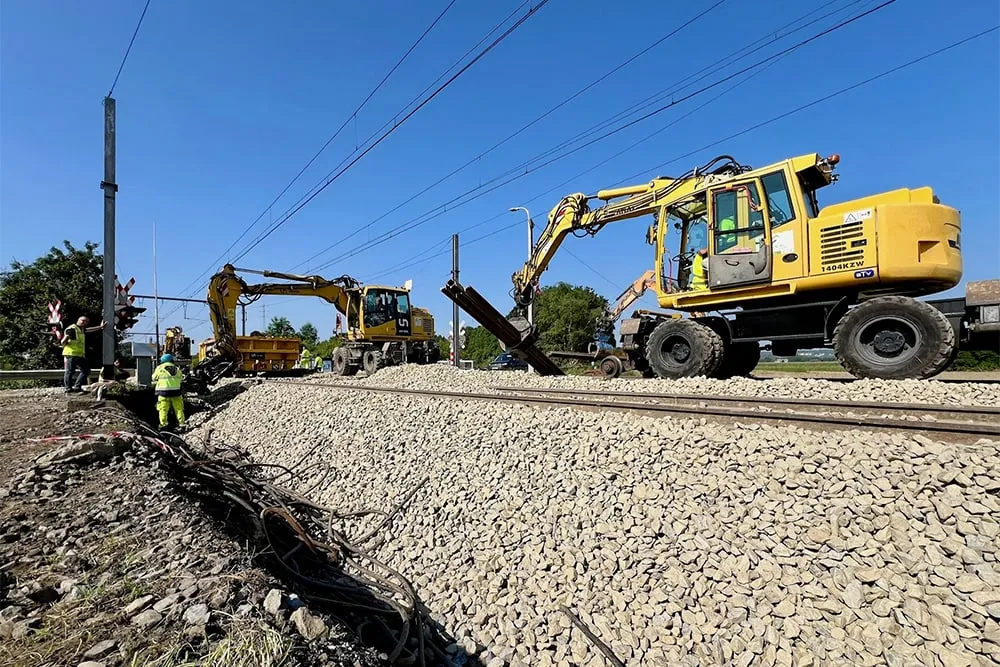
Marathon works
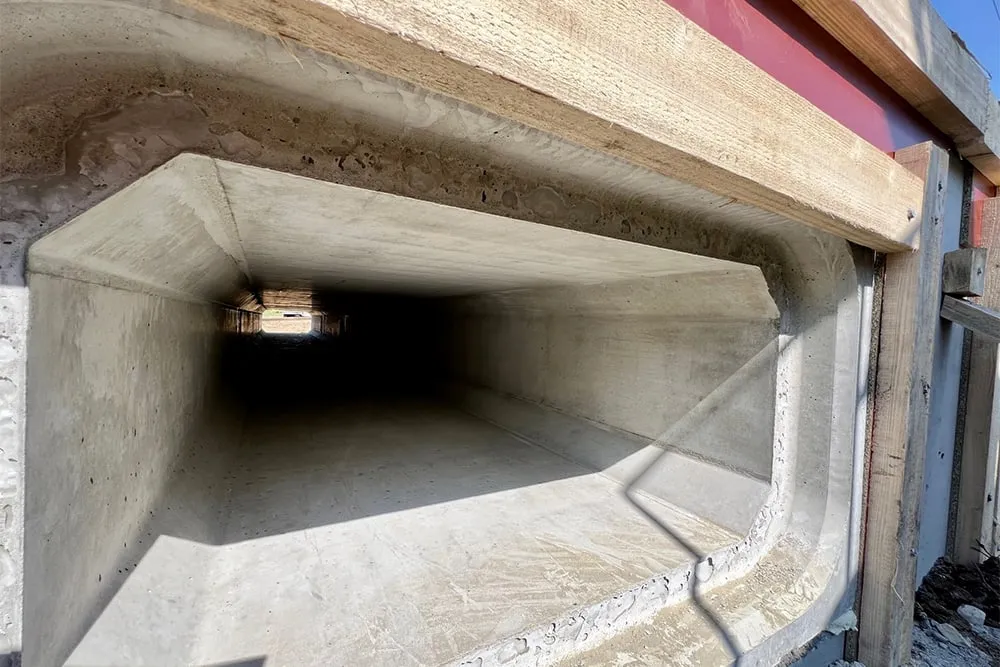
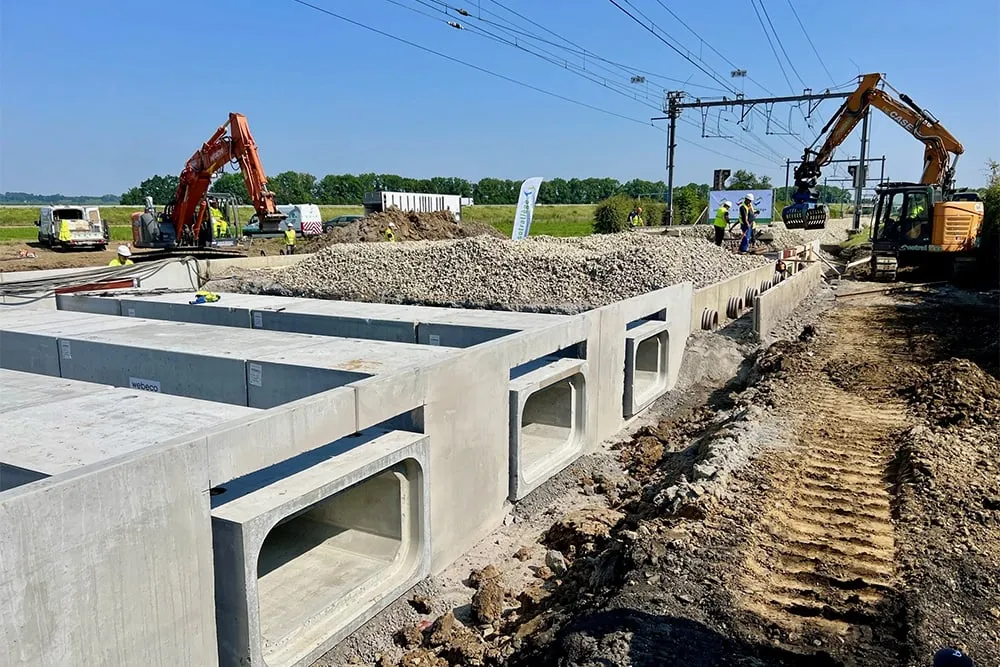
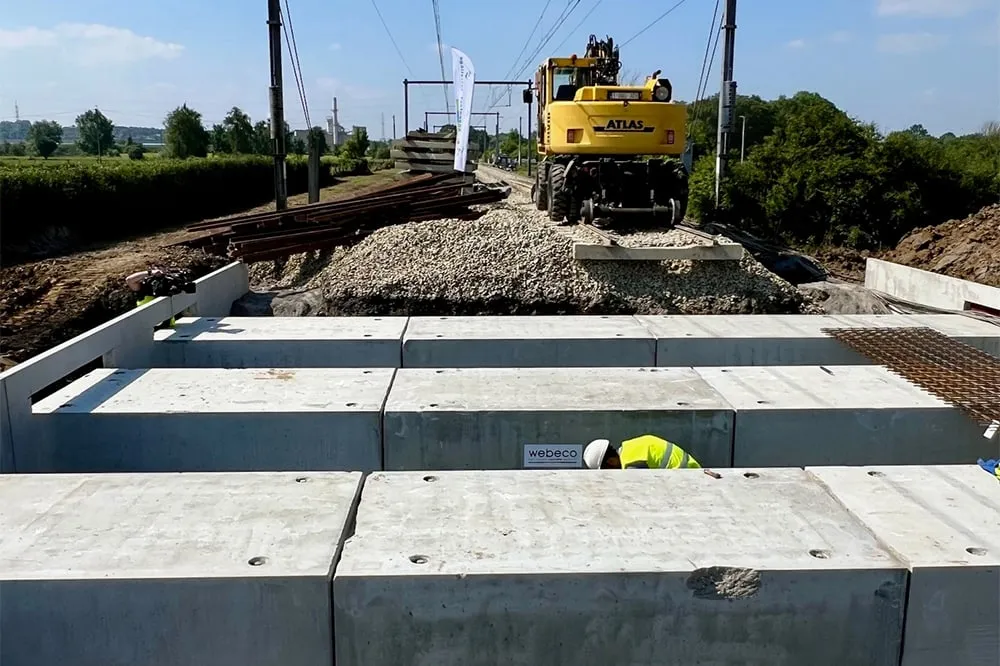
During these marathon works, 5,000 tonnes of ballast were delivered to raise the track bed by thirty centimetres. At the same time, the number of culverts, which carry water from one side of the track to the other and prevent the railway from acting as a dam that traps water, was doubled, and their total cross-sectional area was quadrupled. The works were carried out at the lowest point, where water collects. Drainage was also improved by installing pipes alongside the tracks, and the branch of the Berwijn into which the water flows was dredged to speed up its flow towards the Meuse.
In a second phase, the Infrabel team better protected the electronic equipment by mounting it on poles. The works, which cost around 1 million euros, including repairs following the recent flooding, are an investment, as every flood incurs high costs. Not to mention the damage caused by prolonged disruption to train services.
Priority reinforcement of bridges and high embankments …
In general, and now in Voeren too, Infrabel uses periods when works are being carried out to make its infrastructure more resilient to the effects of climate change. In Mont-Saint-Guibert, for example, flooding in the summer of 2021 compromised the stability of a high embankment supporting the tracks. The embankment was therefore reinforced over a length of more than 600 m with 15,000 tonnes of rock laid in steps. This gave the tracks a solid foundation once again. More recently, during the renewal of a bridge over the Lesse at Walzin (Dinant), the pier in the river was strengthened by adding a reinforced concrete structure. The structure is now better able to withstand possible future high water levels. The Louheau bridge in Pepinster, which was damaged in the summer of 2021, will be strengthened using a similar technique during works due to start in 2025.
The changing climate is also being taken into account in Flanders, particularly the impact of very heavy rainfall. Water management is being significantly improved on several railway lines, for example by replacing trackside ditches with more efficient ‘vertical’ drainage systems. These improvements are intended to prevent railway lines from flooding and, together with the installation of sheet piles, to ensure that the stability of the railway embankments is not compromised. This is being done, among other places, along 12 km of the busy railway line between Brussels and Ghent. In partnership with the province, local authorities and landowners, several retention basins have already been built along the line in Wetteren, Sint-Lievens-Houtem and Lede.
Infrabel is currently carrying out an in-depth analysis of how exposed its infrastructure components are to the effects of climate change. The analysis gives priority to the stability of raised railway embankments during floods and heavy rainfall. Infrabel will use it to map vulnerable areas, taking long-term climate scenarios into account.
… and ongoing prevention measures
Another sign of global warming is storms and gusts of wind reaching speeds of 100 to 150 km/h. In such conditions, preventive measures are essential to limit the damage. Infrabel therefore prunes trees that have grown too tall and risk falling onto the tracks, and raises awareness among local residents so that they securely fasten any loose garden items, such as furniture, greenhouses and trampolines, that could be blown onto the tracks.
At the same time, as part of its strategy to adapt to climate change, Infrabel is investing in the ‘Internet of Things’. By connecting certain infrastructure components to the internet via its own mobile network, they can be monitored remotely. A good example is the ‘wind’ warning system, developed using our in-house expertise. Our ICT developers designed connected units that can be attached magnetically to overhead line masts. The units contain an accelerometer that can detect abnormal vibrations in overhead line structures during gusts of wind. These vibrations may indicate structural weakness and a risk of the structures breaking.
Infrabel’s motto is: innovate and prevent rather than cure. However, the only real solution is to take action to tackle the causes of global warming. Infrabel is already doing its bit. Our ambition is to be carbon-neutral by 2050. Among other measures, we are improving the energy efficiency of our buildings and installations, gradually replacing our diesel trains and investing in renewable energy production.
Question about this story? Ask your question
Keep following this
Get an email when a new story is published. No account needed.
- SubjectGeneral







