









Antwerp Water Plan focuses on the spatial quality of water
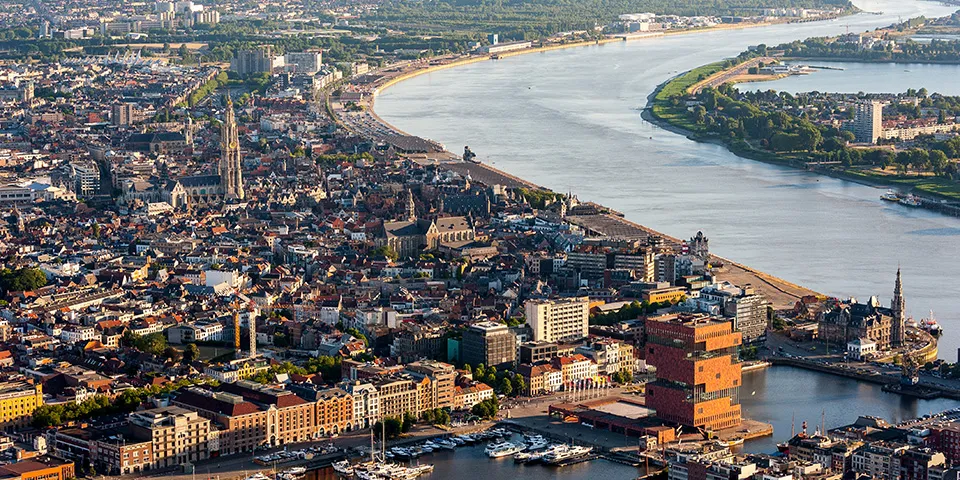
Water and Antwerp are inextricably linked. Yet water is barely tangible in the city centre today. To make Antwerp a water-sensitive city once again, the Public Space Department is working on a Water Plan. The plan will address the effects of climate change and, above all, highlight the spatial quality of water.
The aim of the Water Plan is to give water, in all its forms, a place in the city once again. “In view of climate change, we need to design our public realm with drought, water scarcity and flooding in mind,” explains Samuel Van de Vijver, Water Plan project manager at the City of Antwerp’s Public Space Department. “But above all, the Water Plan is a positive story about the qualities of water. Antwerp grew up on the Scheldt and in the Scheldt Delta. The city owes much of its development to water. Yet this relationship with water has increasingly faded into the background. Water brings considerable spatial qualities, however. Making water visible in the public realm, as well as on private land, improves liveability, heat resilience and flood safety… With this plan, we want to make Antwerp a water city once again.”
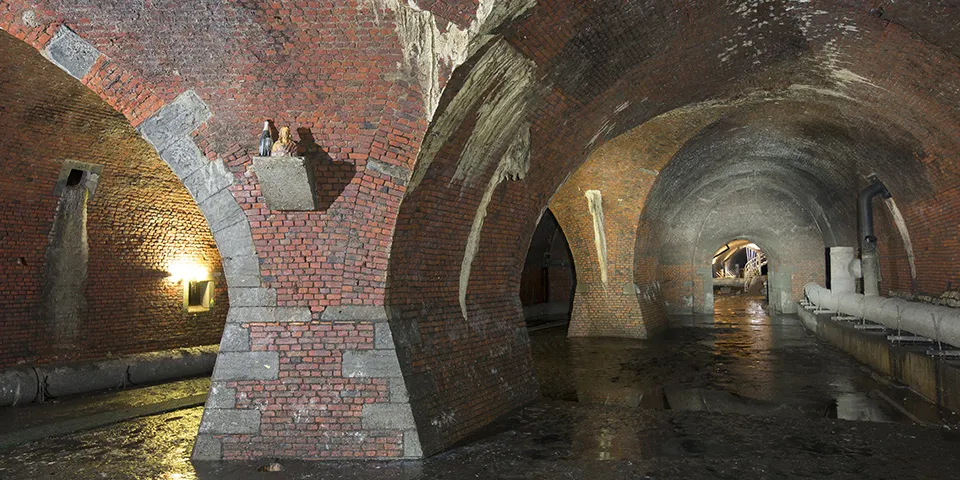
The hidden water city can still be found in various places. The Ruien, for example, reveal part of Antwerp’s history with water. (Image: City of Antwerp, Stefan Dewickere)
Three water cities
A study team of designers, engineers and communications specialists was appointed early this year to develop the Water Plan. The team is a collaboration between De Urbanisten (NL), Witteveen+Bos (BE & NL) and Common Ground (BE). The Water Plan will be ready by the summer. The analysis phase has now been completed. Samuel Van de Vijver: “Our analysis showed that Antwerp can be understood as three water cities. The hidden water city refers to the historic water infrastructure that is, or once was, present in the city. This includes waterways that have been diverted or culverted, military ramparts with moats, and city ponds and gardens that have disappeared. The second water city we identified is the natural water city. This refers to natural systems such as topography, the natural waterways that remain, soil composition and groundwater levels… We can see that these features are still visible in a number of places and offer significant added value, as in Rivierenhof. Finally, we see that the artificial water city, made up of technical sewer networks, pumping stations and treatment plants… is currently the most dominant part of our water system.”
“We believe it is important to strive for a new balance between the three water cities to make the qualities of water visible again in a major city such as Antwerp. In recent decades, we have focused on discharging water as quickly as possible, enabling the city to expand, develop and improve. But we are seeing that climate change is imposing new constraints that cannot be addressed by the artificial system alone. This does not mean, of course, that we no longer need the sewer system. The point is to see where it can be supplemented and work alongside the natural system. This could include opportunities for infiltration and storage in green spaces… Even the historic system, or what remains of it, could perhaps be used to make our city more water-sensitive.”
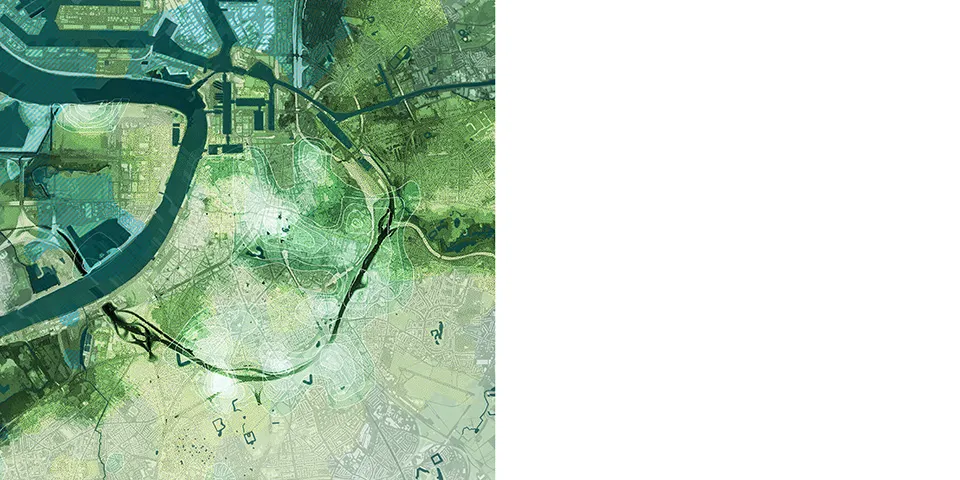
Concept map of Antwerp as a water city (Image: De Urbanisten)
Micro and macro scale
Although the Water Plan is still being developed, its main principles have already been established. “We are working on two parallel tracks,” explains Samuel Van de Vijver. “On the one hand, there are the major water structures, such as waterways, valleys and, for example, the polder structures that are still more or less maintained in the north of Antwerp. In the Water Plan, we want to develop a vision for how to deal with them. Should we restore these structures, or consider where we can link them to flood management? On the other hand, we are also working at a micro scale, from neighbourhood to street and even down to an intersection or playground. For example, how high should the threshold of a pavement be to prevent water flowing into homes and causing flooding elsewhere? We want to provide engineers and designers, who work every day on redeveloping our city, with the building blocks they need to develop Antwerp in tune with water.”
Raising water awareness
But the city cannot do it alone. Around 70 % of Antwerp’s land area is privately owned. “The greatest gains are therefore to be made here,” stresses Samuel Van de Vijver. “The city has a leading role to play and can certainly help raise water awareness, for example by investing heavily in water-sensitive design in the public realm. There are many measures that can be taken on private land, and the city already supports some of them. These include grants from the Ecohuis for installing green roofs. Other useful measures include depaving car parks or playgrounds, as well as retaining and reusing rainwater to water plants or even for sanitation. These seemingly small interventions can have a major impact on water sensitivity and water bills. Encouraging water awareness among residents and businesses is one of the Water Plan’s key pillars.”
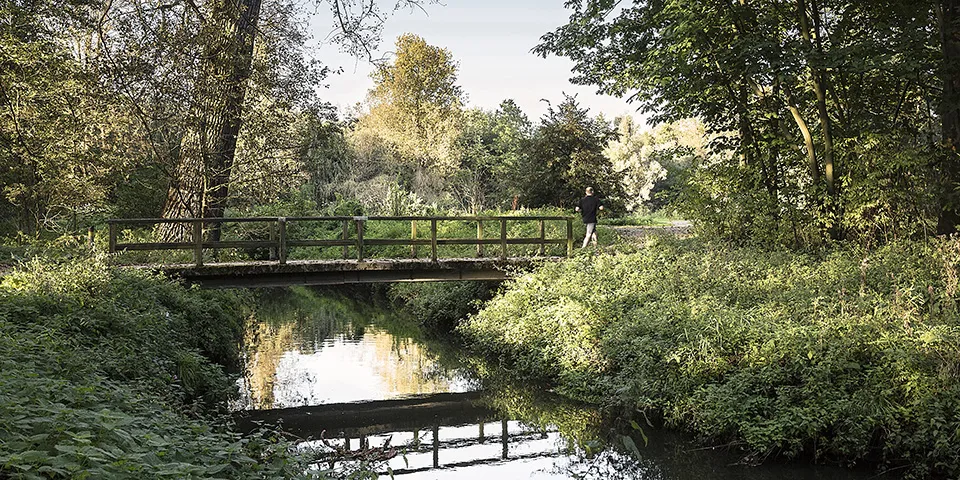
The natural water city can already be experienced in a number of places, such as Rivierenhof. (Image: City of Antwerp, François de Heel)
Guidance document
Once the Water Plan is complete, the intention is to roll it out across the city. This does not mean, however, that nothing is happening around water in Antwerp today. “We already have a rainwater plan, but it was drawn up from a sewerage perspective, whereas the Water Plan focuses on the public realm. New neighbourhoods such as Groen Zuid, Silsburg and Park Spoor Noord are already giving considerable attention to the spatial quality of water, but this is often still done on an ad hoc basis. The Water Plan will provide a framework and guidance on how to deal with water in every part of the city.”
Question about this story? Ask your question
Keep following this
Get an email when a new story is published. No account needed.
- SubjectGeneral







